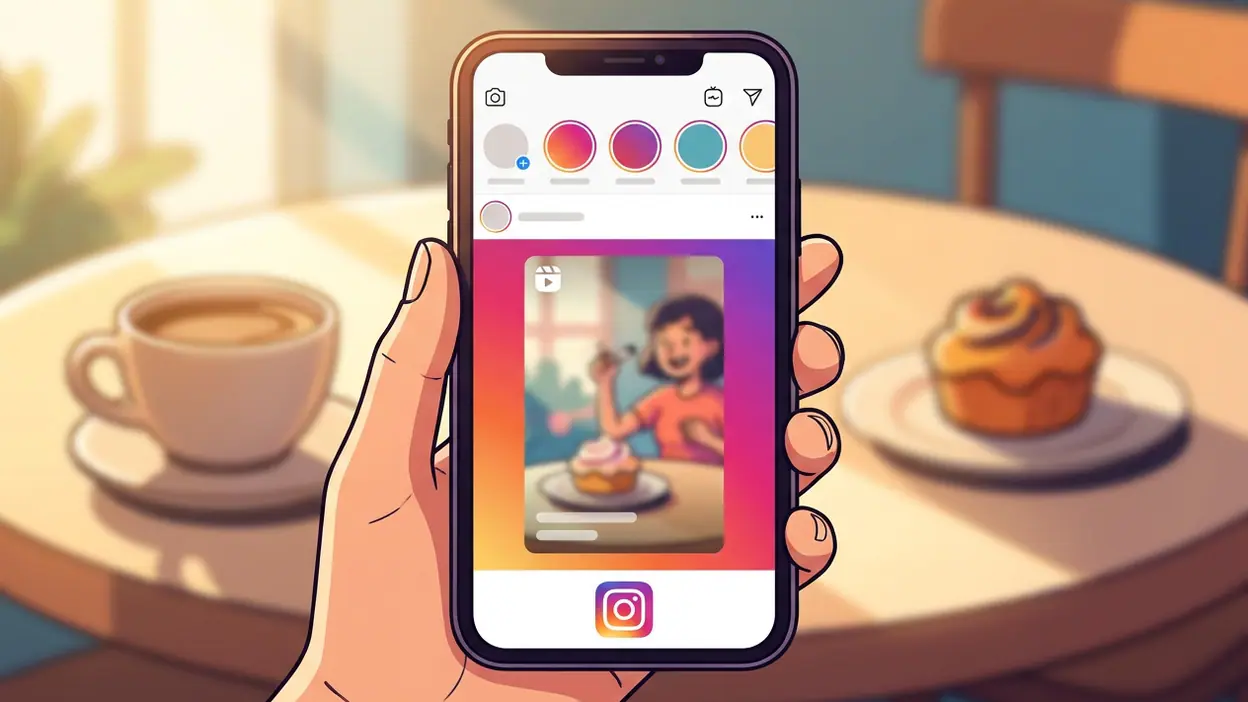
 About Instagram
Instagram’s Power Comes From Its Place in Your Phone
Instagram feels like a camera, a magazine, a messaging app and a shopping window, depending on which part of the day you open it. That flexibility is not incidental: it is the source of its power. Meta has built a service that can absorb new formats, steer attention between them and keep a familiar icon near the top of the phone. The central bargain is simple: Instagram makes publishing and discovery remarkably easy, while its owner gains leverage over what gets seen, how long people stay and where businesses spend.
That bargain explains why this app matters beyond its own feed. Instagram is not merely a place to share photographs; it is a distribution system embedded in a wider company strategy. Its strongest feature is not any single tool but the ability to connect creators, advertisers, shoppers and friends inside one daily habit. Its weakest point is the same concentration of control: users supply much of the culture, but they do not set the rules that determine its reach.
The power behind the familiar interface
Meta’s influence begins with scale. The company owns Instagram, Facebook and WhatsApp, giving it a broad view of mobile communication, entertainment and advertising. Those services have different identities, but they let Meta compete across the moments when people share with friends, watch short videos, follow public figures or look for products. Instagram’s own role is especially valuable because it sits between personal expression and public culture.
The company’s strength is not simply that it owns several popular apps. It can fund infrastructure, advertising tools and recommendation technology at a scale that smaller rivals struggle to match. It can also use lessons from one product to guide decisions in another. Instagram’s shift toward short-form video, for example, was a response to changing viewing habits and competition from TikTok, but it was also a move made by a company with the resources to change a major product quickly.


That flexibility can benefit users. Features that once felt like separate products—Stories, Reels, direct messages, live video and shopping tools—now sit within a single account and social graph. Yet the same capacity means Instagram’s direction can change through a company decision rather than a community vote. A creator may build an audience around one format, only to find that the platform is giving more room to another.
One app, several jobs
Instagram’s ecosystem works because its different activities reinforce one another. A person posts a photo, watches a Reel, replies to a Story, sends a product link and checks a message without leaving the app. Each action creates another chance to keep attention within Meta’s environment. For creators and businesses, that concentration is convenient: a profile can act as portfolio, publishing channel, customer-service desk and storefront.
Facebook remains a useful contrast. It has broader utility for groups, events and established social networks, while Instagram places more emphasis on visual identity and creator-led discovery. Meta can therefore serve different habits without forcing every user into the same product. Instagram’s connection to Facebook also gives businesses access to a larger advertising operation, even when their public-facing brand feels tailored to Instagram’s younger, image-conscious culture.
Latest News


But integration is not the same as user control. The app’s features are designed to keep activity moving through a system whose ranking, data practices and commercial priorities are determined by Meta. The user sees one continuous experience; the company sees multiple surfaces for measuring engagement and selling attention. That difference is easy to overlook because the interface is familiar and the transitions feel natural.
Distribution is the hidden advantage
Instagram’s most durable asset may be its ability to distribute content at enormous scale. A post can reach followers, appear in recommendations, circulate through direct messages and be reshared elsewhere. The recommendation system also gives a new creator a chance to reach people who do not follow them, a meaningful opening that a purely chronological social network would not provide.
That opening is powerful, but it is conditional. The app chooses which material receives wider exposure, and creators have limited visibility into why one video travels while another disappears. Reach can rise quickly, then fall when audience behavior or ranking priorities shift. Businesses and creators may own their work, but they do not own the channel that turns it into an audience.
Meta’s distribution advantage extends beyond recommendations. People already have accounts, friends and habits on the service. A new format can arrive inside an app they use every day rather than asking them to install a separate product and rebuild their network. Facebook Lite, by contrast, makes a deliberate trade in interface weight and data use for people who need a lighter version of Facebook. Instagram’s advantage is less about stripping the experience down and more about adding new reasons to return to the same place.
The habit is designed in small decisions
Instagram’s stickiness does not depend on one dramatic feature. It comes from the short, low-effort loops between checking a Story, scrolling Reels, reacting to a message and looking at a notification. The app gives users several kinds of reward: social reassurance, visual entertainment, inspiration, news from people they care about and the possibility of being noticed themselves.
Those loops can feel useful rather than manipulative. A creator can share work with an audience in seconds; a friend can keep up through casual updates instead of arranging a call; a local restaurant can show what is on the menu without building a website. The problem is that the same frictionless design makes it easy to open the app without a clear purpose and difficult to tell how much time has gone by.
Convenience is also a form of platform leverage. When messaging, entertainment, discovery and commerce all live together, leaving means giving up several habits at once. That does not make every session harmful, but it raises the cost of switching and makes the app’s design choices more consequential than those of a single-purpose tool.
What platform power feels like on a phone
On a phone, Instagram’s strategy becomes physical and immediate. The camera is always close; the app can turn a moment into a post before the moment has passed. Vertical video fills the screen, Stories invite quick taps, and direct messages make public discovery feel personal. The interface is optimized for one-handed use and brief returns throughout the day, not for a deliberate visit to a desktop publishing suite.
That mobile-first quality is a genuine strength. Capturing, editing and sharing from one device lowers the barrier to participation. Small businesses can produce useful visual updates without a production team, and friends can preserve everyday details that would never become formal photographs. Instagram has helped make visual publishing ordinary rather than specialist.
It also places more of life inside a commercial interface. The camera is a creative tool, but it is attached to metrics, recommendations and sponsored posts. A personal image can become part of a public identity; a casual interest can become a stream of targeted promotion. The phone makes this transition feel seamless, even though the incentives behind friendship, entertainment and advertising are not the same.
Rivals copy the format; users gain options
TikTok sharpened the market’s focus on short video and recommendation-led discovery. Instagram responded by giving Reels a central role and making video more prominent across the app. That response shows Meta’s ability to defend distribution: rather than asking its audience to move elsewhere for the format, it can place a competing experience in the app where many users already spend time.
Other competitors press on different needs. Likee combines short video with live and social features, while Facebook retains group and community uses that Instagram does not serve as naturally. These alternatives matter because they prevent any single service from defining every form of mobile social life. They also show that copying a format does not automatically reproduce the network, creator relationships or business tools that make a platform useful.
For users, competition can produce faster improvements and more choice. For creators, it can mean new outlets and less dependence on one algorithm. But maintaining accounts across several services takes time, and audiences do not transfer neatly between them. A rival can offer a better feature without solving the basic problem of platform dependence.
Where the exchange is fair—and where it is not
Users benefit most when Instagram reduces the distance between making something and finding an audience. The app is intuitive enough for casual sharing, but capable enough for creators and small businesses to build recognizable identities. Recommendations can surface niche interests, and the combination of posts, video and messaging gives people multiple ways to stay connected. Those are substantial benefits, not merely hooks designed to keep a screen busy.
Users lose leverage when visibility becomes dependent on rules they cannot inspect or negotiate. A creator can invest years in building a following and still have no guarantee that followers will see the next post. A business can rely on a platform for customer discovery while having little say over fees, formats or ranking changes. Ordinary users have less at stake financially, but they still face opaque recommendations and limited control over the larger systems shaping what appears in their feed.
Meta’s position also complicates the meaning of choice. People can adjust settings, mute accounts or leave, but those actions do not erase the network effects that make Instagram useful. Friends, creators and businesses may remain there even when a user dislikes its direction. The freedom to exit exists in theory; the practical cost is unevenly distributed.
The verdict: powerful, useful, and not neutral
Instagram is an exceptionally effective mobile product because it joins creation, entertainment, communication and discovery in a form that feels effortless. Its best moments are concrete: sharing a quick update with friends, finding a small maker through a Reel, or giving a business a visual front door without requiring a large budget. The app understands how people use phones and turns that understanding into everyday utility.
But a strong product is not a neutral public square. Meta controls the distribution machinery, the pace of product change and the commercial environment surrounding the content users make. Instagram deserves credit for lowering the cost of publishing and helping visual culture travel; it also deserves scrutiny for making reach contingent on systems users cannot meaningfully govern. The clear conclusion is that Instagram is worth using for what it enables, but users should treat it as rented infrastructure—not as an audience, archive or community they fully own.