 About Piano Fire: Edm Music & Piano
Piano Fire Tested: How Well Does It Recover When a Run Breaks?
A rhythm game’s real test is not whether its first song feels exciting. It is what happens when a thumb slips, a notification cuts across the screen, or a song stops behaving like a clean run. Piano Fire: Edm Music & Piano builds its appeal around quick reactions and familiar pop-and-EDM hooks, but its resilience is harder to judge than its bright, immediate premise suggests. The game is easy to understand; the uncertainty lies in how much control it gives you when play goes wrong.
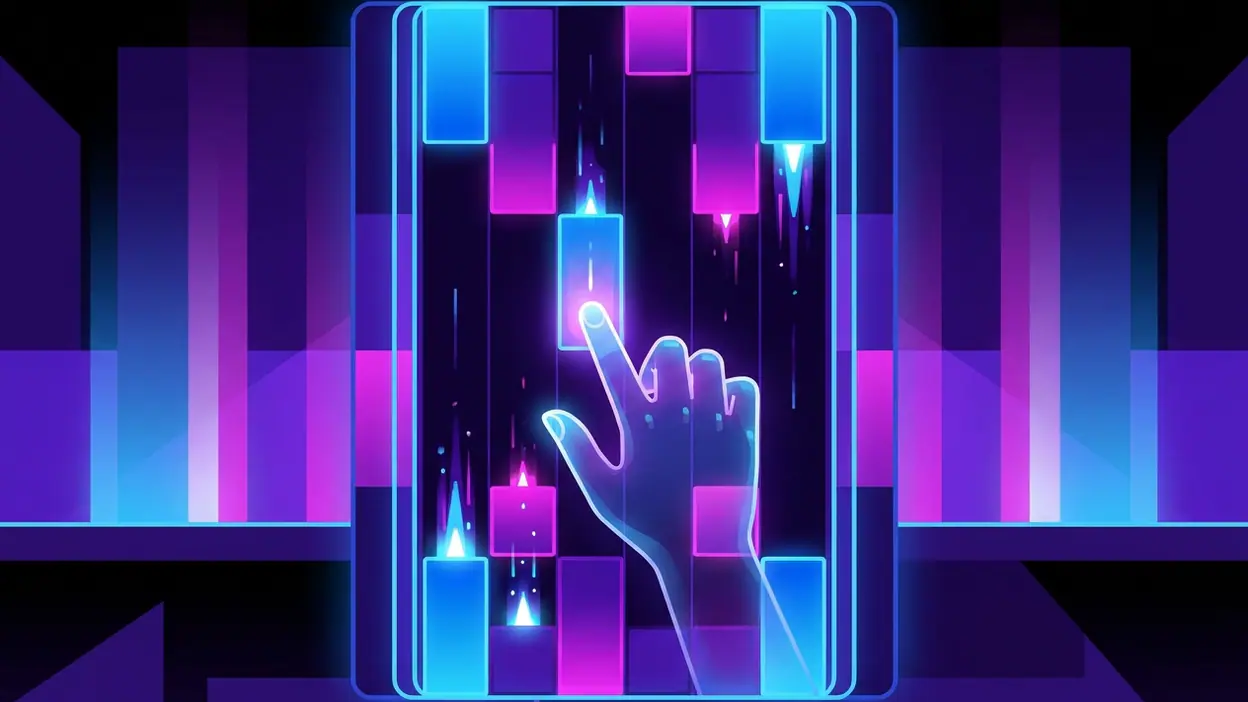
That distinction matters. Piano Fire is designed for short bursts: choose a track, follow the falling notes, tap the corresponding tiles, and try to keep the sequence alive. The loop can feel satisfyingly sharp when the beat and fingers line up. Yet a music game depends on timing, attention, and a stable session, so small failures can feel bigger than they would in a slower puzzle game. This field test separates what the game’s design makes apparent from what should not be assumed without reliable, version-specific evidence.
The run is simple; recovery is the real test
The reliability promise
Piano Fire presents a compact promise: recognizable music, a scrolling lane of notes, and a score that rewards accuracy. There is little conceptual overhead. You do not need to learn a complicated map or manage a long chain of objectives before a song begins. That directness is a strength when you have a few spare minutes and want an immediate challenge.
But simplicity raises expectations. The game’s basic interaction asks for precise taps at precisely the moments the soundtrack demands them. A missed note can break a streak or end a run, turning a tiny interruption into a practical failure. The reliability question is therefore not merely whether the game launches or plays a track. It is whether the interface makes the state of a run clear, whether recovery is fair, and whether a player can tell what a mistake has cost.


Here, caution is warranted: the available product description does not establish a universal pause, resume, or song-recovery policy across devices and versions. I would not promise that a run can always be restored after leaving the game, nor claim that every track behaves identically. The game’s core loop is legible; its safeguards are less clearly documented.
First setup failure points
The first hurdle is not a long account setup but getting from the game’s opening screens to a song without confusion. Music titles often mix track selection, difficulty, unlocks, and promotional prompts, and those layers can make a supposedly instant session feel less direct. Piano Fire’s appeal depends on reaching play quickly, so any extra screen or unclear button carries more weight than it would in a sprawling role-playing game.
Before starting a demanding track, check the device’s sound level and make sure the game has finished loading its song assets. A track that appears ready but stalls at the transition can leave a player unsure whether to wait, tap again, or back out. I cannot verify a consistent loading failure or a particular setup bug from the product information alone, so this is a practical precaution, not a claim that the game routinely fails.
Latest News



There is also a basic comfort check: confirm that the display is responsive and that any system-level focus or notification settings will not interrupt a close run. The game asks for fast, repeated input, which makes a sluggish screen or an accidental swipe unusually costly. A first song is a good place to learn the tile layout before treating a high score as a serious goal.
Mistakes and reversibility
In Piano Fire, mistakes are part of the performance rather than an occasional nuisance. A late tap, a missed tile, or an overconfident finger can break the rhythm. That pressure gives a successful run its snap: the notes arrive, the music pushes forward, and a clean sequence feels earned. The same design can punish a player who is still learning a song, especially if the failure ends the attempt instead of letting the track continue in a forgiving practice mode.
Reversibility is the key question. Can you retry quickly? Can you restart a song without losing access to it? Does the game preserve progress toward an unlock after a poor attempt? Those details shape whether failure feels like useful feedback or wasted time. They should not be guessed at: policies can vary with the current build, track, and progression system, and no dependable universal answer is established here.
What the format does make clear is that the cost of a mistake is immediate. Unlike Duolingo, where a wrong answer can often become a small lesson in a longer exercise, a rhythm-game miss happens in time with the music and can disrupt the entire performance. That makes clear feedback essential. If a tile registers late or an input is swallowed, the player needs a visible explanation, not just a damaged score.
Interruption and return
Phone games compete with calls, messages, alarms, and the ordinary habit of switching between apps. Piano Fire’s fast songs leave little room to look away. A banner notification at the wrong moment can be enough to ruin a streak, while an incoming call may take the player out of the song altogether. That is not a flaw unique to this game, but it makes interruption handling central to the experience.
The safe assumption is that an interrupted run may not resume exactly where it stopped. Mobile operating systems can suspend or reclaim an app, and a game’s behavior depends on its own save and pause logic. Without confirmed recovery behavior for the particular device and version, I would treat a song as a live attempt rather than a checkpointed session. If the run matters, silence avoidable notifications first and avoid leaving the game mid-track.
Returning to the game should also make the next step obvious: resume, restart, or accept that the attempt ended. When that choice is unclear, players may tap repeatedly and create a second problem while trying to solve the first. A polished return flow would state what happened and offer a clean route back to the song. Whether Piano Fire consistently does that is an evidence gap, not something its simple premise can guarantee.
Connectivity pressure
Music games can be more connection-sensitive than they look. Some tracks or features may depend on downloads, ads, or online services, while already available content may behave differently. It would be careless to label all of Piano Fire either offline-friendly or connection-dependent without testing the current version and its song library under controlled conditions.
If a track fails to load on a weak connection, first distinguish a temporary network problem from a missing download or a server-side issue. Avoid repeatedly tapping the same control; wait briefly, then return to the selection screen and try again. If other apps also struggle, the connection is the likelier culprit. If only one song fails while the rest work, the problem may be track-specific. These are troubleshooting steps, not verified guarantees about the game’s internal diagnostics.
Connectivity also changes the feel of a rhythm game. A player can tolerate a delay before a song begins; a delay or hitch during a note sequence is far more damaging because it collides with timing. If play depends on a stable stream or an ad-loading step, the game should make that dependency clear before the performance starts. The evidence available does not establish exactly which features remain usable offline, so players who need dependable offline sessions should test their chosen songs before relying on them.
Unclear states and recovery guidance
The most frustrating failure is often not a crash but ambiguity. A dimmed tile, a frozen-looking transition, a score that does not update, or a button that appears to ignore input can leave the player guessing. In a rhythm game, guessing is especially costly: tapping again may register as an unwanted action, while waiting may waste the moment to recover.
A sensible recovery sequence is deliberately modest. Give a stalled transition a moment; do not mash the screen. If the game remains unresponsive, return to the system’s app switcher and reopen it rather than repeatedly launching new attempts. Check whether the song or score is still present before assuming progress was saved. If the issue recurs, note the track, device, operating-system version, and whether the connection was stable. Those details make a support report more useful than a general complaint that the game is broken.
That guidance is not proof that every restart preserves progress. It is the safest way to avoid making an unclear state worse. Piano Fire would be easier to trust if it clearly distinguished loading, paused, failed, and completed states, and if it explained what is saved after each one. In a game built around split-second feedback, recovery messages should be just as direct as the notes themselves.
Where evidence is missing
The game’s central appeal is easy to describe, but several reliability details remain unsettled without hands-on testing of a specified release: whether a run resumes after an incoming call, how long a backgrounded session survives, what content is available offline, and how consistently scores or unlock progress persist after a forced close. These are not minor technical footnotes for players who depend on short sessions or unreliable networks. They determine whether the game fits their routine.
It is also worth separating ordinary difficulty from input failure. A missed note may be the player’s fault, the result of a poorly timed tap, or a consequence of lag or a screen issue. A good game helps you tell the difference through responsive feedback and repeatable results. Without comparable tests across devices, it would be unfair to declare Piano Fire’s touch response either flawless or defective. The honest verdict is narrower: its play pattern makes input reliability unusually important, and the available evidence does not settle every edge case.
Who needs more certainty
Casual players who treat each song as a disposable challenge may be comfortable with the uncertainty. The short loop makes a fresh attempt an appealing answer to a failed one, much as a quick round of Candy Crush Saga can turn a setback into another try. But Piano Fire’s timing makes interruptions more punishing than a board game’s ordinary pause, and a song’s momentum cannot be reconstructed simply by looking back at the screen.
Players who need predictable offline access, who play during commutes with unstable service, or who care deeply about preserving high scores should verify the exact behavior on their own device before committing. Parents choosing a game for a child may also want to check how songs unlock and what prompts appear between attempts. If your priority is a stable, clearly documented session rather than a quick musical reflex test, an app with transparent offline and recovery policies may suit you better.
Resilience verdict
Piano Fire: Edm Music & Piano has a strong, immediate rhythm-game hook: familiar music, fast-moving tiles, and the satisfying tension of trying to stay in time. Its best moments come from the clean loop between hearing a beat, reading the next notes, and landing a run that feels sharper than the last. But resilience is not the same as a compelling first song. The game’s recovery rules, interruption behavior, and offline limits are not clear enough to support confident promises.
My verdict is cautiously positive for players who want short, retry-friendly bursts and are willing to treat a run as temporary. I would hesitate to recommend it to anyone who needs reliable resume behavior or proven offline play without checking those details in the current version first. Piano Fire knows how to make a missed beat sting; it still has to earn trust in what happens after the miss.