 About Words of Wonders: Crossword
Words of Wonders: Crossword Fits the Notification Age, Familiar Limits and All
Modern phones are built to interrupt themselves. A puzzle can be abandoned for a message, resumed between errands, then squeezed into the quiet minute before sleep. That change in device habits suits Words of Wonders: Crossword unusually well: its word-building loop asks for attention, but not a long appointment. The game’s appeal is not that it has reinvented crosswords. It is that its small, repeatable challenges still fit a mobile routine shaped by notifications, battery management, and constant switching.
That fit is more important than any claim about a sweeping Android or iOS makeover. The core game remains a familiar exchange: inspect a crossword grid, connect letters in a circle to form words, and use the resulting answers to fill the board. The platform story is therefore about how this steady design behaves on phones whose operating systems increasingly encourage short sessions, quiet notifications, and quick returns to recently used apps. It gains convenience from that environment, even as its older, level-by-level structure shows its age.
A small puzzle built for changing phone habits
What the game gains from modern platforms
On both Android and iOS, the best feature of a compact word game is often what it does not demand. There is no elaborate 3D world to reload, no match that collapses if you leave halfway through, and no need to remember a complicated chain of objectives. A level can be approached as a complete little task: make words from the available letters, watch them settle into the grid, and decide whether to keep hunting for bonus answers or move on.
That structure pairs neatly with the way people use phones now. App switching is routine, and system-level focus tools make it easier to carve out brief stretches of quieter attention. Words of Wonders benefits without needing to become a productivity app: its puzzles are self-contained enough to survive a pause. On a recent Android or iPhone, returning to the game after checking a message generally feels less like restarting a session and more like reopening a book at the same page.


There is a subtle benefit here. Many mobile games treat every return as a reason to push an event, a reward track, or a fresh demand for attention. Words of Wonders has a more legible central promise. The board is the task, the letter wheel is the tool, and solving is the payoff. That simplicity feels increasingly valuable in an ecosystem where even casual apps compete to become habits.
What users notice first
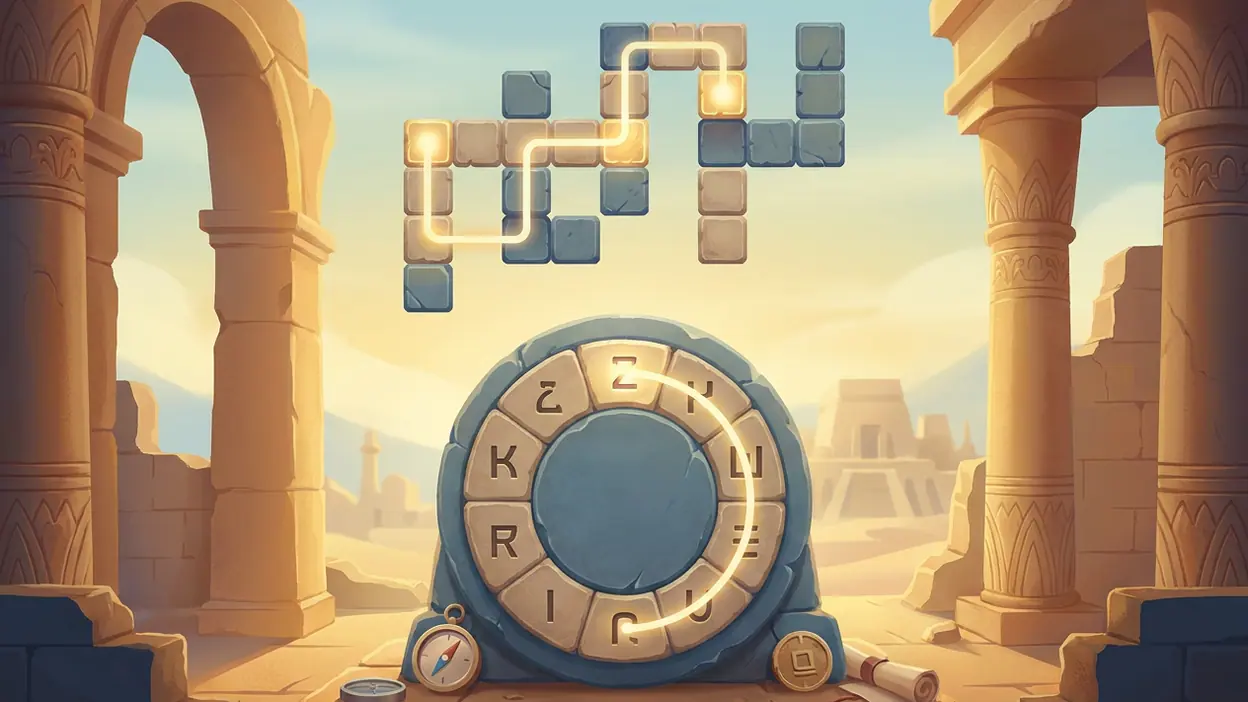
The opening rhythm is easy to read. A circle of letters sits beneath a crossword pattern; dragging across letters forms a word, and correct answers appear in their places. That physical gesture is well suited to a touch screen. It is direct enough for a newcomer and tactile enough to make the small act of discovering a word satisfying. When a longer answer clicks into place, the grid’s completion gives the brain a clean, visible reward.
The game also gives its puzzles a travel-and-wonders framing, using place-inspired progression to lend movement to what is essentially a series of word boards. It is a light wrapper, not a deep narrative. I found that distinction useful: the scenery suggests a journey without asking the player to follow a plot or learn a cast of characters. The actual pleasure remains linguistic, in spotting an overlooked combination and seeing the crossword tighten into order.
Latest News



The first friction appears just as quickly. Some answers are obvious; others depend on vocabulary that feels less common or on a particular interpretation of the available letters. The bonus-word hunt can be rewarding, but it can also turn a brisk puzzle into a search for the one form the game accepts. Hints help, yet spending one may feel like paying to escape a bottleneck rather than learning a new trick.
The day-to-day shift: from session to spare minute
Words of Wonders is strongest when treated as a pocket puzzle, not as a game that needs a dedicated evening. One board can occupy a short break, and the low-stakes pace makes it easy to stop once the grid is filled. The absence of a demanding real-time match is a practical advantage: an incoming call does not cost a teammate a round, and a train arriving does not ruin a carefully timed run.
Modern operating systems make that kind of stop-start play ordinary. Android’s notification controls and iOS Focus settings can reduce interruptions, while app switching lets a player move between a puzzle and a message without much ceremony. These are platform capabilities rather than special game features, and the distinction matters. The game does not need to advertise a novel operating-system integration to benefit from a phone that handles background activity and returns cleanly to recent apps.
There is a downside to the same convenience. A puzzle that fits every spare moment can become repetitive when played in every spare moment. The board format changes its letter combinations, but the core gesture rarely changes: scan, connect, test, fill. The game’s short-session design keeps it accessible; it does not automatically give the loop more depth. I would rather play a few boards with attention than let the game become another reflexive stop between every other app.
New ecosystem strengths, with familiar limits
Current phones make small text and touch targets easier to adjust through system display settings, and accessibility options such as larger text or magnification can help players who need them. The exact result depends on the device and the game’s own layout, so no single Android or iOS setting guarantees a perfect board. Still, a static puzzle screen is a relatively forgiving format: there is less visual motion to track than in a match-three game such as Candy Crush Saga, and no fast spoken lesson to follow as in Duolingo: Language Lessons.
That comparison clarifies the game’s place. Candy Crush Saga turns touch into a cascade of effects and constantly varied board states. Duolingo builds a routine around lessons, reminders, and a wider sense of progress. Google Play Books & Audiobooks serves a different kind of pause, one centered on reading or listening. Words of Wonders occupies the middle ground between active play and quiet study: it asks you to produce words, but the consequences of a wrong guess are mild and the session can end at almost any point. Even foodpanda: food & groceries, an entirely different kind of utility, reflects the same phone habit: people expect an app to be useful in quick, interrupted visits. Words of Wonders makes its case through a few minutes of mental play instead of a transaction.
Its ecosystem weakness is less about missing a headline feature than about uncertainty and fit. Android devices vary widely in screen size, manufacturer software, and battery management; iPhones are more consistent, but system updates can still change permissions, notification behavior, and background expectations. Players should not assume that every device handles every version identically. If a game session is interrupted, the sensible test is whether the level remains intact after switching away, not whether the operating system promises a particular experience.
How rivals adapt, and what mobile is becoming
Rival games have learned that a mobile puzzle needs more than a good core mechanic. Candy Crush Saga layers events and reward systems over its matching loop, while Duolingo makes progress visible through streaks and lesson sequences. Those approaches can create strong reasons to return, but also add more pressure and more interface noise. Words of Wonders is comparatively plain. Its restraint is a strength for players who want a puzzle rather than a second schedule, although it can leave the long-term progression feeling thinner than the competition’s.
The broader direction of mobile software is not simply toward shorter sessions. It is toward experiences that can survive being interrupted, resume without fuss, and coexist with a crowded home screen. Games that respect that pattern feel more natural on current devices. Yet the best ones still need a reason to return beyond convenience. For Words of Wonders, that reason is the small satisfaction of language: a hidden word, a nearly complete grid, and the moment the remaining letters finally make sense.
That is a modest but durable proposition. The game does not transform Android or iOS, and it does not need to. Instead, it shows how a familiar design can remain useful as phone habits shift around it. Its strongest platform advantage is structural: a board is easy to pause, easy to resume, and easy to finish. Its weakness is equally clear: the same repeatability can turn into sameness, especially when an answer feels arbitrary or a hint system interrupts the pleasure of solving.
Who should play it, and what to watch next
This is a good fit for people who enjoy word searches, anagrams, or crossword clues but want a gentler format than a timed daily challenge. It also suits anyone who likes having a game ready for a waiting room or a quiet commute, provided they are happy with a consistent loop rather than a stream of mechanical surprises. Players who want deep strategy, lively competition, or a story with substantial character development should look elsewhere.
What I would watch in future updates is not a louder progression system. It is careful refinement: clearer handling of less familiar answers, reliable restoration after interruptions, and interface choices that remain comfortable across the range of Android screens and current iPhones. Better explanation around hints and bonus words could also reduce the sense that the game is withholding an answer rather than testing vocabulary. These changes would strengthen the experience without crowding out its calm pace.
Words of Wonders: Crossword earns its place on a modern phone by asking for little and giving a clear, satisfying task in return. It is not the most inventive word game, and its repeating boards will eventually show their seams. But as a short-session puzzle that handles interruption gracefully, it understands the device in your hand better than many games that try to own your whole evening. The best reason to install it is simple: when you have five spare minutes and want to use your mind rather than just scroll, the next grid is ready.