 About MX Player
MX Player and the Small, Private Rituals of Mobile Viewing
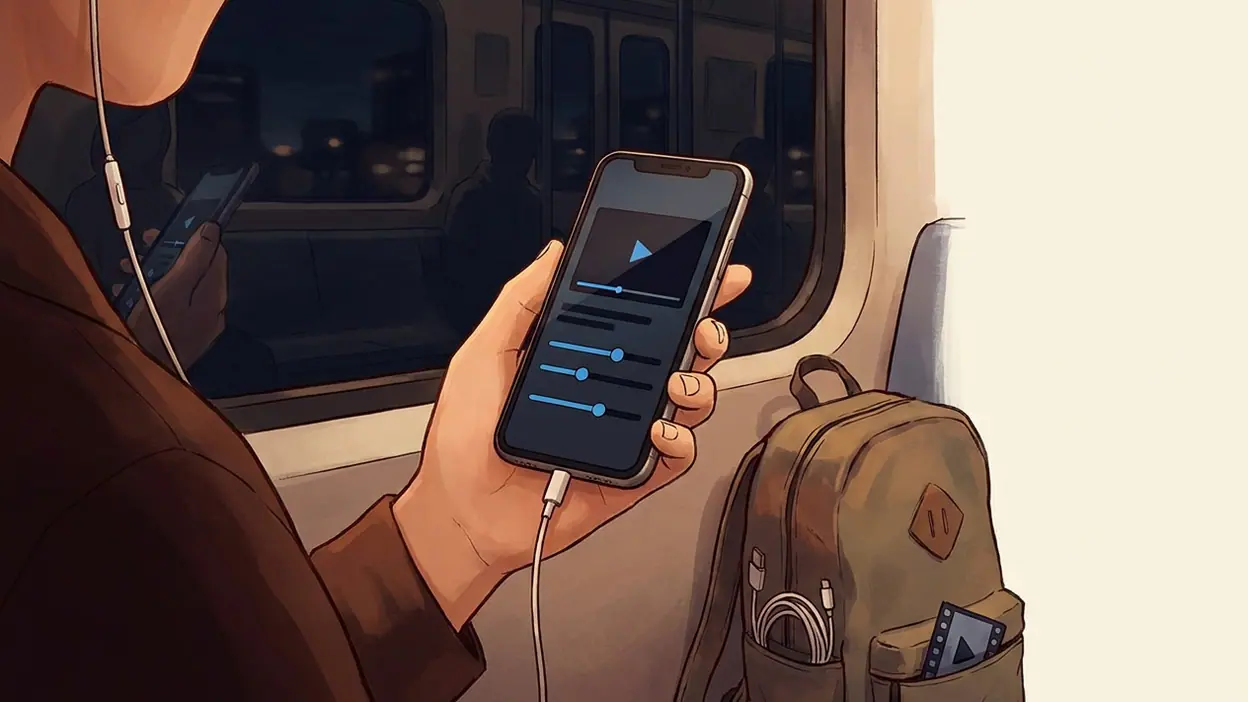
There is a particular kind of viewing that begins before anyone calls it watching: a downloaded episode opened on the bus, a clip replayed while dinner cooks, a film resumed in bed after the television has gone dark. MX Player belongs to that unceremonious culture. Its appeal is not that it turns a phone into a grand entertainment destination; it makes the phone’s existing pile of video feel ready whenever a spare pocket of attention appears. That is a modest promise, but a revealing one: mobile life increasingly depends on tools that help us carry private routines through public space.
A player built for the files already in your life
The first impression is practical rather than theatrical. Open the app and it is oriented around finding and playing video, not persuading you to admire the player itself. A folder of saved clips, a downloaded film, or an episode transferred from another source can become the evening’s entertainment with little ceremony. That focus matters. Streaming services organize viewing around their catalogs and subscriptions; a local video player starts from the less tidy reality of what people already have on their devices.
MX Player’s reputation rests partly on control. Playback gestures let viewers adjust brightness and volume without digging through a settings maze, while support for subtitle files and a range of video formats helps with content that does not arrive in one standardized package. These features sound small until a subtitle needs shifting or a file refuses to behave in another player. Then the app feels less like a media brand and more like a pocket utility: capable, familiar, and ready to get out of the way.
That utility is also a statement about the current phone. The handset is no longer just a window onto live services. It is a storage cabinet, a travel screen, a personal archive, and sometimes a fallback television. MX Player fits that mixed role. It does not need to know whether a video is important, embarrassing, educational, or simply something to pass the time. It assumes that if the file is on the phone, the owner may want to watch it.


The behavior it makes ordinary
The habit MX Player normalizes is not binge-watching so much as watching in fragments without treating the fragments as a compromise. A few minutes before a stop, a scene during a lunch break, a full episode on a long ride: the player makes these occasions feel like legitimate viewing sessions. Its interface supports quick entry and quick exit. The phone can be locked, pocketed, or handed over without the elaborate start-up ritual associated with a television and a streaming app.
That convenience shifts the shape of attention. A television usually claims a room and asks for a stretch of time. A phone player follows its owner instead, letting entertainment occupy intervals that might once have been dead space. The trade is not automatically good. A story can be chopped into tiny pieces, and a screen held close can make it harder to notice the world around it. But the routine is now familiar: people do not always set aside time to watch; they fit watching into time that is already spoken for.
MX Player also makes personal media feel less dependent on a network connection. A downloaded video can keep playing underground, on a flight, or in a place where reception is poor. That offline confidence gives the app a different social meaning from a streaming service whose catalog is abundant but conditional. The file is there; the connection can be absent. For commuters and travelers, that distinction is not abstract technical trivia. It is the difference between a plan and a blank screen.
Latest News



Convenience as a quiet status signal
There is little glamour in being the person who knows which folder contains the film or how to fix an awkward subtitle. Yet that knowledge is a form of competence. MX Player serves the user who wants the device to obey, rather than the user who wants every part of entertainment packaged as a polished subscription experience. It rewards a slightly hands-on relationship with media: save the file, choose the track, adjust the view, carry on.
The app’s controls reflect that preference. Gestures put common adjustments close to the thumb, and playback options recognize that people watch in different circumstances, with different files and different expectations. This is not convenience as a glossy promise; it is convenience as reduced friction at the exact moment friction becomes irritating. A dim screen on a night bus, dialogue too quiet to follow, subtitles arriving out of sync: these are ordinary problems, and practical control can feel more valuable than another recommendation row.
Still, the experience is not perfectly frictionless. The usefulness of a file-based player depends on a library that can become cluttered, and the app may need more sorting or permission decisions than a tightly managed streaming service. The broader MX Player experience has also changed over time and can vary by region and version, including the prominence of online content and advertising. Those additions can blur the clean purpose of a local player. A tool that once feels like a direct route to a video can become a busier media environment than some users want.
How it enters the daily loop
MX Player’s stickiness comes from repetition, not spectacle. It becomes the app someone opens when a file arrives, when a familiar episode is saved for a journey, or when another player fails to handle a format. Once it is associated with these small acts, it occupies a durable place on the phone. People often keep utility apps not because they love looking at them, but because removing them would break a routine they barely notice until it is gone.
That routine has a private quality. The same device used to answer work messages can turn, seconds later, into a screen for a film watched alone under a blanket. The boundary between public and personal viewing becomes a pair of earbuds and a lowered brightness setting. MX Player does not invent this intimacy, but it supports it by making playback direct and portable. The app sits close to the user’s own collection rather than demanding a public identity or a social performance.
There is a small comfort in that arrangement. Streaming platforms can make watching feel like an ongoing conversation with a catalog: what to sample, what to finish, what to watch next. A local player can be quieter. It helps people return to material they already chose, whether that is a saved concert, a family recording, or a film they do not want to search for again. The archive is imperfect, but its imperfections are personal.
Design that mirrors a phone-first culture
The best parts of MX Player’s design are legible at the scale where it is used. Playback controls are built for touch, and the screen can respond to a thumb rather than a remote control. That matters because mobile viewing is not simply television reduced in size. The viewer may be standing, holding a rail, sharing a room, or watching with one earbud in. Gestures and quick adjustments suit a body that is already negotiating other tasks.
At the same time, the app’s practical character can feel less refined than a service designed around a single curated library. A local collection asks the user to manage files and make choices; discovery may not feel as effortless as browsing a streaming catalog. This is a real design trade-off, not a flaw that can be solved by adding more artwork. MX Player’s strength is that it respects a user’s existing media. Its weakness is that an expanding, mixed-purpose interface can make that simple relationship harder to see.
The contrast with Canva is instructive. Canva turns a phone into a small production studio, encouraging people to make and publish visual work. MX Player turns it into a personal screening room, often for material made elsewhere. Foodpanda represents another phone habit: outsourcing a practical errand to an on-demand service. These apps differ in purpose, but all make a once-separate activity available in the same intimate device. MX Player’s quieter contribution is to make consumption portable without insisting that every moment become creation, commerce, or public sharing.
What the ease leaves unresolved
Private viewing has costs that a capable player cannot solve. A screen that is always available can make rest feel like another opportunity to fill, while endless clips can crowd out silence. The app itself is neutral in the narrow sense: it plays what the user opens. But the broader culture around it treats every pause as available inventory. MX Player’s convenience makes that expectation easier to satisfy, and therefore more visible.
There is also a tension between control and clutter. People value a player that handles their files, yet many mobile apps are pushed toward feeds, recommendations, and advertising because attention is commercially valuable. When those layers grow, the old appeal of a straightforward utility can weaken. The user may still be able to watch a saved video, but the app’s surrounding environment can ask for more attention than the task requires. That tension is worth noticing precisely because the basic function remains so useful.
Rivals follow the same larger pattern in their own ways. Streaming apps have borrowed the quick, personalized feed; creator tools make editing and sharing possible from the same pocket-sized screen; even casual games such as Woodturning or Super Stylist: Fashion Makeover turn short intervals into repeatable routines. They are not direct substitutes for a video player, but they compete for the same scattered minutes. The lesson is that mobile apps increasingly succeed by fitting into an existing day, not by demanding a separate one.
MX Player’s cultural meaning is therefore larger than its playback controls and smaller than a revolution. It is a reliable tool for a habit already underway: carrying entertainment around, watching privately, and treating brief gaps as usable time. Its best qualities appear when the file plays cleanly, the controls make sense, and the app disappears into the act of watching. Its weaker moments arrive when interface clutter or the always-on logic of the phone interrupts that simplicity.
I would keep MX Player close for the same reason I keep other dependable utilities: it handles a real job without asking me to reorganize my life around it. That does not make it culturally innocent; portable viewing feeds the expectation that every idle moment should be occupied. But it does make the app revealing. MX Player is a pocket-sized expression of modern convenience: not a grand destination, just a dependable way to make private entertainment available wherever the day leaves room for it.