 About Ludo King®
Ludo King Turns Quick Matches Into a Lasting Social Ritual
A Ludo match can be over in minutes, but the argument about who got lucky can outlast the game. That gap between a simple board and the social life built around it is the real story of Ludo King®. The game’s community is not a single, highly visible creator scene; it is the collection of friends, families and casual opponents who keep finding reasons to return. Its network value is intimate and practical, though the app gives players fewer tools to shape that network than its popularity might suggest.
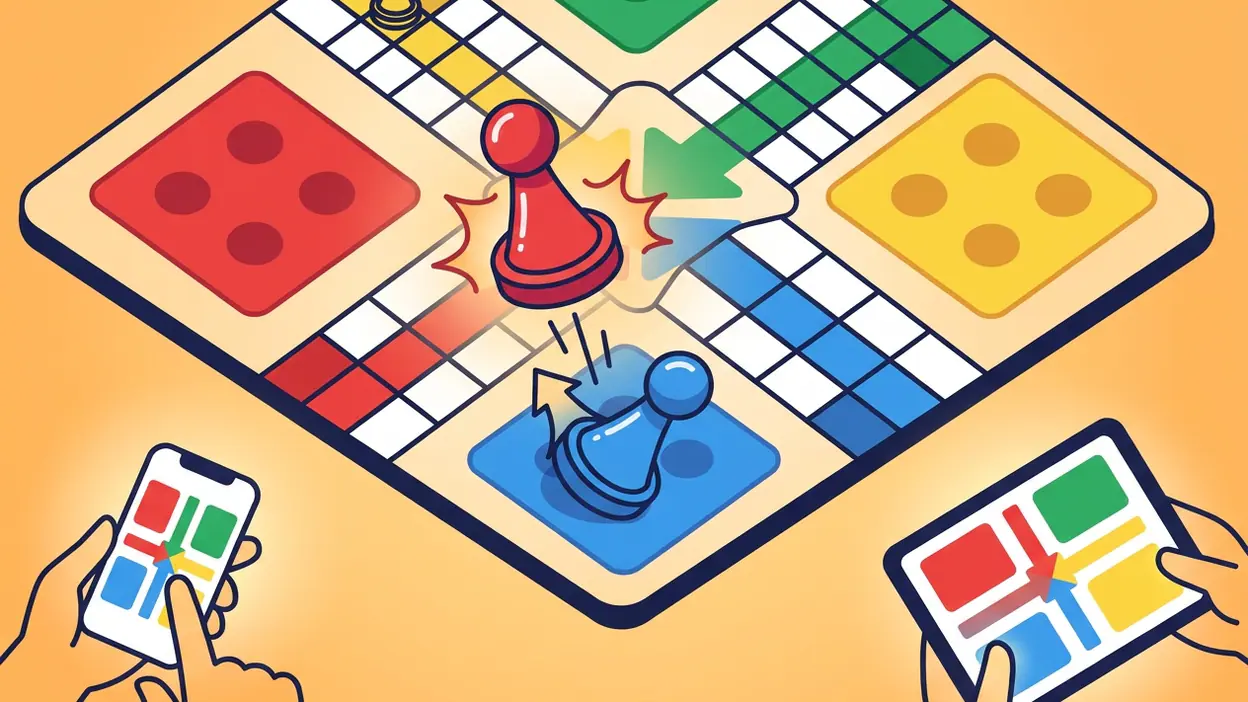
The rules are familiar: roll a six, bring a token out, circle the board, and race all four home while opponents try to send you back. The digital version packages that contest for quick sessions, with online and local play options helping players meet on the same board. A match’s rhythm is a string of small reversals: a safe stretch, a risky dash, a token knocked back, then a lucky roll that changes the mood. The board is easy to read, and the rules are easy to explain, which makes the game unusually suited to conversation while playing.
How the community forms around the board
Participation starts with an invitation
The participation model is straightforward. A player can compete against the game, sit down with people nearby, or seek an online match; private play with friends and family is especially central to the game’s social appeal. The exact options and labels can vary with platform and version, so it is better not to treat every menu as identical. What persists is the low barrier: one person who knows the rules can bring several others along without a tutorial session or a long commitment.
That simplicity distinguishes Ludo King from games whose communities depend on ranked ladders, specialist knowledge or coordinated teams. A new player does not need to study a build guide or understand a changing competitive meta. They need to know what a six does and accept that chance may undo a careful plan. This makes the game welcoming, but it also means participation is usually casual rather than an apprenticeship toward mastery.


Newcomers enter through relationships more often than through fandom. Someone shares a room or asks for a rematch; a relative who has played the tabletop version recognizes the board; a friend who has never tried it can learn by watching a turn. Online matchmaking can extend the circle beyond people already known, but meeting a stranger does not automatically create an ongoing community. The strongest handoff is still personal: an invitation with a familiar name attached.
Rituals, rematches and player contribution
Repeated play gives the game its social texture. Players often settle into a familiar sequence: open a room, wait for the usual group, trade turns while chatting, then demand one more round after a bad roll. The session may be less about proving who is best than about keeping company during a spare stretch of time. Because individual turns are brief, players can talk, tease and react between moves instead of giving the screen their uninterrupted attention.
There is a particular pleasure in the rituals of rivalry. Someone remembers the token that got sent home; another insists that the dice are biased; a rematch becomes an informal appeal against the previous result. These claims are part of the fun, not evidence of a deeper competitive system. Chance keeps the contest volatile, and a strong position can collapse quickly. Skill still matters in choosing which token to move and when to take a risk, but the dice stop any match from feeling like a clean measure of ability.
Latest News



Player contribution here is mostly social rather than creative. Players supply the jokes, house rules, invitations and shared memories that make a familiar board feel personal. They may introduce friends, build a regular group or make an ordinary evening game into a recurring appointment. I would not describe that as a creator ecosystem in the usual sense: the game’s core appeal does not depend on user-made levels, custom campaigns or a steady stream of community-built content. The players animate a stable format; they do not substantially remake it.
That distinction matters when comparing Ludo King with games such as Block Blast!, where the loop is chiefly a personal score chase, or Trivia Crack, which can make knowledge and competition the center of a session. Ludo King’s social value does not come from a public feed of achievements. It comes from being easy to bring into an existing group. The board is a meeting place, not merely a challenge to beat.
Friction, safety and the limits of the room
The same luck that creates dramatic reversals can also create friction. Getting knocked back near home is annoying; being targeted by an opponent can feel personal, especially when the group already has a running rivalry. A player who wants a deep, skill-led contest may find the dice too dominant, while a newcomer can feel exposed if regulars turn every mistake into a joke. The social mood depends on the people in the room, not just on the game’s rules.
Online play adds a different uncertainty: opponents may be strangers, and a quick match does not guarantee courteous behavior. Features, reporting options, chat controls and safety policies can change across versions and platforms, and I cannot verify every current implementation from the game’s general design alone. Players should check the controls available in their own version, particularly before arranging play for children. It is also sensible to avoid sharing personal details with people met through matchmaking. The game’s accessibility is a strength, but it should not be mistaken for a complete account of its moderation safeguards.
There is a broader limit to the community model: connections can be difficult to carry beyond the match. A private group may have a strong shared rhythm, but that activity depends on people coordinating again. Random matchmaking can fill a seat without creating a durable relationship. Ludo King does not need to solve this problem to be enjoyable, yet it does mean that its network is more like a set of rooms than a single public town square. The game helps people gather; it cannot ensure they will stay gathered.
Where the network earns its value
The network value appears whenever one player’s presence makes the game more worthwhile for another. A friend who knows the rules shortens the learning curve. A regular opponent gives a rematch meaning. A family group can make a familiar pastime available across distance, while local play can put several people around one device or session. The experience grows through participation, but it remains understandable even when nobody is building a profile or chasing a public status ladder.
That modesty is part of the appeal. Many mobile games ask players to maintain a streak, collect seasonal rewards or join a large competitive structure. Ludo King can fit into a shorter social window: play a round, laugh about the last roll, leave. It is not as rich in strategic expression as a serious board-game platform, and it does not offer the creative range of a game built around user-made content. Its strength is lower-friction company, not limitless depth.
Whether the ecosystem can last depends on the durability of the relationships around it. Ludo itself has a simple premise that does not require constant updates to remain legible, and the game can continue serving groups that want a familiar contest. But a stable ruleset is not the same as a thriving community. If friends stop inviting one another, the board alone has limited power to restore that bond. The game’s longevity is therefore partly cultural: people return because someone they know is waiting.
My verdict is that Ludo King works best as a social utility disguised as a board game. Its quick turns, recognizable rules and unpredictable finishes make it easy to share, while its strongest community rituals come from players rather than from elaborate creator tools or a sophisticated public network. That also sets a ceiling: luck can frustrate, stranger interactions require sensible caution, and the game offers less to people seeking deep mastery or lasting online ties. For families and friends who want an uncomplicated reason to gather, though, its most valuable feature is simple: it gives the group a board, a few minutes, and a fresh excuse for a rematch.