Coin Identifier - Coin Finder
- 160.00
- 4.4
- Installs
- 100.00K
- Price
- Free

Screenshots
Analysis by Reviewed
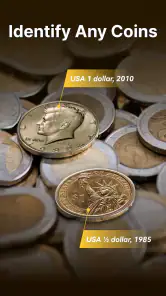
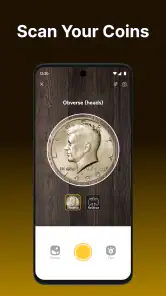
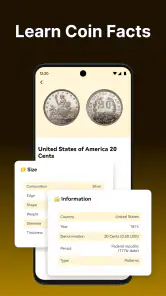
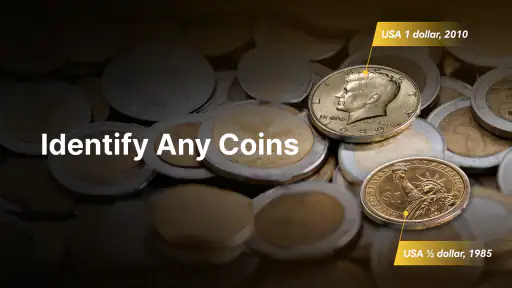
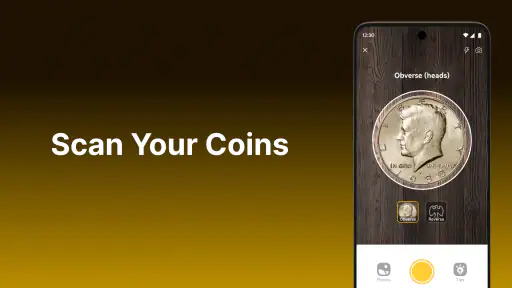
Coin collecting often begins with a small moment of curiosity: you find an unfamiliar coin in a drawer, inherit a jar from a relative, or notice an unusual design while travelling. Coin Identifier - Coin Finder, a free tools app from Smart AI DEV, is built for that exact moment. I found its appeal strongest when I wanted a quick starting point rather than a formal appraisal. You point the phone at a coin, use the identification tools, and then decide whether the result is worth investigating further.
That distinction matters. This is not the same as taking a rare coin to a professional numismatist, and I would not use an app result alone to set a selling price. Its real value is in reducing the first layer of uncertainty: what the coin might be, where it came from, and whether it deserves closer attention. For casual collectors, families, students, and anyone sorting an inherited collection, that can make the hobby feel much less intimidating.
The app sits in the Tools category and carries an Everyone age rating, so its presentation is approachable rather than specialized. It is free to install, although optional in-app purchases range from around five dollars to around fifty dollars per item. On Android, it works with version 8.0 or later. The current release is 1.3.9, and the app has built a visible audience, with over one hundred thousand installs and a 4.4 average from around 2,400 ratings.
From first scan to a useful collecting habit
Why the first week feels satisfying
During the first few sessions, the strongest part of the experience is the low barrier to entry. I did not need to know a coin's country, denomination, year, or metal before beginning. That is important because those are often the very details a beginner cannot read or interpret confidently. A coin identifier is most useful when it helps turn a vague question into a more specific one.
A simple workflow works best: place the coin on a plain, well-lit surface, keep the camera steady, and check both sides when the design is unclear. I also found it sensible to clean the surrounding area rather than the coin itself. Scrubbing an old coin can damage its surface and reduce its collector interest, so the app should be used as a reason to observe carefully, not as an excuse to polish everything before scanning.
The first-week appeal comes from discovery. A mixed handful of foreign coins can become a small catalogue of countries and dates. A family collection can be separated into recognizable groups. Even coins with little monetary value become easier to discuss when the app gives you a likely identity and a place to begin researching.
That instant feedback is especially helpful for children. Instead of handing them a dense reference book and expecting them to understand specialist terms, I can imagine using the app as a visual prompt: scan a coin, look at its design, compare it with other examples, and ask why two pieces that look similar might have different origins. The app does not replace learning, but it makes the first question easier to ask.
What the identification result is really good for
I would treat each result as a lead, not a certificate. Camera-based recognition can be affected by glare, worn lettering, unusual angles, partial views, and similar designs used across different years or countries. When a result looks surprising, the best response is to rescan, rotate the coin, inspect the edge, and compare the visible details with a trusted reference.
This is one of the most important practical habits with Coin Identifier - Coin Finder: use the app to narrow the search, then verify before making a financial decision. That approach protects you from two opposite mistakes. You may overlook an interesting coin because the first scan seems ordinary, or you may assume a common coin is valuable because the result sounds impressive.
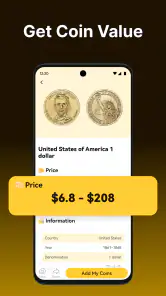
The valuation side deserves the same caution. A suggested value can be useful for organizing questions and spotting coins that merit further research, but market value depends on condition, authenticity, rarity, demand, mint errors, and sometimes the exact variety. Two coins with the same broad identity can have very different prices. I would never sell, trade, or insure a potentially valuable piece based only on an automated estimate.
A realistic everyday scenario
Imagine clearing out a grandparent's desk and finding several envelopes of coins with no labels. The practical temptation is to photograph everything quickly and hope the app creates order. A better workflow is slower: group coins by apparent country or design, scan the clearest example first, record the likely identity, and then use that information to sort the rest. If a coin appears unusual, keep it separate rather than mixing it back into the general pile.
This method turns the app into a sorting assistant. It reduces repeated guesses and gives the collection a basic structure before you spend time on specialist catalogues or local experts. I would also photograph the coin in its original condition and avoid handling it more than necessary. Even when the app is not perfectly certain, the process can reveal which pieces deserve careful attention.
Where it compares well with ordinary alternatives
The usual alternative for a beginner is a web search based on a few guessed words. That can work when the lettering is clear, but it becomes frustrating when you do not know the language, denomination, or country. Searching broad phrases such as “old silver coin” produces too many possibilities and encourages confirmation bias: you notice the result that looks valuable and ignore the details that do not match.
Printed catalogues are better for serious study, especially when you need detailed varieties and historical context, but they are slower for an unknown coin. A local dealer or numismatist offers more informed judgement, yet that option is not always nearby and may not be practical for a box of ordinary pieces. Coin Identifier - Coin Finder occupies the convenient middle ground: faster than manual searching and more accessible than an expert appointment, while still requiring human verification.
That middle position is also its limitation. If you already know how to identify coins from inscriptions, mint marks, edges, and reference numbers, the app may feel less useful. Experienced collectors may prefer specialist databases or physical catalogues because those tools support deeper comparison. The app is most convincing as a first-pass companion, not as the final authority in a specialist workflow.
What remains useful after the novelty fades
Month-to-month value depends on a real collection
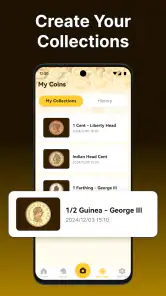
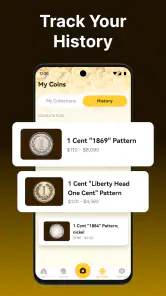
The app's recurring value is tied to whether new coins continue to enter your life. If you travel, attend flea markets, sort inherited items, or actively build a collection, identification and collection management can remain useful over time. The app gives those activities a repeatable starting point instead of making every discovery a separate research project.
For a casual user with one interesting coin, the experience may be mostly a one-day novelty. Once that coin has been identified, there may be little reason to open the app again until another unknown piece appears. That is not necessarily a flaw; it simply means the app serves an occasional need better than a daily one.
I think the collection-management aspect becomes more valuable when it supports a personal routine. After scanning, add your own note outside the app if needed: where the coin came from, who owned it, and what condition it was in when found. Provenance can matter emotionally even when it does not increase market value. A digital identification without that context can leave a family collection feeling anonymous.
Another useful habit is to separate certainty levels. Mark or note which identifications are obvious, which are probable, and which need a second opinion. This prevents an early guess from becoming an unquestioned fact months later. It also makes later research more efficient because you can focus on the uncertain pieces instead of reopening the entire collection.
The maintenance burden is modest, but attention is still required
There is no complicated setup routine that a beginner has to master before trying a scan. The real maintenance burden is physical and organizational: keep coins in sensible groups, avoid damaging them, take readable images, and revisit uncertain results. The app can help with the digital side of a collection, but it cannot compensate for poor handling or incomplete observation.
Lighting deserves more attention than many new users expect. Metallic surfaces reflect lamps and windows, creating bright patches that hide lettering. Diffuse daylight is usually easier to work with than a harsh overhead light. Placing the coin flat, keeping the phone parallel to it, and taking separate views of the front and back can improve the quality of the information available to the recognition system.
Do not assume that a visually attractive coin is automatically rare. Modern commemoratives, foreign currency, and heavily worn historical pieces can all look unusual to someone unfamiliar with them. The most reliable maintenance habit is to preserve the original condition and keep the app's result alongside your own observations rather than letting the result replace them.
For a larger collection, organization can become the deciding factor. Scanning hundreds of coins without a naming system creates a second mess. I would use consistent labels based on country, denomination, year, and confidence in the identification. If the built-in collection tools do not match the level of detail you want, a separate spreadsheet or notes app may still be necessary. That is a trade-off worth accepting if your collection is growing beyond casual size.
Where fatigue can set in
The first source of fatigue is repeated scanning. The excitement of discovering one unfamiliar coin does not necessarily survive a long session of nearly identical pieces. If you have a large jar, I would not scan every common-looking coin immediately. Sort first, identify one representative example from each group, and reserve individual scans for pieces with different dates, marks, designs, or conditions.
The second source is uncertainty. A result that changes because the image angle changed can make the process feel less dependable. Rather than repeatedly photographing the same coin without a plan, capture the details that distinguish possibilities: the full design, the date, the lettering, the edge, and any small mark near the main image. If the coin remains ambiguous, that is the point to consult a specialist reference instead of spending more time chasing a definitive automated answer.
Optional purchases may also affect how comfortable the app feels over a longer period. The app is free, but the presence of items priced from around five dollars to around fifty dollars means users should pay attention before committing to anything. I would begin with the free experience, decide whether identification and collection management genuinely fit my routine, and only then consider whether an optional purchase solves a problem I actually have.
There is also a psychological fatigue that comes from focusing too heavily on value. Coin collecting is often more rewarding when history, design, family connection, and geography are part of the interest. If every scan becomes a hunt for a rare windfall, ordinary coins quickly seem disappointing. The app works better when it supports curiosity first and valuation second.
Who should use it, and who should skip it?
I would recommend it to beginners who want a friendly entry point, families sorting inherited coins, travellers trying to understand unfamiliar currency, and casual collectors who need a quick way to organize discoveries. It is also useful for someone preparing a shortlist of pieces to take to a dealer or specialist, because it can make that first sorting stage less chaotic.
I would be more cautious about recommending it to professional sellers, advanced collectors, or anyone making a high-stakes purchase. Those users need exact variety identification, condition grading, authentication, and current market evidence. A general identification app cannot replace those requirements. If your main goal is a defensible appraisal, a specialist service is the better option.
Privacy-conscious users should also make their own comfort decision before photographing personal collections. I would avoid including identifying documents, home addresses, or other unrelated objects in the frame. A clean, tightly framed coin image is better for recognition and keeps the task focused.
Does it earn permanent space on my phone?
For me, the answer is conditional but positive. Coin Identifier - Coin Finder earns lasting space when I am actively sorting coins or expect to encounter unfamiliar ones regularly. Its strongest long-term role is not constant entertainment; it is a practical reference point that shortens the distance between “I have no idea what this is” and “I know what to investigate next.”
The app's audience size and 4.4 average suggest that many users find that basic promise worthwhile, but those numbers do not remove the need for sensible judgement. The developer, Smart AI DEV, has positioned the product as a straightforward tool rather than an academic catalogue, and that focus suits its best use. I would keep it installed for household sorting, travel, and early-stage collecting, while relying on specialist sources for important decisions.
My final advice is to build a small routine around it: photograph carefully, scan both sides, record the likely identity, keep uncertain coins separate, and never clean a potentially old piece just to improve recognition. Used that way, the app remains useful after the first-week excitement because it becomes part of a repeatable collecting habit. If you only have one coin and do not expect another, it may be a temporary helper. If unknown coins regularly cross your path, Coin Identifier - Coin Finder is a sensible free starting point, provided you remember that identification is the beginning of research, not the end.
Pros
- Quickly identifies many common coins from a phone photo.
- Useful reference for checking coin names
- countries
- and basic details.
- Simple interface makes searches easy for beginners.
- Portable tool for collectors
- travelers
- and casual coin enthusiasts.
- Can help organize initial research before consulting specialist sources.
Cons
- Photo results may be inaccurate for rare
- damaged
- or poorly lit coins.
- Estimated values can differ greatly from real auction or dealer prices.
- Requires a clear image and may struggle with worn inscriptions.
- Some useful features may be restricted by ads or in-app purchases.
- Should not replace professional authentication for valuable coins.

- Category
- Tools
- Version
- 1.3.9