Busuu: Learn & Speak Languages
- 17.51K
- 4.7
- Installs
- 50.00M
- Price
- Free

Screenshots






Analysis by Reviewed
I tend to judge a language app by what happens after the first burst of enthusiasm: can I fit it into a real day, and does it help me do more than recognize a few words? Busuu: Learn & Speak Languages is an education app from Busuu that aims to make language practice manageable through structured lessons and interaction with other learners. In my experience, its biggest appeal is that it gives a beginner somewhere clear to start without making every study session feel like a major commitment.
Getting Started with Busuu
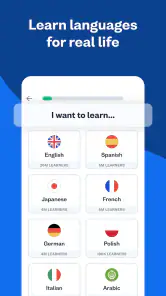
Diving into Busuu is like entering a world of endless possibilities. Right from the get-go, the app greets you with a friendly interface that doesn’t intimidate. You’re prompted to select the language you wish to learn, and with choices ranging from Spanish to Chinese, it feels like the world is literally at your fingertips.
Once you’ve chosen your language, Busuu takes you on a personalized learning journey. What’s cool is that it doesn’t just throw random words at you. Instead, it tailors lessons based on your goals. Want to learn for travel? Or just a hobby? Busuu has got your back!
Features That Stand Out
The app isn’t just about rote learning. It incorporates a variety of features that make learning engaging and, dare I say, fun. You’ve got grammar lessons, vocabulary exercises, and even dialogue simulations with native speakers. The dialogues are a game-changer! They make you feel like you’re actually conversing with someone from a different country.
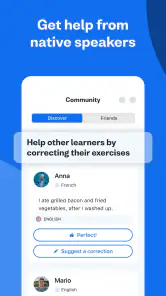
One feature that I particularly love is the community aspect. You can connect with other learners globally, and native speakers can correct your exercises. It’s like having a personal tutor without the hefty price tag!
Making Practice Fit a Real Day
The most useful way I’d fit Busuu into a busy routine is to give each session a small job. On a commute, I might review familiar vocabulary; later, with a little more focus, I’d work through a grammar explanation or a dialogue. That split matters: quick repetition is convenient, but speaking and writing benefit from a quieter moment when I can pay attention rather than tap through in a hurry.
If I were preparing for a trip, I’d use the goal-oriented lessons as a starting point, then keep a short list of phrases I actually expect to need: asking for directions, ordering food, or explaining a problem. A course can build useful foundations, but rehearsing a practical exchange aloud helps reveal whether I can retrieve the words without staring at the screen. That is a better test than simply recognizing a correct answer.
More From Our News Desk

Weather by Xiaomi Review: Clear at a Glance, Less Clear Up Close

X Under Pressure: Can It Recover When Posting Goes Wrong?

Clash of Clans Is Won Between the Battles

Android Auto Makes the Case for Quieter Car Software

MobiOffice: Transforming Mobile Productivity with Seamless Integration

EA SPORTS FC™ Mobile Soccer: Redefining Mobile Sports Gaming
Where It Fits Among Language Apps
Compared with a flashcard-only tool, Busuu offers a broader path through vocabulary, grammar, and dialogue practice, so I’d choose it when I want lessons to connect rather than collect isolated words. A dictionary or translation app is still quicker when I need one phrase immediately, while a live tutor is a better fit for sustained conversation and detailed personal feedback. Busuu sits between those options: more guided than self-made flashcards, but not a substitute for regular conversation with a person.
The community corrections are most valuable when I treat them as feedback on a real attempt, not as an instant answer key. I’d write a sentence or record an exercise carefully, then review the correction later and note the reason for it. This makes the social element useful for learning rather than just encouraging me to submit work and move on. It also means the experience depends partly on being willing to participate and learn from other people’s responses.
Speed, Stability, and Device Fit
For short study sessions, the lesson-sized format makes the app feel suited to quick check-ins rather than long, uninterrupted classes. I wouldn’t assume that every activity is equally comfortable to do while walking or in a noisy place: anything that asks for close attention or a spoken response is better saved for when I can focus. If a page or exercise feels slow, I’d first check the connection and reopen the activity before deciding the whole course is unreliable; that is a sensible recovery step, not a guarantee that every slowdown has the same cause.
Busuu is free to start, and in-app purchases range from $0.99 to $169.99 per item, so I’d check the purchase details in the app before committing to anything. It has a 4.7 average from around 1.1 million ratings, and has been installed over 50 million times. It is suitable for everyone, and its current version is 32.26.0(1499641), with Android 9 as the minimum operating system. Those figures suggest a widely used app, but they don’t tell me whether it will feel light on every device; older or slower phones may make any lesson with several interactive steps less comfortable, so I’d try a short session before settling into a routine.
Why I Love It
Alright, personal opinion time. What I absolutely adore about Busuu is its flexibility. Whether you’re on a quick coffee break or lounging at home, you can squeeze in a lesson. The app tracks your progress and even sends you reminders to keep up with your learning streak. It’s like having a little language coach in your pocket.
Another thing is the quality of content. The lessons are well-structured and bite-sized, which means you’re never overwhelmed. Plus, the app’s design is sleek and intuitive, making navigation a breeze.
Getting More From Each Lesson
A practical way to use the course is to pause at the end of a session and choose one expression you could use outside the app. I’d say it from memory, then make a different sentence with it instead of simply repeating the example. That small change checks whether I understand how the phrase works, not just whether I can recognize it in the same context. It is especially useful for travel preparation, where a memorized line can fall apart as soon as the other person replies differently.
I’d also avoid treating a completed lesson as proof that the material is settled. The next time I open the app, I’d spend a moment retrieving a few older words before moving forward. This is a simple way to turn brief sessions into a connected routine, and it helps me notice which material needs another pass. If I only have a couple of minutes, reviewing is a worthwhile use of that time; if I have a quiet stretch, I can give a new dialogue or grammar point proper attention.
Choosing a Routine That Holds Up
For someone balancing work or school, a realistic pattern might be a short review during a break and a more attentive lesson at home. I would keep the goal modest enough to survive a busy week rather than plan ambitious study blocks that are easy to abandon. The app’s reminders can help me remember, but I wouldn’t let a streak decide whether a session is useful. A distracted tap-through may preserve a habit marker while doing little for actual recall.
If I were learning with a specific deadline, such as an upcoming trip, I’d pair the guided course with situations I expect to face and practice answers as well as questions. That exposes gaps the app’s exercises alone may not reveal: I might recognize a phrase but struggle to produce it without choices on the screen. For a broader goal, such as becoming comfortable with a language over time, I’d give myself room to revisit lessons instead of racing through them.
When Another Approach Makes More Sense
Busuu’s structure is a benefit when I want a route through the material, but it can feel restrictive if I already know exactly what I want to study. Someone who only needs a specialized vocabulary list for work may prefer a tool built around custom flashcards. A learner who wants immediate back-and-forth conversation may get more value from booking a human tutor or joining a conversation group. I see Busuu as a useful bridge between solitary drills and real conversation, not a replacement for either in every situation.
It is also worth thinking about how much feedback I want and how I respond to it. Community corrections offer a chance to see how another speaker reacts to my writing or exercise, but they are not the same as a teacher guiding a lesson in real time. I’d use them to spot patterns, ask myself why a correction makes sense, and then try again. If I prefer private, fully self-paced study and don’t want to submit work for other people to review, that social layer may be less appealing.
Who Should Choose It—and Who Might Not
I’d recommend Busuu to a beginner who wants a guided route, a returning learner who needs structure, or a traveler who can spare a few minutes most days. It is also a sensible choice if you enjoy learning from corrections and can be patient with feedback from a community rather than expecting a teacher to respond on demand. The app was released on July 29, 2011, and its long presence has helped make it a familiar option, though longevity alone is no promise that a particular course or study style will suit you.
I’d look elsewhere if my main goal were spontaneous conversation practice with a live instructor, or if I wanted a completely self-designed deck of words with no course sequence. Those approaches serve different needs. If I were unsure about paying for extras, I’d begin with the free experience, see whether the lesson rhythm and correction process actually suit me, and only then consider an in-app purchase. That makes the decision depend on my own habits, not on a streak or a brief burst of motivation.
The Performance Verdict
My overall impression is that Busuu is best treated as a steady study companion, not an app I need to leave open for long stretches. Its short lesson format makes it easy to return to, while the more demanding activities deserve a calm setting and a reliable connection. On a device that meets its Android requirement, I’d still judge comfort by trying the lessons I expect to use: a phone can meet a minimum operating-system requirement and still feel sluggish if it is older or already under strain.
If an exercise stalls, I’d give it a moment, check connectivity, and reopen it before repeating the same action again and again. That keeps a temporary hiccup from turning into a frustrating session. I would not use one slow screen as proof that the whole app is unstable, but repeated delays on my own device would be a good reason to shorten sessions or choose a lighter study method. The useful verdict is personal: test the workflow you need, not just the welcome screen.
The Final Word
In a world where language barriers are becoming a thing of the past, apps like Busuu: Learn & Speak Languages are making a significant impact. It’s not just an app; it’s a community, a learning partner, and a doorway to new cultures.
If you’re serious about picking up a new language or just want to dabble and see how it goes, give Busuu a try. Who knows? You might just find yourself planning your next trip abroad to test your newfound skills!
Busuu: Learn & Speak Languages Frequently Asked Questions
Is Busuu free to download, and what does the free version include?
Busuu is free to download, so you can install the app and explore its language-learning experience without an upfront purchase. The app also offers in-app purchases, and some options may provide access to additional features or content. Check the choices displayed in the app before committing, so you can decide whether the free experience suits your learning needs.
Which devices and operating systems can run Busuu?
Busuu is a language-learning app for mobile devices, and it is available for Android and iOS. Before installing, check that your device meets the operating system requirement; the current Android version requires Android 9 or later. The app is designed for learning on the go, so you can use it as part of a study routine wherever you take your phone or tablet.
Is Busuu available for both Android and iOS?
Busuu is a language-learning app for mobile devices, and it is available to download for Android and iOS. Before installing, check that your device meets the operating system requirement; the current Android version requires Android 9 or later. The app is designed for learning on the go, so you can use it as part of a study routine wherever you take your phone or tablet.
Who is Busuu for, and what can I use it to learn?
Busuu is an education app for people who want to build language skills, whether they are starting from scratch or looking to develop skills they already have. Its store description highlights learning Spanish, Japanese, French, English, German, and more. The app focuses on guided language study and practice, making it useful for learners who prefer a dedicated app rather than relying only on general reference material.
What languages can I learn with Busuu?
Busuu offers a diverse range of languages for learners, including popular options like Spanish, French, German, Italian, and English. Additionally, it provides courses for languages such as Chinese, Japanese, Arabic, Russian, Portuguese, and many more. This makes it an excellent choice for anyone looking to learn a new language from a selection of over 12 languages.
Pros
- Wide variety of languages offered.
- Interactive and engaging lessons.
- Personalized learning paths.
- Offline mode available.
- Speech recognition feature.
Cons
- Limited free content.
- Some languages lack depth.
- Occasional app glitches.
- Subscription can be pricey.
- Requires internet for updates.
- Category
- Education
- Version
- 32.26.0(1499641)