Bible Audio - KJV Daily Verse
- 895.00
- 4.8
- Installs
- 1.00M
- Price
- Free

Screenshots


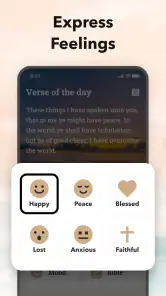
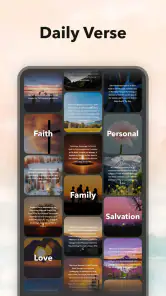
Analysis by Reviewed
I approached Bible Audio - KJV Daily Verse as a practical reading and listening tool rather than just another digital Bible. It belongs to the Books & Reference category, comes from Efficient Tools, and focuses on the King James Version, daily verse reading, Bible study, and audio access. That combination makes it especially interesting for people who move between quiet reading and listening during an ordinary day.
My first impression was that the app is aimed at reducing the effort between wanting to read Scripture and actually opening it. The layout is more useful when I treat it as a personal reference shelf: I can read a passage, use audio when my eyes are busy, and return to a daily verse when I only have a short break. It is free to install and suitable for Everyone, although optional in-app purchases range from $2.99 to $29.99 per item, so I would pay attention to any purchase prompts before committing to extras.
The app has built a strong audience, with a 4.8 average from around 12 thousand ratings and over 1 million installs. Those figures do not replace personal testing, but they do suggest that the straightforward Bible-and-audio format is working for many users. The current version is 1.0.28 and it runs on Android 8.0 or later, which makes it accessible on a wide range of still-used phones.
How connectivity changes the reading and listening experience
Where a connection matters most
The most important practical question is not whether a Bible app looks attractive, but how it behaves when the phone is connected, disconnected, or switching between networks. In my use, I found it useful to think of the app in separate activities. Reading a passage is one task, listening is another, and opening a daily verse is a third. They do not all place the same demands on a mobile connection.
When I am online, the experience feels most convenient for browsing and moving around. A stable connection is helpful when I want to explore beyond the verse that first appears, start an audio session, or make a quick change of direction. This is the kind of use that suits a lunch break or a study period at home, where I can take my time and avoid interrupting the process with repeated loading.
Audio is the area where connectivity deserves the most attention. Listening is more sensitive to interruptions than reading because a weak signal can break the rhythm of a passage. I would not begin a longer listening session while walking through places where the network regularly drops unless I had already checked how the app handles the content I want. That is not a criticism of the Bible text itself; it is simply the reality that audio makes network changes more noticeable than a static page.
A useful habit is to open the exact passage before leaving a reliable connection. That does not guarantee that every part of the listening experience will remain available, so I would still test the routine on my own phone and network. The benefit is that I am not discovering the problem halfway through a commute, when I have no patience for troubleshooting.
More From Our News Desk

Clash of Clans Is Won Between the Battles

Android Auto Makes the Case for Quieter Car Software

MobiOffice: Transforming Mobile Productivity with Seamless Integration

EA SPORTS FC™ Mobile Soccer: Redefining Mobile Sports Gaming

How Microsoft OneDrive Became a Mobile Productivity Giant

How Google Translate Breaks Language Barriers Effortlessly
Daily verse use on a busy phone
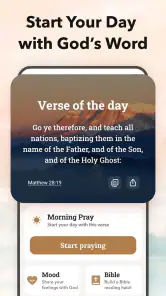
The daily verse concept works best for short, repeatable moments rather than deep study. I can imagine checking it while waiting for an appointment, during a morning coffee, or before putting the phone away at night. These moments are often shaped by connectivity: a strong signal makes opening content feel effortless, while a poor one can turn a brief pause into a frustrating wait.
For that reason, I prefer not to make the daily verse my only way of using the app. If I have a few minutes and the connection is unreliable, reading a passage that is already accessible is a better plan than repeatedly refreshing a screen. The daily feature is valuable as a prompt, but a dependable personal routine should not depend entirely on perfect network conditions.
There is also a small mental advantage to separating discovery from study. I use the daily verse as a starting point, then move to a longer reading session when I have enough time and a stable connection. That prevents the short feature from becoming a substitute for context. A single verse can be encouraging, but the surrounding chapter is often where the meaning becomes clearer.
Using it in mobile situations
This app makes the most sense on a phone because its main strengths fit small gaps in the day. I would use the reading side when I am sitting on public transport, waiting in a queue, or taking a quiet break. I would choose audio when I am doing a simple household task and want to listen without holding the screen constantly.
Audio also changes how I think about battery and attention. Even when the network is good, listening asks more from the phone than briefly reading a verse. I would avoid starting a long session when the battery is already low, especially if I still need the phone for navigation or emergency calls. The app is convenient, but it does not remove the basic trade-off between media use and remaining battery life.
In a realistic morning scenario, I might read the daily verse at home, then listen to a selected passage while preparing breakfast. If I leave for work afterward, I would not assume that the same session will continue perfectly through every part of the journey. I would either finish the short listening segment before leaving or confirm that the content behaves as expected when the connection changes. That simple adjustment makes the experience less fragile.
The phone’s screen size also affects the best use case. For quick reading, it is comfortable enough, but extended comparison of passages is less natural than on a larger screen or in a printed Bible. I would not choose this app as my only tool for a group study where several people need to inspect pages together. It is better as a personal companion that travels with me.
What happens when the connection fails
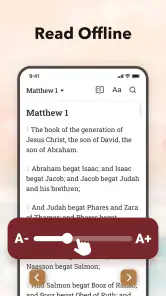
Network failure is where expectations need to be realistic. The store summary presents the app as including offline audio Bible use, but I still recommend treating offline access as something to verify through actual preparation rather than assuming every passage and listening action will be ready automatically. Before relying on it during travel, I would test the exact book, chapter, and audio behavior with connectivity disabled.
That test is more useful than a general check because different actions can behave differently. A verse that opens quickly may not tell me whether an audio session will start later. Likewise, a passage that appeared once may not prove that the app will recover after the phone has been restarted. I would test once at home, then repeat the check in the setting where I plan to use it.
If a session stops, my first recovery step would be simple: check whether the phone has moved from Wi-Fi to mobile data or lost both, then return to the passage instead of repeatedly pressing play. If the connection is available again, reopening the selected content may be more effective than waiting on a stalled screen. I also prefer keeping the app updated, since the developer, Efficient Tools, may address behavior changes through later releases.
The current version, 1.0.28, is worth noting for troubleshooting because support instructions and screen behavior can change between versions. If I were helping a family member, I would ask which Android version and app version they use before assuming we are seeing the same problem. The minimum requirement of Android 8.0 means older devices may still qualify, but age, storage, and network performance can make the experience feel different from one phone to another.
Recovery is less stressful when I have a backup plan. For a long trip, I would carry a printed reading plan or know which passages I want before leaving. That is not because the app is unsuitable for travel; it is because no phone-based listening routine should be the only option when the signal is unpredictable. The strongest setup combines the convenience of the app with a little preparation.
Keeping mobile data under control
If I am using mobile data, I would reserve audio for situations where it adds real value and use reading for quick checks. Audio can turn a short verse visit into a longer session, so it is easier to lose track of data use than when reading text. Anyone with a limited plan should test a brief session and check the phone’s own data controls rather than guessing.
Wi-Fi is the sensible choice for preparing a longer listening routine. I would also avoid repeatedly starting and stopping audio while moving between weak and strong signals, since that creates a poor experience and may use more data than a planned session. A focused listening block is easier to manage than many accidental starts throughout the day.
The app’s free entry point is helpful for trying this routine without paying first. At the same time, the presence of optional purchases means I would distinguish between what I can use at no cost and what may require payment. I would not buy an extra simply because I was trying to solve a connection problem; first I would determine whether the issue is network-related, device-related, or connected to the particular content I selected.
For parents or shared devices, the Everyone rating makes the app broadly approachable, but I would still review purchase settings on the phone. Age suitability and spending control are separate questions. A child can use an age-appropriate reference app while the account holder still needs to manage optional purchases responsibly.
Reading compared with usual alternatives
Compared with a printed KJV Bible, this app is lighter and more flexible. It gives me a daily entry point and an audio option without carrying a physical book. The trade-off is that I am dependent on the phone, its battery, its screen, and the way connectivity affects the session. A printed Bible remains more predictable when I want uninterrupted reading.
Compared with a general e-reader, the app is more focused on Bible use and audio listening. I would choose it when I want a dedicated Scripture routine rather than a broad library. A general e-reader may be better for someone who wants novels, study books, and several reference sources in the same place. This app is not trying to replace that wider reading environment.
Compared with a web search, the dedicated app feels more intentional. Searching the web can be fast for finding a quotation, but it tends to introduce distractions and depends heavily on a live connection. Here, the daily verse and Bible-centered presentation encourage a more focused visit. The limitation is that people who need extensive cross-referencing, academic notes, or a large collection of translations may prefer a more specialized study platform.
That distinction matters for choosing the right tool. I would recommend this app to someone who wants KJV reading, a daily prompt, and audio in one uncomplicated place. I would skip it in favor of another option if my priority were detailed scholarly research, side-by-side translation comparison, or a full digital library. Its value comes from focus, not from trying to cover every possible study method.
Small workflow choices that improve the experience
My first practical tip is to decide whether a session is for reading, listening, or discovery before opening the app. If I am only checking a verse, I do not need to begin an audio session. If I want a longer listening period, I prepare the passage while connected and avoid changing tasks repeatedly. This simple separation makes the app feel faster and reduces unnecessary network dependence.
My second tip is to test travel use in advance. I would select a passage, begin the audio, turn off connectivity, and see what remains usable. Then I would close and reopen the app to check whether my assumption still holds. This is a more reliable preparation method than trusting a short successful test at home.
My third tip is to use the daily verse as a doorway into context. After reading it, I would continue into the surrounding passage when time allows, especially if the wording feels unfamiliar. The KJV style can be rewarding, but its older language may require slower reading for people who are more accustomed to contemporary English. Audio can help with flow, although listening alone may make unfamiliar phrases easier to miss.
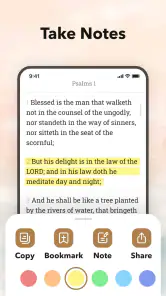
A fourth useful habit is to keep a manual note of passages I want to revisit if the app does not provide the kind of study organization I need. I would not assume that a daily verse tool replaces a personal reading plan or a separate note-taking system. The app works well as the reading and listening layer; a notebook or another trusted method can handle long-term reflection.
These details also show where friction remains. The app is convenient when my goal is clear, but it is less ideal when I want a complex research workflow. Connectivity can influence audio more than text, and mobile conditions can expose interruptions that are invisible during a short home test. Those are manageable limitations, but they are important for anyone expecting a completely self-contained study environment.
Who will appreciate it most
I think the best audience is someone who already values the King James Version and wants a simple way to keep it close throughout the day. It also suits listeners who prefer hearing Scripture while doing light tasks, provided they prepare for network changes and keep an eye on battery and data use.
It can be a good fit for a person beginning a daily Bible habit because the daily verse gives the routine a clear starting point. The free installation lowers the barrier to trying it, and the Everyone rating makes it broadly suitable in terms of age classification. Still, beginners should not feel pressured to treat one verse as a complete study session; reading the surrounding context remains the better habit.
I would be more cautious about recommending it as the main tool for advanced students, pastors, or researchers who need extensive annotations, original-language resources, or several translations side by side. Those users may find a dedicated study app more efficient. Likewise, anyone with highly restricted mobile data should make the audio workflow fit their plan before relying on it regularly.
My connectivity verdict
After looking at the app through the lens of real phone use, I see Bible Audio - KJV Daily Verse as a focused companion rather than a complete replacement for every Bible resource. Its strongest qualities are the combination of KJV text, daily encouragement, and audio in a format that fits short breaks and ordinary routines. Its main friction comes from the practical realities around mobile connectivity, audio continuity, battery, and data.
The best way to use it is to prepare deliberately, then let the app support your routine rather than control it. Read when the connection is uncertain, listen when the network and battery are comfortable, and test the passages you expect to use away from home. That approach makes the experience more dependable without asking the app to do more than it is designed to do.
For me, the free starting point makes it worth trying if the KJV is the translation I want and audio matters to my routine. I would keep another reading method available for long journeys, serious study, or moments when the phone is not the right tool. Within its narrower purpose, however, Efficient Tools has created a useful Books & Reference app for people who want Scripture available in both written and spoken form.
Bible Audio - KJV Daily Verse Frequently Asked Questions
Who develops Bible Audio - KJV Daily Verse, and what devices can run it?
Bible Audio - KJV Daily Verse is developed by Efficient Tools and is listed in the Books & Reference category. Its current version is 1.0.28, and it requires Android 8.0 or later. Checking your device’s operating system before downloading can help avoid compatibility issues. The app is rated for Everyone, so its content is intended for a broad audience.
What is Bible Audio - KJV Daily Verse?
Bible Audio - KJV Daily Verse is a devotional Bible app centered on the King James Version (KJV). It combines readable scripture with audio playback and daily verse content, making it useful for personal study, prayer, or listening while traveling. The app is designed for users who prefer the traditional language of the KJV and want convenient access to biblical passages on a mobile device.
Can I listen to the Bible without reading the text?
Yes, the app’s audio feature allows you to listen to Bible passages instead of relying only on on-screen reading. This can be helpful during commutes, quiet reflection, or when your eyes are occupied. Playback controls may vary depending on the version of the app and device, so it is worth checking whether background listening, chapter selection, and other audio options are available before downloading.
Does the app include the complete King James Bible?
Bible Audio - KJV Daily Verse is intended for users looking for KJV scripture and daily devotional access, but the exact selection of books, chapters, and supporting material can differ between app versions. Before installing, review the store description and screenshots to confirm whether the complete Old and New Testaments are included, along with the specific audio coverage you expect.
Does Bible Audio - KJV Daily Verse require an internet connection?
An internet connection may be needed for the initial download, advertisements, updates, or streaming audio, depending on how the app stores its content. Some versions may allow certain passages or audio files to be accessed offline after they have been downloaded, while others may require continuous connectivity. Check the app’s listing and permissions to understand its offline capabilities.
Pros
- Offline audio access is useful when traveling or dealing with limited connectivity.
- Daily verse reminders can help establish a consistent Bible-reading routine.
- Simple navigation makes it approachable for users of different ages.
- KJV wording preserves the traditional language many readers prefer.
- Audio playback offers a convenient option for multitasking or accessibility needs.
Cons
- The KJV’s older English may be difficult for readers unfamiliar with archaic wording.
- Audio quality and narration style may vary depending on the selected recording.
- Frequent notifications could feel distracting if reminder settings are limited.
- Some features or content may require an internet connection to load properly.
- The app may feel basic for users seeking study notes
- commentaries
- or multiple translations.

- Category
- Books & Reference
- Version
- 1.0.28