AntiqSnap: Antique Identifier
- 1.53K
- 4.6
- Installs
- 1.00M
- Price
- Free
Screenshots
Analysis by Reviewed
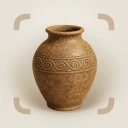
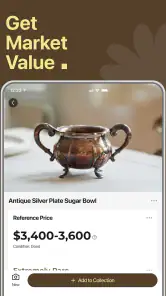
I found AntiqSnap: Antique Identifier appealing for a very practical reason: it turns the first step of investigating an unfamiliar object into something I can do with my phone. Instead of immediately searching through broad image results or trying to describe an old vase, watch, chair, coin, or decorative piece in the right words, I can begin with a photograph and use the app as an organizing and valuation aid. That makes it especially interesting for people who inherit household items, browse flea markets, collect curiosities, or simply want more context before deciding what to keep.
My first impression was that this is not really a replacement for an experienced dealer, auction specialist, or conservator. Its value is more practical: it helps me create a starting point, gather objects in one place, and think about possible market value without turning every discovery into a research project. The app is free to install, is rated for Everyone, and comes from Next Vision Limited. Its store summary focuses on identifying antiques, estimating market value, and organizing a collection, which is a useful combination because these jobs are closely connected in real life.
The important question, though, is whether that initial curiosity lasts. An identification tool can be exciting for a weekend and then disappear from the home screen. I paid attention to what would make this useful repeatedly: how much effort it takes to record an item, whether the valuation information changes what I do next, and whether collection organization feels like a genuine habit rather than an extra chore.
From quick discoveries to a more useful collection habit
I see the shift from a quick identification to a collection habit as a change in how I use the app, not as proof that any particular feature has changed. A useful next step is to decide what I want each record to help me do—compare a possible purchase, preserve a family story, or prepare an item for closer research. That purpose makes it easier to keep the collection focused and leads naturally to considering how the current app fits into that routine.
The first week: fast answers, but not final answers
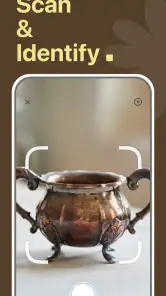
During the first week, the strongest appeal is the low barrier to starting. When I encounter an object I cannot name, taking a picture feels more natural than opening several search tabs and guessing terms. That matters with antiques because the wrong vocabulary can send research in completely the wrong direction. A piece that looks like a serving dish may be a decorative object, a reproduction, or part of a larger set. Beginning visually gives me a more sensible route into the subject.
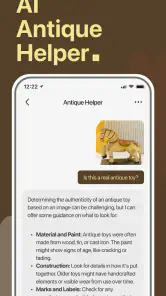
I would use the app in short sessions rather than treating it like a formal appraisal appointment. At a market, I might photograph an item, note the result, and decide whether it deserves closer inspection. At home, I could work through a box of inherited objects one at a time. The most useful mindset is to treat each result as a lead: it can suggest what the object might be and what kind of market information is relevant, but it should not be the only reason I pay a high price or sell something valuable.
A realistic example is an inherited cabinet filled with mixed household pieces. I might use the app to separate obvious modern items from objects that appear worth researching further. That saves time because I can reserve detailed manual research for the pieces that show signs of age, unusual design, a maker’s mark, or a connection to a recognizable style. The app becomes a filter for attention, not a magic authenticity certificate.
More From Our News Desk

Weather by Xiaomi Review: Clear at a Glance, Less Clear Up Close

X Under Pressure: Can It Recover When Posting Goes Wrong?

Clash of Clans Is Won Between the Battles

Android Auto Makes the Case for Quieter Car Software

MobiOffice: Transforming Mobile Productivity with Seamless Integration

EA SPORTS FC™ Mobile Soccer: Redefining Mobile Sports Gaming
Photography technique makes a bigger difference than I expected from this kind of tool. I get more useful results when the object is well lit, fills much of the frame, and is shown without distracting clutter. For a marked object, I would capture the mark separately rather than relying on one distant image. A second photograph showing the back, base, clasp, underside, or construction detail can also prevent me from forming an opinion based only on the most attractive angle.
This is one of the app’s less obvious lessons: identification and valuation are only as good as the evidence I provide. A decorative front may suggest one category, while the underside reveals a modern manufacturing detail. I would photograph both. I would also avoid polishing an item before documenting it, since cleaning can remove surface information and may reduce historical value. The app cannot compensate for evidence that has already been altered or hidden.
What the market-value feature can and cannot do
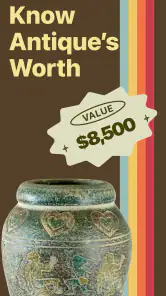
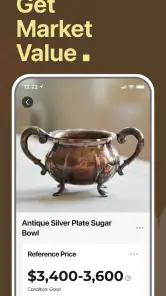
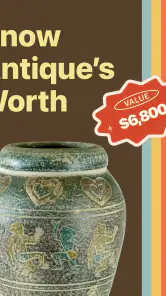
The market-value element is useful because it gives me a financial frame for further research. It helps answer a basic question: is this object worth spending more time on? That is different from asking whether it has emotional, historical, or family value. A mass-produced item may have limited resale interest but still be meaningful, while an attractive antique may be difficult to sell because condition, location, demand, and provenance all matter.
I would therefore use the estimate as a screening figure rather than a promise. Before selling, I would compare the result with several current listings or seek an opinion from a specialist who can inspect the object directly. Auction prices can vary depending on timing and buyer interest, and asking prices are not the same as completed sales. The app is most helpful when it tells me what to investigate next, not when it encourages me to assume that a displayed value is guaranteed.
There is also a practical trade-off between speed and certainty. A quick app-based assessment is convenient when I have a large number of objects, but a specialist may notice repairs, replaced parts, reproductions, or condition problems that a photograph cannot establish reliably. If I am considering an expensive purchase, insuring a valuable collection, dividing an estate, or selling an item with possible historical importance, I would choose professional evaluation over relying on a phone-based result alone.
Organizing objects instead of losing the research
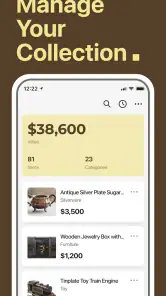
The collection side is where AntiqSnap can earn more lasting space. Identification is a one-time moment, but organization gives me a reason to return. Without a place to keep photographs and notes, research quickly becomes scattered across the camera roll, browser history, and scraps of paper. A collection record can preserve the context that makes an object useful later: where I found it, who owned it, what marks it carries, and what questions remain unanswered.
I would create a simple routine for each item. First, I would photograph the complete object. Next, I would capture identifying details such as signatures, labels, stamps, damage, and construction. Then I would record my own note about the source and condition before moving on. This workflow is more valuable than taking a single attractive picture because it creates a reference record that can support future comparison.
One particularly useful habit is separating observation from interpretation. In my notes, I would write “blue glaze, worn edge, stamped mark underneath” before writing “possibly European ceramic.” That keeps guesses from becoming accidental facts. If I revisit the item later, I can compare new research with what I actually saw. This is a small discipline, but it reduces confirmation bias, especially when an early identification sounds exciting.
For a family collection, I would also add ownership and story details while they are still available. An object’s background can matter as much as its appearance. A photograph of a relative using a piece, an old receipt, or a note about where it came from may not change an automated identification, but it can add provenance and personal meaning. The app is more useful when I treat it as a living inventory rather than a gallery of disconnected images.
Month-to-month value: when the novelty has to prove itself
After the first month, the app’s value depends on whether I keep encountering objects that need sorting, documenting, or comparing. It is naturally more useful for collectors, antique-market regulars, estate clearers, interior decorators, and families managing inherited belongings than for someone who rarely handles older objects. If my home contains only one item I am curious about, the initial identification may be enough and there may be little reason to return every month.
For an active collector, however, recurring use can develop around buying decisions. Before purchasing an unfamiliar piece, I can use the app as an initial check, then inspect the object physically and compare the result with the seller’s description. That extra step may expose a mismatch between the claimed category and what the object appears to be. I would still check condition and authenticity independently, but the app can make casual buying more deliberate.
It can also help with collection maintenance. A monthly review could reveal which items have incomplete photographs, uncertain identifications, or missing notes. I might group objects by material, period, room, or research status in my own workflow, depending on how the app presents collection information. The key is not to catalog every possession perfectly. The sustainable approach is to record pieces that I may sell, insure, pass to family, restore, or research later.
Another recurring use is preparing for a move or estate decision. A collection that seemed manageable in a cabinet can become difficult when it must be packed, divided, donated, or sold. Having photographs and basic records ready can reduce last-minute confusion. I would not expect the app alone to produce a legally complete inventory, but it can help me begin one before the situation becomes urgent.
Where the maintenance burden appears
Organization always creates a small maintenance cost. Every photograph needs context, and every tentative identification needs a reminder that it may change. If I photograph dozens of objects without recording condition or source, I may end up with a digital pile that is only slightly better than an unorganized camera roll. The app can support a collection, but it cannot supply the discipline of keeping records clear.
My advice is to use a “good enough” standard. For a low-value curiosity, one clear image and a short note may be sufficient. For an object I might sell or insure, I would create a fuller record with multiple angles and close-ups. This prevents the cataloging process from becoming so demanding that I stop using it. The best collection is not the most detailed one; it is the one I will actually maintain.
I would also review uncertain entries instead of treating them as settled. If later research reveals that an object belongs to a different category, I would update the note rather than keeping the original guess. This matters because incorrect labels can spread through a collection and influence future buying decisions. A clean record should distinguish between what the app suggested, what I observed, and what a human expert eventually confirmed.
Storage and access habits are worth considering too. I would keep important original photographs outside the app as well, particularly for family archives or objects with possible financial value. That is not a criticism unique to this product; it is sensible practice for any mobile catalog. A collection should not depend entirely on one device or one application if the records matter to me long term.
Sources of fatigue and moments when I would skip it
The first source of fatigue is uncertainty. People often want a clear answer—what is it, how old is it, and what is it worth—but antiques rarely cooperate. A photograph may support a likely identification without settling authenticity or condition. If I expect every scan to produce a definitive verdict, I will probably become frustrated. The app is better suited to guided exploration than absolute certainty.
The second is repetitive input. Photographing and documenting a large collection takes patience, especially when many items look similar. The process can feel worthwhile for unusual pieces but tedious for ordinary household objects. I would avoid cataloging an entire room in one sitting. Short batches, with a clear purpose such as preparing for a move or reviewing recent purchases, are more sustainable.
There is also a financial consideration. The app is free, but in-app purchases range from $7.99 to $39.99 per item. That makes it important for me to understand how often I expect to use its deeper value before spending anything. A casual user who only wants to identify one inherited object may not find ongoing purchases worthwhile. A serious collector may see more value, but should still compare the cost with books, specialist advice, auction research, or other tools that serve the same purpose.
I would be especially cautious with high-stakes decisions. If an object might be rare, stolen, culturally sensitive, or worth a substantial amount, I would not rely on an app result as the final word. The same applies to restoration: a wrong assumption about materials or age could lead me to clean, repair, or alter something in a damaging way. In those cases, the right next step is a qualified specialist, not more aggressive experimentation with the phone.
Another reason to skip it is if I already have a carefully maintained catalog and a trusted expert network. For an established collector who knows how to identify makers’ marks and track completed auction sales, the app may add convenience but not enough depth to replace existing methods. Its strongest audience is people who need a practical starting point and a lightweight way to keep discoveries together.
How it compares with ordinary alternatives
The usual alternative is a general web search. That approach can be more powerful when I already know the correct terms, especially for researching makers, historical references, and comparable sales. Its weakness is that the search process depends heavily on my ability to describe the object. AntiqSnap is more approachable at the beginning because it starts with the item in front of me rather than with a vocabulary test.
Books and specialist catalogs remain better for deep learning. They provide context, visual comparisons, terminology, and historical detail that a quick mobile assessment may not. Their drawback is that they take time to consult and may not cover an unusual object. I see the app and reference books working together: use the phone to narrow the possibilities, then use reliable references to test the result.
A human appraiser is the stronger choice when condition, authenticity, provenance, or legal value matters. An appraiser can inspect texture, construction, repairs, and details that photographs may miss, while also explaining why an object has a particular valuation. That expertise costs more and takes more effort, so it is not necessary for every flea-market curiosity. The sensible division is to use AntiqSnap for triage and reserve professional help for items that justify it.
A basic spreadsheet or photo folder may be enough for someone who only wants an inventory. Those options offer flexibility and can be easier to back up, but they do not provide the same identification-focused starting point. If my main need is financial accounting, insurance documentation, or a detailed family archive, I might prefer a dedicated inventory system. If my main need is deciding what an unfamiliar object could be, this app is more directly relevant.
My long-term verdict on keeping it installed
AntiqSnap earns lasting space on my phone when I use it as part of a repeatable collecting workflow, not as a novelty scanner. Its best long-term role is a first-pass research companion: photograph an object carefully, separate observations from guesses, record its context, and use the result to decide what deserves deeper investigation. That combination is more durable than identification alone because it creates a growing record of what I own and what I still need to learn.
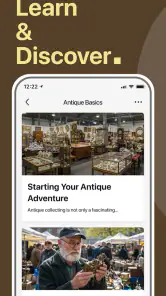
The app is particularly well matched to people who are building a collection from flea markets, sorting inherited belongings, or wanting a simple way to remember the objects they encounter. The Everyone rating also makes it approachable for household use, including a shared project where family members document pieces and preserve their stories. I would recommend it to a friend with those needs, while making clear that the valuation should guide research rather than replace judgment.
Its current version is 1.1.2, and the app has reached over one million installs with a 4.6 average from around sixty thousand ratings. Those figures suggest that the concept has found a broad audience, but they do not change the practical limits of image-based identification or the work involved in maintaining a useful collection. I would judge it by the quality of my own records and decisions, not by popularity alone.
My final recommendation is therefore conditional but positive. Install it if you regularly handle antiques, vintage objects, or inherited items and want a faster way to begin identifying and organizing them. Start with a small group, photograph details rather than only the front, and treat every valuation as an invitation to investigate. If you need certified appraisals, exhaustive historical research, or a formal insurance inventory, choose a specialist or a dedicated cataloging method instead.
For me, the lasting value comes from the habit it encourages: pause before buying, document before cleaning, and preserve the story alongside the object. Its real strength is turning scattered curiosity into a repeatable record. Once the novelty fades, that modest but useful routine is what can keep the app relevant.
AntiqSnap: Antique Identifier Frequently Asked Questions
Who is AntiqSnap designed for?
AntiqSnap is a Tools app for people interested in antiques, collectibles, and organizing a collection. It can be useful for a casual collector who wants to learn more about an unfamiliar object as well as someone keeping track of items they own. Its features focus on identification, market-value guidance, and collection organization, so it may help bring initial research together in one place.
Is AntiqSnap free to download, and what should I know about paid features?
AntiqSnap is free to download, with in-app purchases priced from $7.99 to $39.99 per item. Check the purchase details shown in the app before confirming a payment, particularly if you are considering a recurring plan or trial. The app’s core purpose is antique identification and collection organization, but access to particular features may depend on the option you choose.
Does AntiqSnap: Antique Identifier work on my phone?
AntiqSnap is a tools app for mobile devices, and its minimum operating system requirement is version 10. Before downloading, check that your phone is running a compatible operating system and has enough space for the app. Meeting the minimum requirement helps with installation, though performance can also depend on your device and the quality of the photos you use.
Who makes AntiqSnap, and what can I use it for?
AntiqSnap is developed by Next Vision Limited and is intended for people who want to identify antiques and organize a collection. Its store summary highlights antique identification, market-value guidance, and collection organization. It may be useful when you are researching an unfamiliar object, but any identification or value estimate is best treated as a starting point rather than a substitute for specialist advice.
What is AntiqSnap: Antique Identifier and how does it work?
AntiqSnap: Antique Identifier is designed to help users learn more about antiques, collectibles, and vintage objects by analyzing photos. You typically take or upload a clear image, and the app provides an estimated identification, background information, and sometimes an approximate value. Results should be treated as a helpful starting point rather than a certified appraisal, especially for rare or expensive items.
Pros
- Quickly identifies many antiques from a photo
- Useful for researching unfamiliar decorative objects
- Simple interface suitable for casual users
- Can help estimate an item's historical context
- Convenient for browsing and checking finds on the go
Cons
- Results may be inaccurate for rare or altered items
- Photo quality strongly affects identification accuracy
- Valuations should not replace advice from an expert
- Some features may require an account or paid access
- Limited help when objects lack distinctive visual details
- Category
- Tools
- Version
- 1.1.2