Tellonym: anonymous questions
- 3.13K
- 4.3
- Installs
- 10.00M
- Price
- Free

Screenshots





Analysis by Reviewed
If you're someone who loves sharing thoughts and opinions without the fear of judgment, then Tellonym is the app for you. It's like having a digital diary where the world can ask you questions anonymously, and you get to answer them your way. I've been diving into this app, and let me tell you, it's a mix of mystery, fun, and a bit of introspection.
What to Expect from Anonymous Questions
Tellonym is a social app built around a simple exchange: people send you questions without attaching their names, and you decide whether and how to respond. That changes the feel of a conversation compared with a regular social feed. A friend might ask something they would not put in a public comment, while a stranger may send a question that is playful, awkward, or simply too vague to answer. I would treat it as a conversation prompt, not as a reliable measure of what everyone thinks about me.
The format works best when you enjoy choosing which parts of your life to share. If you want direct, accountable conversations, a group chat or ordinary comments are usually a better fit because you can see who is speaking and reply in context. Tellonym is more suited to people who like occasional surprises and are comfortable leaving some questions unanswered.
What Anonymous Q&A Does Better Than a Usual Feed
The appeal is not that every answer will be profound; it is that the question can arrive without the social formality of a direct message. That makes the app useful for light prompts, such as asking what people would choose for a weekend outing or which hobby they think you should try. Compared with a standard social post, the exchange has a clearer invitation: send a question, then decide whether to share the answer.
That difference comes with a trade-off. On a familiar social network, replies are often tied to visible profiles and an ongoing thread, which gives you context and makes follow-up easier. Here, anonymity can make participation feel less intimidating, but it also removes clues about a sender’s intent. I would choose Tellonym when the surprise is part of the fun, and use a direct message when I need a trustworthy answer or a sensitive conversation.
Getting Started with Tellonym
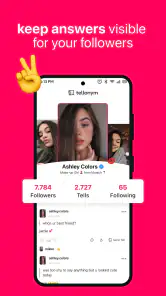
First off, setting up Tellonym is a breeze. You download the app, sign up with your email or social media, and boom, you're in. The interface is sleek, minimalistic, and user-friendly. It's designed to keep you focused on the content and interactions rather than getting lost in menus and options. You have a profile where people can send you anonymous questions, or "tells" as they're called. It's surprisingly addictive, waiting for the next tell to pop up and deciding how to answer it.
Make Your First Tell Worth Answering
For a first meaningful result, I would share the profile link with a small group of friends who already know the kind of questions I enjoy. A broad, vague invitation can produce a pile of low-effort messages; a specific prompt, such as asking for recommendations for a weekend activity, gives people a useful starting point. This is a small but important trade-off: focused prompts make replies easier to handle, while leaving the invitation open-ended can be more entertaining but less predictable.
You May Like

Clash of Clans Is Won Between the Battles

Android Auto Makes the Case for Quieter Car Software

MobiOffice: Transforming Mobile Productivity with Seamless Integration

EA SPORTS FC™ Mobile Soccer: Redefining Mobile Sports Gaming

How Microsoft OneDrive Became a Mobile Productivity Giant

How Google Translate Breaks Language Barriers Effortlessly
Imagine you are planning a quiet Saturday and cannot decide what to watch. You post your Tellonym link with a note asking for one film recommendation, then answer the most useful suggestions publicly. That gives your friends a clear reason to participate and gives you a simple first interaction without turning the app into a demand for personal feedback. If the link gets little response at first, I would share it where people already see your posts rather than repeatedly posting it everywhere.
Setting Up a Comfortable First Round
Before sharing the link, I would decide what kind of answer I am hoping to get and who is likely to see the invitation. For example, asking for a favorite local snack is easy to answer and unlikely to turn into a debate about your personality. A question about a difficult relationship may invite opinions from people who know none of the background. Choosing a low-stakes subject is a practical way to test the format without making the first round feel exposing.
You also do not need to answer every message as it arrives. I would set aside a moment to read through the tells, choose one or two that are worth sharing, and leave the rest alone. That small pause reduces the feeling that the app expects an immediate reaction. It also gives you time to notice when a question is too personal, unclear, or simply not worth your attention.
Features that Stand Out
One of the coolest features of Tellonym is its anonymity. It lets users ask questions without revealing their identity, which can lead to some very honest, sometimes hilarious, and occasionally deep interactions. You can choose to answer these questions publicly or keep them private, which adds a layer of control over your content.
Another neat feature is the ability to link your Tellonym account to other social media platforms. This means you can share your responses or interesting tells with friends on Facebook, Twitter, or Instagram. It's a great way to engage with a broader audience and keep the conversation going beyond the app.
Sharing Without Losing Control
Because the link can travel beyond the app, I would think about the audience before posting it to a public social profile. A question intended for close friends can attract responses from people who do not know your boundaries or the context behind your answers. Sharing it with a smaller audience first is a practical way to learn what kind of interaction you get before making the invitation more widely visible.
A useful habit is to decide in advance what you are comfortable answering in public. You can keep a tell private, skip it, or use the app’s reporting and blocking tools if someone crosses a line. An anonymous question is not an obligation to disclose personal details, and a short, neutral response—or no response—is often the best choice for invasive messages.
Handling Awkward Messages and Common Confusion
One point that can be confusing at first is the difference between receiving a tell and choosing to make it part of your public conversation. Getting a question does not require you to publish an answer, and answering one publicly does not mean you have to explain your whole situation. I would treat each message as an invitation, not a task. If it is unclear what the sender means, you can skip it rather than guessing and sharing more than you intended.
Another reasonable question is whether anonymous replies should be taken as honest feedback. Sometimes a message may be sincere, but the sender’s identity and context are hidden, so there is no easy way to judge how well they know you or what they meant. I would use tells for curiosity and entertainment, not as evidence that a rumor is true or a verdict on a personal decision. For advice that could affect your wellbeing, a trusted person who understands the situation is a better source.
The Good, the Bad, and the Entertaining
Now, while Tellonym is fun, it's not without its challenges. The anonymity that fuels its appeal can sometimes lead to negative or inappropriate questions. However, the app does provide moderation tools to report or block users who might be crossing the line, which is quite reassuring.
On the flip side, the randomness of the questions is what makes it exciting. You never know what's going to pop up next. It could be someone asking for life advice, or it could be a light-hearted query about your favorite ice cream flavor. It's this unpredictability that keeps users hooked.
Who Will Enjoy It—and Who May Prefer Something Else
I think Tellonym is a good match for people who enjoy low-pressure Q&A, want to collect light feedback from friends, or like turning audience questions into social posts. It is less suitable for anyone who finds anonymous criticism stressful, needs dependable answers, or wants a conversation where every participant is identifiable. For those needs, a direct message, a group chat, or a public comment thread gives more context and accountability, even if it lacks the anonymous surprise that makes Tellonym distinctive.
The app is free to use, with in-app purchases listed from $0.99 to $89.99 per item, so I would not assume every optional element is included at no cost. It is developed by Callosum Software, has a 4.3 average from around 340,000 ratings, and has passed 10 million installs. Those figures suggest a well-established audience, but they do not guarantee that the questions you receive will be thoughtful; the quality still depends heavily on who sees your link and what you ask.
Practical Ways to Keep the Experience Manageable
One non-obvious tip is to use the question format to set a boundary as well as start a conversation. A prompt about hobbies, recommendations, or harmless opinions invites participation without encouraging strangers to weigh in on sensitive decisions. If you do ask for personal feedback, narrow the question and consider whether you truly want answers from people whose identity you cannot see.
It also helps to separate entertainment from advice. A tell can be a fun way to hear how friends interpret a harmless choice, but anonymous replies are not a dependable substitute for support from someone you trust. If a message feels cruel or unsettling, you do not need to debate the sender or turn it into content; use the available controls and move on. That keeps the app’s playful side from becoming a source of pressure.
For a more useful exchange, I would also close the loop when a tell leads to something worthwhile. If someone suggests a film or activity, a brief answer saying what you chose gives the conversation a satisfying endpoint without exposing more than you planned. On the other hand, do not feel obliged to keep a public Q&A going just because a few messages arrive. The app works better as an occasional social prompt than as a scorecard for attention.
Age, Cost, and Device Fit
Tellonym is rated for teens, so I would still encourage younger users to think carefully about what they share and to involve a trusted adult if an interaction becomes upsetting. Its current version is 3.155.2, and it supports devices running Android 7.0 or later. The app was released on August 19, 2017, and its continued presence in social conversations makes it easy to understand why people try the format, but the basic question remains personal: do you enjoy opening a small window for anonymous replies?
The free starting point makes it easy to try the basic idea, but the listed in-app purchases mean I would check what an optional item costs before confirming it. I would not pay simply because I hoped it would make anonymous messages more thoughtful; the quality of the interaction depends more on the prompt and audience than on spending. If you are installing it on an older Android device, the minimum operating system requirement is worth checking before you begin.
Conclusion: Is Tellonym for You?
In the end, Tellonym is an intriguing app that offers a unique way to interact with others. It’s perfect for those who enjoy candid conversations and don’t mind the occasional oddball question. Whether you're looking for feedback, advice, or just some harmless fun, Tellonym has got you covered.
If you haven't tried it yet, give it a shot. It's free, and who knows? You might just learn something new about yourself in the process. Just remember, take the tells with a grain of salt and enjoy the experience!
A Sensible Next Step
My practical recommendation is to start with one simple prompt, share it with people you know, and decide afterward whether the answers felt worthwhile. If you like the mix of curiosity and control, keep using it at your own pace. If the anonymity makes you second-guess every message, there is no need to force it; a familiar chat app may give you a more comfortable and useful conversation.
For a first try, I would keep the goal modest: invite a small circle to send one easy question, answer only what feels comfortable, and review how the exchange felt afterward. That gives you a clear sense of whether anonymous Q&A suits you without turning the app into another place where you feel expected to post constantly. If the first round is quiet, that is not a verdict on your profile; the prompt may simply need a more specific subject or a better-timed share.
Tellonym: anonymous questions Frequently Asked Questions
Can I use Tellonym to receive questions from people who do not follow me?
Tellonym is designed around sharing a profile link so people can send you questions and anonymous messages. Its store summary specifically highlights sharing a Tellonym link on Instagram and Snapchat, making it a way to invite responses beyond a conversation inside the app. Think about where you post the link, since a wider audience can mean more messages and a broader range of feedback.
What should I consider before sharing my Tellonym link publicly?
Sharing your Tellonym link publicly can make it easier for people to send questions and messages, but it also increases your exposure to responses from a wider audience. Consider whether you are comfortable receiving anonymous feedback before posting the link on a social profile. You can choose to share it selectively, and you should avoid including sensitive personal details in your profile or replies.
Is Tellonym free to download and use?
Tellonym is free to download, so you can try its anonymous question-and-answer format without paying upfront. The app also offers in-app purchases, which may be relevant if you want access to paid extras. Before making a purchase, check the details shown in the app and consider whether the features are useful to you; the basic idea is receiving and responding to messages.
What is Tellonym and how does it work?
Tellonym is an anonymous messaging app that allows users to send and receive anonymous messages, known as 'tells.' Users can create a profile, share it with friends or publicly, and receive feedback or questions anonymously. The app is popular among teenagers and young adults who want to express themselves freely without the fear of judgment. However, users should be aware of the potential for cyberbullying and use the app responsibly.
Is Tellonym safe for teenagers to use?
Tellonym has safety features like blocking and reporting, but like any anonymous platform, it carries risks such as cyberbullying and inappropriate content. The app's age limit is 17+, and parents should monitor their teenager's usage. It's important to have discussions about online safety and ensure that teens understand the implications of sharing personal information anonymously.
Pros
- Easy to use interface for seamless interaction.
- Allows for honest feedback from friends.
- Encourages open communication.
- Available on both Android and iOS platforms.
- Offers privacy and anonymity options.
Cons
- Can lead to cyberbullying issues.
- May result in unwanted or inappropriate messages.
- Limited control over anonymous content.
- Requires internet connection to function.
- Some features require in-app purchases.

- Category
- Social
- Version
- 3.155.2