Quora: the knowledge platform
- 28.67K
- 4.2
- Installs
- 50.00M
- Price
- Free

Screenshots
Analysis by Reviewed
I reach for Quora when a question needs more than a quick search result. The app brings together people asking about everything from everyday decisions to specialist subjects, so a useful answer can come with context, examples, and a personal point of view. That variety is its main appeal, though it also means I treat individual answers as starting points rather than automatic facts.
Free access and the kind of value it offers
Quora is a free News & Magazines app from Quora, Inc. Its current version is 3.2.34, and it runs on Android 7.0 or later. The free access makes it easy to try without weighing up a purchase first; the value is in whether the questions and answers you find are relevant enough to earn a place in your routine. I wouldn’t judge it as a reference book or a substitute for professional advice, but it can be a handy way to encounter perspectives you might not have thought to look for.
What free access is worth in practice
For me, “free” matters most when I’m testing whether a reading habit will stick. I can open Quora to investigate one question, see whether the responses are useful, and decide whether I want to return without first committing money. That makes the app low-friction to try, but it does not make every answer equally valuable: the return comes from finding people who explain their reasoning, not simply from having a large collection of responses available.
I’d think of it as a supplementary reading space rather than a replacement for a paid course, a specialist publication, or a dependable reference work. Those options may be better when I need a planned curriculum, consistent editorial standards, or a clear route to verified information. Quora’s particular value is the chance to see how different people frame a question and what practical experience they bring to it.
A practical way to use answers
One useful habit is to search for a question before posting it. Existing answers can reveal that the issue has several angles, and comments may point out assumptions a short response leaves unaddressed. When answers disagree, I compare the reasoning and look for details that can be checked elsewhere instead of treating votes as proof. This makes Quora more useful for exploring a topic than for settling a high-stakes decision on its own.
For a better search, I try to make the wording specific. A broad prompt can lead to broad opinions, while adding the relevant context—such as what I’m trying to decide or what constraints I have—can make the responses easier to compare. I also read the question itself carefully before judging an answer: two people may appear to disagree while actually answering different versions of the problem.
When a response sounds confident, I look for its supporting explanation rather than relying on the tone or popularity. A personal story can be insightful about what happened to one person, but it is not automatically a general rule. For health, legal, financial, or safety decisions, I use the discussion to identify questions worth asking and then consult an appropriate qualified source. That boundary keeps curiosity useful without asking a community answer to carry more weight than it should.
More From Our News Desk

Clash of Clans Is Won Between the Battles

Android Auto Makes the Case for Quieter Car Software

MobiOffice: Transforming Mobile Productivity with Seamless Integration

EA SPORTS FC™ Mobile Soccer: Redefining Mobile Sports Gaming

How Microsoft OneDrive Became a Mobile Productivity Giant

How Google Translate Breaks Language Barriers Effortlessly
For example, while planning a weekend activity, I might browse questions about a destination or hobby to pick up practical suggestions and learn what other people found surprising. I’d then check time-sensitive details with a current source before making plans. That split—using Quora for human experience and another source for facts that can change—is a sensible way to get value without expecting one feed to do every job.
A small routine for getting better results
When I’m exploring a subject rather than solving one immediate problem, I use a simple sequence: search a focused question, read more than one answer, and note which claims are experience-based versus independently checkable. If a response introduces a useful term or a new angle, I search that next rather than letting one answer define the whole topic. This turns browsing into a trail of questions instead of an endless scroll.
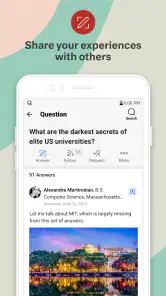
There’s also a useful distinction between reading and contributing. If I have relevant experience, writing an answer can force me to explain what I know clearly and identify where my knowledge stops. I’d avoid presenting one personal example as universal advice; stating the circumstances behind it makes the answer more useful to someone whose situation differs. That effort can be worthwhile, but readers who only want quick information may prefer to search and leave without taking part.
Who will get the most from it
Curious readers, people who enjoy explaining what they know, and anyone who likes following a question into related subjects are the natural audience. It can also suit someone who wants to ask a specific question and hear from people with different experiences. If you mainly want breaking headlines, a focused news app is likely a better fit; if you need a concise, authoritative answer, a trusted reference source may be more efficient.
It’s especially appealing if you enjoy the human side of learning: how someone reached a conclusion, what they tried, or why a common assumption did not match their experience. A student could use it to discover different ways people explain a topic, then verify the material against class sources. Someone changing careers might use it to collect questions about the work before speaking with people directly or checking formal guidance. In both cases, I’d treat the app as a source of leads and perspectives, not as the final authority.
By contrast, someone who wants a tightly edited stream of current events may find the question-and-answer format indirect. A conventional news app is built to foreground reporting and headlines, while Quora is organized around curiosity and responses. Likewise, a search engine is usually faster for locating a specific official page or fact. I choose Quora when I want explanation and lived experience; I choose those alternatives when speed, recency, or editorial accountability matters more.
There are trade-offs. Answers come from a broad community, so detail and reliability can vary, and a popular response is not necessarily the most accurate one. A personalized feed is convenient, but following only familiar topics can narrow what you see. I’d occasionally search beyond my usual interests and read more than the top response, especially when a question has practical consequences.
Keeping the feed useful rather than noisy
A personalized feed can save time once it reflects genuine interests, but I wouldn’t assume that its selection is a balanced overview of a subject. Following a topic because one answer caught my attention can gradually steer what I encounter toward that narrow corner. When I want a broader view, I search directly for related questions and compare responses rather than relying only on whatever appears in the feed.
Another practical trade-off is that open-ended questions invite open-ended answers. If I’m looking for a short, settled fact, a long personal response may feel like work instead of help. I narrow the query, scan for explanations that address the exact issue, and stop when I have enough to verify the point elsewhere. That stopping rule is useful because a stream of interesting answers can make a five-minute lookup expand into much longer browsing.
What's Quora All About?
Quora is essentially a platform that connects people with questions to those who have answers. The app is designed to foster knowledge sharing among users across the globe. Whether you’re a trivia junkie or someone looking to dive deep into specialized subjects, Quora has something for you.
The User Experience
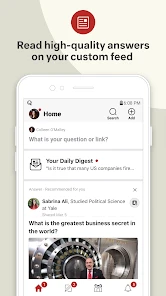
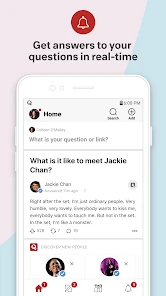
Upon opening the app, the interface feels intuitive and sleek. It doesn’t bombard you with unnecessary clutter, which is always a win in my book. You can easily navigate through questions, topics, and user profiles. The search functionality is robust, allowing you to find answers to almost any question under the sun.
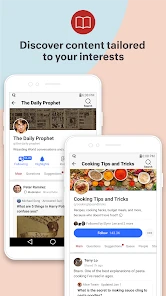
What’s cool is that you can tailor your feed to match your interests. Just follow the topics you love, and Quora does the rest. It curates a personalized feed filled with questions and answers that pique your interest. And if you’re someone who loves sharing your own knowledge, you can easily contribute by answering questions and gaining followers.
How it fits alongside other reading tools
I see the app as sitting between a search engine and a social feed. Search is often the direct route to a page or a precise fact; a general social feed is better for keeping up with people and posts I already follow. Quora’s distinctive draw is that a question gives the discussion a shared focus, and answers can expose reasoning or personal context that a short search result may not provide.
That difference is useful, but it also sets expectations. I wouldn’t open it expecting the same reporting process as a news publication, or the uniform editorial voice of an encyclopedia. The contributor’s knowledge and approach shape each response, which makes the range interesting and uneven at the same time. If I need a dependable, quick reference, I leave the discussion and check an authoritative source; if I want to understand how people think through a topic, the format has more to offer.
For a practical everyday example, imagine I’m trying to choose a new hobby and have only a vague idea of what would suit me. I can look for questions about what beginners find difficult, what keeps people interested, or what they wish they had known earlier. Those answers may help me make a shortlist, but I’d still use current local information to check availability and any requirements. The app is most useful in that middle step: turning a vague curiosity into better questions and a more informed next action.
Engagement and Interaction
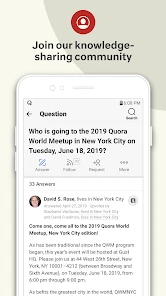
Quora shines when it comes to interaction. The community is vibrant and engaging. You can upvote answers you find helpful, comment for further discussion, and even follow users whose insights you admire. This interactive environment makes learning not just informative but also entertaining.
Moreover, the app encourages quality content. Well-researched and detailed answers often rise to the top, thanks to the upvoting system. This ensures that you’re not just getting any answer, but likely the best one available.
What engagement can and cannot tell you
Votes and discussion are useful signals about what readers found helpful, but I treat them as signals of interest rather than proof of correctness. A thoughtful response may be less visible than a simple, confident one, and comments can add nuance—or introduce more disagreement. When the stakes are low, that mix can make browsing lively. When the stakes are high, I slow down, compare claims, and verify important details independently.
Following a writer can also help when I have found someone whose explanations consistently make sense to me, but I try not to let familiarity replace scrutiny. Even an insightful contributor may be speaking outside their strongest area on a different question. I read each answer on its own merits and pay attention to whether it explains its limits. That is a better habit than assuming a familiar name is always right.
Why You Should Download It
If you’re a lifelong learner or someone who just loves to explore new ideas, Quora is your playground. It’s an app that grows with you, offering more complex and diverse knowledge as your interests expand. Plus, it's a great way to kill time productively. Instead of mindlessly scrolling through social media, why not feed your brain with some quality content?
Quora has been available since September 5, 2012, and its audience has grown to over 50 million installs. Its 4.2 average from around a million ratings, alongside roughly 29,000 written reviews, suggests that many people find it useful, while still leaving room for a mixed experience. It carries a Teen age rating, so it may not suit every family’s preferences; I’d consider that before handing it to a younger reader.
Who should skip it, and how I’d decide
I’d skip Quora if my main goal were a polished stream of breaking news, a guaranteed expert answer, or a quick lookup with a single authoritative result. It is also a poor fit if I know I’m prone to losing time in open-ended browsing and don’t want another feed to check. A focused news service, an official information source, or a book or course with a clear structure may serve those needs better.
For someone who likes reading varied explanations and can keep a healthy distance from confident claims, the free access makes trying it straightforward. I’d begin with one specific question, judge the answers by their reasoning, and decide whether the experience is genuinely useful rather than simply absorbing. The strongest reason to keep it is not that it answers everything; it’s that it can help me notice what I still need to ask, and where to look next.
In conclusion, Quora is more than just an app; it’s a gateway to knowledge. Whether you’re looking for answers or looking to share them, this platform offers a fulfilling experience. So, go ahead, download it, and let the learning adventure begin!
Quora: the knowledge platform Frequently Asked Questions
What topics can I explore on Quora?
Quora covers questions and discussions across many subjects, making it useful when you want to explore a topic or see how different people approach a question. You can follow topics and users to shape the content in your feed around your interests. The experience is centered on reading, asking, and answering, so the range of material you encounter depends in part on what you choose to follow.
Is Quora suitable for teenagers?
Quora is rated for Teen audiences, which is worth considering before installing it for yourself or a younger user. The app is built around questions, answers, and discussions contributed by people on a broad range of subjects. Families may want to think about whether that kind of open knowledge-sharing environment is appropriate for their teenager and review the app’s available privacy settings together.
What should I know about Quora before downloading it?
Quora is a knowledge-sharing platform for asking questions, reading answers, and exploring discussions across many subjects. Its app is listed in the News & Magazines category and is free to download. It is rated for Teen audiences, so users and families may want to consider that age guidance before installing it. The platform’s focus is sharing knowledge and helping people better understand the world.
Which devices can run the Quora app?
Quora is available for Android and iOS, making it possible to use the platform on a phone or tablet. For Android, the app requires version 7.0 or later. Before downloading, check that your device meets the relevant system requirements and that you are choosing the version intended for your operating system. Once installed, you can use the app to browse and participate in Quora’s question-and-answer community.
What is Quora and how does it work?
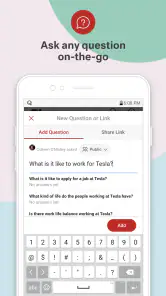
Quora is a knowledge-sharing platform where users can ask questions, provide answers, and engage in discussions on a wide range of topics. The platform allows users to both seek knowledge and share their expertise with others. By following specific topics and users, you can tailor your feed to receive content that interests you. Quora also allows for upvoting, downvoting, and commenting on answers, enhancing the interactive experience.
Pros
- User-friendly interface
- Diverse range of topics
- Active community engagement
- High-quality answers
- Free to use
Cons
- Inconsistent answer quality
- Ads can be intrusive
- Limited offline access
- Occasional misinformation
- Requires internet connection

- Category
- News & Magazines
- Version
- 3.2.34