Economic Times : Business News
- 2.86K
- 4.6
- Installs
- 10.00M
- Price
- Free

Screenshots

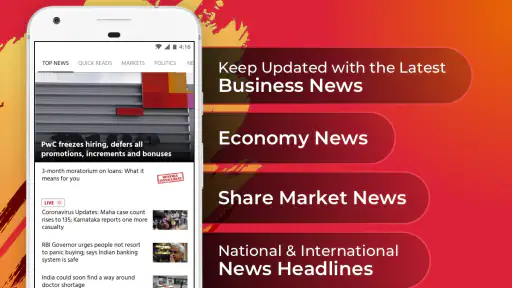
Analysis by Reviewed
I use Economic Times as a focused way to follow business stories, market movement, and the financial news that can otherwise get scattered across general news apps. It is published by TIL (Times Internet Limited), belongs to the News & Magazines category, and is free to install. My overall impression is that it works best when I want a quick business briefing rather than an all-purpose news feed.
The app has a strong reputation on Android, with a 4.6 average from around 271 thousand ratings and more than 10 million installs. That does not automatically make it right for everyone, but it does suggest that many readers find its combination of market coverage and general business reporting useful. I would recommend it most readily to people who want finance to stay close at hand during the working day.
How Economic Times feels during everyday use
I find the app most useful when I decide in advance what I want from a visit: a quick sense of the business news or a closer read of one issue. That small choice helps me avoid turning a focused check-in into an aimless scroll, and it sets up a closer look at the points where trust and personal control matter.
Speed expectations when I need a quick update
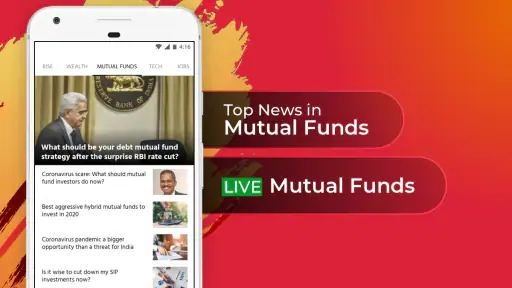
The main strength of this app is its purpose. Instead of opening a broad news service and searching through politics, entertainment, sport, and local stories, I can go directly to economic and business coverage. That narrower focus makes the experience feel more efficient, especially when I am checking the market before work or trying to understand why a company is suddenly being discussed.
I do not treat it as a replacement for a dedicated trading terminal. A news app can explain market developments and provide context, but it is not the same thing as an execution platform or a professional real-time workstation. If I am making a time-sensitive investment decision, I would still verify figures and announcements through an appropriate financial service before acting.
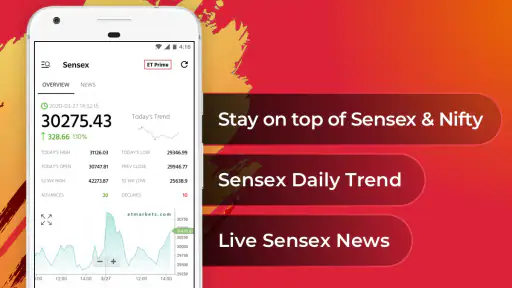
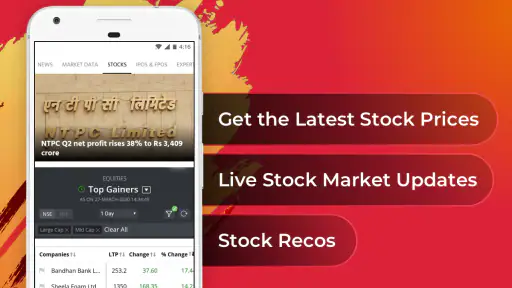
The app’s store summary specifically highlights Sensex, stocks, BSE, NSE, Nifty, and stock-market news. In practical terms, that makes it particularly relevant to readers following Indian markets. I find that focus more useful than a generic international business feed when the story I need is tied to Indian companies, exchanges, economic policy, or domestic market sentiment.
One useful habit is to open the app with a question rather than browse aimlessly. For example, I might want to know what is moving the market today, whether a company announcement has broader implications, or what an economic decision could mean for businesses. This keeps the session short and helps me separate useful reporting from headlines I do not need.
More From Our News Desk

Weather by Xiaomi Review: Clear at a Glance, Less Clear Up Close

X Under Pressure: Can It Recover When Posting Goes Wrong?

Clash of Clans Is Won Between the Battles

Android Auto Makes the Case for Quieter Car Software

MobiOffice: Transforming Mobile Productivity with Seamless Integration

EA SPORTS FC™ Mobile Soccer: Redefining Mobile Sports Gaming
What happens during heavier reading sessions
Short visits suit the app naturally, but longer sessions reveal a trade-off. Business news is often dense, and I may move from a market headline to a company story, then to an economic analysis piece. That kind of chain is valuable because it builds context, yet it also means the app can become a regular reading destination rather than a simple glance at one headline.
When I use it repeatedly during a busy day, I pay attention to how much content I am loading and how often I am switching between sections. Any news application can feel less immediate when it is handling many images, long articles, and repeated refreshes. I would not describe this as a reason to avoid the app, but I do prefer a deliberate reading routine instead of leaving it open continuously.
My practical workflow is to scan the main business headlines first, select only a few stories, and read the full articles that affect my interests. For someone tracking a portfolio, that might mean focusing on company announcements and market explanations. For a student or professional, it could mean saving time by reading the economic stories most connected to their field.
The app is also more useful when I read beyond the first headline. A market move can look dramatic in isolation, while the accompanying reporting may explain whether it relates to company results, broader sentiment, policy, or a temporary event. That is one of the reasons I prefer it to a simple stream of short alerts: the value is not only speed, but also the attempt to connect events with business consequences.
Reliability and recovering after interruptions
I judge a news app partly by what happens when my attention is interrupted. In everyday use, I may open an article, answer a message, return later, and expect to continue without having to reconstruct the entire search. Economic Times is most dependable for me when I use it as a structured news reader: start with the business area I care about, open a story, and return to the wider feed when I am ready.
Still, no news application should be treated as the single authority for a financial decision. Articles provide reporting and interpretation, while official company announcements, exchange information, and professional research may be necessary for confirmation. The app is excellent as a starting point and context layer, but I would not use one article as the only basis for buying or selling an asset.
That distinction is especially important for newcomers. The presence of stock-market coverage can make an app feel like an investment tool, but reading financial news and placing trades are different activities. I would use this app to learn what is happening and why people are discussing it, then move to a separate service if I need account-specific prices, orders, holdings, or portfolio controls.
The developer is TIL, and the app has been available since late 2011. Its long presence gives it the feel of an established publication app rather than a newly launched experiment. The current version is 5.6.2, and the broad user base makes it a familiar choice for people already looking to Economic Times for business reporting.
Device constraints and resource-conscious use
The minimum operating-system requirement is Android 8.0, so owners of older Android phones should check compatibility before planning around it. For supported devices, I would expect the experience to depend more on the phone’s age, available storage, network quality, and how much media-heavy content is being loaded than on the app’s basic purpose.
On a modest phone, I would keep my expectations realistic. A news feed with images and article pages may feel more comfortable when other demanding apps are closed, particularly during a long reading session. If storage is tight or the connection is inconsistent, I would also avoid assuming that every refresh will feel instant. These are normal constraints for a content-rich news reader, not evidence that the app is unsuitable.
For a smoother routine, I would open it when I actually intend to read, avoid repeatedly refreshing the same page, and use a stable connection when I am following several articles. I also find it helpful to read one complete story before jumping through many headlines. That reduces unnecessary loading and gives the app a clearer role in my day instead of turning it into a constantly running background habit.
People who want a very lightweight text-only reader may find the experience less appealing than a simple web page or a minimal RSS tool. Those alternatives can be better when the priority is low resource use and complete control over sources. Economic Times makes more sense when I value a recognizable business publication and a concentrated financial-news experience over the smallest possible footprint.
Who will get the most from it
I think the best audience includes business students, working professionals, entrepreneurs, investors who want market context, and readers who follow Indian financial news. It is also useful for anyone who wants a morning overview before deciding which topics deserve deeper research elsewhere.
A realistic example is a commuter who has ten minutes before a meeting. I would open the app, scan the leading business stories, read one market-related article, and note any company or economic topic that could affect the day’s conversations. That is a better fit than trying to consume a full general-news service, because the app keeps the session centered on business.
Another good use is preparing for a discussion. If I am meeting someone from a particular industry, I can use the app to review recent business developments and then seek more specialized sources for technical details. The important insight is that it works as a context builder: it helps me understand the direction of a story before I decide whether I need deeper documents or data.
However, I would skip it if my main interest is local news, entertainment, sports, or a highly personalized collection of unrelated subjects. I would also choose a dedicated market platform when I need advanced charting, order placement, account management, or portfolio analytics. Those needs go beyond what I expect from a business-news application.
How it compares with familiar alternatives
Compared with a general news app, Economic Times gives business stories a much more central role. That saves time for finance-minded readers, although it can feel narrow if I want a balanced view of every type of news in one place. A general service is better for broad awareness; this app is better when business is the reason I opened my phone.
Compared with reading the publication in a mobile browser, the dedicated app feels more purposeful for repeated visits. A browser is convenient when I am following one shared article or trying to keep app usage low, while the app is more natural for returning to business coverage throughout the day. The choice depends on whether I want a quick destination for regular reading or occasional access without another installed application.
Compared with a financial terminal or trading application, it offers a more readable editorial experience but less of the specialized control that active market users may expect. I would pair the two rather than force one to replace the other: Economic Times for reporting and explanation, and a dedicated financial tool for precise account or trading tasks.
Cost, age suitability, and the practical trade-off
The app is free, and its content rating is Everyone, which makes it approachable for a wide audience. There are in-app purchases ranging from $0.99 to $209.99 per item. I would therefore check what any optional purchase provides before confirming it, especially if I only want ordinary access to business news.
This pricing structure does not change my view of the core app, but it does make it sensible to distinguish between casual reading and premium-oriented use. A reader who only checks headlines occasionally may not need to spend anything. Someone who wants additional access or more intensive use should look carefully at the purchase screen and decide whether the extra value matches their reading habits.
The age rating also does not mean every article will be equally easy for every reader. Financial language, market terminology, and economic analysis can be challenging for beginners. I would suggest that new readers start with straightforward company or market reports, look up unfamiliar terms, and avoid treating confident-sounding headlines as personal investment advice.
My performance verdict
After using it as a business-news reader, I see Economic Times as a focused daily briefing tool rather than a complete financial workstation. Its strongest performance comes from keeping market and business reporting close together, which reduces the effort of finding relevant stories. Its weaker side appears when I expect trading functions, highly specialized research, or an exceptionally minimal reading interface.
For speed, I value the focused subject matter more than any promise of instant delivery. For heavier use, I recommend short, intentional sessions instead of endless refreshing. For reliability, I trust it as a reporting and context source while checking important financial details elsewhere. For older or modest devices, the Android 8.0 requirement and normal content-loading demands are worth considering before installation.
The app’s long availability, 4.6 average, and audience of over 10 million installs make it an established option in its category. Those figures are reassuring, but my recommendation still depends on what you need. If your day revolves around business headlines, Indian market coverage, and economic developments, I think it deserves a place on your phone.
If you want one app for every kind of news, advanced investment analysis, or direct trading, I would choose a broader or more specialized alternative instead. For everyone in between, the free entry point makes it easy to test without committing to a new financial workflow. My final advice is simple: use it to understand the business day, then use the right specialized source when understanding needs to become a financial decision.
Economic Times : Business News Frequently Asked Questions
Can I personalize the business news I see in Economic Times?
Personalized topic choices can make a business news app more useful, especially if you follow particular industries or financial subjects. Economic Times covers areas such as markets, companies, personal finance, and the economy, so readers can explore stories that match their interests. If you mainly want updates on a specific subject, check the app’s available sections and settings after installing it.
Can I use Economic Times: Business News on an iPhone or iPad?
Economic Times: Business News is available for mobile devices, and the app is aimed at readers who want business and market coverage on the go. Before downloading, check that the version offered in your device’s app store supports your particular iPhone or iPad and operating system. The Android version supports devices running Android 8.0 or later.
Does Economic Times require an account to read its stories?
Some news apps let readers browse headlines freely while asking them to sign in for certain features or content. Economic Times offers business coverage and may include premium articles or other features that involve registration or a subscription. Review the prompts shown in the app as you browse, so you can understand whether a particular story or feature requires an account before relying on it.
Will Economic Times: Business News work without an internet connection?
News and market information are most useful when the app can connect to the internet to load current stories and updates. If you expect to read while offline, check whether the app offers any saved-story or offline-reading options after installation. Downloading the app itself does not mean that live news and market information will be available without a connection.
Can I use the app as my only source for investment decisions?
Economic Times can help you follow business developments, market movements, and financial commentary, but news coverage is not a substitute for personal research or professional advice. Markets can change quickly, and an article or market update may not reflect every factor relevant to your circumstances. Use the app as one source of information, consider your own risk tolerance, and assess decisions carefully.
Pros
- Covers Indian markets
- companies
- policy
- and business news in one app.
- Offers personalized feeds for topics
- sectors
- and companies you follow.
- Includes market data
- stock quotes
- and financial indicators for quick checks.
- Provides podcasts
- videos
- and visual explainers beyond standard articles.
- Lets readers save stories and access selected content for later reading.
Cons
- Some premium articles and features require a paid subscription.
- Frequent notifications can feel excessive without careful customization.
- Ad placements may interrupt reading and reduce screen clarity.
- Coverage is heavily India-focused
- with limited international business depth.
- Certain market data may be delayed or require a premium plan.
- Category
- News & Magazines
- Version
- 5.6.2