NOAA Marine Weather
- 132.00
- 3.6
- Installs
- 100.00K
- Price
- Free
Screenshots
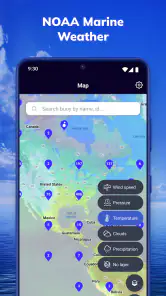
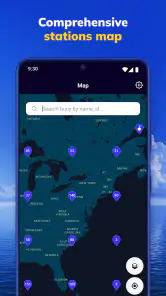
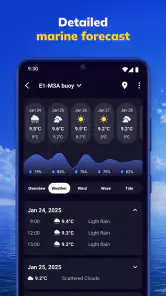
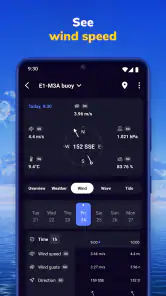
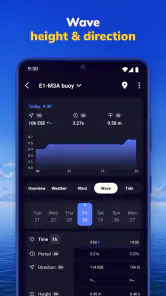
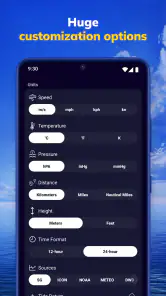
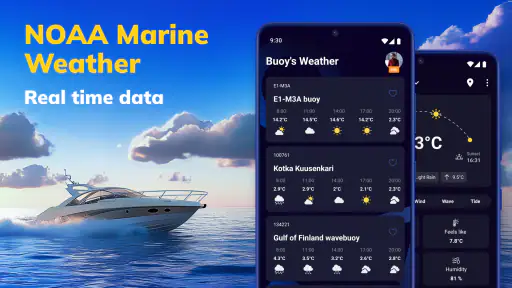
Analysis by Reviewed
Weather apps are easy to judge when the forecast appears instantly, but marine weather is a different kind of test. I approached NOAA Marine Weather as a practical tool for checking conditions before making plans near the coast or on the water, rather than as a general-purpose lifestyle app. It comes from DOSA Apps and sits in the weather category, with a focus signaled clearly by its short store description: NOAA Marine Weather.
My overall impression is mixed but useful. The app can appeal to someone who wants a dedicated way to look at marine conditions instead of scrolling through a crowded general forecast. At the same time, it is not the sort of app I would install blindly and expect to understand immediately. The rating is a 3.6 average from around 1.5 thousand ratings, which fits my experience: there is a practical idea here, but the usefulness depends heavily on setup, location, connection, and knowing what information you actually need.
Getting past the first points of friction
The first place I would expect a new user to hesitate is the app’s purpose. The store summary presents it as an NOAA weather temperature checker, while the short description emphasizes marine weather. Those phrases point in the same direction, but they do not explain the best way to use it. I found it more helpful to think of the app as a focused reference for weather information relevant to coastal and marine planning, not as a replacement for every forecast service on a phone.
That distinction matters because a user looking for a simple daily temperature card may find the experience less direct than a mainstream weather app. General forecast apps are usually designed around a city, a quick glance, and familiar icons. A marine-focused tool makes more sense when the question is connected to a shoreline, a boating plan, or conditions that deserve a more careful check before leaving home.
The most important setup habit is to confirm the place you are checking before trusting the result. If the displayed location is not the one you intended, repeatedly refreshing will not solve the real problem. I would start by checking the selected area, then close and reopen the relevant screen if the information looks unrelated to the plan. This simple check prevents a surprisingly common mistake: treating a technically working weather screen as proof that it is showing the right area.
Another point of friction is that marine information is more useful when read in context. Temperature alone is not enough to decide whether a trip is comfortable or sensible. A person planning time near the water should consider the whole situation, including changing conditions and the difference between a pleasant shoreline visit and an activity that depends on dependable marine information. I would use this app as one part of that decision, not as permission to ignore changing weather.
What I would check before relying on it
Before using NOAA Marine Weather for an actual outing, I would run through a short preparation routine. First, open the app while connected to a stable network and give the screen time to load. Second, verify that the location or area matches the place you care about. Third, compare the displayed information with the time of day and the plan itself. A reading that was useful earlier may not answer a later question, especially when conditions are changing.
More From Our News Desk

Clash of Clans Is Won Between the Battles

Android Auto Makes the Case for Quieter Car Software

MobiOffice: Transforming Mobile Productivity with Seamless Integration

EA SPORTS FC™ Mobile Soccer: Redefining Mobile Sports Gaming

How Microsoft OneDrive Became a Mobile Productivity Giant

How Google Translate Breaks Language Barriers Effortlessly
I would also avoid judging the app from a single failed load. Weather information depends on more than the application interface. Weak reception, an interrupted connection, or a temporary problem with the underlying information source can all make a screen appear empty or stale. Closing the app, checking the connection, and trying again later are reasonable first steps. If the same issue continues while other online apps work normally, then the problem deserves closer attention.
Device compatibility is another practical consideration. The current version is 11.1.0.1.1 and requires Android 8.0 or newer. That makes the app suitable for many existing Android phones, but anyone using an older device should check compatibility before spending time troubleshooting an installation problem. The app is free to install, although in-app purchases range from $0.99 to $99.99 per item. I would look carefully at any purchase prompt and decide whether the extra option is relevant to my own use rather than assuming every user needs it.
The Everyone content rating makes the app broadly approachable from an age-classification standpoint. That does not change the need for sensible weather judgment. A weather app can present information clearly while the real-world decision still depends on experience, local knowledge, and the seriousness of the activity. For a casual walk, the app may be a convenient reference. For a demanding marine trip, I would want additional dependable sources and a proper safety plan.
Recovering when the normal workflow breaks
When the app does not immediately give me a useful result, I would work through the problem in a fixed order instead of changing several things at once. I would begin with the selected location, then check the network, then restart the app. If the phone has been running for a long time, restarting the device can also clear temporary system problems. This order is useful because it separates incorrect context from a loading failure.
If the screen appears outdated, I would note the time rather than treating the display as current simply because it is visible. I would refresh only after confirming the connection and the location. If the app still does not update, I would compare the same general area with another trusted weather source. That comparison is not about choosing whichever forecast looks nicer; it helps identify whether the issue is limited to this app or reflects a broader delay or change in conditions.
A useful recovery technique is to simplify the question. Instead of trying to interpret every available detail at once, I would first ask whether the app is showing the correct area at all. Then I would ask whether the information is recent enough for the plan. Only after those two checks would I evaluate whether the conditions are suitable. This prevents a bad location or stale screen from being mistaken for a complicated forecast disagreement.
I would be cautious about reinstalling immediately. Reinstallation can help with damaged local app data, but it also adds time and may not fix a network or source-related problem. I would reserve it for a persistent issue after the basic checks have failed. The same applies to blaming the phone whenever the result looks wrong. A phone can display a perfectly normal screen while the selected place, connection, or timing is the real issue.
For a routine such as checking conditions before leaving for a marina, I would make the app part of a repeatable sequence: check the area at home, check again shortly before departure, and look once more if the plan changes. That workflow is more reliable than opening the app only after arriving somewhere with poor reception. It also helps reveal whether the app is consistently useful for the locations I care about.
When the app may not be the cause
Weather information is one of those areas where disagreement does not automatically mean that one application is broken. Different services can present information from different sources, update at different times, or frame the same conditions differently. A difference between NOAA Marine Weather and a general forecast app should prompt a closer look at location and timing, not an instant conclusion that either one is useless.
Location accuracy can also be misleading near coastlines. A phone may identify a nearby town, road, or land position when the user actually wants information for a particular stretch of water. That is why I would never assume that an automatically selected place is the correct marine reference. I would inspect the displayed area and make sure it matches the real plan, especially when moving between nearby beaches, harbors, or coastal communities.
Connection quality deserves equal attention. A screen that loads partially may look like an app defect when the phone has simply lost reliable access to online information. Testing another ordinary online service can provide a quick clue. If several apps are struggling, I would solve the connection first. If everything else works and only NOAA Marine Weather is failing, then restarting or reinstalling becomes more reasonable.
There is also a human factor. Marine conditions can change, and a single glance does not turn a forecast into a guarantee. I would not use the app as the only basis for a high-consequence decision, particularly when the plan involves unfamiliar water, poor visibility, or conditions that could become hazardous. Its best role is as a convenient part of preparation, with the user still responsible for interpreting the situation carefully.
How it compares with ordinary weather apps
Compared with the usual city-weather application, NOAA Marine Weather has a narrower identity. A general app is usually better for quick household questions: whether to take an umbrella, how warm the afternoon may feel, or what clothes to wear. Those apps often make the first screen easier to understand because they are built around everyday land-based routines.
This app makes more sense when a marine context is the reason for opening it. That focus can be an advantage because it avoids treating a coastal plan as just another city forecast. It encourages the user to think about the conditions around the water rather than stopping at a simple temperature number. The trade-off is that someone who only wants a polished daily forecast may find the dedicated focus unnecessary.
I would also distinguish it from a specialist service intended for experienced boaters or professional planning. NOAA Marine Weather may be useful as an accessible reference, but I would not assume that installing it alone provides every tool needed for navigation, emergency preparation, or detailed trip planning. A person with serious marine responsibilities should choose software and information sources that match those responsibilities, and should understand exactly what each source covers.
That leaves the app in a practical middle ground. It is more targeted than a standard weather widget, but it should not automatically be treated as a complete marine operations system. For a recreational user who wants a dedicated weather check before heading toward the coast, that middle ground may be exactly right. For someone expecting advanced planning tools, the narrower experience may feel limiting.
Everyday situations where I would use it
Imagine planning an early morning visit to a coastal pier. The first question is not simply whether the air will be warm. I would open the app at home, confirm the intended area, and check the available marine information before deciding what to bring and whether the plan still makes sense. Later, I would check again before leaving, because the earlier view is not a substitute for a current check.
For a family spending time near the shore, the app can be useful as a preparation aid. I would use it to support a broader decision that also considers the children’s comfort, the time available, and whether the group can easily leave if conditions change. This is a good example of where a focused weather app helps without pretending to make the whole decision for me.
For a casual fishing plan, I would use the app as an initial screen and then confirm important details elsewhere if the trip depends on them. The non-obvious benefit is not just seeing a number; it is building a habit of checking the marine context before loading the car or heading to the launch point. The weakness is that a user who wants one definitive “go” or “no-go” answer may be disappointed, because weather information still requires judgment.
I would skip it for someone who wants a home-screen glance with almost no interaction. I would also hesitate to recommend it as the only weather tool for a person who needs detailed navigation, specialized alerts, or professional-grade planning. In those cases, a more comprehensive marine service is likely a better fit, even if it is less convenient for casual checking.
Who should install it
NOAA Marine Weather is most suitable for Android users who regularly think about coastal or marine conditions and want a free app with that specific orientation. It is also a reasonable option for someone who finds ordinary weather apps too focused on city temperatures and wants to make marine weather part of a pre-trip routine.
I would recommend approaching it with realistic expectations. The app’s 100K-plus installs show that it has reached a meaningful audience, but popularity does not remove the need for careful setup. The developer is DOSA Apps, and the current release supports Android 8.0 and later. Those details make it easy to place the app in the wider Android ecosystem, but the real question is whether its marine focus matches your habits.
The free entry point is helpful for trying the basic experience without committing money immediately. Because optional purchases can range from $0.99 to $99.99 per item, I would pay attention during use and avoid assuming that a purchase is necessary for ordinary checking. A careful user should understand what is being offered before confirming anything, especially when the app is being tested casually.
My practical verdict
After looking at the app through the lens of setup and recovery, I see NOAA Marine Weather as a focused weather reference rather than a universal forecast replacement. Its strongest quality is its marine orientation, which gives coastal users a reason to open it that a standard daily-weather app may not provide. Its main weakness is that the value can drop quickly when the location, connection, timing, or user expectations are wrong.
I would install it if I wanted a dedicated marine-weather check and was willing to verify the selected area before relying on what I saw. I would keep another trusted source available for important plans, and I would never interpret a single screen as a guarantee of safe conditions. If you want a simple city forecast, another app will probably feel faster. If you want a practical marine-focused reference and can tolerate a little troubleshooting, this free app is worth trying.
My recommendation is cautious but positive: use it as one dependable step in a broader preparation routine, not as the entire routine. That approach gives the app room to be useful while respecting its limitations. For casual coastal planning, it can earn a place on an Android phone; for serious marine decisions, it should support—not replace—more complete preparation and judgment.
NOAA Marine Weather Frequently Asked Questions
Is NOAA Marine Weather free to download, and are there in-app purchases?
NOAA Marine Weather is free to download, so you can try it without paying upfront. The app also offers in-app purchases, with individual items ranging from around one dollar to around one hundred dollars. Check the purchase details shown in the app before confirming anything, and consider whether the available features suit your needs before spending.
What devices can run NOAA Marine Weather?
NOAA Marine Weather is available for devices running Android 8.0 or later. Before downloading, check your device’s operating system version and make sure you have enough storage for the app. The app is rated for Everyone, making its stated content age-appropriate for a general audience, though anyone using weather information at sea should still follow suitable safety practices.
Who develops NOAA Marine Weather, and is it a widely used app?
NOAA Marine Weather is developed by DOSA Apps and is listed in the Weather category. It has over 100,000 installs, with an average rating of 3.6 from around 1,500 ratings and 132 written reviews. Those figures can offer a sense of its reach and user feedback, but individual experiences may differ depending on location, device, and intended use.
What is NOAA Marine Weather used for?
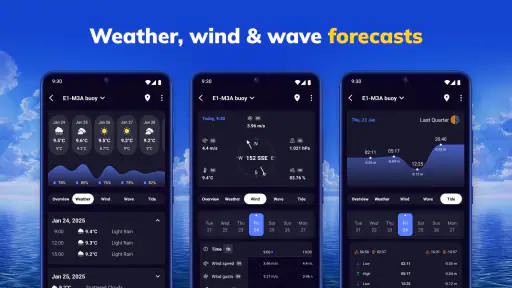
NOAA Marine Weather provides access to marine forecasts and weather information from the National Oceanic and Atmospheric Administration. It can help boaters, sailors, anglers, and coastal users check conditions such as wind, waves, tides, storms, and warnings before heading out. It is mainly a planning and reference tool, not a substitute for proper navigation equipment or professional marine advice.
Does NOAA Marine Weather provide real-time alerts and severe weather warnings?
The app may display current NOAA forecasts, watches, warnings, and advisories, depending on the selected location and the data services it uses. Users should remember that alerts can depend on an internet connection, device settings, and the availability of official updates. For safety-critical situations, compare the information with official NOAA channels, marine radio broadcasts, and local authorities.
Pros
- Reliable forecasts from an official U.S. weather source
- Detailed marine observations support trip planning
- Includes alerts for hazardous coastal conditions
- Useful coverage for boaters
- anglers
- and sailors
- Forecast information is generally clear and practical
Cons
- Best coverage is focused on U.S. waters and coastlines
- Some features may depend on an internet connection
- Interface can feel dated compared with modern weather apps
- Forecast terminology may be difficult for casual users
- Not a replacement for onboard safety and navigation equipment
- Category
- Weather
- Version
- 11.1.0.1.1