Khan Academy
- 9.23K
- 4.2
- Installs
- 10.00M
- Price
- Free

Screenshots
Analysis by Reviewed
When I have a few spare minutes and want to make progress on a topic instead of scrolling aimlessly, Khan Academy is a useful place to start. I find it most valuable when I approach it with a specific question—such as revisiting a maths concept or getting a first explanation of a subject—rather than expecting one app to replace every class, textbook, or teacher. It is a free education app from Khan Academy, and its broad range makes it easy to return to when my interests change.
Choosing a goal before opening the app
The app works best for me when I decide what I want to learn before browsing. “Review how fractions work” is a more useful starting point than “study maths,” because it gives a session a clear finish line. I can then use the explanation and practice to check whether I understand that one idea, rather than letting a long list of possible subjects pull me in several directions.
This matters particularly for learners who are preparing for a class or exam. I would keep the course outline or a list of topics nearby and use Khan Academy to clarify specific gaps, then return to the required material to make sure the practice matches what I will be expected to do. It is a helpful companion to a syllabus, not a reason to assume that a broad learning library automatically follows the exact sequence or emphasis of every school or exam.
A learning session that fits real life
A realistic way to use it is to open a lesson while waiting for an appointment, watch or read one focused explanation, then try a related exercise while the idea is still fresh. That short loop is more useful than collecting videos to watch later. If I get an answer wrong, I treat it as a sign to pause and review the explanation, not as a reason to rush through more material. For exam preparation, I would pair that practice with my course syllabus so I can check that I am studying the right topics in the right order.
This approach also helps answer a practical question: is it useful without a long, uninterrupted study session? Yes, especially for reviewing a small concept or building a habit. For deeper subjects, though, short visits need to add up to planned study. I would write down a question before opening the app and finish by noting what I still do not understand; that keeps a quick session from becoming aimless browsing.
Who benefits most from self-paced study
I think the strongest fit is someone who is comfortable taking charge of their own learning: a student revisiting a lesson, an adult brushing up on a skill, or a curious learner testing whether a new subject holds their interest. The freedom to revisit an explanation is useful when I need a second pass without feeling rushed. Parents can also use it as an extra resource, although younger children may need help choosing a sensible topic and staying with it.
The opposite is true for someone who relies on external deadlines or wants a person to notice exactly why an answer is wrong. Independent practice can show that I have not understood something, but that is not the same as receiving a teacher’s diagnosis and a tailored explanation. If I repeatedly make the same mistake, I would bring the question to a teacher, tutor, or classmate instead of assuming that more attempts alone will solve it.
More From Our News Desk

Clash of Clans Is Won Between the Battles

Android Auto Makes the Case for Quieter Car Software

MobiOffice: Transforming Mobile Productivity with Seamless Integration

EA SPORTS FC™ Mobile Soccer: Redefining Mobile Sports Gaming

How Microsoft OneDrive Became a Mobile Productivity Giant

How Google Translate Breaks Language Barriers Effortlessly
Where it fits among learning options
Compared with a general video site, Khan Academy is more structured around learning rather than simply finding something to watch. Compared with a paid course or a live tutor, it is easier to try at no cost, but it cannot respond to a learner’s individual confusion in the same way a person can. I see it as a strong supplement for independent study, homework review, or exploring a subject—not a guaranteed substitute for a teacher, a required curriculum, or specialized professional instruction.
It is especially appealing to curious learners, students who benefit from revisiting explanations at their own pace, and families looking for an additional study resource. I would be more cautious if someone needs strict accountability, detailed feedback on every mistake, or a tightly tailored course for a specific exam. In those cases, a teacher, tutor, or course designed around that exam may be a better fit, with this app still useful for filling in gaps.
Why Khan Academy Stands Out
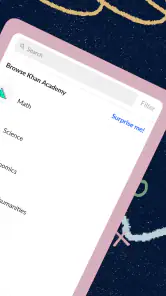
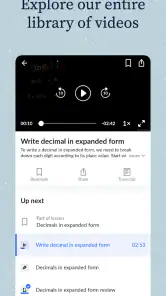
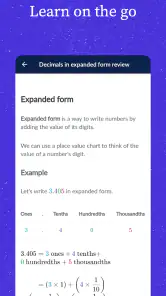
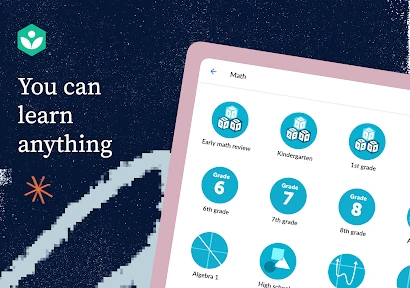
The first thing you’ll notice about Khan Academy is its incredible range of subjects. I mean, it covers everything from basic algebra to cosmology, and even art history. The best part? All the content is available for free. Yep, you heard it right, free! This app is like a one-stop-shop for all your learning needs. And it’s not just the variety that’s impressive—it’s the depth. Each subject is broken down into digestible chunks, so you’re never overwhelmed.
Learning Made Fun
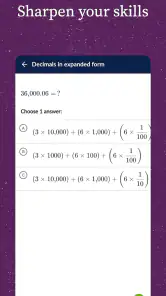
Let’s be honest, traditional learning can sometimes feel like a chore. But Khan Academy makes it fun! The app uses a mix of videos, articles, and interactive exercises to keep things interesting. You can earn points and badges as you progress, which is a neat little feature that gamifies the experience and keeps you motivated. It’s like playing a game where the prize is your own education!
One useful habit is to switch from watching to doing: after an explanation, try the exercise before moving on to another lesson. That gives me a better sense of whether I can use the idea, rather than merely recognize it when someone else explains it. Points and badges can make progress feel visible, but I would not use them as proof that I have mastered a topic; being able to solve a fresh problem is a more meaningful test.
Personalized Learning Experience
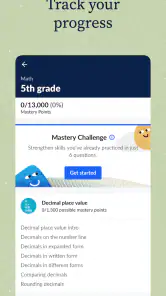
Another standout feature is the personalized dashboard. When you first start using the app, you can set your learning goals, and the app will tailor the content just for you. It’s like having a personal tutor on your phone. Plus, the app tracks your progress, so you can see how far you’ve come and what areas need more work. It’s super handy, especially if you’re trying to get a grip on something challenging.
For a useful routine, I would revisit the progress view after a few sessions and choose one weak area to work on next. That is a more manageable plan than jumping between unrelated subjects whenever a new video catches my eye. The trade-off is that a dashboard can guide my attention, but it cannot know every reason I am stuck; if the same confusion persists, asking a teacher or trying a different explanation may be more effective than repeating the same lesson.
Making progress without turning it into a checklist
For me, the best way to use progress tracking is as a prompt for the next study decision, not as a scorecard. If a topic still feels shaky, I can return to it; if I can explain the idea in my own words and handle a new exercise, I have a better reason to move on. This small distinction helps prevent a common trap in self-study: mistaking a completed lesson for lasting understanding.
A practical routine is to keep a short note outside the app with two lines: what I worked on and what still feels unclear. That makes it easier to pick up after a busy day and gives me a concrete question to ask if I need help. It also keeps the dashboard from becoming the only record of my learning. I would not try to cover several unrelated subjects in one sitting unless I had a reason; switching contexts can make a session feel busy without helping me retain much.
Perfect for All Ages
What’s also great about Khan Academy is that it’s suitable for all ages. Whether you’re a parent wanting to help your child with their homework or an adult looking to pick up a new skill, this app is a fantastic resource. The interface is incredibly user-friendly, making it easy for even the youngest learners to navigate. Plus, there’s a separate section for teachers, making it a valuable tool in the classroom as well.
For a family, I would treat it as a shared study aid rather than handing a young learner a device and expecting the app to provide all the guidance. A parent can help choose one goal, ask the child to explain what they learned afterward, and notice when they need support beyond an on-screen lesson. Older students and adults may prefer to work independently, but the same check-in is useful: can I apply the idea without looking at the explanation?
Speed, reliability, and device expectations
For ordinary study, I would expect the experience to feel most responsive when the phone has a dependable connection and the lesson is already ready to open. Videos and interactive practice naturally rely on more than simply reading a page, so a weak connection can interrupt the rhythm of a session. If I am studying somewhere with unreliable internet, I would avoid making the app my only plan for the day and prepare another way to review the material.
I would also keep expectations sensible on an older or less capable device: a broad learning app can involve media and interactive content, so performance may vary with the phone and connection. The current version is 8.3.1, and the minimum operating-system requirement is 9. The app is rated for Everyone; that makes it approachable for a wide audience, though younger learners may still benefit from an adult helping them choose suitable goals and keep study sessions focused.
When a session is interrupted, the practical recovery is simple: return to the topic you were working on and check what you can still solve, rather than assuming that a half-finished study period counts as mastery. I would not judge reliability only by whether a video starts quickly; the more important test is whether I can resume a useful learning routine. The app has a 4.2 average from around 171,000 ratings, and more than 10 million installs, which suggests it has reached a large audience without guaranteeing that every learner will find its style ideal.
What to expect from a short, interrupted session
If I only have a few minutes, I would choose a reading or a compact explanation rather than begin a long sequence that I may have to abandon. A notification, a commute ending, or a change in connection can break concentration, so I try to leave myself a clear return point: the topic name and the question I was working through. That simple note is more dependable than relying on memory to reconstruct why I opened the lesson.
For longer study, I would use a stable connection and give myself enough time to complete an explanation and attempt practice. If the app feels slow, I would first distinguish between a general device or network delay and a difficulty with one particular lesson. That is not a guarantee of a fix, but it stops me from blaming my understanding for a technical pause—or blaming the app when the connection is the likely cause. I also avoid starting a demanding study session when my phone is already struggling with other tasks.
Choosing between an app, a book, and a person
A textbook remains useful when I need a fixed sequence, extended reading, or a reference I can mark up and revisit without switching screens. A teacher or tutor is better when my problem is not simply missing information but a misconception that needs a conversation. A general video site can be convenient for a quick alternate explanation, but its open-ended recommendations can make it easy to drift away from the original question. Khan Academy sits between those options: it offers guided learning and practice while leaving me responsible for choosing the right goal and deciding when I need more help.
That balance is its main trade-off. I get a low-pressure way to begin and revisit topics, but I also have to supply the structure that a scheduled class or a carefully designed exam course would provide. If I need a credential, a formal assessment, or a guaranteed match to a particular curriculum, I would choose a resource built for that requirement and use this app for explanations where it helps. For broad curiosity or a refresher, the flexible approach is a strength rather than a flaw.
In a world where education often comes with a hefty price tag, Khan Academy is like a breath of fresh air. It’s a reminder that learning doesn’t have to be expensive or out of reach. With its comprehensive content, interactive learning approach, and personalized features, it truly stands out as a top-tier educational app. So, if you’re looking to expand your horizons, give Khan Academy a try. You might just find yourself addicted to learning!
My overall view is that this is a strong option when I want free, self-paced explanations and practice across different subjects, especially if I can set my own routine. I would skip it as my sole resource when I need a human to diagnose a misunderstanding, a course mapped precisely to a formal requirement, or intensive coaching. Used for the right job—and with a little discipline about what to study next—it can make everyday learning feel approachable without pretending that every subject is mastered by tapping through a few lessons.
My performance verdict
My practical verdict is that speed and reliability matter most here as part of a study routine, not as isolated specs. When the connection is dependable and I approach one topic at a time, the format suits quick reviews as well as more deliberate practice. When access is unreliable, the device feels strained, or I need a carefully paced course with personal feedback, I would switch to a book, a teacher, or another resource that better fits that need. For learners who can set their own direction, Khan Academy remains an easy free starting point; for everyone else, it works best as one helpful part of a wider plan.
Khan Academy Frequently Asked Questions
Can I use Khan Academy offline, or do I need an internet connection?
Khan Academy is a mobile learning app, so it is worth considering how you usually access lessons before downloading. If you expect to study while traveling or in places with limited connectivity, check that the app’s current features suit that routine. For learners who can connect regularly, it provides a way to reach educational resources from a phone or tablet as well as a computer.
Which devices and operating systems can run Khan Academy?
Khan Academy is an education app for phones and tablets. Its current version is 8.3.1, and it requires operating system version 9 or later. Before downloading, check that your device meets this minimum requirement so you can install and use the app. It is free, which lets you explore its learning resources without paying for a subscription.
Can I use Khan Academy on my phone or tablet?
Khan Academy is an education app for mobile devices, giving learners a way to access lessons and practice while away from a computer. Its current version is 8.3.1, and it requires operating system version 9 or later. The app is free, so you can explore its learning resources without paying for a subscription.
Is Khan Academy free, and what age rating does it have?
Khan Academy is free to use and has an Everyone content rating, making it suitable for a broad audience. Its app is categorized as education, and the developer is Khan Academy. The platform’s store summary is “You can learn anything,” reflecting its focus on making learning accessible to a wide range of users.
What is Khan Academy and what does it offer?
Khan Academy is a non-profit educational platform that provides free online courses, lessons, and practice in a wide range of academic subjects. It offers a personalized learning dashboard, instructional videos, and exercises aimed at learners of all ages. The platform is available in several languages and covers subjects from basic math to advanced sciences, economics, history, and more. It is designed to support personalized learning both in and outside of classrooms.
Pros
- Free access to quality education.
- Covers a wide range of subjects.
- User-friendly interface.
- Regularly updated content.
- Supports offline learning.
Cons
- Requires stable internet for updates.
- Limited interactive features.
- Some advanced topics are missing.
- Not all courses have exercises.
- May not engage younger children.
- Category
- Education
- Version
- 8.3.1












