Fuelio: gas log & gas prices
- 3.49K
- 4.3
- Installs
- 5.00M
- Price
- Free
Screenshots


Analysis by Reviewed
If you’re trying to make sense of what your car costs to run, a fuel log can help turn scattered receipts and vague guesses into a useful picture. Fuelio: gas log & gas prices is a free app from Sygic for keeping track of refills, fuel spending, mileage and other vehicle costs. I’d think of it as a record-keeping tool first: it works best when you enter information consistently, rather than expecting it to manage your car for you.
What to expect from a fuel log
Fuelio has been around since 2011, and its focus is practical rather than flashy. It has a 4.3 average from around 132,000 ratings, and more than 5 million installs. The Everyone age rating makes it broadly suitable, while optional in-app purchases range from $1.99 to $12.99 per item. The current version is 9.15.0, and it requires Android 8.0 or later.
The main payoff is seeing your own driving costs add up over time. A single fill-up tells you little; a run of accurate entries can help you notice whether fuel use or spending is changing. That makes the app more useful for drivers who want a personal history than for someone who only needs directions to the nearest station.
Who it suits before you install
I’d consider Fuelio if you regularly drive the same car, pay for fuel yourself, and have wondered whether your monthly costs are creeping up. It is also a reasonable fit for a family with more than one vehicle or someone who wants a clearer record of work-related driving expenses. In each case, the benefit comes from being able to look back at your own entries, not from the app making decisions on your behalf.
It is a less natural choice if you rarely drive, strongly dislike entering information, or want an app that automatically handles every detail. If your main need is turn-by-turn directions, a navigation app is the better first install; if you want to diagnose a mechanical issue, a fuel log is not a substitute for a suitable vehicle diagnostic tool. Knowing that boundary helps set expectations before you begin.
The Fuel Tracking Companion You Never Knew You Needed
When I first stumbled upon Fuelio: gas log & gas prices, I was intrigued but a tad skeptical. I mean, how much can an app really do to help me manage my fuel expenses, right? But after giving it a whirl, I have to admit, it’s pretty nifty!
Simple Setup and User-Friendly Interface
Setting up the app is a breeze. You just download it, punch in some basic details about your vehicle, and you’re good to go. The interface is clean and intuitive, which is a huge plus. No one wants to fiddle around with a complicated app when they’re trying to track expenses.
More From Our News Desk

Weather by Xiaomi Review: Clear at a Glance, Less Clear Up Close

X Under Pressure: Can It Recover When Posting Goes Wrong?

Clash of Clans Is Won Between the Battles

Android Auto Makes the Case for Quieter Car Software

MobiOffice: Transforming Mobile Productivity with Seamless Integration

EA SPORTS FC™ Mobile Soccer: Redefining Mobile Sports Gaming
For a first-time setup, I’d keep it simple: add the vehicle you actually use most, then make your first entry the next time you refuel. You don’t need a perfect historical record to get started. A clear starting point is more valuable than trying to reconstruct months of purchases from memory, especially if you’re unsure of exact amounts.
Your first useful result
A realistic first success is not a dramatic saving; it’s a reliable record. After a refill, enter the fuel amount and price while the receipt or pump display is still fresh in your mind. If you also record mileage consistently, later entries become easier to compare. For a household with two cars, keeping each vehicle’s records separate can make it clearer which one is driving the larger share of fuel costs.
A practical way to make the routine stick is to use the same moment each time: once you have safely finished refuelling, note the mileage and purchase details before driving away. That small repeatable cue is more dependable than hoping to remember the figures at home. If you usually pay by card, the receipt can help you check the amount later, but I’d still capture the odometer reading promptly because that is the detail people are most likely to forget.
Tracking Fuel Expenses Like a Pro
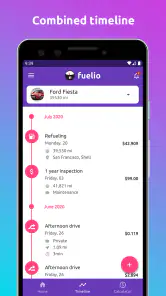
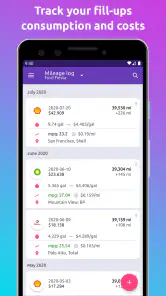
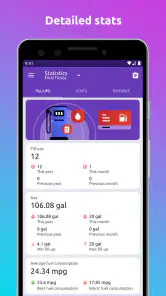
One of the standout features of Fuelio is its ability to log every fuel refill. You just enter the amount of fuel you’re purchasing and the current price per gallon or liter, and voila! The app calculates your average fuel consumption and even shows you how much you’re spending over time. It’s like having a personal accountant for your car!
There is a small habit involved: if you skip entries or mix up which vehicle a refill belongs to, the trends become less trustworthy. I’d treat the numbers as a guide to your own usage, not a laboratory measurement. A useful trick is to log the odometer reading at each fill-up, because it gives the consumption history context and can help you spot a change rather than reacting to one unusual trip.
When a number looks surprising, I wouldn’t immediately assume the car has developed a problem. First check whether the entry belongs to the right vehicle and whether the mileage and fuel amount make sense together. Then compare it with later refills. This is one of the quieter strengths of keeping a log: it encourages you to verify a pattern before spending time or money reacting to a one-off result.
Stay Ahead with Fuel Prices
Another feature that I found incredibly helpful is the fuel price tracking. Fuelio allows you to keep tabs on fuel prices in your area, so you always know where to find the cheapest gas. It’s updated regularly, meaning you can avoid those pesky price spikes and save a little extra cash.
I’d use that information as a comparison, not a reason to make a special long detour. For example, if I’m already passing several stations on my commute, checking prices can help me choose between them; driving far out of the way to chase a small difference could erase the benefit. Price awareness is most practical when it fits a route you were already taking.
For a first-time user, the useful question is not simply “Which station is cheapest?” but “Is the difference worth changing what I’m already doing?” A station on the route you take anyway may be a sensible choice, while an out-of-the-way option adds time and fuel to the decision. I’d treat local prices as a prompt to compare convenient choices, not as a promise that every trip to refuel will be cheaper.
Common points of confusion
Fuel tracking and fuel-price checking answer different questions. Your own refill history helps you understand what you spend and how consumption changes; local price information helps you compare places to fill up. One cannot replace the other, so I wouldn’t judge the whole app by whether a price check alone saves money that day.
Likewise, a mileage log is only as useful as the entries behind it. If you forget a reading, enter it later only when you can do so accurately; guessing may make the next comparison confusing. Drivers who want automatic trip navigation, live traffic guidance or hands-free vehicle diagnostics should look to a dedicated navigation or car-monitoring option instead. Fuelio is better suited to deliberate tracking than to replacing those tools.
There can also be a difference between wanting a quick answer and wanting a dependable history. If you enter only some refills, the record may still show what you spent on those occasions, but it is a weak basis for comparing overall consumption. I’d decide early whether you want a complete running log or only a rough record of selected expenses. Being consistent with one approach is more helpful than expecting incomplete entries to tell the whole story.
Insights That Make a Difference
The app doesn’t just stop at tracking expenses and prices. It also gives you insights into your driving habits. For instance, are you guzzling more gas than usual? Fuelio can alert you to these changes, helping you adjust your driving habits to be more fuel-efficient. Pretty cool, right?
For a useful routine, I’d review the record after several refills rather than drawing conclusions from one tank. A change might come from a different route, heavier loads or driving conditions, not necessarily a sudden change in the vehicle itself. That distinction keeps the app’s trends useful without turning every fluctuation into a worry.
A good everyday example is a commute that changes for a few weeks because of roadworks or a temporary schedule shift. If your fuel use looks different during that stretch, the log gives you a reference point for comparing it with your usual pattern once your routine returns. It will not tell you why the change happened, but it can help you ask a more useful question than “Does this tank feel expensive?”
When a dedicated log beats the usual alternatives
Compared with a notes app, Fuelio gives this particular job a more organized home: fuel, mileage and vehicle spending belong together rather than being scattered across short entries. That can make reviewing a run of refills less awkward. The trade-off is that a notes app may be quicker for someone who only wants to jot down an occasional receipt and has no interest in trends.
A spreadsheet has the opposite appeal. It can be shaped around custom categories or calculations, which is useful for a highly analytical driver who enjoys maintaining their own system. But it asks you to create and update that structure. Fuelio is a more focused middle option for someone who wants a dedicated vehicle record without building a workbook from scratch. Neither approach is automatically better; the right choice is the one you’ll actually maintain.
It also sits apart from navigation apps. A map is designed to help you get somewhere, while Fuelio is about remembering what your driving has cost. I would not replace a trusted navigation tool with it, and I would not expect a navigation app to provide the same personal refill history. If you want both kinds of help, think of them as separate tools rather than competing versions of one product.
How I’d build the habit without overcomplicating it
After the first successful entry, I’d keep the next step modest: record the next refill in the same way, then look back after a few entries. Avoid trying to enter every old receipt at once unless you already have accurate details. A partial but honest starting record is easier to interpret than a long backfill full of estimates.
If you share a vehicle, agree on a simple routine with the other driver. The key is not who enters the details but whether the mileage and purchase information are recorded consistently and attached to the right car. If that coordination feels like a chore, keep expectations modest and use the log for the expenses you can reliably capture rather than treating it as a perfect account of every trip.
The app is free to start, while optional in-app purchases are available. I’d begin with the basic logging routine and decide later whether any paid option matters to the way you use it. That avoids paying for extras before you know whether you enjoy maintaining a vehicle record at all.
Who will get the most from it?
I’d recommend Fuelio to regular drivers who want one place to keep fuel and vehicle expenses, especially people who commute, share a car, or manage costs across more than one vehicle. It can also help someone who uses a car for work understand how running costs accumulate. If you rarely drive, dislike manual logging, or only need turn-by-turn directions, the routine may feel like more effort than it is worth.
Compared with jotting figures in a notes app or keeping receipts in the glove compartment, a dedicated log makes it easier to review entries as a developing record. A spreadsheet may suit someone who wants custom calculations and full control over columns, but it takes more setup and upkeep. Fuelio offers a more focused middle ground: less improvisation than notes, without asking you to build your own tracking system.
My take after weighing the trade-offs
In conclusion, if you’re someone who drives regularly and wants to keep a closer eye on your fuel expenses, Fuelio: gas log & gas prices is definitely worth checking out. It’s easy to use, packed with useful features, and can save you money in the long run. Give it a shot and see how much you could save!
My advice is to begin with one vehicle and a careful refill entry, then keep the habit going long enough to get a meaningful comparison. Fuelio is free to start, but I wouldn’t install it expecting automatic accuracy or guaranteed savings: the value comes from your records and the choices you make with them. If that hands-on approach sounds reasonable, it’s a sensible companion for understanding what your driving actually costs.
Fuelio: gas log & gas prices Frequently Asked Questions
What devices and operating systems can run Fuelio?
Fuelio is a car-management app for Android and iOS, so drivers can choose the version that fits their device. On Android, it requires version 8.0 or later. If you use an older Android phone, check its system version before downloading. The app is intended for a general audience, making it a straightforward option to consider for everyday vehicle record-keeping.
Who develops Fuelio, and is it a well-established app?
Fuelio is developed by Sygic and has been available since 2011. It has more than five million installs and an average rating of 4.3 from around 132,000 ratings, with about 3,500 written reviews. Those figures suggest that many drivers have tried it, though the best way to judge whether its tools fit your routine is to explore the app yourself.
Is Fuelio free to download, and are there optional purchases?
Fuelio is free to download, so you can try its vehicle and fuel-tracking tools without paying upfront. The app also offers optional in-app purchases, giving users the choice to spend more for available extras. If you prefer to keep your costs down, you can start with the free app and decide later whether any paid options suit your needs.
What kind of information can I keep in Fuelio?
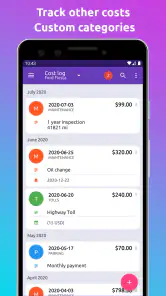
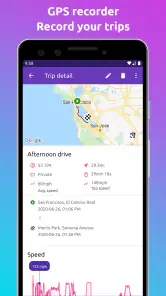
Fuelio brings together several practical parts of car ownership: fuel prices, fuel consumption, expenses, mileage logging, and GPS tracking. This makes it useful not only for noting fill-ups, but also for keeping a broader record of vehicle-related activity. Drivers who want a clearer view of their car’s running costs may appreciate having these tools in one app.
Is Fuelio suitable for everyday drivers or only people who manage fleets?
Fuelio can be useful for everyday drivers who want to follow fuel use, mileage, and vehicle expenses, as well as for people keeping records for more than one car. Its focus is practical car management rather than specialist fleet operations, so drivers can use it to build a straightforward picture of how their vehicles are being used and what they cost to run.
Pros
- User-friendly interface for easy navigation.
- Tracks fuel economy and costs effectively.
- Syncs data across multiple devices.
- Supports multiple vehicles and currencies.
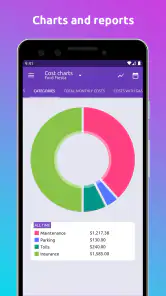
- Provides detailed analytics and graphs.
Cons
- Limited features in the free version.
- Ads can be intrusive at times.
- Some users report sync issues.
- Lacks integration with other apps.
- No option for automatic trip tracking.
- Category
- Auto & Vehicles
- Version
- 9.15.0