Fiverr - Freelance Service
- 28.38K
- 4.3
- Installs
- 10.00M
- Price
- Free

Screenshots




Analysis by Reviewed
I judge a freelance marketplace by more than the range of work on offer. I also want to know whether I can make a careful choice, keep the conversation clear, and understand where my responsibility begins. Fiverr is a free business app from Fiverr, with an Everyone age rating. It has an average rating of 4.4 from around 354,000 ratings, and has been installed over 10 million times. Those figures suggest a well-used service, but they don’t guarantee that any particular seller or project will be a good fit. I’d treat each gig as an individual decision, not assume the platform’s popularity replaces basic due diligence.
Choosing work with care
When I browse a service, I’d start with the actual deliverable rather than the headline or the lowest price. Read the description closely, check what the seller says is included, and compare that with the outcome you need. For a logo, for example, clarify whether you need one concept or several, what file types matter, and whether the design must work at small sizes. A short, specific brief can prevent a mismatch more effectively than a long list of vague preferences.
Reviews can help me form a picture, but I wouldn’t use them as my only check. I’d look for comments that resemble my project, then ask a focused question before committing if anything important remains unclear. This is especially useful for work with several stages, such as a website build or a video edit: agree on the first deliverable and the feedback process before the whole job gets underway. I also avoid sharing passwords, payment details, or confidential client material in a brief unless there is a clear, necessary reason to do so.
Working in the app day to day
A practical use case is a small business owner who needs a product description before a listing goes live. I’d gather the product facts, intended audience, tone, and any wording that must be avoided, then send that as a concise brief. When the work arrives, I’d check it against those requirements before asking for revisions. That routine keeps the task manageable and gives both sides a clearer reference than a vague request like “make it sound better.”
For freelancers, the appeal is the chance to present a defined service to people looking for that kind of help. I’d make the scope, expected inputs, and boundaries plain in the gig description; otherwise, a quick job can become a string of assumptions. The app is less suitable if your priority is a long-term employee, close daily supervision, or a highly sensitive project that needs a formal procurement process. In those cases, a direct hiring route or a specialist agency may offer a better fit, even if it takes longer to arrange.
Small decisions that prevent avoidable friction
Before I contact a seller, I’d separate requirements into “must have” and “nice to have.” That simple distinction makes it easier to compare offers without letting an attractive extra distract from a missing essential. For a translated brochure, for instance, the must-haves might be the target language, intended audience, and final format; stylistic preferences can be discussed after those basics are clear. It also gives me a fair way to judge whether a response actually addresses the job.
I’d also keep one version of the brief and refer back to it as the conversation develops. If I change the audience, add a deliverable, or alter the deadline, I’d say so explicitly rather than assume the seller has inferred it. This is a useful trade-off of gig-based hiring: a tightly described task can be efficient, but changes that seem minor to me may alter the work substantially. Clear boundaries are not just a courtesy; they help me tell the difference between a reasonable revision and a new request.
More From Our News Desk

Weather by Xiaomi Review: Clear at a Glance, Less Clear Up Close

X Under Pressure: Can It Recover When Posting Goes Wrong?

Clash of Clans Is Won Between the Battles

Android Auto Makes the Case for Quieter Car Software

MobiOffice: Transforming Mobile Productivity with Seamless Integration

EA SPORTS FC™ Mobile Soccer: Redefining Mobile Sports Gaming
The Freelance Universe at Your Fingertips
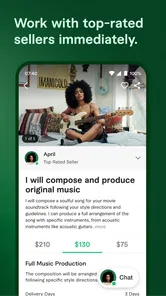
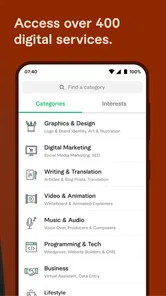
Imagine having access to a global talent pool right from your smartphone. That’s what Fiverr offers. The app is essentially a marketplace where freelancers showcase their skills in various categories. From graphic design and digital marketing to programming and video editing, the options are vast. The user interface is seamless, making it easy for even the least tech-savvy among us to navigate.
Getting Started with Fiverr
So, how does it work? Once you download the app, you can set up an account either as a buyer or a seller. As a buyer, you get to browse through countless gigs offered by freelancers. Each gig is like a mini advertisement, complete with descriptions, prices, and reviews from previous clients. It’s like shopping online, but instead of goods, you’re buying services. Pretty neat, right?
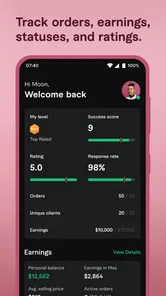
If you’re on the other side of the fence and looking to offer your skills, Fiverr makes it easy to put up your gigs. You set your prices, outline what you offer, and wait for clients to come knocking. The app even provides analytics to help you track your performance and optimize your gigs for better visibility.
The Perks of Using Fiverr
One of the major perks is the flexibility. You can work from anywhere, anytime. Whether you’re a night owl or an early bird, there’s no set schedule. This makes it a perfect platform for freelancers who value autonomy. Plus, with a secure payment system in place, you can focus more on delivering quality work and less on chasing payments.
Another highlight is the community aspect. Fiverr isn’t just a transactional platform; it’s a community of creatives and professionals. There are forums and groups where you can learn, share, and grow together. It’s this sense of belonging that adds an extra layer of value to the app.
How I’d compare it and make a decision
Compared with finding a freelancer through a personal referral, Fiverr makes it easier to scan multiple service offers in one place, but you lose some of the context a trusted colleague might provide. Compared with a general job board, its gig-based format is better suited to a bounded task than an ongoing role. I’d use it when I can describe a deliverable clearly; for an open-ended project, I’d favor a direct conversation with a specialist before choosing a marketplace listing.
If I were fitting the app into a busy day, I’d shortlist a few relevant gigs during a break, then return later to compare scope and reviews with a clear head. I’d keep the project brief in a separate note first, so I don’t send inconsistent details while browsing. For freelancers, that same habit helps: define what a client must provide and what counts as completion before publishing an offer. These small steps make the marketplace easier to use without assuming that a smooth interface guarantees a smooth project.
When a different route makes more sense
For a one-off task with a clear finish line, browsing a marketplace can be more convenient than asking around individually. But I would not use convenience as my only selection test. A referral may be stronger when I need someone who already understands my industry or can be vouched for by a person I trust. An agency can be a better fit when several specialists must coordinate under one plan, while a direct hire is more appropriate when the need is ongoing rather than a defined service.
There is also a practical difference between finding a promising profile and knowing how the collaboration will feel. A portfolio or review can help me judge past work, but neither guarantees that the person will interpret my brief as I intend. I’d start with a small, meaningful first task when the larger project allows it. That creates a chance to assess communication and fit before I share more material or build a bigger workflow around the seller.
Version, trust, and user choice
The current version is 4.3.2.2, and the app’s long-running presence makes it a familiar option for people who already know the marketplace. I would still make trust decisions at the level of the specific job: assess the seller’s description, keep requirements understandable, and avoid sending sensitive information that the task does not need. The app is free to download, but a buyer should distinguish that from the cost of hiring a freelancer; the service itself is the purchase being considered.
As with any account-based marketplace, I’d take a moment to review the choices shown during sign-up and in account settings, and read any relevant terms before sharing personal or business details. I can’t infer privacy safeguards or account controls beyond what is visible to me, so I wouldn’t treat the presence of a marketplace or payment flow as proof that every data concern is settled. If a project involves confidential material, I’d first decide whether I can safely describe the work without including that material, or whether another hiring route is more appropriate.
Handle sensitive work deliberately
When a task touches customer information, unpublished plans, or internal documents, I’d first ask whether the freelancer needs the original material at all. Sometimes I can provide a sanitized sample, remove names and account details, or describe the problem without attaching a real file. That keeps the brief useful while limiting unnecessary exposure. If the work cannot be done without sharing material I’m not authorized to disclose, I’d pause rather than treat a marketplace conversation as permission to pass it along.
I’d make the same distinction when choosing an app account for personal versus business work. Before sending anything, I’d check that I’m using the intended account and that the details in my message are meant for the person receiving it. The useful principle is simple: share only what helps complete the agreed task. For highly regulated or confidential work, an internal process or a vetted specialist under a formal agreement may be a more suitable route than a quick gig purchase.
Who will get the most from it
I think the app suits people who want to compare clearly defined services, small businesses that need occasional creative or technical help, and freelancers who can package their skills into a specific offer. It is less compelling for anyone who wants a guaranteed outcome without reviewing candidates, or who needs a close working relationship from day one. A marketplace can make discovery easier, but the buyer still has to explain the brief and judge the result; a seller still has to set realistic boundaries and communicate clearly.
Questions I’d settle before committing
Can I hire without knowing exactly how the final work should look? I’d say yes, as long as I can explain the problem, identify the essentials, and agree on an initial step that helps clarify the direction. If even the goal is uncertain, I’d first talk to a consultant or specialist who can help define the project, instead of expecting a listing to solve the planning stage for me.
What should I do if an offer looks inexpensive but the scope is vague? I’d compare what is actually included, ask about the specific point that matters, and avoid assuming that extra rounds of work or additional formats are part of the offer. For a seller, the same question works in reverse: state what the service covers and what the client must supply. Neither side benefits from relying on guesswork.
Can the app replace a proper working relationship? For a bounded deliverable, it can help me find and communicate with someone offering relevant skills. For repeated work that depends on shared context, frequent approvals, or access to sensitive systems, I’d want a more deliberate arrangement. A marketplace listing is a starting point for evaluating a service, not a substitute for deciding how much collaboration the project needs.
Final Thoughts
In a world that’s increasingly leaning towards remote work, Fiverr stands out as a beacon for freelancers and businesses alike. It’s efficient, user-friendly, and opens doors to opportunities that might otherwise be out of reach. Whether you’re looking to hire or be hired, this app is worth a spot on your home screen. So, next time you’re in a bind or looking to make some extra cash, give Fiverr a whirl. It might just be the solution you’ve been looking for.
My cautious verdict is that Fiverr is most useful when I arrive with a well-bounded task and the patience to compare offers rather than choose on impulse. Its 4.4 average and broad reach make it worth exploring, not a substitute for asking precise questions or protecting sensitive details. If I needed a quick, discrete piece of work, I’d consider it; if I needed close collaboration, formal oversight, or strict confidentiality, I’d look at alternatives first. The app works best when I stay involved in the hiring decision from brief to delivery.
Fiverr - Freelance Service Frequently Asked Questions
Can I browse Fiverr before creating an account?
Fiverr is a marketplace for exploring freelance services, so browsing can help you get a feel for the range of work available and decide whether it suits your needs. If you plan to hire someone or offer your own services, you can create an account to take part in those activities. The app may be useful to explore before settling on which role you want to use.
What kinds of tasks can I look for on Fiverr?
Fiverr brings together a wide range of freelance services in one marketplace. You can explore options for a project and compare listings to find services that appear relevant to what you need. The store summary describes one marketplace with hundreds of services, so the app is intended to cover varied freelance needs rather than just one type of work. Check each service description before making a decision.
Can Fiverr help me manage freelance work while I’m away from my computer?
The Fiverr app is built around a freelance-services marketplace, making it relevant for people who want to browse services or keep up with freelance activity from a mobile device. It can be a convenient way to access Fiverr while on the go. Before relying on it for a particular task, consider whether the app’s available features fit how you prefer to communicate and manage your work.
Can I use Fiverr to hire freelancers or offer my own services?
Fiverr is designed for both sides of freelance work: you can browse services and hire a freelancer, or create an account to offer services of your own. The app brings these activities together in one marketplace, so it can be useful whether you are looking for help with a project or hoping to find clients for your skills. Consider which role you want to use it for before downloading.
What is Fiverr and how does it work?
Fiverr is a global online marketplace for freelance services. It connects freelancers offering digital services with potential clients. Users can browse through various categories such as graphic design, writing, programming, and more. Freelancers list their services as 'Gigs,' starting at $5, and clients can hire them based on their needs. The platform facilitates communication, payment, and project management, making it easy for both parties to collaborate.
Pros
- Wide range of freelance services available.
- User-friendly interface for easy navigation.
- Secure payment system ensures safe transactions.
- Flexible pricing options for all budgets.
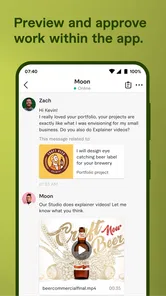
- Efficient communication tools with freelancers.
Cons
- Service fees can be relatively high.
- Quality of work varies between freelancers.
- Limited customer support response time.
- Some freelancers have misleading profiles.
- Difficult to get refunds for unsatisfactory work.