Microsoft Teams
- 94.22K
- 4.6
- Installs
- 500.00M
- Price
- Free

Screenshots






Analysis by Reviewed
I find Microsoft Teams most useful when a group needs one shared place for conversation, meetings, and ongoing work rather than another chat window. It is a business app from Microsoft Corporation, and its scale is hard to miss: it has passed 500 million installs and holds an average rating of 4.6 from around 8.4 million ratings. That popularity does not make it the right fit for every group, but it does mean most people can find colleagues or collaborators already using it.
A routine that keeps work findable
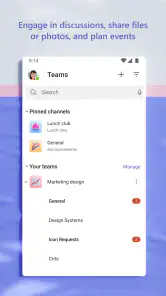
My best advice is to treat Teams as a workspace, not as a replacement for every tool you own. For a project, keep questions and decisions in the relevant channel, use chat for quick one-to-one coordination, and move a discussion into a meeting when typing is slowing things down. That simple distinction helps prevent a common mess: important decisions scattered across private chats where the rest of the team cannot find them.
On a normal workday, I might check a project channel before opening a document, ask a colleague a brief question in chat, then join a call to settle a more complicated issue. The value is not merely having all those options; it is being able to return to the channel afterward and continue from the same context. For a small team that already relies on Microsoft tools, that continuity can be more useful than adding a separate meeting app and another messaging service.
The Latest on Microsoft Teams
Small habits that make it easier
I would spend a few minutes setting up notifications before relying on Teams all day. If every channel alert interrupts you, the app can become another source of noise; if everything is muted, you may overlook a message that needs a timely response. Choosing which conversations deserve attention, then checking the rest at set points in the day, makes the app feel more manageable. It is also worth reviewing microphone and camera choices before a call, especially if you are joining from a shared room or a busy home.
One practical habit is to open a shared file from the conversation where people are discussing it, rather than keeping several copies in circulation. When a colleague edits alongside you, make the change in the shared document and use the conversation to explain the decision. That reduces the “which version is current?” problem, though it still depends on everyone using the shared file consistently. Teams can bring people together, but it cannot make a group’s naming and follow-up habits tidy by itself.
Getting Started with Microsoft Teams
First things first, setting up Microsoft Teams is a breeze. You just download the app from the App Store or Google Play, sign in with your Microsoft account, and voilà, you're ready to roll. The interface is sleek and intuitive, making navigation a piece of cake even for the not-so-tech-savvy folks. Everything is neatly organized into channels and tabs, so you can easily find what you need without breaking a sweat.
Features That Stand Out
Now, let's dive into some of the features that make this app a must-have. One of the standout features has to be the integration with other Microsoft Office apps. Imagine being able to access your Word documents, Excel sheets, and PowerPoint presentations without leaving the app. It's like having your office in your pocket! Plus, the real-time collaboration feature is a total game-changer. You can work on documents simultaneously with your colleagues, and it's as if you're all in the same room, minus the awkward coffee spills.
More From Our News Desk

X Under Pressure: Can It Recover When Posting Goes Wrong?

Clash of Clans Is Won Between the Battles

Android Auto Makes the Case for Quieter Car Software

EA SPORTS FC™ Mobile Soccer: Redefining Mobile Sports Gaming

How Microsoft OneDrive Became a Mobile Productivity Giant

How Google Translate Breaks Language Barriers Effortlessly
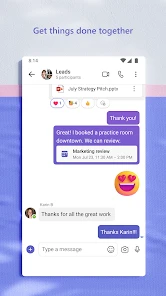
Another cool feature is the video conferencing capability. Whether you're working from home or connecting with team members from different corners of the world, the video calls are crystal clear. The app supports screen sharing too, which is super handy when you need to present something or troubleshoot an issue. And let's not forget the chat feature. It's fast, efficient, and keeps all your conversations in one place. No more switching between apps and losing track of messages!
Picking the right fit
Those strengths are most useful for colleagues whose work already revolves around shared Microsoft documents and scheduled collaboration. If you mainly want a lightweight messenger for a handful of friends, Teams may feel like too much structure; a simpler chat app is usually easier to maintain. Likewise, a group that does not need channels, meetings, or shared work may gain little from moving its conversations into a business-oriented workspace.
Compared with using email for every decision, channel discussions make project context easier to revisit, while chat is quicker for a short exchange. Compared with a standalone video-call app, Teams is appealing when a meeting belongs to an ongoing project and shared files matter. The trade-off is that an all-in-one workspace asks people to learn where conversations belong. If teammates keep posting the same updates in several places, the extra structure can create duplication instead of clarity.
What to expect before committing
Teams is free to download, and it is rated for Everyone. Some in-app purchases are available, listed at prices from $9.99 to $129.99 per item, so I would check what a particular purchase covers before paying rather than assuming every work feature is included at no cost. The app was released on November 2, 2016, and its current version is 1416/1.0.0.2025204802. Those details are less important than whether your workplace or group actually uses Teams: the experience depends heavily on having the right people and shared routines in place.
For an everyday example, imagine a team preparing a presentation. Someone posts the draft in the project channel, a colleague comments on the figures in the shared spreadsheet, and the group uses a call to resolve a disagreement about the final slide. Afterward, a short channel note records the decision. That last step is easy to skip, but it saves the next person from asking the same question and gives anyone who missed the call a useful trail to follow.
Features That Stand Out
Now, let's dive into some of the features that make this app a must-have. One of the standout features has to be the integration with other Microsoft Office apps. Imagine being able to access your Word documents, Excel sheets, and PowerPoint presentations without leaving the app. It's like having your office in your pocket! Plus, the real-time collaboration feature is a total game-changer. You can work on documents simultaneously with your colleagues, and it's as if you're all in the same room, minus the awkward coffee spills.
Another cool feature is the video conferencing capability. Whether you're working from home or connecting with team members from different corners of the world, the video calls are crystal clear. The app supports screen sharing too, which is super handy when you need to present something or troubleshoot an issue. And let's not forget the chat feature. It's fast, efficient, and keeps all your conversations in one place. No more switching between apps and losing track of messages!
Why I Love It
Personally, what I love about Microsoft Teams is how it brings everything into one platform. It cuts down the clutter and makes communication seamless. The app adapts to the way you work, whether you're a small team managing a project or a large enterprise coordinating across departments. And hey, it's not just for work. You can use it to plan family events or coordinate with friends. The possibilities are endless!
Security is another big plus. With end-to-end encryption, you can be sure your data is safe and sound. Plus, the app is constantly being updated with new features and improvements, so it keeps getting better and better. It's like having a trusty sidekick that evolves with your needs.
Where the workflow reaches its limit
My main reservation is that Teams can feel heavier than the task at hand. A quick message is easy, but channels, tabs, files, and notifications only help when the group agrees how to use them. On a phone, long discussions and document work are less comfortable than on a larger screen, so I treat mobile as a way to keep up and respond, not as my ideal place for detailed editing. If a team needs a very simple communication tool or works mainly outside Microsoft’s document ecosystem, a focused chat or meeting app may be the cleaner choice.
For people who do stick with it, a repeatable rhythm matters more than constantly checking the app: scan priority conversations, handle direct questions, then set aside time for channel updates and shared files. I also avoid using a meeting when a clear written decision will do, and I leave a concise recap when a live conversation changes the plan. These habits make Teams less distracting without relying on elaborate setup or treating every notification as urgent.
My verdict after settling into it
In conclusion, if you're looking for a robust, versatile, and user-friendly collaboration app, Microsoft Teams is the way to go. It simplifies teamwork, boosts productivity, and makes communication a joy rather than a chore. So, go ahead and give it a try. You might just wonder how you ever managed without it!
I would recommend it most to people whose team already shares files and plans work in Microsoft’s ecosystem, and less to anyone hoping for a no-friction personal messenger. The strongest reason to choose it is the connection between project conversation, meetings, and collaborative documents; the strongest reason to hesitate is the coordination needed to keep those pieces organized. If your group is willing to establish a few shared habits, the app can earn its place in the daily routine. If not, a smaller, more focused tool may serve you better.
Microsoft Teams Frequently Asked Questions
Can I use Teams to call or message someone who does not belong to my organization?
Teams is built around communication and collaboration, but how you can reach someone outside your workplace or group depends on the access and settings available to your account. If you want to contact an external person, check with your organization or the person who manages your workspace first. That helps you understand whether your intended conversation can take place there.
Can I mute conversations or control which Teams notifications I see?
Teams notifications are affected by both app preferences and your phone’s settings. Reviewing those controls after installation can help you decide how often Teams interrupts you and which activity you notice. This is especially useful if you belong to several conversations or use the app for both work and group activities. Your organization may also have guidance about how members should stay informed.
Can I use Microsoft Teams when I am away from an internet connection?
Teams is designed for mobile communication, including chat and meetings, and using those features requires an internet connection. If you expect to be away from Wi-Fi, consider whether your mobile connection will be available and reliable enough for the way you plan to use the app. For important meetings or messages, checking your connection beforehand can help you avoid interruptions.
Can I switch between multiple Teams accounts on one phone?
Whether multiple accounts are convenient on your phone depends on how your workplace, school, or group has set up access. Before relying on one device for several Teams workspaces, check the sign-in process with the relevant organization. That is particularly helpful if you use separate accounts for work and personal projects, since each group may handle membership and access differently.
Does Teams let me record meetings?
Meeting capabilities in Microsoft Teams can depend on the workspace, plan, and permissions established by the organization hosting the meeting. If recording is important to your routine, ask the meeting organizer or workspace administrator which options are available and how recordings are handled. It is also wise to follow your group’s rules before recording or sharing meeting content.
Pros
- Seamless integration with Office 365 suite.
- High-quality video and audio calls.
- Customizable team channels.
- Strong security and compliance features.
- Real-time collaboration on documents.
Cons
- Complex setup for non-technical users.
- Occasional notification delays.
- Limited customization for UI.
- Requires stable internet connection.
- Storage limitations on free plan.
- Category
- Business
- Version
- 1416/1.0.0.2025204802