Drawing Apps: Draw, Sketch Pad
- 494.00
- 4.1
- Installs
- 10.00M
- Price
- Free
Screenshots
Analysis by Reviewed
I usually decide whether a drawing app belongs on my phone by trying to picture a real moment for it: a spare few minutes, a half-formed idea, or a child asking for something to color. Drawing Apps: Draw, Sketch Pad is most appealing when I want to get a mark onto a canvas without turning the session into a setup project. It sits in the Art & Design space, but I’d think of it less as a professional studio and more as an accessible place to doodle, sketch, paint, and practice.
What I’d decide before installing
Think about what you want to draw and how you plan to use the result. For quick doodles, coloring, or a rough idea you want to develop, ease of getting started matters more than a long list of advanced controls. If you need a carefully managed production workflow, precise file handling, or a tool built around professional illustration, I’d compare specialist art apps first.
This is a free Art & Design app from Photo Editor Apps Maker Studio, with a 3.9 average from around 12,000 ratings and over 10 million installs. It is rated for Everyone, so its intended audience includes children and adults. The current version is 1.9.3, and it runs on Android 7.0 or later. Those basics make it easy to consider for a family tablet or a personal phone, though the right fit still depends on how much control you expect from a drawing tool.
My first practical question would be whether I want a tool for making images or one for marking up existing ones. Those sound similar, but they lead to different expectations. A drawing space is useful when I’m building an idea from a blank canvas; if the main task is circling a detail in a screenshot or adding a note to a document, an annotation-focused app is usually a more direct choice.
Getting Started with Creativity
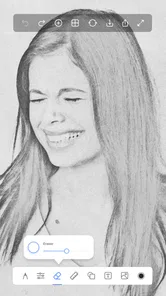
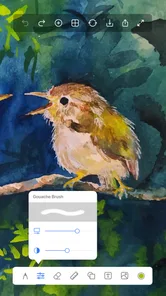
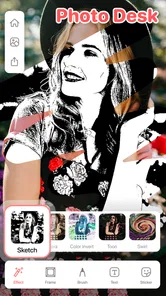
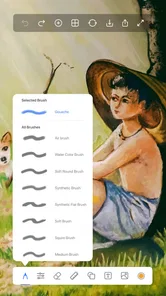
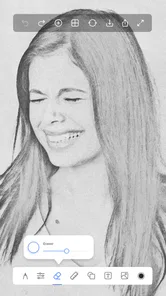
The first thing you notice about Draw, Sketch Pad is its incredibly intuitive interface. I mean, even if you’re not tech-savvy, you’re going to feel right at home here. The layout is clean and straightforward, with all the tools you need right at your fingertips. From pencils to paints, the app offers a diverse range of tools that mimic traditional art mediums, and it’s all just a tap away.
Tools and Features Galore
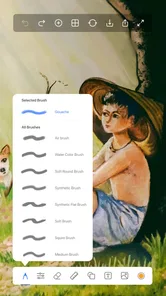
Now, let’s dive into the fun part—the tools! Whether you’re a fan of sketching with pencils or you prefer the fluidity of watercolors, this app has got you covered. I personally love the brush tool; it’s incredibly responsive and feels almost like the real thing. Plus, the color selection is vast, allowing for endless possibilities. And guess what? There’s a layering feature too! This is a game-changer for anyone wanting to add depth to their art without making a mess.
That said, a familiar-looking brush is not automatically a substitute for working with paint or pencil on paper. I’d treat the tools as a handy way to explore marks and color, not assume every stroke will behave exactly like a physical medium. If you’re learning, that distinction is useful: focus on the shape, contrast, and idea first, then decide whether the digital feel suits the kind of practice you want.
More From Our News Desk

 Lark Player:Music Player & MP3
Switching to Lark Player: A Better Fit for Music Stored on Your Phone?
Lark Player makes sense if your music already lives on your phone. Here is what changes, what does not transfer by assumption, and how to test the switch without regret.
 Tile Master® - Matching Game
Tile Master Finds Its Place in the Gaps of a Noisy Phone
OS changes rarely transform a tile puzzle, but they reshape the small rituals around it. Tile Master’s appeal lies in how well its brief, tactile rounds fit the modern phone.
 Google Docs
 Shows What Mobile Writing Still Gets Wrong
Google Docs still makes a strong case for the shared document, but its real significance is how it exposes the gap between cloud convenience and genuinely capable mobile work.

 YouTube Studio
 Is Becoming a Creator’s Daily Control Room
As publishing turns into a daily, data-led habit, YouTube Studio is becoming the control room creators reach for between uploads—not another tool for making videos.

 Tiles Hop Music & Ball Game
Tiles Hop Review: When the Beat Is Clear, Every Miss Counts
Tiles Hop turns a simple bouncing-ball premise into a sharp test of timing. Its best design is immediate and readable; its weakest moments come when recovery feels less clear than the beat.
 Piano - Music Keyboard & Tiles
: Inviting Rhythm, Unproven Recovery
A tile-tapping piano game lives or dies by timing. This resilience-focused review separates what its format promises from what players still need to verify.
Latest News


Another cool feature is the zoom function. You can get up close and personal with your work, making it perfect for those intricate details that can make or break a piece. Trust me, my artwork never looked so good!
Make a small sketch easier to manage
For a practical routine, I’d use layers to separate a rough outline from color rather than trying to make every mark perfect on the first pass. That gives you room to build an image in stages and keeps a stray color choice from taking over the whole drawing. Zoom is most useful for small details, but I’d regularly zoom back out: close-up work can look neat while the full composition feels unbalanced.
A simple everyday example is sketching a birthday-card idea while waiting for a bus, then returning to it later to refine the lettering or add color. That kind of short session suits an accessible canvas better than a tool that expects a long setup. If a child is using it, I’d start with a small drawing goal and explore tools together; the broad audience rating doesn’t replace normal guidance around sharing work online.
For a repeatable workflow, I’d begin with a loose outline, pause to check the whole image, and only then add color on a separate layer. This is more than a tidy habit: it makes experimentation less risky because the line work and color decisions are not all tangled together. If the sketch is only a quick reminder, I’d skip that extra structure and draw directly. The right amount of organization depends on whether I expect to revisit the image.
On a phone, I’d also keep the subject simple enough to work comfortably at the screen size. A small icon, a rough character idea, or a simple card motif is a better fit for a brief mobile session than an illustration full of tiny details. Zoom can help with precision, but it doesn’t change the size of the overall screen; frequent zooming in and out can interrupt the flow if the drawing depends on seeing many fine elements at once.
Where another kind of drawing app may suit you better
Compared with basic phone doodle tools, this app’s combination of brushes, color choices, layers, and zoom gives you more room to develop an image instead of making a one-pass mark-up. Compared with specialist illustration software, though, a straightforward interface can mean fewer workflow controls than an experienced artist wants. I’d choose a professional-focused alternative for complex commissions or a project that depends on precise editing and file management; I’d choose this one for approachable practice and casual art.
One useful trade-off is that a layer-based approach can make experimenting less stressful, but it also asks you to keep track of what each layer is doing. I’d name or organize layers if the app makes that practical, and avoid piling up unnecessary ones. For a quick doodle, layers may be more fuss than help; for a drawing with separate line work and color, they can save time.
The usual alternatives fall into a few broad groups. A basic doodle pad is often enough when I only need a quick mark or a child wants an uncomplicated activity. A photo editor is a better starting point when the picture already exists and I mainly want to change it. A dedicated illustration program makes more sense when precision, a carefully controlled production process, or dependable project organization is central to the work. I’d place this app between the first and last groups: more room to develop a drawing than a bare scribble tool, without assuming it can replace a specialist workspace.
That middle ground is useful for trying out an idea before committing to a more involved workflow. I might draft a logo concept or a character pose here, then redraw it in another tool if the project grows. I would not choose it as the only home for a client project that must remain editable and carefully organized, but it can be a low-pressure place to find the direction of a sketch.
If I were choosing for a child, I’d weigh simplicity and the intended Everyone rating against the actual way the device will be used. The app is suitable to consider for a broad age range, but I’d still decide whether the child should be online, whether purchases need supervision, and whether a shared device is set up appropriately. For an adult beginner, the same easy entry point can make regular practice less intimidating; for someone already comfortable with advanced art software, it may feel too limited as a main workspace.
Sharing and the cost of moving your work
Once you’ve created your masterpiece, sharing it with the world is as easy as pie. The app allows you to export your work in various formats, making it a breeze to show off your skills on social media or print them out for your personal gallery. I’ve shared a few of my creations on Instagram, and the feedback has been amazing. It’s always rewarding to see how others appreciate your hard work.
Oh, and did I mention the community feature? You can join a vibrant community of artists right within the app. It’s a fantastic way to get inspired, receive feedback, and even collaborate on projects. If you’re looking to improve your skills, this is the place to be.
Before making a detailed piece, I’d test the export process with a throwaway sketch and check how the saved image looks outside the app. That small step helps avoid surprises if you plan to print or post your work. If you later move to another drawing app, keeping exported images gives you a viewable record, but it may not preserve an editable project with layers; I’d keep important originals in the app until I know what can be carried across.
I’d make that export test early, not at the end of a long project. It answers two separate questions: whether the finished image looks suitable for the place I want to use it, and whether I can keep a copy in a form that works for my next step. A saved picture is useful for viewing or sharing, while an editable project is what I’d want if I expect to keep changing the layers. I would not assume those are interchangeable.
The community and sharing options also change how I’d approach a first session. I’d make a private, low-stakes sketch before deciding what I’m comfortable posting or showing to others. If I’m drawing with a child, I’d handle that choice myself rather than treating the presence of a community as an automatic reason to share. The creative tools can be enjoyed without turning every drawing into a public post.
What to expect from the price
The app is free to install, with in-app purchases listed at $6.99 to $13.99 per item. I’d try the basic drawing routine first and only consider paying if a specific paid option solves a problem I actually have. That is a better test than buying anything in anticipation of a feature I may never use. The overall rating is useful context, but it can’t tell me whether the brushes or workflow match my own habits.
For someone deciding whether to spend, I’d set a small test before opening any purchase screen: make a sketch, try separating its lines and color, and see whether the app fits into a real routine. If I only want an occasional doodle, paying may not improve the experience enough to matter. If I return often and find a particular paid option genuinely useful, then I can weigh it against how much I use the app. The key is to judge the purchase by a specific need rather than by the promise of more tools in general.
Switching away has a different cost from deciding whether to pay. A finished image can serve as a reference or keep a record of the work, but that does not necessarily mean the layers remain available for editing elsewhere. I’d therefore avoid making a large collection of important drawings before checking how I can preserve them. For casual sketches, that trade-off may be perfectly acceptable; for a project that needs ongoing revisions, I’d start in the software I expect to finish with.
Final Thoughts
All in all, Draw, Sketch Pad is a fantastic tool for both budding artists and seasoned pros. It provides an accessible platform to unleash your creativity without the need for expensive art supplies. Whether you’re sketching for fun or working on a serious project, this app is a must-have. So, grab your stylus and start creating some magic!
In a world where digital art is becoming more prevalent, having a reliable drawing app is essential. Draw, Sketch Pad not only meets expectations but exceeds them with its user-friendly interface and powerful features. So, if you haven’t already, go ahead and give it a try. Your inner artist will thank you!
My recommendation is strongest for beginners, casual sketchers, and families who want a low-friction way to draw, color, and experiment on a phone or tablet. I’d skip it if I needed a dependable professional pipeline or if I mainly wanted a quick annotation tool rather than a drawing space. For everyone in between, I’d install it, make a small test sketch, and see whether its approachable tools feel comfortable before investing time in a larger piece.
My clearest advice is to treat it as a convenient starting canvas, not an all-purpose answer to every art task. Try one small drawing that resembles something you actually want to make, then check how the layers, zoom, and export fit your habits. If that test feels comfortable, the app has a sensible role in a casual creative routine. If you find yourself needing more exact control or a more dependable way to carry projects between tools, choosing a specialist alternative from the outset will save frustration.
Drawing Apps: Draw, Sketch Pad Frequently Asked Questions
Is Drawing Apps: Draw, Sketch Pad free to download, and what does it cost to unlock extras?
Drawing Apps: Draw, Sketch Pad is free to download, so you can try its drawing and sketching tools without an upfront purchase. The app also offers in-app purchases, with items priced from $6.99 to $13.99 each. Check the purchase options in the app before buying, and consider whether the available extras suit the way you plan to use it.
What is Drawing Apps: Draw, Sketch Pad designed for?
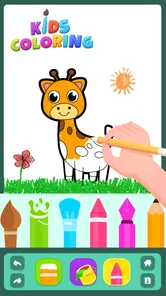
Drawing Apps: Draw, Sketch Pad is an Art & Design app for drawing, painting, doodling, coloring, and sketching. Its store description presents it as an easy-to-use option for both kids and adults, making it suitable for casual creative activities as well as practicing drawing. The app is rated for Everyone, so it is presented for a broad audience.
What features does the Drawing App: Draw, Sketch Pad offer?
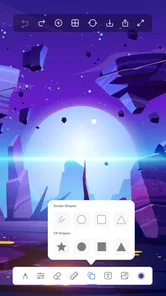
The Drawing App: Draw, Sketch Pad offers a wide range of features designed to cater to both beginners and professional artists. Users can enjoy a variety of brushes, pencils, and pens, each with customizable size and opacity settings. The app also supports layers, allowing for complex compositions, and offers color palettes and blending modes to enhance creativity. Additionally, it includes tools for symmetry drawing, shape tools, and even the ability to import images for reference or tracing.
Is the Drawing App: Draw, Sketch Pad suitable for beginners?
Yes, the Drawing App: Draw, Sketch Pad is very suitable for beginners. It provides a user-friendly interface with intuitive controls, making it easy for new users to navigate and start creating art quickly. The app also includes tutorials and tips to help beginners learn how to use the various tools and features effectively. With its simple layout and helpful guidance, anyone can start drawing and sketching with confidence.
Can I use the Drawing App: Draw, Sketch Pad on multiple devices?
The Drawing App: Draw, Sketch Pad is available on both Android and iOS, and it supports cloud synchronization. This means you can access your artwork across multiple devices as long as you are logged into the same account. Whether you're using a smartphone or a tablet, your work will be saved and synced, allowing you to continue your projects seamlessly on any compatible device.
Pros
- User-friendly interface for all ages.
- Wide range of brushes and tools.
- Supports high-resolution canvas.
- Layers feature enhances creativity.
- Offline mode available.
Cons
- Limited free version features.
- Occasional app crashes reported.
- Ads may interrupt workflow.
- Premium features can be costly.
- No direct social media sharing.