Canva: AI Photo & Video Editor
- 97.22K
- 4.8
- Installs
- 500.00M
- Price
- Free
Screenshots
Analysis by Reviewed
When I need to turn a rough idea into a usable visual without opening a desktop design program, I reach for Canva: Design, Art & AI Editor. Its most valuable quality is how it brings photo, video, and graphic work into one mobile workflow. That convenience matters most when I’m making a quick piece for a real purpose, not trying to replace a professional editing setup.
Why a suggested layout can help
The part I find most useful is not simply having design tools on a phone; it’s having a way into the work when I have a message but no clear visual plan. A layout suggestion can give me a starting structure, so I can spend my attention on what the design needs to communicate. I still make the final choices, but I’m less likely to stall at an empty canvas.
That distinction matters for AI-assisted design. I treat the suggestions as prompts, not authority: they can help me explore an arrangement, but I decide whether it fits the audience, whether the wording is accurate, and whether the result feels appropriate. For a personal announcement or a small business post, a quick human review of names, dates, and spelling is more valuable than accepting a polished-looking result without checking it.
The Latest on Canva: AI Photo & Video Editor
A practical routine for making a design
I get a smoother result when I separate the decisions. First I write down the essential message and decide what the viewer should notice first. Then I choose a layout, adapt the text, and only after that refine colors and decorative elements. This order is especially helpful on a phone, where rearranging a design to accommodate late wording changes can take more effort than it would on a larger screen.
For a set of related posts, I’d keep a small visual rule in mind—perhaps the same two colors and a similar text hierarchy—rather than making every item identical. That gives the pieces a recognizable connection while leaving room for different content. Before sharing, I’d view each at the size people are likely to see it; tiny text and low-contrast details are easy to miss while editing close up.
Who benefits from this approach
This workflow suits someone who makes occasional or recurring visual material and values speed over deep technical control. A student preparing a club announcement, a local seller making a product post, or a family member putting together an invitation can all benefit from a guided start. The app is also useful when an idea needs to move from a photo or a rough concept to a presentable graphic without switching between several tools.
It is less compelling if your main goal is detailed retouching, exact layer control, or intricate video editing. In those cases, I’d rather use a specialist editor designed around that particular job, especially on a larger screen. Canva’s strength is the joined-up, template-led path from idea to shareable design, not replacing every dedicated creative tool.
More From Our News Desk

Clash of Clans Is Won Between the Battles

Android Auto Makes the Case for Quieter Car Software

MobiOffice: Transforming Mobile Productivity with Seamless Integration

EA SPORTS FC™ Mobile Soccer: Redefining Mobile Sports Gaming

How Microsoft OneDrive Became a Mobile Productivity Giant

How Google Translate Breaks Language Barriers Effortlessly
One workspace for quick visual projects
Canva is a free art and design app from Canva, with optional in-app purchases ranging from $1.49 to $300 per item. It’s rated for Everyone 10+, and its version 2.340.0 supports Android 6.0 and later. The scale is striking—over 500 million installs, about 24 million ratings, and a 4.8 average—but what I find useful is the practical idea behind it: start with a design, then adjust the pieces rather than building every element from scratch.
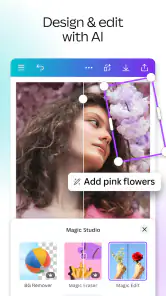
Its AI-assisted tools can suggest layouts and elements, which is helpful when I know the message but feel stuck on how to arrange it. I treat those suggestions as starting points, not finished creative decisions. A suggested layout can give a project a clear structure, but I still check whether the text is readable and whether the image actually suits the message.
How I use it in practice
For a small event, for example, I might begin with an invitation template, replace the sample wording, and adjust its colors to match the occasion. Then I can make a related social post using the same visual choices. This is where a template library saves time: I can focus on the information people need instead of figuring out every spacing and design decision from a blank page.
One useful habit is to settle the wording before spending time on decorative details. On a phone, repeatedly moving text to make room for a new sentence can become fiddly. I also check the finished design at its intended size. A label that looks fine while zoomed in may be hard to read when viewed as a small social post. Those quick checks make templates more dependable without taking away the freedom to customize them.
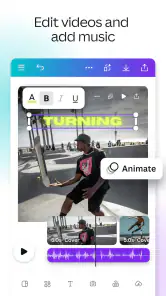
When the project includes video, the same all-in-one approach can be convenient for a short social clip or a simple announcement. I wouldn’t choose a mobile design app for precise, complex editing, but it can help when the goal is to put a clear visual together quickly. Keeping the project focused—one message, a small number of elements, and legible text—usually works better than trying to fit every idea into one design.
Where the convenience has limits
The ease of starting from a template can also make different projects feel alike. I get a more personal result when I change more than the wording: adjusting the colors, removing an unnecessary element, and choosing a layout that fits the actual content all help. AI suggestions are useful for getting unstuck, but they don’t replace my own judgment about tone or accuracy.
There is also a trade-off between doing everything on a phone and using a tool made for detailed production. Canva is well suited to quick graphics, invitations, and straightforward social content; someone who needs fine control over complex image layers or a demanding video workflow may prefer a specialist editor on a larger screen. Optional purchases are another consideration: the app is free to use, but some spending is available in-app, so I’d check the choices shown in the app before settling into a particular workflow.
Unleashing Creativity with Canva
First off, let me just say, the Canva app is like having a designer’s toolkit right in your pocket. Whether you’re a budding designer, a social media enthusiast, or just someone who loves to dabble in creativity, this app has something for everyone. It’s available on both Android and iOS, so no one gets left out.
Features that Stand Out
One of the coolest things about Canva is its AI-powered design tools. These tools are not just gimmicks; they truly enhance your design experience by suggesting layouts and elements that could elevate your project. Imagine having a design assistant that’s always ready to help—pretty neat, right?
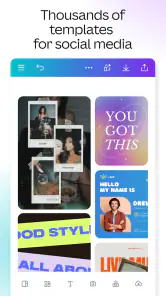
Another feature worth mentioning is the vast library of templates. From Instagram posts to wedding invitations, Canva has it all. The templates are not only varied but also stylish and modern, making it easy for anyone to create professional-looking designs in minutes.
And let’s not forget about the flexibility in customization. You can tweak colors, fonts, and layouts to your heart’s content. Plus, with the recent addition of video editing features, Canva is stepping up its game. You can now create stunning videos with just a few taps!
User Experience
Using Canva is as easy as pie. The interface is intuitive and user-friendly, which is a blessing for those of us who aren’t exactly tech-savvy. You can drag and drop elements, resize them, and see your changes in real-time. It’s like magic!
Moreover, the app’s collaborative feature is a game changer. You can invite friends or colleagues to work on a project together, making it perfect for team efforts or group projects. Sharing designs has never been simpler.
For a shared project, I’d agree on the basic look before inviting others to make changes: a consistent color palette and a clear purpose help keep feedback focused. That makes collaboration more useful than simply collecting edits. If your work is mostly detailed retouching or precise video post-production, though, a dedicated editor is likely a better fit than an all-purpose design app.
Why You Should Try Canva
If you’re someone who loves to create, Canva: Design, Art & AI Editor is a must-try. It’s not just an app; it’s a platform that nurtures creativity. Whether you’re designing for work or play, Canva provides the tools and inspiration to bring your ideas to life.
In conclusion, Canva is more than just a design app—it's a community of creators. So, why wait? Dive into the world of design with Canva and unleash your inner artist today!
Choosing the right tool for the job
Compared with a basic photo editor, Canva makes more sense when the image is only one part of a finished communication: a photo may sit alongside a title, event details, or other graphic elements. Compared with a specialist design program, it gives up some precision in exchange for templates and a more approachable mobile workflow. I’d choose based on the finished task, not on which app has the longest feature list.
For instance, if I’m making a quick notice for a community event, I can put the time and place in a clear hierarchy, adapt the look, and prepare a matching post without treating each piece as a separate design challenge. If I’m correcting subtle color issues in a photograph or assembling a complex video, that convenience matters less than the finer controls offered by a dedicated editor.
Small checks that prevent common mistakes
Before I share a design, I read it once as if I were seeing it for the first time: is the main point obvious, and can I find the practical details quickly? I also remove elements that don’t serve the message. Templates can make it tempting to keep every decorative flourish, but empty space often helps the important text stand out.
When I’m preparing several related pieces, I’d finish one version first and use it as a visual reference for the next. That is a simple way to keep colors and typography from drifting. For collaboration, I’d also give contributors a defined task—such as checking wording or suggesting a color—rather than asking everyone to alter the whole design at once.
What to expect before settling in
A common question is whether the app is suitable for a complete beginner. In my experience, templates make the first attempt less intimidating, while the ability to alter text, colors, and layout leaves room to learn by doing. The trade-off is that the many choices can distract from the message, so I’d start with one template and make only the changes the project needs.
It’s also reasonable to wonder whether the free starting point is enough. The app is free, while optional purchases are available; I’d begin with the task I actually want to complete and check whether the choices I need are accessible before building a routine around them. That avoids paying for options simply because they are visible.
For everyday use, I’d recommend it to people who want a practical bridge between an idea and a polished-looking visual, especially when they work from a phone or need a consistent style across simple graphics. I’d steer someone toward a more specialized alternative if precision, advanced photo work, or a demanding video edit is the main requirement. The best results come when I use Canva for what it does well—getting a clear design moving quickly—and keep my own judgment in charge of what the finished piece says.
I’d recommend it most to people who regularly need polished everyday visuals but don’t want to learn a specialist design program first. If you’re curious, start with one small project—a post, invitation, or simple clip—and see whether the template-led workflow suits you. For quick, flexible creation on a phone, I find it a helpful option; for exacting professional control, I’d choose a more focused tool.
Canva: AI Photo & Video Editor Frequently Asked Questions
Do I need an account to start designing in Canva?
Before downloading, consider how you plan to keep and revisit your work. Canva is built around creating and editing visual projects, and its ability to sync work across devices can be useful if you use more than one phone or tablet. You can explore the app’s available options when you open it and decide what setup best fits your workflow.
Can I export designs from Canva and share them with other people?
Canva is made for creating visual content that can be used or shared, including photo designs, collages, logos, and other graphics. The exact sharing or export choices can depend on the project and the options available in the app. If sharing is central to your plans, check the controls for your chosen design before you finish it.
Does Canva offer templates, or do I have to design everything from scratch?
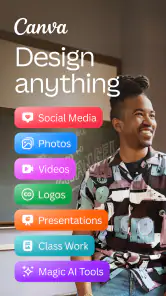
Canva includes templates and design elements that can help you shape a project without beginning with a blank page. They can be useful when you want a starting point for a graphic, invitation, presentation, or other visual material, while still allowing you to adjust the result to your needs. You can also build a design more freely if you prefer.
Can Canva be used for work as well as personal projects?
Canva can support both personal and work-related visual projects. Its range includes logos, collages, presentations, invitations, marketing materials, and graphics for sharing online, so it may suit different goals. Whether it fits a particular professional workflow depends on the type of material you need to produce and how you prefer to create and edit designs on a mobile device.
Is Canva suitable for editing video backgrounds on a mobile device?
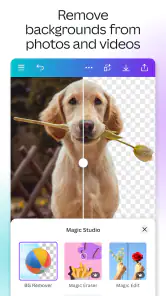
Canva’s design tools include video-background editing, alongside photo design and other visual projects. This makes the app relevant if you want to work with video as part of a broader design task rather than use it only for static graphics. Explore the available editing options in the app to see whether they match the kind of video project you have in mind.
Pros
- User-friendly interface for quick designs
- Wide range of templates for various needs
- Includes AI tools for creative enhancements
- Collaborative features for team projects
- Accessible on both mobile and desktop
Cons
- Premium features require a subscription
- Limited offline functionality
- Occasional slow loading times
- Some templates lack customization
- Ads in free version can be intrusive
- Category
- Art & Design
- Version
- 2.340.0