DMV Practice Test: Permit 2026
- 379.00
- 4.7
- Installs
- 100.00K
- Price
- Free

Screenshots
Analysis by Reviewed
Preparing for a driving permit can feel strangely difficult: the rules are available, but knowing what to study first is another matter. I tested DMV Practice Test: Permit 2026 as an education app from BrainSoft Apps, and I found its main value in turning spare minutes into focused written-test practice. It is free to install, aimed at Everyone, and works on Android devices running version 7.0 or later. The app is not a replacement for the official driver handbook or real driving instruction, but it can make revision more active and easier to organize.
My overall impression is positive, especially for someone who already has access to the correct local handbook and wants repeated question practice beside it. The app has a 4.7 average from around 9.2 thousand ratings, with more than 100 thousand installs. Those figures suggest that it has found a useful place among permit learners, although popularity alone should not decide whether it suits your study habits.
How I Decided Whether It Was Worth Using
The right question is not simply whether it has many questions
When I judge a permit-preparation app, I look at four things first. Can I use it for short sessions without wasting time? Does it help me understand mistakes rather than merely mark answers wrong? Can I combine it with the rules for my own location? And does the free experience remain useful before I am asked to pay?
Those points matter more than a polished interface. A learner may complete hundreds of practice questions and still be poorly prepared if the questions do not match the relevant jurisdiction, if explanations are too thin, or if the app encourages memorizing answer patterns instead of understanding the rule. I therefore treated this as a revision companion, not as an authority on its own.
The app’s store summary refers to DMV practice and routes for the 2026 permit and written tests. That makes it particularly relevant to people who want a current-feeling study routine rather than a static PDF. Still, “current” in an app title is not a reason to ignore the handbook issued by your local licensing authority. Road signs, penalties, procedures, and wording can vary, so I would always check an uncertain answer against the official source.
How I used it in a normal week
My most useful approach was not opening it randomly and answering questions until I became tired. I used it in three stages. First, I worked through a short session to discover weak areas. Next, I reviewed every mistake while the question was still fresh. Finally, I returned later and tried similar material without looking at my previous answer.
That workflow exposes a common problem with practice apps: recognition can feel like learning. If I see the same question repeatedly, I may remember its position or wording without understanding why the answer is correct. To avoid that, I paused before selecting an answer and explained the rule to myself in plain language. When I could not do that, I treated the question as unfinished even if I had guessed correctly.
More From Our News Desk

Clash of Clans Is Won Between the Battles

Android Auto Makes the Case for Quieter Car Software

MobiOffice: Transforming Mobile Productivity with Seamless Integration

EA SPORTS FC™ Mobile Soccer: Redefining Mobile Sports Gaming

How Microsoft OneDrive Became a Mobile Productivity Giant

How Google Translate Breaks Language Barriers Effortlessly
A realistic use case is a learner who takes public transport to work or school. A short session during the journey can be useful, but I would not attempt to study while driving, cycling, or crossing a busy street. At home, I would keep the official handbook nearby and note topics that need a deeper reading. This makes the app part of a routine instead of the entire routine.
What makes it useful for quick revision
The strongest fit is repetition with a purpose. Permit learners often know that they should study, yet postpone it because opening a long manual feels like a major task. A practice-test format lowers that barrier. Answering one question creates an immediate decision, and a wrong answer gives me a clear reason to return to the relevant rule.
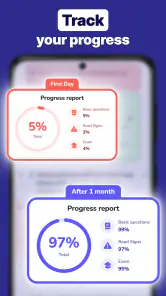
I also like the psychological advantage of visible progress, even when the session is brief. A learner who has ten spare minutes can do something concrete instead of waiting for a large block of free time. That does not guarantee readiness, but it can make consistency more realistic.
Another useful habit is to separate “knowledge mistakes” from “careless mistakes.” If I misunderstood a sign or right-of-way rule, I need to study. If I knew the rule but rushed through the wording, I need to slow down and read more carefully. Treating both errors the same way wastes revision time. With this app, I would keep a small list of concepts rather than simply chasing a higher score.
Where this app wins against ordinary study methods
Compared with reading only a handbook, the app gives me immediate retrieval practice. Reading can create the comforting feeling that the material looks familiar, while a question forces me to produce an answer. That distinction is important before a written test.
Compared with searching the web for random quiz pages, a dedicated app is easier to return to and less distracting. I do not have to sort through unrelated results every time I want a short practice session. The focused format is especially helpful for learners who lose momentum when study involves too many tabs or sources.
Compared with watching general driving videos, it is more suitable for checking factual recall. Videos can demonstrate situations well, but they are not always efficient for drilling signs, rules, and test-style wording. I would use video or instructor guidance for visual situations and this app for repeated written preparation.
The important advantage is not that it replaces the handbook; it gives the handbook a practical testing loop. I read a rule, test myself, identify the gap, and return to the source. That combination is stronger than relying on either reading or quizzes alone.
Small techniques that improved my results
One technique was to answer aloud before touching the screen. This reduced guessing based on the shape of the options and made it easier to notice when I only recognized a familiar phrase. Another was to rewrite a confusing rule as a short scenario, such as who moves first and what each driver should watch for. That turned abstract wording into something I could picture.
I also avoided doing only comfortable topics. It is easy to spend a whole session answering familiar sign questions because the results feel encouraging. A better plan is to reserve part of each session for the area I repeatedly miss. If the app lets me encounter those questions again, I would use that repetition deliberately rather than treating it as a score chase.
Finally, I would practice under mild time pressure only after understanding the material. Speed is useful later, but early speed can hide confusion. The written test rewards accurate reading, and rushing through practice can teach the wrong habit.
Where It Fits, Where Other Options Fit Better, and What Switching Costs
The audience I would recommend it to
I would recommend this app to a first-time permit learner who wants a simple daily study tool, a busy student who needs short sessions, or an adult returning to the licensing process after many years. It is also a reasonable supplement for someone who has read the handbook but wants to discover which topics still feel uncertain.
It can be useful for a learner who prefers active practice over highlighting pages. The question format gives immediate feedback and makes revision less passive. People who study well in small bursts may get more from it than they would from promising themselves a long weekend session that never happens.
The free price is another practical advantage. You can begin without committing money, which makes it easier to see whether the style matches your needs. At the same time, in-app purchases range from $2.49 to $34.99 per item, so I would inspect any upgrade screen carefully and decide whether extra access genuinely improves my study plan.
Who should be cautious
I would be cautious if you need guaranteed jurisdiction-specific guidance and are unwilling to cross-check material. No practice app should be treated as the final word on local law. If your test is imminent and you have not read the official manual, I would prioritize that manual first and use this app to reinforce it.
I would also hesitate to recommend it as the only resource for someone who struggles with reading comprehension, anxiety, or road situations that are easier to understand visually. In those cases, an instructor, accessible handbook, or supervised explanation may be more valuable. Practice questions can reveal a gap, but they cannot always explain the real-world judgment behind a rule.
Learners who dislike repeated quizzes may also find the format tiring. The app is built around practice, so it is not the best choice if you want a full driving course, detailed lessons from an instructor, or a complete replacement for behind-the-wheel training. It prepares for written knowledge; it does not create driving experience.
How it compares with the usual alternatives
The official handbook remains the best reference for exact local requirements. Its weakness is that it may not tell me which details I have actually retained. This app addresses that weakness through active recall, but the two work best together rather than competing directly.
A classroom or instructor-led course offers explanation, context, and the chance to ask questions. That is better when I keep misunderstanding a topic or need accountability. The trade-off is time, scheduling, and usually a more involved commitment. This app is more convenient, but it cannot respond to my confusion like a person can.
General quiz websites can be useful for a second opinion, especially if I want to compare wording. They may also be easier to access on a computer. However, moving between scattered pages can make a study routine less consistent. I would choose this app when convenience and repeat practice matter, then use official material to settle disagreements.
Flashcards are another alternative. They work well for signs, definitions, and short facts, but they can oversimplify situations involving right of way or safe decisions. A practice-test app is better for reading a complete question and weighing alternatives. Flashcards remain useful as a supplement, not necessarily as a substitute.
The cost of changing study methods
Switching to this app is inexpensive in the beginning because it is free to install, but the real cost is attention. If I abandon the handbook and rely entirely on quiz sessions, I may become familiar with test patterns without learning the underlying rules. That is a costly mistake because confidence can rise faster than actual understanding.
There is also a time cost when changing from one resource to another. I would avoid restarting from the beginning every time I try a different tool. Instead, I would keep a short record of missed concepts: signs, lane rules, stopping requirements, or any other topic that causes repeated errors. Then each resource has a job. The app identifies weaknesses, the handbook verifies the rule, and an instructor or practical lesson handles questions that require judgment.
Before paying for an in-app item, I would use the free portion long enough to answer three questions: Do I return to it consistently? Are the explanations helping me, rather than merely showing a result? And does it support the location and test I am preparing for? If the answer to any of these is no, spending more will not solve the underlying problem.
Version, access, and everyday practicality
The current version is 1.1.8, and the app is available for Android devices from version 7.0 onward. That broad operating-system requirement makes it approachable for people using an older phone, provided the device meets that minimum. I would still keep the phone updated where possible and avoid depending on any app as the sole place for important study material.
Because the content rating is Everyone, it is suitable for a wide range of learners from an age-rating perspective. That does not mean every learner will find the wording equally easy, so younger students may still benefit from discussing difficult rules with a parent, teacher, or instructor.
The developer is BrainSoft Apps, and the app’s adoption gives it a reassuring starting point for a free study tool. I would nevertheless judge it by my own results: whether I can explain missed answers, whether my weak topics shrink, and whether I feel prepared without confusing practice familiarity with legal knowledge.
My recommendation
I recommend DMV Practice Test: Permit 2026 as a practical revision companion, especially for people who need flexible sessions and prefer answering questions to reading continuously. Its best role is between handbook study sessions: use it to test recall, identify weak areas, and decide what deserves another careful read.
I would not recommend using it alone, paying immediately, or assuming a strong practice score automatically means you are ready for the official exam. The better plan is simple: read the local handbook, practice here, investigate every mistake, and repeat the difficult topics after a delay. That workflow makes the app more valuable than casual tapping through quizzes.
For me, the decision comes down to study style. If you want a focused Android education app for repeated permit-test practice, it is worth trying at no upfront cost. If you need personalized teaching, comprehensive local legal guidance, or hands-on driving preparation, choose an official manual, instructor, or course as the main resource instead. Used in the right place, DMV Practice Test: Permit 2026 can turn otherwise wasted minutes into useful preparation without pretending to be the whole licensing process.
DMV Practice Test: Permit 2026 Frequently Asked Questions
Who develops DMV Practice Test: Permit 2026, and what devices can run it?
DMV Practice Test: Permit 2026 is an education app developed by BrainSoft Apps. It is intended for mobile use, and the listed minimum operating-system requirement is Android 7.0. Before downloading, check that your device meets this requirement and has enough available storage for the installation. The app is free to download, though optional in-app purchases are available.
What is DMV Practice Test: Permit 2026?
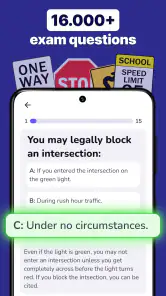
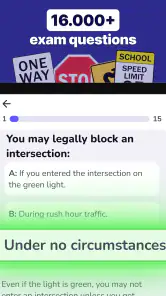
DMV Practice Test: Permit 2026 is a study app designed to help learners prepare for the written knowledge exam required for a driving permit. It typically includes practice questions based on common traffic laws, road signs, safe-driving rules, and licensing topics. The app is useful for reviewing material in short sessions, although users should also consult their official state DMV handbook.
Does DMV Practice Test: Permit 2026 include questions for every U.S. state?
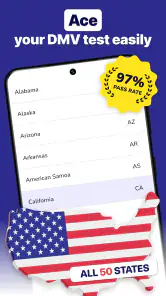
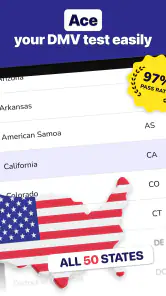
The app may provide practice material for multiple states, but coverage and question availability can vary by location and app version. Before relying on it, select your state and compare the topics with your local DMV requirements. Driving laws, test formats, and passing scores are not identical nationwide, so the official handbook should remain the primary source for state-specific information.
Can this app guarantee that I will pass my permit test?
No study app can guarantee a passing result. DMV Practice Test: Permit 2026 can help you identify weak areas, become familiar with multiple-choice questions, and improve recall through repeated practice. However, success depends on understanding the rules rather than memorizing answers. Read the official driver manual carefully and use the app as a supplement to your preparation.
Is DMV Practice Test: Permit 2026 suitable for beginners?
Yes, the app can be helpful for beginners who are starting to learn road signs, traffic regulations, and basic safe-driving principles. Practice quizzes make it easier to study without feeling overwhelmed, especially when used regularly. New learners should review explanations carefully and avoid guessing their way through tests, since understanding the reasoning behind each answer is more valuable than simply achieving a high score.
Pros
- Covers road signs
- rules
- and realistic permit-test topics.
- Practice sessions help identify weak areas quickly.
- Useful for studying in short sessions without a classroom.
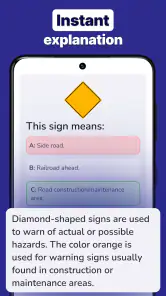
- Question explanations can reinforce the correct answers.
- Suitable for learners preparing for several U.S. state exams.
Cons
- State-specific content may vary in depth and accuracy.
- Some advanced features may require payment or subscriptions.
- Repeated questions can make practice feel less challenging.
- It cannot replace reading your official DMV handbook.
- Ads may interrupt study sessions in the free version.
- Category
- Education
- Version
- 1.1.8