Word Pizza: Crossword Games
- 3.95K
- 4.9
- Installs
- 10.00M
- Price
- Free
Screenshots
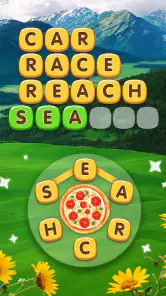
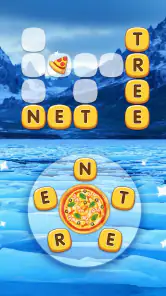
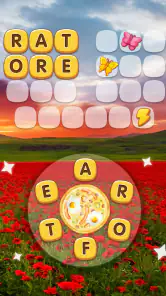
Analysis by Reviewed
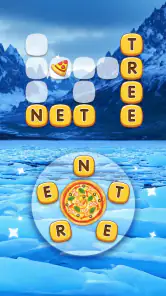
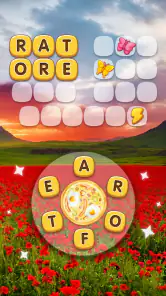
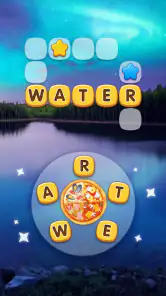
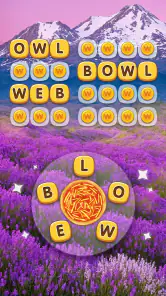
I like word games that are easy to pick up for a few minutes but still make me pause over a clue, and Word Pizza: Crossword Games fits that mood. It is a free word puzzle from Malpa Games: you connect letters to uncover words, with the crossword format giving each answer a place in a larger puzzle. The idea is straightforward, but the enjoyment comes from spotting a word you nearly missed and seeing how it fits with the others.
My main recommendation is to treat it as a casual mental break rather than a substitute for a deep, clue-heavy crossword. Its appeal is the approachable letter-linking loop, which works well when you have a little spare time and want something more active than scrolling. It is less suited to players who want long-form cryptic clues, a social competition, or a game whose whole point is learning specialist vocabulary.
What the free entry point gives you
I’d judge the free starting point by whether the letter-solving loop feels satisfying before considering any optional purchases. In my view, trying a few puzzles first is the clearest way to decide, since the game’s value depends more on enjoying that repeated search than on how quickly you progress. The purchase range makes it sensible to check each item carefully rather than treating spending as part of the entry price.
A low-commitment way to try the puzzle
The game is free to install, so you can try its central word-finding activity without paying an upfront price. That makes the decision simple for anyone curious about letter puzzles: download it, see whether the solving rhythm suits you, and decide from your own experience. The free starting point is a real advantage, especially if you are comparing it with paid word games and do not yet know which style you prefer.
Free access should not be confused with a guarantee that every possible convenience or extra is included. The game offers in-app purchases ranging from $0.49 to $99.99 per item. That is a wide range, so I would look at the individual purchase details in the app before spending rather than assuming a particular item is necessary or represents the best value. You can approach the core game as a free option first and make any later purchase decision separately.
That distinction matters because word games often feel inexpensive at the start but can encourage spending when a player gets stuck or wants to move faster. I would set a personal limit before buying anything, particularly if the game is being used as a quick daily pastime. The useful question is not simply whether there are purchases, but whether the way you enjoy the puzzles makes any purchase worthwhile to you.
Where the value comes from
The value here is chiefly in the repeatable mental exercise. Connecting letters asks you to test possible words, notice patterns, and reconsider a set of letters when your first guess goes nowhere. The crossword structure provides context: an answer is not just a word you can form, but part of a puzzle that rewards looking at the board as a whole. That gives the basic mechanic more shape than an isolated word scramble.
More From Our News Desk
Weather by Xiaomi Review: Clear at a Glance, Less Clear Up Close

X Under Pressure: Can It Recover When Posting Goes Wrong?

Clash of Clans Is Won Between the Battles

Android Auto Makes the Case for Quieter Car Software

MobiOffice: Transforming Mobile Productivity with Seamless Integration

EA SPORTS FC™ Mobile Soccer: Redefining Mobile Sports Gaming
I find this format especially useful when I want a small task with a clear stopping point. A short session can fit into a wait, a quiet break, or the few minutes before bed. You do not need to arrange a game with anyone, and the premise is easy to understand again after putting the phone down. For a casual player, that convenience is a meaningful part of the value, not just a minor feature.
There is also a satisfying balance between guessing and reasoning. If you stare at the available letters one way, a familiar answer may remain invisible; changing the order you scan them can help. My practical tip is to stop trying to force the first obvious word and instead look for a different starting letter or a less familiar combination. That small change often makes a word puzzle feel less like blind trial and error.
How it compares with other word games
Compared with a traditional crossword, this is a more immediate kind of challenge. Conventional crosswords rely on written clues, intersections, and sometimes cultural references; Word Pizza puts the emphasis on forming words from letters. That makes it easier to begin without knowing crossword conventions, but it also means it will not scratch the same itch for someone who enjoys interpreting a clever clue or building a whole grid from definitions.
Against a basic word-search game, the difference is the act of creating answers from a shared set of letters rather than scanning a fixed grid for words already placed there. If you enjoy hunting visually through rows and columns, a word search may be more relaxing. If you prefer actively testing combinations and seeing how answers contribute to a crossword puzzle, this is the more natural fit.
It also differs from competitive word games where the pressure comes from an opponent, a clock, or comparing scores. The attraction here is private problem-solving at your own pace. That can be a relief when you want to unwind, but it may feel too solitary for players who need rivalry or social interaction to stay interested.
A small-session habit that suits the format
A useful way to decide whether this belongs on your phone is to try it in the kind of spare moment you actually have, rather than saving it for a long, uninterrupted session. For instance, during a short wait, I would solve until I reach a word that makes me pause, then give myself a moment to scan the letters methodically before moving on. The point is not to turn the break into a test; it is to notice whether the little cycle of searching and recognition feels satisfying to you.
If you tend to play in brief bursts, it helps to leave the puzzle at a natural stopping point instead of pushing through simply because you have started. That keeps the game in the role of a casual pastime and makes it easier to return with fresh attention. On the other hand, anyone who wants a structured session with a clear challenge arc may find this kind of flexible play too loose.
Tradeoffs and the kind of player who will enjoy it
The main tradeoff is a focused format: I find it easy to fit into spare moments, but it won’t replace clue-rich crosswords or competitive word games for players who want those experiences. It suits people who enjoy testing letter combinations at their own pace, especially when a brief puzzle break is all they need. If that simple rhythm feels repetitive, a game with more varied puzzle types is likely a better use of your time.
When the format can feel limiting
The simplicity that makes the game approachable is also its main limitation. If you want rich clue writing, a story, or a broad range of puzzle mechanics, a letter-connection crossword may start to feel repetitive. The pleasure depends on whether finding hidden words is enough to keep you engaged. I would not choose it as my only word game if I wanted a regular change between logic puzzles, trivia, and more elaborate crossword challenges.
Another tradeoff is that a stuck moment can turn into repeated guessing if you do not change your approach. Rather than tapping random combinations, I recommend scanning the letters in a deliberate order, testing likely word endings, and then returning to the crossword context to consider what kind of answer might fit. This is a useful way to keep the puzzle mentally engaging, though players who dislike getting temporarily stuck may still prefer a more guided game.
Because purchases are available, players who are sensitive to optional spending should pay attention to their own habits. If you tend to buy your way past difficulty in mobile games, the broad purchase range is a reason to be deliberate. You can still try the free game, but decide in advance whether you are comfortable with in-app offers and avoid treating a purchase as the default response to a challenging puzzle.
Everyday situations where it works well
For example, I would use it during a short break when I want to wake up my attention without committing to a long session. I might solve a few words, put the phone away when the break ends, and return later without needing to remember a complicated story or strategy. That makes the game a better fit for scattered moments than for a planned evening of intensive puzzling.
It can also work as a shared, low-pressure activity. Two people can look at the same letters and suggest possibilities, which turns the puzzle into a small conversation rather than a competition. This works best when both people enjoy searching for words; it is not the right pick if your group wants fast turns, clear team rules, or a head-to-head score.
For younger players, the age rating is Everyone, so the stated content classification is broad. I would still choose a game based on the child’s reading ability and patience, not the label alone. An adult and child can take turns suggesting words, while a player who is just learning to read may need help with unfamiliar vocabulary and spelling.
Who should try it—and who should pass
I would recommend it to casual word-game fans, people who enjoy rearranging letters, and anyone looking for a free starting point for short puzzle sessions. Its popularity is substantial, with an average rating of 4.9 from around 521,000 ratings and more than 10 million installs. Those figures suggest that many players have found its accessible style appealing, though they cannot tell you whether you personally will enjoy its particular pace.
It is a weaker choice for someone who wants a traditional clue-based crossword, a highly varied puzzle collection, or a competitive multiplayer experience. If those are your priorities, a dedicated crossword app or a word game built around versus play will likely serve you better. I would also skip it if you dislike forming words from letter sets or find repeated word-searching tiring, since that activity is the central draw.
The game first appeared on October 31, 2017, and its current version is 5.3.16. It requires Android 8.0 or later. These details are useful if you are checking compatibility before installing, especially on an older device. The title is rated for Everyone, and the free download makes it easy to test the core experience before deciding whether it belongs in your regular rotation.
What to check before committing
If you are weighing whether to keep playing after your first try, I would separate three questions: do you enjoy finding words from a letter set, does the crossword context add enough purpose, and are you comfortable with the available purchase choices? Those are more useful tests than trying to judge the game by how quickly you move through a puzzle. A slower session can still be rewarding if you like searching carefully.
The game is listed as a word game by Malpa Games, and its current version is 5.3.16. It is free to install, with in-app purchases available, so the sensible approach is to begin without assuming you need to spend. If you are using an older Android device, check that it meets the Android 8.0 minimum before installing. For an iPhone or iPad, check the relevant store’s compatibility information for your device before downloading.
My verdict on whether it is worth installing
Word Pizza is worth trying if you want a straightforward, free-to-start word puzzle that fits into spare moments. I like the clear focus on making words from letters and the way the crossword context gives each discovery a little more purpose. It does not need a complicated pitch: the appeal is the simple satisfaction of seeing a hidden word that was right in front of you.
I would keep expectations aligned with that focused design. This is not the choice I would make for intricate clues, a varied campaign, or social competition, and the in-app purchase range is worth keeping in mind if you are careful about spending. But if you enjoy letter puzzles and want to judge the game for yourself without an upfront cost, installing it is a reasonable low-risk decision. Try a few sessions, notice whether you enjoy the search rather than just the answers, and spend only if a specific purchase genuinely improves your experience.
Word Pizza: Crossword Games Frequently Asked Questions
What is Word Pizza: Crossword Games?
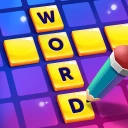
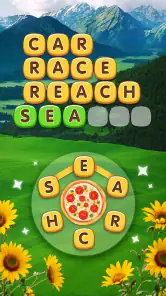
Word Pizza: Crossword Games is a word-search and crossword-style puzzle game built around finding words from a set of letters. Players connect letters to fill a grid and progress through levels, with a cooking-themed presentation that gives the game its name. It is designed for short, casual sessions, though the difficulty can rise as puzzles introduce more words or less obvious letter combinations.
How do you play Word Pizza: Crossword Games?
Each puzzle gives you a group of letters and a crossword-like grid containing empty spaces. Swipe or drag across the letters in the right order to form a word; correct answers fill matching spaces on the board. You can try different combinations when you get stuck, and many versions include hints or other assistance. The core rules are simple, but spelling knowledge and patience help on tougher levels.
Is Word Pizza: Crossword Games free to download and play?
The game is generally offered as a free download, so you can begin playing without paying upfront. However, free-to-play puzzle games may include advertisements, optional in-app purchases, or paid items such as hints and other boosters. Availability and specific purchase options can vary by platform, region, and version. Check the current App Store or Google Play listing before downloading, and review purchase settings if children will play.
Can I play Word Pizza: Crossword Games offline?
Some levels may be playable without an internet connection, which can make the game convenient for travel or times when Wi-Fi is unavailable. Online access may still be needed for features such as advertisements, events, updates, or syncing progress, depending on the version. Because offline behavior can change, test the game before relying on it during a trip, and avoid assuming that every feature will work without a connection.
Is Word Pizza: Crossword Games suitable for children, and what should I know before downloading?
The basic word puzzles are generally accessible to a broad range of ages, and they can encourage spelling and vocabulary practice. Still, difficulty and reading level may make some stages challenging for younger players. Before installing, check the store listing’s age rating, privacy details, and information about ads or in-app purchases. Parents may also want to enable purchase restrictions and supervise any online features available in the current version.
Pros
- Combines word searches with crossword-style puzzles for varied play.
- Short levels make it easy to play during a quick break.
- Hints can help when you get stuck on a puzzle.
- Progressive difficulty offers a gentle start for newcomers.
- Works well as a casual way to practise spelling and vocabulary.
Cons
- Some answers may feel obscure or depend on less familiar vocabulary.
- Hints and other aids may be limited unless you earn or purchase them.
- Repeated puzzle patterns can make later levels feel less fresh.
- Small letter tiles may be harder to use on compact screens.
- Ads may interrupt play
- depending on the version and settings.
- Category
- Word
- Version
- 5.3.16