Block Blast!
- 44.11K
- 4.8
- Installs
- 500.00M
- Price
- Free
Screenshots


Analysis by Reviewed
Block Blast! is an intriguing puzzle game that combines elements of classic block games with a modern twist. This app has quickly become one of my go-to games for passing time and keeping my mind sharp. Let me walk you through my experience with this engaging app.
A simple routine that rewards a pause
My usual approach is to scan the available pieces before placing anything, then protect open space rather than chasing an immediate line clear. That small pause matters: a placement that clears a row can still leave an awkward pocket for the next shape. I get the most out of the game when I treat each move as a choice about the board I will have afterward, not just a quick way to score.
It suits short breaks because the central task is easy to understand without a long tutorial or a complicated story to follow. I might play while waiting for an appointment or settling in after a commute, then stop when I need to do something else. If you prefer puzzles with a defined ending, a narrative, or a sequence of carefully authored levels, this open-ended block-placement loop may feel repetitive instead.
Reads About Block Blast!
Settings and habits that make play smoother
I would check the sound controls before settling into a longer session. The effects are pleasant, but a quiet waiting room or a late evening calls for a different setup than playing at home. I also find it useful to decide in advance whether I am playing casually or trying to beat my own result; without that intention, one more placement can easily turn a tiny break into a much longer one.
A practical habit is to pause whenever the offered shapes create a tempting quick clear. I look at all the pieces first, then consider which placements preserve broad, usable areas of the grid. This is especially useful when one piece is bulky or irregular: fitting it into the first available gap can make later moves much harder. There is no guaranteed sequence, so the point is not to predict every future shape but to avoid choices that needlessly box me in.
The Addictive Gameplay
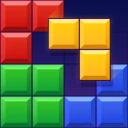
From the moment I downloaded Block Blast!, I was hooked. The concept is simple yet incredibly addictive. You have to drag and drop blocks onto a grid, forming full lines to clear them, much like the traditional Tetris game. However, in Block Blast!, the challenge escalates as the grid fills up, and you have to strategically place blocks to prevent it from overflowing.
One of the features I adore is the game’s ability to keep me on my toes. It’s not just about fitting blocks but thinking several steps ahead. I often find myself planning my moves like a chess player, trying to anticipate which block will come next and how best to utilize the available space. This aspect of foresight adds a layer of depth that keeps the game exciting.
More From Our News Desk

Clash of Clans Is Won Between the Battles

Android Auto Makes the Case for Quieter Car Software

MobiOffice: Transforming Mobile Productivity with Seamless Integration

EA SPORTS FC™ Mobile Soccer: Redefining Mobile Sports Gaming

How Microsoft OneDrive Became a Mobile Productivity Giant

How Google Translate Breaks Language Barriers Effortlessly
Reading the board instead of rushing
For a more deliberate run, I use a repeatable check: identify the tightest gaps, see whether any current piece can fill them cleanly, and keep at least one flexible region open for shapes that do not fit neatly. Clearing a line is satisfying, but it is not automatically the best move if it splits the remaining space into narrow fragments. That trade-off is what gives this familiar format its planning element.
The comparison with falling-block games is helpful, but the feel is different. Here I choose where to place the pieces rather than reacting to a piece dropping in real time, so I can slow down and inspect the board. That makes it friendlier for a calm, stop-and-think session, though players who want fast reactions or a competitive head-to-head match may prefer another kind of puzzle.
Visuals and Sound Effects
Visually, the app is a treat. The color palette is vibrant but not overwhelming, making the game easy on the eyes during those long gaming sessions. The interface is clean and intuitive, which is a massive plus for any app. I didn’t have to spend any time figuring out the controls, which means more time enjoying the game.
The sound effects deserve a mention too. They are subtle yet effective, adding to the overall immersive experience. There’s a satisfying "click" when a block fits perfectly into place and a rewarding "whoosh" when you clear a line. It’s these little touches that enhance the gameplay and make it more engaging.
Who will enjoy it, and where it can fall short
I can see why this puzzle appeals to such a broad audience: it is free to start, rated for Everyone, and has reached over 500 million installs. HungryStudio is the developer, and the game has a 4.8 average from around 1.9 million ratings. Those figures point to wide appeal, but they do not mean every player will enjoy the same loop. I would recommend it to someone who likes spatial reasoning in brief bursts; I would skip it if I needed a rich campaign, elaborate controls, or a strong sense of progression from one session to the next.
There is also a practical difference between being free to download and having no optional spending. In-app purchases range from $4.99 to $49.99 per item, so I would check the purchase prompts carefully, particularly if a child uses the device. The age rating is Everyone, but that does not remove the value of ordinary purchase safeguards. The current version is 7.1.8, and the minimum operating system is Android 5.0.
Challenges and Rewards
Block Blast! keeps things interesting with its variety of challenges. As you advance, the game introduces new block shapes and patterns that require different strategies. This ever-evolving gameplay ensures that you’re always learning and adapting, which is great for keeping boredom at bay.
Moreover, the rewards system is a fantastic incentive to keep playing. Completing levels earns you points, which can be used to unlock new themes and backgrounds. It’s a nice touch that allows for some personalization and gives players something to work towards.
Limits of mastering the puzzle
Even with careful play, a bad run can happen because the pieces do not always leave an easy fit. I do not treat every crowded board as proof that I made a mistake; sometimes the useful response is simply to change priorities and make the best placement available. This is a good fit for people who enjoy adapting, but less satisfying for anyone who expects a perfectly controllable puzzle or a guaranteed route to a high score.
The game’s simple presentation is also part of its trade-off. It helps me get into a round quickly, but it offers less variety than puzzle games that change their rules, introduce a story, or build toward a final stage. If I want a focused spatial challenge, I choose this; if I want discovery or a fresh mechanic, I look elsewhere. Its original release was September 23, 2022, and the straightforward core remains the main reason I return.
Choosing the right moment to play
I find the game especially useful in situations where I have enough attention to think but not enough time to commit to a long session. A few moves while waiting for a train or during a quiet pause can feel complete on their own, because the board gives me an immediate problem to solve. For a more focused session, I set aside a little longer and play with the aim of keeping the grid workable rather than making every move as quickly as possible.
That flexibility is also a reason to be deliberate about stopping. The simple loop makes restarting feel effortless, and a personal high-score goal can tempt me to continue after the break I intended to take. I get better use from it when I treat a round as a small activity rather than something I need to finish; that mindset makes it easier to put the phone away without feeling that I left a story or a task incomplete.
Small decisions that improve consistency
When several pieces are available, I try not to judge them one at a time. I compare their shapes as a group and ask which arrangement leaves the fewest awkward single-cell gaps. A move that looks slightly less satisfying in the moment may preserve a clean rectangle or a broad lane for later placements. This is not a formula for winning every run, but it is a useful way to make fewer rushed decisions.
I also avoid filling the center simply because it is convenient. Keeping usable space connected gives me more options when the next shapes are unfamiliar, while scattered empty pockets can look plentiful and still be difficult to use. If the board is already crowded, I shift from long-term planning to making the safest available placement and clearing space where possible. That change of priorities is more practical than trying to rescue every run with an ideal move.
How it compares with other puzzle choices
Compared with a traditional falling-block game, this is a quieter kind of challenge: I place the pieces on my own terms instead of making quick decisions while shapes descend. That makes it easier to play at a relaxed pace and less dependent on reaction speed. The trade-off is that it does not deliver the same urgency or momentum, so I would choose a real-time block game when I want pressure and this one when I want room to consider my options.
It also differs from level-based match puzzles, where each board tends to have a defined objective and a clear win condition. Here, the appeal is managing space and keeping a run going, not working through a chain of authored stages. If you like gradually learning a particular puzzle’s rules, a campaign-based alternative may give you more variety. If you want a familiar spatial task that can be understood quickly, this format is a better match.
What to expect before downloading
The game is free to download, but optional purchases are part of the experience, so I would use the device’s purchase controls if children may play on it. The Everyone age rating can help families understand its general suitability, but it is still sensible to talk about spending before handing over a device. The same care applies to anyone who prefers not to see purchase prompts in a casual game: knowing your limits in advance makes it easier to keep the puzzle relaxing.
For a player wondering whether a connection is necessary, the game’s appeal is clearly suited to moments away from a steady connection, which is useful on a commute or while traveling. I would still avoid assuming that every surrounding app function behaves identically offline; the central puzzle is the reason I would bring it along. It is also a lightweight choice in terms of learning: the basic action is straightforward, while improving comes from noticing how each placement affects the shape of the remaining board.
Final Thoughts
In conclusion, Block Blast! is a delightful app that offers hours of entertainment. Whether you’re looking to kill time on a commute or just need a mental workout, this game is up to the task. The combination of strategic gameplay, appealing visuals, and rewarding challenges make it a standout in the crowded field of puzzle games.
I highly recommend giving Block Blast! a try. It’s one of those apps that’s easy to pick up but hard to put down, and that’s the hallmark of a great mobile game. So, go ahead and give it a download – your brain will thank you!
Block Blast! Frequently Asked Questions
Can I play Block Blast! without an internet connection?
Yes. Block Blast! is presented as a game you can play and enjoy without Wi-Fi, making it a convenient choice for a puzzle break while travelling or when you are away from a connection. You can focus on placing blocks and clearing the board at your own pace. If you use online features or make purchases, those actions may require an internet connection.
What kind of puzzle experience does Block Blast! offer?
Block Blast! is a block-placement puzzle game that invites you to fit shapes into open spaces and clear the board. The basic idea is easy to grasp, but deciding where each piece will be most useful calls for planning. It suits players looking for a straightforward puzzle to dip into, with the challenge coming from making the best use of the available space.
Is Block Blast! suitable for children?
Block Blast! is a puzzle game with an Everyone content rating, so it is presented as suitable for a broad audience, including children. Its block-placement challenges are easy to understand, while planning moves can keep players thinking. Parents may still want to review the game’s in-app purchase options and any advertising before letting a child play, particularly if the device allows purchases.
What is Block Blast! and how does it work?
Block Blast! is an engaging puzzle game designed for both Android and iOS platforms. It challenges players with a series of block-based puzzles that require strategic thinking and planning. The objective is to clear the board by fitting blocks into the right spaces, similar to a Tetris-style game. Each level increases in difficulty, providing hours of entertainment as players strive to achieve high scores and unlock new challenges.
Is Block Blast! free to play?
Yes, Block Blast! is free to download and play on both Android and iOS devices. However, it does offer in-app purchases for players who wish to enhance their gaming experience. These purchases can include additional lives, special blocks, or other game-enhancing features. While in-app purchases can provide advantages, they are entirely optional, and players can enjoy the game fully without spending any money.
Pros
- Intuitive and easy-to-use interface.
- Offers a wide variety of block puzzles.
- Regular updates with new levels.
- Supports offline gameplay mode.
- Includes daily challenges for rewards.
Cons
- Contains ads that can be intrusive.
- Some levels require in-app purchases.
- Limited hints without purchase.
- Occasional bugs in lower-end devices.
- Can be addictive and time-consuming.
- Category
- Puzzle
- Version
- 7.1.8