Sky Words: Word Game
- 327.00
- 4.8
- Installs
- 500.00K
- Price
- Free
Screenshots
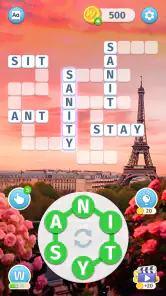
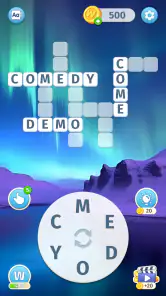
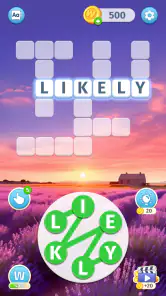
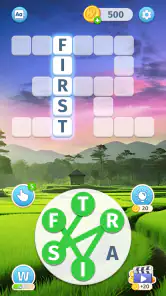
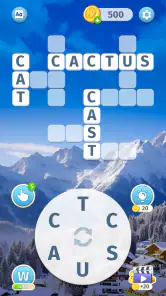
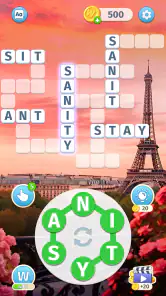
Analysis by Reviewed
When I want a word game that fits into a spare moment, I look for two things: a clear puzzle and a pace I can control. Sky Words: Word Game is built around making words from letters, so it is easy to understand without a long tutorial. I find it most enjoyable when I treat each round as a small mental reset rather than a test I need to ace. That makes it a natural choice for a quiet break, though players who want deep strategy or a social competition may prefer a different kind of word game.
A simple routine for each puzzle
My practical approach is to scan the available letters before trying combinations, then look for familiar short words and use them to spot less obvious patterns. If I get stuck, I pause instead of tapping randomly; a few seconds away from the screen can make a combination stand out. This habit keeps the game relaxing and helps me avoid turning a casual puzzle into a frustrating hunt. It is also a useful way to play when I have only a few minutes and do not want to lose track of a more involved task.
For a realistic everyday use, I can see myself opening it while waiting for a coffee or winding down after work. A short session suits the word-building premise, while a longer one works when I want to focus on vocabulary. I would not choose it as a substitute for a structured language course: finding words can be enjoyable practice, but it does not offer the same planned progression as lessons or explain every nuance of a word.
Gameplay that Soars Above the Rest
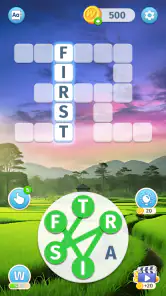
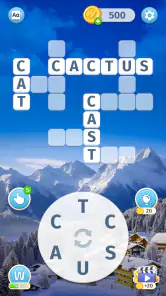
Right off the bat, Sky Words: Word Game sets itself apart with its unique blend of word puzzles and sky-high adventures. The premise is simple yet engaging: you’re tasked with forming words from a jumble of letters to help your character ascend higher into the sky. It's like Scrabble got wings! The controls are straightforward, and even if you’re not a tech wizard, you’ll get the hang of it in no time.
Features to Keep You Hooked
What really caught my attention is the variety of features packed into this app. There’s a daily challenge that keeps things fresh, so you never feel like you’re doing the same thing day in and day out. Plus, there are tons of levels to explore, each with increasing difficulty, ensuring that your brain cells are constantly being put to work.
And let’s not forget the stunning visuals and calming background music. Seriously, the graphics are vibrant and the animation is smooth, making the entire experience quite immersive. The music is the cherry on top, adding a serene vibe to your word-building quests.
Settings, habits, and useful trade-offs
One thing I would check early is whether the sound suits the place I am playing. The original article calls out calming music, which is pleasant at home but not always useful in a waiting room or on a commute. I make a repeatable habit of deciding before a session whether I want audio, then keeping my attention on the letter puzzle rather than repeatedly adjusting things mid-round. I would also check the game’s available settings for controls or display options instead of assuming every word game handles them the same way.
You May Like

Clash of Clans Is Won Between the Battles

Android Auto Makes the Case for Quieter Car Software

MobiOffice: Transforming Mobile Productivity with Seamless Integration

EA SPORTS FC™ Mobile Soccer: Redefining Mobile Sports Gaming

How Microsoft OneDrive Became a Mobile Productivity Giant

How Google Translate Breaks Language Barriers Effortlessly
A second useful habit is to give the daily challenge its own small time slot rather than letting it dictate a long session. That makes it a low-pressure reason to return, while the levels are there when I want a longer run. The trade-off is that a daily task can feel like an obligation if I already have several games competing for attention; I would skip it on busy days without treating a missed session as lost progress.
Who will get the most from it
If you enjoy solo word puzzles and like a clear visual theme, this is a friendly fit. The format is less suited to someone looking for head-to-head play, a serious tournament ladder, or the open-ended freedom of a crossword. Compared with a standard letter-grid game, its rising-through-the-sky framing gives the word search a sense of movement; compared with Scrabble-style play, it is more immediately approachable but does not ask for the same planning around a shared board or opponent. I would pick it for relaxed vocabulary practice, not for a competitive match.
That distinction also answers a common practical question: does it work for a quick break or only a long session? The simple premise makes it easy to start briefly, while its levels give players a reason to stay longer. If you prefer games where every move involves layered tactics, though, this may feel light. It is a casual word game first, and I think it is best when judged on that promise rather than on features it is not trying to provide.
Why You'll Love It
If you’re anything like me and love a good challenge, this game is right up your alley. It’s perfect for a quick brain workout during your coffee break or a long session when you’re in the mood to really push your linguistic limits. The game’s interface is user-friendly, making it accessible for both kids and adults.
Another thing I appreciate is the lack of intrusive ads. Nothing kills the vibe quicker than a pop-up right in the middle of your game. Thankfully, Sky Words: Word Game keeps this to a minimum, letting you focus on what really matters – the words!
Choosing it with clear expectations
Malpa Games’ word title is free to start, and its 4.8 average from around 17,000 ratings suggests it has found a sizeable audience; more than 500,000 installs point to the same broad reach. In-app purchases range from $0.99 to $249.99 per item, so I would check what a purchase offers and its price before confirming anything. The game is rated Teen, runs on Android 8.0 or later, and version 1.1.4 is the current release. It first arrived on May 10, 2024. Those details make it easier to judge whether it fits your device and household, but they do not change the basic choice: play it for accessible word puzzles, not for a comprehensive learning tool.
For parents deciding whether it suits a younger player, I would use the Teen age rating as the starting point and check the device’s purchase controls before handing it over. For anyone wondering whether the free entry means everything is free, the in-app purchase range is a reason to review any offer carefully rather than tapping through automatically. That small pause is especially sensible if a child may use the device.
Making a session feel worthwhile
I get more from this kind of game when I give a session a simple purpose. Some days that means playing just long enough to clear my head; other times I try to notice which letter combinations keep slowing me down. I would not turn that into a scorecard or a vocabulary syllabus. It is simply a way to make a few minutes feel intentional without adding pressure to a game that works best as a casual break.
When a puzzle feels stubborn, I find it useful to change the order of my search rather than keep repeating the same guesses. I look for likely endings or beginnings, then test whether the remaining letters can make a shorter word. This is a general word-solving habit, not a special tool in the game, and it helps me stay patient. If the letters still do not suggest anything, stepping away is better than letting a relaxing activity become an argument with the screen.
For a commute or shared space, I would make the session easy to stop: finish the current puzzle if convenient, then put the phone away when I reach my stop or need to pay attention. A game with short, self-contained word tasks suits these small gaps better than a long story or a match that depends on another player. Still, I would not assume every moment is ideal for it. If I am walking, navigating, or talking with someone, the puzzle can wait.
How it compares with other word games
The most useful comparison is not whether this replaces every other word game, but what sort of attention it asks for. A crossword tends to reward clues, general knowledge, and working across intersecting answers. Scrabble-style games put more weight on board placement and anticipating an opponent. A letter-building puzzle is a more direct fit when I want to focus on combinations without managing a shared board or waiting for someone else’s turn.
That simpler loop is also the main trade-off. Players who enjoy defending a lead, planning several moves ahead, or trading turns may find little of that here. People who like discovering words from a set of letters can get into a round quickly, but someone seeking a rigorous vocabulary curriculum will be better served by lessons with definitions, review, and deliberate progression. I see Sky Words as a casual puzzle with a light learning benefit, not a replacement for either competitive play or study.
The skyward presentation gives the word-making a theme rather than changing what makes the puzzle satisfying: the pleasure is still in seeing a possible word among the letters. That distinction matters if you are choosing between it and a plain word-search or anagram game. If visual framing helps you settle into a session, the presentation is a plus; if you mainly want the toughest possible linguistic challenge, the theme may matter less than the puzzle design, and a more demanding alternative could suit you better.
Practical checks before settling in
A sensible first session is a chance to see whether the interface, pace, and sound work for you, not a reason to buy anything. I would try a few puzzles, notice whether the rising visual theme keeps me engaged, and check the available settings before deciding how I want to play. If an in-app offer appears, I would read its details and cost rather than treating it as necessary for enjoying the basic word-game idea.
It is also worth matching the game to the device and the person using it. The Teen rating should guide family decisions, and purchase controls are a practical safeguard when a younger player shares a device. On Android, the stated minimum is version 8.0, so checking the operating system before installing avoids an unnecessary compatibility surprise. These are small checks, but they answer the everyday questions that matter more than a feature list: can I run it, is it suitable for my household, and do I want to spend anything?
I would also keep expectations modest about what a successful session means. Finding words may expose you to spellings and combinations, but it does not automatically teach pronunciation, usage, or why one word fits a context. When I come across an unfamiliar word, I would look it up separately if I wanted to learn it properly. That extra step turns a casual puzzle into a useful prompt without mistaking the game for a dictionary or a language tutor.
Final Thoughts
In conclusion, if you’re looking to expand your vocabulary while having a blast, give it a shot. It's not just a game; it's a delightful escape into a world of words and wonder. So, what are you waiting for? Download it now and let your word adventure take flight!
My verdict is more grounded: I would recommend it to a friend who wants an approachable solo puzzle with a gentle visual theme and room for both brief and longer play. I would point a competitive player toward a game built around opponents, and a learner toward a dedicated study tool. If you want a straightforward way to spend a spare few minutes making words, this is a pleasant option; just keep your expectations, and any purchases, in check.
Sky Words: Word Game Frequently Asked Questions
What kind of game is Sky Words: Word Game?
Sky Words: Word Game is a word puzzle game built around finding words and using your vocabulary. Its premise is straightforward: connect letters to form words and work through puzzles. If you enjoy word-finding challenges that give your brain a chance to stay active, its focus may appeal to you; it is less suited to someone looking for action or a story-driven game.
What does Sky Words: Word Game offer to players who enjoy word puzzles?
The game centers on exploring a word-game world while relaxing your brain by finding words. Its puzzle format makes vocabulary the main tool for progressing, rather than quick reflexes or complex controls. Players who like taking time to consider possible words may find this style appealing, while the simple premise also makes it easy to understand before getting started.
Is Sky Words: Word Game free to download and play?
Sky Words: Word Game is free to download, so you can try its word puzzles without paying upfront. Optional in-app purchases are available, with prices ranging from $0.99 to $249.99 per item. The core game can be enjoyed without buying them, but it is worth checking purchase options and settings before handing your device to a child.
Who develops Sky Words: Word Game, and how popular is it?
Sky Words: Word Game is developed by Malpa Games and has attracted a substantial audience for a word puzzle game. It has over 500,000 installs, with an average rating of 4.8 from around 17,000 ratings. Those figures suggest that many players have tried it and that ratings are generally positive, though your own enjoyment will depend on whether its word-finding puzzles suit you.
What is the main objective of Sky Words: Word Game?
Sky Words: Word Game is a brain-challenging puzzle game where the main objective is to form words by connecting letters scattered in the sky. Players must use their vocabulary skills to solve increasingly difficult levels, making it both entertaining and educational. This game is perfect for improving your language skills while having fun.
Pros
- Engaging and challenging puzzles.
- Improves vocabulary and spelling.
- Stunning graphics and design.
- Regular updates with new levels.
- Offline mode available.
Cons
- In-app purchases can be pricey.
- Ads can be intrusive.
- Limited daily rewards.
- Requires internet for some features.
- Higher levels can be too difficult.
- Category
- Word
- Version
- 1.1.4