Rainbow High: Beauty Salon
- 98.00
- 4.9
- Installs
- 500.00K
- Price
- Free

Screenshots






Analysis by Reviewed
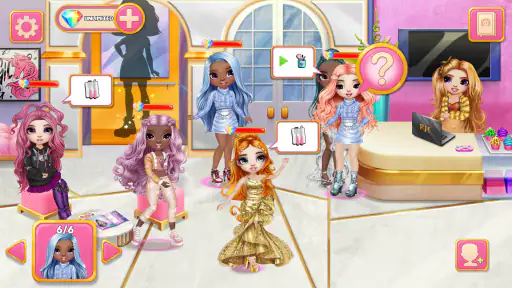
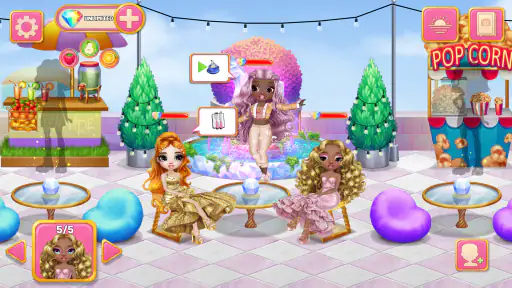
When I first tried Rainbow High: Beauty Salon, its appeal was immediately clear: it gives children a familiar doll-salon fantasy and lets them make a series of small creative choices. The activity centers on styling hair, makeup, and manicures, so a player can begin without learning a complicated set of rules. I see it as a focused creative game rather than a broad fashion world. That focus makes it easy to pick up, but the more important question is whether a child will still enjoy returning when the first excitement fades.
From first try to a familiar routine
The first-week appeal is easy to grasp
The basic idea needs little explanation. A child can choose a Rainbow High doll and work on her look, moving between different kinds of beauty styling instead of dealing with a complicated story or set of rules. That makes the game approachable for younger players and useful when an adult wants to offer a short, low-pressure activity. The focus is on making a look, not on winning a match or mastering a demanding control scheme.
In a typical after-school moment, a child might open the game while waiting for dinner, choose a doll, and experiment with a hairstyle and manicure. That sort of brief session suits the salon theme better than a game that expects a long stretch of attention. I also like that the creative task gives children a reason to make choices: they can try to coordinate the overall look, or simply follow whatever color or style catches their eye.
Articles Related to Rainbow High: Beauty Salon
The three styling areas provide a useful starting range. Hair, makeup, and nails feel like parts of a single makeover, so a player can think about the doll’s appearance as a whole rather than treating each choice as an unrelated mini-game. A practical tip is to pick a mood first—bright, playful, or more coordinated—and use it to guide the choices. That small bit of self-direction can make a session feel more intentional without turning play into a lesson.
As an educational game, its value is informal. I would not choose it to teach a specific school subject, but it can give a child room to practise visual decision-making, color preference, and personal expression. The adult’s role can be as simple as asking why the player chose a particular combination. That works best as a friendly conversation, not as a test with a right answer.
It can also be a handy choice for a child who wants to play alongside a sibling or parent without needing everyone to take turns in a competitive game. One person can suggest a color or occasion, while the player decides whether to use that idea. I would keep suggestions open-ended, though: “What would make this look feel cheerful?” invites more thought than giving step-by-step instructions. The child remains the stylist, which is where the activity is most engaging.
What the experience is—and what it is not
Rainbow High: Beauty Salon is made by Hippo Kids Games, and its narrow focus is both its strength and its limit. Compared with open-ended drawing apps, it gives children a ready-made subject and a clear theme: style the dolls. Compared with larger dress-up games, it puts the beauty-salon idea at the center instead of promising a wide world of activities. That can be a relief for a child who wants to get straight to styling, but it may feel restrictive to someone who wants to design outfits, build scenes, or tell elaborate stories.
You May Like

How Microsoft OneDrive Became a Mobile Productivity Giant

How Google Translate Breaks Language Barriers Effortlessly

Why Google Sheets Is the Ultimate Mobile Productivity Tool

Unveiling the Dynamic World of My Talking Tom Friends

Free Fire MAX: Dominating the Battle Royale Arena

Free Fire: Winterlands – The Ultimate Winter Gaming Adventure
I would recommend it most to children who already enjoy dolls, makeover play, and choosing how a character should look. It is also a reasonable option for a parent looking for a free game with an Everyone age rating to try together. It is less suitable for a child who quickly loses interest in repeating a familiar creative format, or for a family specifically seeking structured learning exercises. The educational label should not be mistaken for a substitute for a dedicated art or learning app.
For a first download, it helps to set expectations clearly: this is a beauty-styling activity, not a full fashion studio. A child who knows that in advance is less likely to expect extensive wardrobe design or a long sequence of challenges. I’d also suggest letting the player finish one look before switching tasks; the small act of completing a head-to-toe style can make the session feel satisfying even when playtime is short.
That distinction helps when choosing between this and other creative apps. A drawing app gives a child a blank page and more freedom, but may ask them to supply the subject and structure themselves. A broad dress-up game can offer more kinds of play, but may take longer to navigate before the child reaches the activity they want. This salon is a better fit when the desired activity is already clear: choose a doll, make styling decisions, and enjoy the result. If a child’s favorite part of play is inventing a whole world around a character, the broader option is likely to serve them better.
Month-to-month value comes from returning with a new idea
The longer-term question is whether the game gives a child a reason to return after the novelty of choosing a doll wears off. In my view, its recurring value comes less from progression and more from the player’s imagination. A child can approach a new session with a different plan—matching colors, making a deliberately unusual look, or choosing one detail and building around it. That is a helpful way to refresh the activity, but it depends on the player enjoying self-directed experimentation.
One useful routine is to make a “design brief” before opening the salon: choose a color family, a mood, or a simple occasion, then see how the hair, makeup, and manicure can support it. This gives the child a new goal without assuming the game contains a challenge mode. Another approach is to ask the player to explain which part of the look matters most and why. Those prompts can add a little reflection to play, while keeping the game itself relaxed.
A small variation I find especially useful is to begin with one constraint. The child might decide that the manicure is the feature to build around, or that the overall look should feel calm rather than bold. A constraint gives the session a fresh starting point without requiring a new game mode. It also makes it easier to compare two ideas: the player can explain what changed and whether the new choice better fits the mood they had in mind. This works best as an invitation, not a rule the child has to obey.
That said, I would not treat it as a game that automatically deepens with repeated sessions. Its core activity remains styling, so a child who needs new mechanics, story developments, or increasingly difficult goals may move on quickly. This is the main trade-off against broader dress-up titles: those may offer more variety, while this one keeps its attention on the Rainbow High salon fantasy. For a fan who enjoys revisiting that fantasy, focus is a benefit; for a novelty-seeker, it can become a ceiling.
The audience response is strong, with an average rating of 4.9 from around 5.8 thousand ratings, and it has passed 500 thousand installs. Those figures suggest that many players have found the concept appealing, but they cannot predict whether a particular child will keep playing after the first few sessions. I’d use them as reassurance that the game has found an audience, not as a promise of lasting engagement.
For a parent wondering whether it can become a regular activity, I would make the decision based on the child’s behavior rather than a calendar. Does the player return with a fresh idea, take time over a choice, or enjoy describing the finished look? Those are signs the format is still working for them. If each session becomes a quick rush through the same choices, it may be time to rotate in a different creative activity. There is no need to make every app earn daily use; a game can be worthwhile as an occasional option.
Maintenance is light, but the purchase screen deserves attention
There is little upkeep involved in the basic idea: the child can return when they want a creative break rather than maintaining a daily streak or a complicated collection. That makes it easier to fit into a family routine. If you prefer games that can be put down and picked up without pressure, this salon concept is a better fit than apps built around constant check-ins.
The game is free to download, with in-app purchases ranging from $0.49 to $11.99 per item. I’d make the purchase boundary clear before handing over a device, especially for a younger child. A parent can check the device’s purchase controls and explain that any paid option requires permission. This is not a criticism of the styling concept, but it is a practical part of deciding whether a free children’s game is comfortable to leave within reach.
If the device is shared, I would set it up before a child begins playing rather than waiting until a purchase prompt appears. A simple rule—ask an adult before choosing anything that costs money—helps avoid confusion, while device-level purchase controls add a practical safeguard. This is particularly useful when the child is old enough to explore menus independently but still relies on an adult to approve spending. The free starting point is convenient, but families should decide in advance how they want to handle optional purchases.
For device compatibility, the current version is 1.4.6 and the minimum operating system is Android 7.0. It is worth checking that before downloading to an older device. The game is free to try, but families should still consider whether the device is shared and whether a child can reach purchase prompts without an adult nearby.
For a first session, I’d sit with the child long enough to see whether the controls and choices feel comfortable, then let them take over if they are happy. That is a more useful test than assuming an age label guarantees the right fit for every child. Some younger players may enjoy choosing styles independently; others may prefer an adult to help them think through a look. Either way, the low-pressure format makes it straightforward to stop when attention wanders and return another time.
Where fatigue can set in
The likely source of fatigue is repetition, not difficulty. Once a child has explored the salon’s central idea, the next visit may feel familiar unless they bring a fresh styling goal of their own. A child who likes to perfect a look may happily return; one who wants constant surprises may prefer a game with more varied activities. I would watch for the moment when the player starts making choices quickly just to finish, rather than enjoying the process—that is a better signal of fading interest than the number of days since installation.
There is also a difference between imaginative play and open-ended creation. The doll and salon theme provide a frame, which can help a younger player who finds a blank canvas overwhelming. But children who want to invent characters from scratch or draw their own designs may feel boxed in. In that case, a drawing app or a broader creative game is a better companion, not necessarily a replacement for every child.
Another possible mismatch is the child who mainly wants a story to follow. Here, the player supplies much of the meaning behind the choices; the fun is in creating an appearance, not in discovering what happens next in a plot. If a child asks for characters with changing goals or a sequence of missions, I would choose a story-led game instead. The salon can still work as an occasional break, but it should not be expected to satisfy a different kind of play.
For shared play, I’d avoid turning the game into a contest over whose styling is “best.” The most useful conversation is about choices: what colors work together, what detail the child wants people to notice, or what they might change next time. That keeps the experience personal and prevents a simple beauty activity from becoming a source of comparison. It also gives parents a realistic way to participate without needing to take over the device.
My long-term verdict
I see Rainbow High: Beauty Salon as a good fit for a specific kind of player: a child who likes the Rainbow High dolls and enjoys making appearance-based choices at their own pace. Its best quality is how quickly it turns a familiar salon theme into something a child can do independently or share with an adult. The clearest limitation is that its central activity does not offer the breadth of a full fashion or art game, so lasting interest relies on the player’s own desire to experiment.
With 98 reviews alongside its larger rating count, the game has a visible base of player feedback, and its Everyone rating makes its intended audience clear. Hippo Kids Games has made a free entry point, though optional purchases mean I’d still set device-level boundaries. For a short creative break or a gentle way to encourage a child to think about color and style, I’d be comfortable recommending it. If you are choosing one game meant to sustain a child through many different kinds of play, I’d look for a broader alternative instead.
My practical recommendation is to try it when the child already likes makeover play, then judge its staying power by whether they return with new ideas rather than simply asking for more screen time. If they invent themes and enjoy refining a doll’s look, it can earn a modest, recurring place on the device. If they need new goals supplied by the game itself, the initial charm may be enough, and that is a perfectly reasonable point to move on.
Rainbow High: Beauty Salon Frequently Asked Questions
What is Rainbow High: Beauty Salon?
Rainbow High: Beauty Salon is a fashion and makeover game inspired by the Rainbow High characters and their colorful style. Players can choose a character, experiment with beauty looks, and put together outfits using the options available in the game. It is aimed mainly at children and fans of dress-up games, with a straightforward, playful format rather than a complex story or competitive gameplay.
How do you play Rainbow High: Beauty Salon?
The main activity is creating a makeover for a selected character. Depending on the available features in your version, you can work with beauty and hair styling choices, then finish the look with clothing and accessories. The controls are designed for touchscreens, so most actions involve tapping or selecting items. The experience is relaxed and creative, making it suitable for short play sessions as well as repeated styling experiments.
Is Rainbow High: Beauty Salon free to download, and does it include in-app purchases?
The game may be offered as a free download, but its price and available purchase options can differ between the Google Play Store and Apple App Store, as well as by region. Check the store listing on your device for current details before installing. Also review the in-app purchase and advertising information there, since these policies can change and may affect what content is accessible without spending money.
Is Rainbow High: Beauty Salon suitable for children?
Rainbow High: Beauty Salon is designed around fashion, character styling, and imaginative play, so its subject matter is generally child-friendly. However, suitability also depends on the version and the way a child uses the device. Before handing it over, adults should check the app-store age rating, privacy information, advertisements, and any purchase options. Parental controls can help prevent unintended purchases or access to external links.
Can I play Rainbow High: Beauty Salon offline, and which devices support it?
Offline availability and device compatibility depend on the specific release and its current requirements. Some salon activities may work without a connection after installation, while ads, updates, or certain features may require internet access. Check the game’s store page for supported Android or iOS versions, device requirements, and recent user reports. If offline play matters to you, test the game without Wi-Fi before relying on it while traveling.
Pros
- Colorful visuals and character designs suit the Rainbow High style.
- Salon activities are simple for younger players to understand.
- Experimenting with different looks encourages creative play.
- Familiar characters may appeal to fans of the series.
- Short play sessions make it easy to dip in and out.
Cons
- The activities may feel repetitive after several sessions.
- Some styling options may be limited or require unlocking.
- Gameplay offers little challenge for older players.
- In-app ads or purchases may interrupt the experience.
- The app may need significant storage and a compatible device.

- Category
- Educational
- Version
- 1.4.6