Little Panda Policeman
- 827.00
- 4.0
- Installs
- 100.00M
- Price
- Free
Screenshots


Analysis by Reviewed
When I’m choosing a game for a young child, I look beyond whether it keeps them busy: I want to know if they can understand what to do, enjoy it at their own pace, and connect the play to something familiar. Little Panda Policeman is a colorful educational game from BabyBus that puts pretend police work at the center of its activities. Its approachable theme can open up simple conversations about helping people and staying safe, though I’d treat it as a playful introduction rather than a detailed lesson about real policing.
Easy to follow, with a grown-up nearby
The game uses bright scenes, a friendly guide, and straightforward touch interactions to make its missions feel inviting to children. In my experience, that kind of visual direction can help a child who is not yet comfortable reading much: they can watch what is happening and explore the scene rather than having to work through long explanations. I would still stay close the first time, both to help with unfamiliar choices and to see whether the pace suits the child.
Its appeal is reflected in its reach: it has passed 100 million installs and has a 4.0 average from around 156,000 ratings. Those figures tell me it has found a broad audience, but they don’t guarantee that every child will enjoy its particular theme or interaction style. The game is free to download, rated Everyone, and includes optional in-app purchases priced from $1.99 to $3.99 per item, so I’d check the purchase settings before handing over a device.
Exploring the Game's World
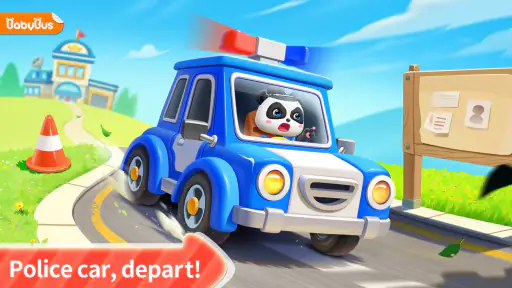
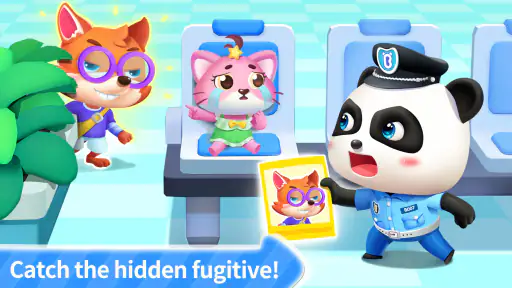
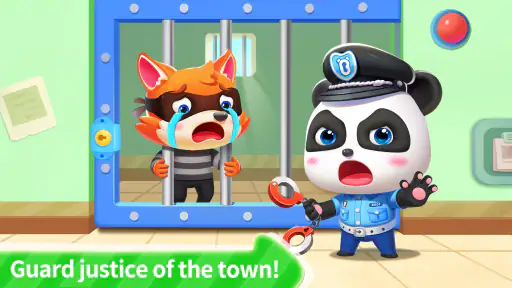
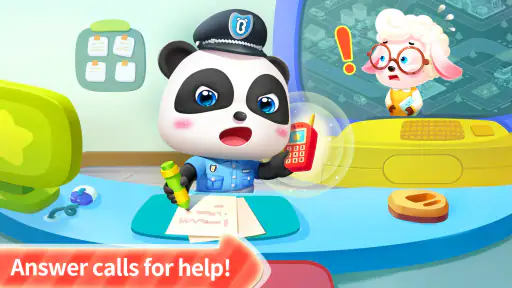
As soon as you launch Little Panda Policeman, you're greeted with vibrant visuals and catchy tunes that set the stage for an engaging adventure. The game is designed with young players in mind, making navigation intuitive and straightforward. Little Panda is your trusty guide, leading you through various missions where you can help solve mysteries, catch criminals, and even learn about traffic safety.
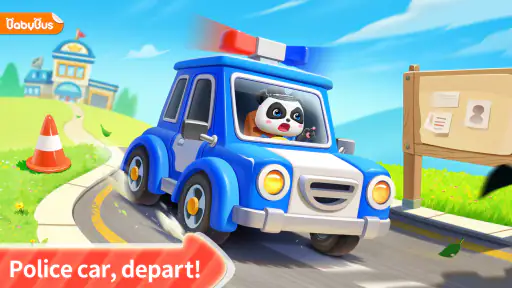
The game world is beautifully crafted, with each area offering something different to explore. From bustling city streets to quiet countryside lanes, every location is packed with interactive elements that invite curiosity. It’s like stepping into a storybook, where every tap brings something new to life.
The Missions and Mini-Games
Little Panda Policeman is packed with exciting missions that teach kids about responsibility and problem-solving. Each mission is a mini-adventure, whether it's finding lost items or catching mischievous thieves. The game cleverly integrates educational elements within its missions, teaching children about different aspects of a policeman's job without ever feeling heavy-handed.
One particularly fun aspect is the mini-games. These range from jigsaw puzzles to memory games, all designed to boost cognitive skills in a playful way. The game ensures that learning is always a part of the fun, keeping kids engaged while subtly imparting valuable life lessons.
More From Our News Desk

Weather by Xiaomi Review: Clear at a Glance, Less Clear Up Close

X Under Pressure: Can It Recover When Posting Goes Wrong?

Clash of Clans Is Won Between the Battles

Android Auto Makes the Case for Quieter Car Software

MobiOffice: Transforming Mobile Productivity with Seamless Integration

EA SPORTS FC™ Mobile Soccer: Redefining Mobile Sports Gaming
Interactive and Educational Elements
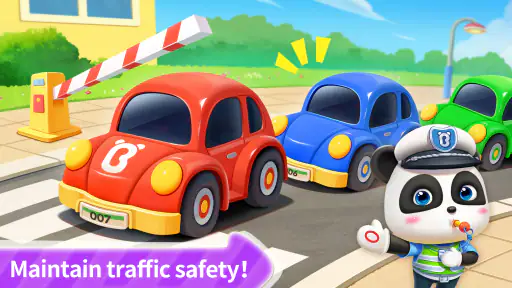
What sets Little Panda Policeman apart is its commitment to combining play with education. The game introduces children to the concepts of law enforcement, safety, and community service in an accessible manner. For instance, players learn about the importance of road safety through interactive traffic light games and the significance of helping others through rescue missions.
These elements are woven seamlessly into the gameplay, ensuring that the educational content is both engaging and relevant. It’s a fantastic way for kids to develop a sense of duty and understand the value of helping others, all while having a blast.
Kid-Friendly Design
The developers have done a stellar job making sure the game is child-friendly. The controls are simple, with large buttons and clear instructions that make it easy for little fingers to navigate. The bright, cheerful graphics are appealing to kids, making them eager to jump back into the game again and again.
Additionally, the game features a friendly, non-violent approach to its themes. Even when dealing with "criminals," the game focuses on understanding and education rather than punishment, promoting a positive message of compassion and understanding.
Making the first session useful
I’d use the first few minutes as a small observation session rather than expecting the game to occupy a child independently. Let them choose an activity, watch how they respond to the visual prompts, and notice whether they understand what a successful action looks like. If they tap randomly, pause and ask what they think the scene is asking them to do. That simple prompt can turn confusion into a chance to practise looking carefully before acting.
This is also a practical way to decide whether the theme feels comfortable. Some children enjoy pretending to help a community; others may focus on the words “police” and “criminal” or find the idea of catching someone unsettling. I’d follow the child’s reaction rather than assuming that a friendly art style makes every part of the subject matter suitable for them.
When this kind of play works best
I see this as a good fit for a short, shared play session: a child can choose a mission, try its interactions, then tell an adult what they noticed. A traffic-safety activity, for example, can lead to a useful real-world reminder before walking near a road. That conversation matters more than treating the game as a stand-alone safety course; pretend play can introduce an idea, but it cannot replace an adult’s guidance or local road-safety rules.
The missions and puzzles also make it a reasonable choice when a child wants variety without switching between unrelated apps. The trade-off is that the police theme is the organizing idea throughout. If a child is uneasy with sirens, uniforms, or stories about catching offenders, I’d choose a gentler animal-care or creative-play game instead. Likewise, children looking for open-ended building or a long story may find these focused tasks less satisfying.
One everyday use I can see is a brief turn while a caregiver is nearby preparing a meal or waiting for an appointment. I’d offer one activity, then invite the child to explain what happened or point out a safety idea they noticed. That gives the session a natural endpoint and helps prevent the game from becoming background noise. If the child wants to keep playing, I’d use their interest to start a conversation, not promise that every mission teaches a complete real-world rule.
Play at a comfortable pace
For children who are still learning to use a touchscreen, I’d start with one activity and give them time to understand what a tap does before offering help. Keeping the device steady and reducing nearby noise can make it easier to focus on the colorful scenes and sounds. But a bright display and audio cues will not suit every child: if either feels distracting or uncomfortable, a quieter, less visually busy activity may be a better choice. I wouldn’t assume that simple controls alone make the game accessible for every ability.
A practical tip for caregivers is to make the first session a quick trial rather than promising a long stretch of independent play. That reveals whether the child can follow the visual prompts, whether they enjoy the missions, and whether they start tapping rapidly when unsure. Sitting alongside them also gives you a natural chance to explain that the game’s playful version of police work is not a complete picture of real community roles.
For children who have difficulty with precise finger movements, I’d watch whether the large controls are genuinely comfortable for them instead of relying on their apparent simplicity. A caregiver can help position the device or take turns with taps, but that changes the experience from independent play to shared play. If the child becomes frustrated by missed touches, a physical toy, a spoken story, or an activity designed around their particular needs may be a more enjoyable choice.
How it compares with other children’s games
Compared with basic matching or coloring games, this one gives children a role to play and links activities to a recognizable community theme. That can make it more engaging for a child who likes pretend jobs; in return, it is less neutral than a puzzle-only game and may not hold the interest of a child who prefers making pictures or solving challenges without a story around them. I’d choose it for themed exploration, not as my first pick for quiet, low-stimulation play.
It also differs from a dedicated learning app because its lessons are folded into missions and mini-games rather than presented as a structured course. That makes it easier to approach casually, but parents should not expect a complete curriculum or a measured learning path. If your main goal is systematic reading, maths, or a particular accessibility need, a purpose-built option is likely to be a better match.
The choice between this and a puzzle app depends on what a child is seeking at that moment. Here, a puzzle sits inside a pretend role, so a child who enjoys acting out a job may be more willing to stay with it than with a bare sequence of matching tasks. The reverse is true for a child who wants a quiet challenge without a social or police-work frame. I’d keep both kinds of activity available and let the child’s mood guide the choice rather than treating one as a replacement for the other.
What to check before handing over the device
The game is free, but optional purchases are available, so I’d review the device’s purchase controls and explain any household rules before a child plays alone. Its Everyone age rating is a useful starting point, not a substitute for a parent deciding whether the police theme and pace are right for a particular child. The game was released on May 18, 2017; its current version is 8.75.00.01 and it requires Android 6.0 or later. Those details are useful when checking whether an Android device can run it, while the game’s suitability still depends on the child.
For a caregiver wondering whether it needs to be played together, my answer is: I’d accompany the first session, then decide based on the child’s confidence and your comfort with the device’s purchase settings. A child who follows the prompts and enjoys the activities may be able to explore more independently, but the game’s educational themes are most valuable when an adult helps connect them to everyday situations.
Because it is free to start, it is relatively easy to try before deciding whether it belongs on a child’s device. I’d still make the decision with the child rather than presenting it as an automatic choice: let them sample the theme, then check whether they return to the missions willingly or seem more interested in another kind of play. The purchase controls are worth setting in advance even if you expect to supervise, since a child may eventually use the device when your attention is elsewhere.
Where the boundaries matter
The game’s educational value is strongest as a conversation starter, not as proof that a child has mastered a safety lesson. A traffic-light activity can help an adult introduce the idea of paying attention, but real streets involve changing conditions that a simple game cannot reproduce. I’d use the play as a prompt to talk, then rely on ordinary adult supervision and practical guidance outside the screen.
There is a similar limit to the role-play itself. A child may come away with a warm, simplified picture of police work, which suits an early pretend-play experience but leaves out the complexity of real public service. If you want to discuss community helpers more broadly, you can use the game alongside examples of other people who help, rather than letting its central role become the only one a child sees.
On the practical side, the bright presentation and music that make the scenes lively can also make them a poor fit when a child needs a calm transition, is easily distracted by sound, or prefers less visual activity. I would not choose it as a reliable wind-down option just because its controls look approachable. A quieter book or low-key game may work better in those moments, while this one is more suited to an alert, supervised play break.
Final Thoughts
In a world filled with apps and games vying for attention, Little Panda Policeman stands out as a delightful blend of fun and learning. It's a game that not only entertains but also educates, offering children a chance to explore the world of law enforcement in a way that's safe, engaging, and incredibly fun.
If you're on the lookout for a game that provides wholesome entertainment and educational value, Little Panda Policeman is a must-download. It's perfect for young children who are eager to learn and explore, providing hours of fun that parents can feel good about. So, why not give it a try and let your little ones embark on an adventure with the most charming little officer around?
My inclusive verdict
I’d recommend giving it a supervised try for a young child who likes guided pretend play, bright scenes, and small activities with a clear theme. Its mix of missions and puzzles offers more context than a simple coloring page, while remaining less structured than a lesson-based learning app. BabyBus has made a free game with a broad audience, but popularity and an Everyone rating do not tell me whether a particular child will find its sounds, visuals, touch interactions, or subject matter comfortable.
For a child who enjoys the idea of helping others, it can be a pleasant way to spend a short stretch together and spark questions about everyday safety. For a child who needs low-stimulation play, dislikes police stories, struggles with touchscreen interaction, or needs a specific learning or accessibility approach, I’d look elsewhere first. My best advice is to let the child try one activity with an adult nearby, then judge the fit by their comfort and curiosity—not by how long the screen keeps them occupied.
Little Panda Policeman Frequently Asked Questions
What does a child do in Little Panda Policeman?
Little Panda Policeman introduces children to the idea of being a police officer through play. Its central theme is exploring that role, giving young players a child-focused way to engage with the subject. Families looking for an educational game built around a police-officer theme may find that premise a useful starting point when deciding whether it suits their child.
Is Little Panda Policeman appropriate for a child who is new to mobile games?
The game is presented as an educational experience for children, with the goal of helping them get to know what it is like to be a police officer. Its Everyone content rating indicates a broadly family-friendly presentation. Parents can consider their child's familiarity with mobile games and the police-officer theme when deciding whether it is a suitable first game.
What should parents know before downloading Little Panda Policeman?
Little Panda Policeman is free to install and centers on a child-focused police-officer theme. Before downloading, parents may want to check that their device meets the Android requirement and review purchase settings, since optional purchases are offered in the game. These practical checks can help families decide whether the game fits their device and how they manage children's spending.
What devices can run Little Panda Policeman?
Little Panda Policeman is a mobile game for Android devices, and it requires Android 6.0 or later. Check your device’s operating system before downloading to make sure it meets this requirement. The game is free to install, though optional in-app purchases are available, so parents may want to review purchase settings before a child plays.
Who developed Little Panda Policeman, and what kind of game is it?
Little Panda Policeman is an educational game developed by BabyBus. Its short store description is “Little Panda,” and its main idea is to let children get to know what it is like to be a police officer. It presents the theme as a child-focused game rather than a realistic simulation, making it an introduction to the role through play.
Pros
- Engaging educational content for kids.
- Colorful and fun graphics.
- Simple
- intuitive controls.
- Encourages problem-solving skills.
- Free to download with optional purchases.
Cons
- Limited replay value for older kids.
- In-app purchases can add up.
- Ads may disrupt gameplay.
- Requires internet for full features.
- Some levels are too easy for older kids.
- Category
- Educational
- Version
- 8.75.00.01