Women's Bible
- 2.10K
- 4.6
- Installs
- 1.00M
- Price
- Free

Screenshots
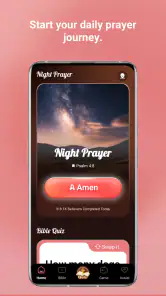
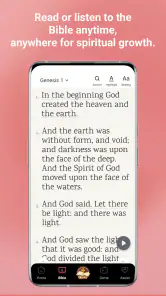



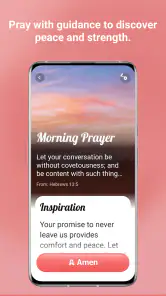
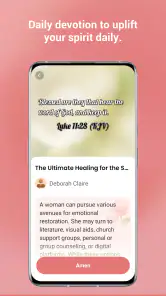
Analysis by Reviewed
I approached Women's Bible as a practical reading and prayer companion rather than as a replacement for a printed Bible, a study course, or a church community. That distinction matters. The app is aimed at women who want Scripture and prayer close at hand, especially during small pauses in an ordinary day. My overall impression is warm and useful: it keeps the experience focused, simple, and easy to return to, while its narrow purpose may feel limiting if you want deep research tools or a broad library of translations.
As a free Books & Reference app from JSK Developer, it is easy to try without making a financial commitment. It is rated for Everyone, runs on Android starting with version 8.0, and its current version is 1.8.6. The app has passed the early curiosity stage for many users, with more than a million installs, an average rating of 4.6, and roughly nine thousand ratings. Those figures suggest that its straightforward approach is connecting with a substantial audience, although popularity alone is not a substitute for deciding whether its style matches your own reading habits.
What I looked for before recommending it
When I judge a devotional app, I start with a simple question: can I use it naturally when I am tired, busy, or distracted? A Bible app may contain plenty of material, but if opening it feels like starting a research project, it will not become part of my routine. Women's Bible makes a stronger case for regular use because its purpose is immediately understandable. It brings together daily Bible verses and prayer in an accessible format, including offline access, so the basic experience does not depend on finding a strong connection at the moment I need it.
I also consider whether an app respects different kinds of reading. Some days I want a short verse to think about before work. On other days I want to sit with a passage for longer, compare interpretations, or follow a theme across several books. The first use case is where this app feels most convincing. It is designed around encouragement and reflection rather than around a large set of scholarly controls. That focus is a strength when you want a gentle prompt, but it becomes a trade-off if detailed study is your main goal.
The most important decision criterion, then, is not whether it contains every tool found in larger Bible platforms. It is whether you want a compact devotional rhythm. If you are choosing an app for a quick morning reading, a quiet evening prayer, or a few reflective minutes during a commute, the focused design makes sense. If you are choosing one for sermon preparation, original-language research, extensive cross-references, or serious comparison between translations, I would look at a more study-oriented alternative instead.
How the daily routine feels in practice
I found the daily-verse approach easiest to appreciate when treated as an invitation rather than a task to complete. I can read the verse, pause over one phrase, and move into prayer without having to decide what to search for first. That removes a small but real barrier. Many people do not stop reading because they lack interest; they stop because they have no energy to choose a passage. A focused starting point helps with that problem.
A realistic example would be a weekday morning when I have only a few minutes before leaving home. I can open the app, read the day’s verse, and use the prayer portion to turn a general feeling of stress into a specific moment of reflection. Later, I might return during a lunch break without needing mobile data. The value is not that the app transforms a busy schedule into a long study session. Its value is that it makes a short spiritual pause more achievable.
More From Our News Desk

Clash of Clans Is Won Between the Battles

Android Auto Makes the Case for Quieter Car Software

MobiOffice: Transforming Mobile Productivity with Seamless Integration

EA SPORTS FC™ Mobile Soccer: Redefining Mobile Sports Gaming

How Microsoft OneDrive Became a Mobile Productivity Giant

How Google Translate Breaks Language Barriers Effortlessly
That workflow also works well for someone beginning a personal Bible habit. A large app can present so many options that a new reader does not know where to begin. Here, the daily structure supplies a modest amount of direction. I would recommend starting with a consistent time rather than trying to consume everything at once. Reading slowly and writing down one thought elsewhere can be more useful than rushing through several screens.
Offline access is more important than it first sounds
The offline element is one of the app’s most practical advantages. It changes where the routine can happen. A person can use it while traveling, in a building with unreliable reception, or during a deliberate break from connectivity. It also reduces the temptation to turn a quiet reading session into a general phone session filled with notifications and unrelated browsing.
I would still treat offline availability as a convenience for the app’s core reading and prayer experience, not as a promise that every possible resource in a Bible study platform will be available without a connection. That distinction is useful when comparing categories. For a daily devotional, offline access can be central to the experience. For a research app, users may care more about searchable libraries, linked references, and downloadable study materials. Women's Bible is better judged by the first standard.
A useful habit is to open the app before entering a low-connectivity situation and make sure the material you expect to use is ready. That is not a criticism of this particular app; it is simply good practice with any offline-focused mobile tool. The biggest benefit comes when the app is already part of your routine, rather than being installed only for an occasional trip.
Where the focused design wins
The strongest part of the experience is its emotional clarity. The app does not need to convince me that I should study the Bible; it gives me a direct route into a short reading and prayer moment. That makes it approachable for users who find full-featured Bible apps intimidating or distracting. The language of the product is also clearly intended to speak to women, which may make the devotional context feel more personally relevant for its target audience.
That audience focus is useful, but I would not interpret it as a rule about who is allowed to use the app. The practical question is whether the tone and presentation help you engage with the material. A woman looking for encouragement, a guided daily pause, or a simple prayer companion is likely to understand the app quickly. Someone who prefers a completely neutral interface or a broad interdenominational study environment may feel more comfortable elsewhere.
Another quiet strength is the low cost of experimentation. Because the app is free, I can test it against my actual routine instead of guessing from screenshots or descriptions. I would give it several ordinary days, including one busy day and one quiet day, before deciding. The important test is whether I return without forcing myself. A devotional tool that becomes part of a real schedule is more valuable than one that looks impressive but remains unopened.
Where another kind of app may fit better
The usual alternatives in this category tend to fall into different groups. Some are built as broad Bible libraries, with many ways to search, compare, annotate, and explore. Others are reading-plan products that organize a longer journey around a theme or schedule. Still others are primarily prayer journals, where recording personal thoughts is more important than receiving a daily verse. Women's Bible sits closer to the compact devotional and prayer-companion side of that range.
If I wanted to investigate a word, trace a theme through several books, or compare multiple translations, I would choose a study-focused Bible app. If I wanted a structured plan that gradually moves through a large portion of Scripture, I would choose a reading-plan service. If I wanted to preserve a detailed record of personal prayers, I would look for a journaling app. The better option depends on the job. Choosing a bigger product simply because it has more features can create unnecessary friction for someone who only wants a daily moment of reflection.
There is also a trade-off in the women-centered identity. It can make the app feel intentional rather than generic, but it may not suit households or groups looking for one shared, broadly configurable Bible tool. A couple, family, or study group may prefer an app that emphasizes common reading plans and collaborative discussion. I would not choose this product as the sole digital Bible for a group unless everyone already likes its focused devotional approach.
Small workflow decisions that improve the experience
My first tip is to separate reading from evaluation. Do not judge the app only by how much content appears on the first visit. Use the daily verse at the time you are most likely to need it, then notice whether the prayer element helps you move from reading into reflection. The app’s usefulness is tied to that transition, not to the size of its menu.
My second tip is to use offline access intentionally. Before a flight, retreat, hospital visit, or weekend away, open the app while connected and make it part of your preparation. This turns a general feature into a dependable routine. It is especially helpful for anyone who wants a phone-based devotional practice without relying on constant browsing.
My third tip is to pair the app with a separate long-form Bible when necessary instead of demanding that one product do everything. I can use Women's Bible for the daily prompt and a more expansive reference tool when I want context. That two-app approach may sound less tidy, but it respects the difference between encouragement and research. It also prevents the focused app from being judged unfairly for not behaving like a study library.
A fourth useful approach is to keep the reading modest. The daily format works best when I allow one verse or prayer thought to remain with me during the day. If I treat it as a checklist, I lose the very calmness that makes a compact devotional app worthwhile. This is a subtle trade-off: the app can support consistency, but the depth still comes from the attention I bring to it.
Who should use it, and who should skip it
I would recommend Women's Bible to a woman who wants a free, accessible Bible and prayer companion with a clear daily purpose. It is particularly suitable for someone starting a spiritual reading habit, someone who prefers short guided moments, or someone who often needs offline access. The Everyone age rating also makes it approachable for a broad audience, although personal comfort with the app’s women-focused presentation remains the more meaningful consideration.
I would be more cautious about recommending it to a reader who expects extensive study functions. If your normal routine includes detailed notes, complex searches, linked commentary, multiple translations, or a carefully sequenced reading plan, a larger Bible platform will probably save you time. I would also skip it as a primary choice if you want a private prayer journal above all else. The app can support prayer, but a dedicated journaling tool may better match a habit built around recording and revisiting personal entries.
For parents choosing a simple devotional app for a household, I would try the daily material personally first and decide whether its presentation fits the family. The broad age rating is reassuring from an accessibility standpoint, but it does not replace a parent’s judgment about tone, reading level, or how the app will be used. For a church group, I would treat it as an optional personal companion rather than assume it can replace the group’s shared resources.
The real cost of switching
Since the app is free, the main cost of switching is not money. It is attention and habit. Moving from a printed Bible or another app means learning where your preferred daily material appears and deciding when to use it. That is a small adjustment, but devotional routines are sensitive to friction. If the new routine feels like extra administration, it may not last.
The easiest transition is to keep your existing longer-form Bible for study and add this app only to the part of the day where you want a short prompt. That avoids an all-or-nothing decision. After several days, I would ask whether the daily verse and prayer actually make me pause, whether offline access changes where I read, and whether I miss the tools from my previous choice. Those answers are more useful than comparing feature lists in isolation.
Switching away can be just as sensible. If I repeatedly leave the app to search for context, compare translations, or record detailed notes, that is evidence that my needs have moved beyond its focused role. I would not see that as failure. A good app can be valuable for one part of a routine even when another product becomes the better central library.
My recommendation after using it as a decision guide
Women's Bible is a good choice when simplicity, daily encouragement, and offline access matter more than an extensive study toolkit. I like that its purpose is easy to understand and that it can fit into a real morning or evening without demanding a large block of time. The free price makes trying it low-risk, and the strong user response, including a 4.6 average from around nine thousand ratings, supports the impression that its focused approach works for many people.
My recommendation is not to install it expecting a complete replacement for every Bible resource on your phone. Install it if you want a dependable devotional starting point. Give it a fair trial during ordinary days, use the offline capability deliberately, and notice whether the prayer component helps you stay present rather than simply tapping through a daily item. If you need research, plans, or extensive personal records, keep a more specialized alternative alongside it.
In the end, I see this app as a focused companion rather than a universal Bible solution. That is precisely why it can be effective. For the right reader, it removes choices, shortens the path to a verse, and creates a practical opening for prayer. For the wrong reader, its narrow scope will become apparent quickly. I would recommend it to anyone seeking a simple women-oriented devotional routine, while encouraging serious study readers and journal-focused users to choose a broader or more specialized tool.
Women's Bible Frequently Asked Questions
What is Women’s Bible, and who is it designed for?
Women’s Bible is a faith-based Bible app created for women who want to read Scripture, reflect on biblical teachings, and build a consistent devotional routine. It may include reading plans, inspirational content, prayers, notes, bookmarks, and study tools. The app can be useful for beginners as well as regular Bible readers, although the exact features and available translations may vary by platform and version.
Does Women’s Bible work offline after the content has been downloaded?
Offline access depends on the app’s design and the specific Bible translation or devotional material being used. Some sections may be available without an internet connection once downloaded, while advertisements, synchronization, updates, or certain multimedia features may still require mobile data or Wi-Fi. Before relying on it during travel or in areas with limited connectivity, open the app offline and verify that your preferred content is accessible.
Are there different Bible translations, reading plans, or devotional topics available?
Women’s Bible may provide several ways to personalize Bible study, such as different translations, daily reading plans, devotionals, prayers, topical reflections, and content focused on relationships, family, faith, personal growth, or emotional encouragement. Availability can differ according to the operating system, language, region, and app version. It is worth checking the in-app library before downloading if a particular translation or topic is important to you.
Is Women’s Bible free to download, and does it include purchases or advertisements?
The app may be free to install while using advertisements, optional subscriptions, or in-app purchases to unlock additional translations, devotional collections, reading plans, or an ad-free experience. Pricing and payment terms can change, so review the store listing and subscription screen carefully before confirming a purchase. Also check whether a trial automatically renews, since cancellation rules are managed through Google Play or the Apple App Store.
Can I highlight verses, add notes, save favorites, or track my reading progress?
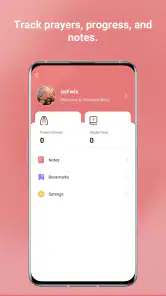
Many Bible apps include practical study features such as bookmarks, highlights, personal notes, verse sharing, daily reminders, and reading-progress tracking, and Women’s Bible may offer some or all of these tools. However, feature availability can vary between devices and app updates. If you plan to use the app for structured study, confirm whether your notes and progress synchronize across devices and whether an account is required.
Pros
- Easy-to-read Bible content designed for daily reflection
- Includes uplifting verses focused on women’s faith and life
- Useful for personal devotion
- prayer
- and quiet study
- Simple navigation makes finding passages quick
- Can provide encouragement during stressful or difficult moments
Cons
- Some content may feel repetitive for regular Bible readers
- Limited appeal if you prefer academic or historical Bible study
- Religious focus may not suit users seeking secular wellness content
- Reading experience may vary depending on device screen size
- Some features or translations may require an internet connection

- Category
- Books & Reference
- Version
- 1.8.6