Wahy (Holy Quran)
- 1.44K
- 4.8
- Installs
- 5.00M
- Price
- Free

Screenshots
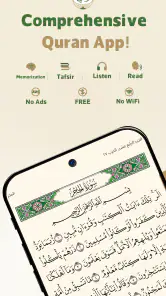
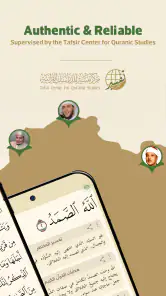

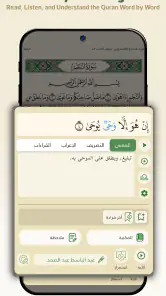
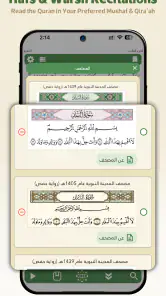
Analysis by Reviewed
What I would pay attention to first with Wahy is not the number of tools it brings together, but whether its way of presenting the Quran suits the kind of attention I can give in an ordinary day. A phone can make it easy to open a passage wherever I am, yet it can also bring messages and other distractions into the same moment. I find the app most useful when I decide beforehand whether I am reading, listening, or following a particular question, then keep that session focused.
A practical way to try it
If I were setting it up for a new routine, I would start with one short reading rather than browsing through every section. I would listen while following the words, then revisit a passage later with a translation if I wanted to reflect on its meaning. That sequence takes advantage of the word-by-word approach without making the first session feel like a complicated study project.
There is also a useful distinction between a personal note and an explanation. A note can preserve what I wondered about or remind me why I saved a passage; it does not establish the correct interpretation. When a question depends on context or scholarly understanding, I would use the app as a place to identify the passage and turn to a trusted teacher or reference for guidance.
How it fits alongside other Quran apps
Many people choose a Quran app for one main job: a readable text, audio recitation, translation, or a collection of references. Wahy’s appeal is that it brings several kinds of engagement into the same general experience. That is convenient if I switch between listening and reading, but a dedicated reader may feel more direct when all I want is to open the text and continue without exploring extra material.
The trade-off is not simply “more features are better.” A combined app can reduce the need to move between tools, while a specialist app or printed edition can be preferable for a particular translation, a focused commentary workflow, or study away from a screen. I would choose based on the material and habits I actually use, not on the assumption that one app must replace every resource.
Small habits that make the tools more useful
Bookmarks and notes can become cluttered if I save every passage that catches my attention. I would keep each bookmark tied to a clear reason—such as a passage to return to during a study session—and make notes short enough to understand later. This makes revisiting more purposeful and avoids treating saved items as a substitute for a structured study plan.
For listening, I would choose a quiet moment when I can follow the text rather than letting audio run unnoticed in the background. In a public place, silent reading may be more practical; at home, listening can give the words a different pace. The point is to match the mode to the setting, instead of expecting one routine to work equally well everywhere.
More From Our News Desk

Weather by Xiaomi Review: Clear at a Glance, Less Clear Up Close

X Under Pressure: Can It Recover When Posting Goes Wrong?

Clash of Clans Is Won Between the Battles

Android Auto Makes the Case for Quieter Car Software

MobiOffice: Transforming Mobile Productivity with Seamless Integration

EA SPORTS FC™ Mobile Soccer: Redefining Mobile Sports Gaming
On a busy day, reminders can help me remember that I intended to read, but they are only helpful if they arrive at a time when I can respond. I would treat them as a gentle prompt and keep the habit manageable. If a notification becomes easy to dismiss, changing the routine around a natural pause in the day may work better than relying on the alert alone.
Who may prefer another approach
I would recommend giving Wahy a try if you want a free Quran companion that brings reading and listening together and gives you ways to return to passages. It can also suit someone who is beginning to build a regular practice and wants a few kinds of Islamic material available in one place. The range may be more useful to a curious reader than to someone who has already settled on a narrow, specialist workflow.
I would be more cautious if my main need were in-depth scholarly commentary, a particular translation or recitation selection, or a distraction-free reading environment. In those cases, I would first check that the resources and presentation match that exact need, or use Wahy alongside a specialist book or reference tool. That is a sensible division of labor, not a reason to expect a general-purpose app to serve every kind of study equally well.
One question a new user may have is whether the app is suitable for someone who does not read Arabic fluently. Its translations make it relevant to readers who want support in another language, while the word-by-word approach can help them follow the text more closely. I would still treat translation as a way into the passage rather than a replacement for context when a deeper question arises.
Another practical question is whether it can fit a short daily session. I think it can: a reader can choose a small passage, listen or read, and save a point to revisit. The benefit depends less on having a long session than on using the available tools with a clear purpose. Someone who wants only a plain text screen may find that a simpler reader better matches that brief routine.
For the cost question, the useful fact is straightforward: Wahy is free. I can try its reading and study approach without an upfront purchase decision, but I would not infer anything beyond that about future costs or optional purchases. Its value to me rests on whether I actually use the tools, not on the fact that the initial price is zero.
Hey there, fellow app enthusiasts! If you're on the hunt for a spiritual journey through your smartphone, let me take you on a little tour of the Wahy (Holy Quran) app. As someone who's always looking to explore apps that can bring a bit of peace and mindfulness into my hectic day, this one really caught my attention. So, let's dive in and see what it's all about.
Starting with the cost
One practical reason to consider Wahy is simple: it is free. That makes it easy to try as a Quran-reading companion without deciding whether a paid app is worth the commitment. I would still choose an app based on whether its reading and study tools suit my habits, rather than treating a zero price as proof that it is automatically the best fit.
For everyday use, I would begin with one clear purpose: reading a passage, following along with recitation, or returning to something I marked earlier. That small routine is more useful than trying to explore every part of a broad religious reference app at once. If I were helping someone new to Quran apps, I would suggest starting with a short session and seeing whether the presentation feels comfortable.
First Impressions: A Seamless Interface
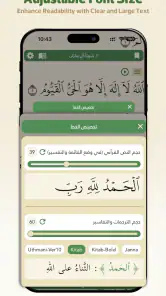
The first thing that struck me about the Wahy (Holy Quran) app was its clean and intuitive interface. You know how some apps just make you feel at home the moment you open them? This one does exactly that. The design is sleek, with a serene color palette that instantly calms your senses. Navigating through the app is a breeze, thanks to its user-friendly layout.
Features That Stand Out
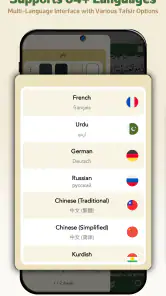
Now, let's talk about features, because that's where this app truly shines. Whether you're a devout follower or just curious to learn more, Wahy offers something for everyone. The app provides a complete Quran with translations in multiple languages, which is a huge plus for those of us who aren't fluent in Arabic. And let me tell you, the recitations are just beautiful. There's a wide selection of renowned reciters, so you can choose the voice that resonates with you the most.
The word-by-word approach is especially valuable when I want to slow down instead of treating a passage as one continuous block. A useful way to study is to listen while following the text, then pause to consider a word or compare its translation with the surrounding verse. That can make a short reading session more focused, though it is not a substitute for a teacher or a trusted explanation when a detail needs deeper context.
One of my favorite features has to be the bookmarking ability. As someone who likes to revisit certain verses, this feature makes it incredibly easy to keep track of your favorite parts. Plus, the app allows you to jot down notes, which is perfect for personal reflections or study purposes.
Those tools work best as a modest personal system: I would bookmark a passage I want to revisit and write a brief note about the question or thought I had, rather than trying to turn a phone screen into a full study notebook. When returning later, the saved place can help me pick up where I left off. For shared study or formal research, I would keep references and explanations from a separate reliable source too.
Engage Your Spiritual Self
But wait, there's more! The app doesn't just stop at the Quran. It also includes a plethora of Islamic content, such as Hadith collections and prayer times. I found the daily reminders particularly helpful, nudging me to pause and reflect amidst my busy schedule. It's like having a little spiritual companion in your pocket, ready to guide you whenever you need it.
A realistic routine might be opening the app during a quiet commute or a lunch break, reading a few lines, and saving one passage to revisit at home. In a shared or busy environment, audio may be less convenient than silent reading; at home, listening can make it easier to follow along without rushing. I would also treat reminders as prompts rather than obligations, adjusting my routine around them so they remain helpful instead of becoming another notification to dismiss.
And if you're someone who loves to learn on the go, you'll appreciate the audio and offline modes. These features mean you can listen to the Quran or other content without worrying about your data plan. Pretty neat, right?
Compared with a basic digital Quran reader, Wahy aims to bring reading, listening, and additional Islamic reference material together, so I would try it first if I wanted those activities in one place. Someone who only wants a plain text reader may prefer a simpler tool with fewer things to navigate. Likewise, readers who need extensive scholarly commentary or a particular study workflow should check that their chosen resources meet those needs rather than assuming a general-purpose app will cover them.
Who is likely to get the most from it?
I can see Wahy working well for readers who want Arabic text alongside translation, people who like listening as they follow a passage, and anyone who benefits from keeping a few personal bookmarks and notes. It may also suit someone building a gentle daily habit, since the combination of reading, audio, and reminders offers several ways to return to the text. If you mainly need advanced research tools, a specialist reference source may be a better companion.
Wahy is a Books & Reference app from مركز تفسير - Tafsir Center. It is free, rated for Everyone, and has an average rating of 4.8 from around 123,000 ratings, with over 5 million installs. Its current version is 1.2.5 and it runs on Android 6.0 or newer. Those details make it a widely used, accessible option, but personal fit still depends on the way you prefer to read and learn.
Final Thoughts
All in all, the Wahy (Holy Quran) app is a fantastic tool for anyone looking to deepen their understanding of Islam or simply seeking a little peace and tranquility in their life. It's thoughtfully designed, packed with features, and makes spiritual exploration accessible to everyone. So, if you're ready to embark on a soulful journey, give it a try. Who knows, it might just become your go-to app for spiritual enlightenment.
My practical verdict is to try it if you want a free, flexible Quran companion for reading, listening, and revisiting passages. I would skip it as my only resource if I needed detailed scholarly guidance or a strictly minimal reader, and I would compare its everyday workflow with the tools I already rely on before making it a central study app. For a first step, though, it offers a sensible way to see whether word-by-word engagement and the wider reference material fit your routine.
Thanks for sticking around, and happy exploring!
Wahy (Holy Quran) Frequently Asked Questions
What does the word-by-word recitation and translation feature do?
Wahy’s distinctive feature is word-by-word recitation and translation, which can help readers follow the Quran while connecting individual words with their meaning. This approach may be useful for people who want to engage more closely with the text rather than read only a continuous translation. Wahy is a Books & Reference app centered on Quran access and study.
Is Wahy suitable for someone who is new to reading or studying the Quran?
Wahy may suit both readers who are beginning to explore the Quran and those who already have an established study routine. Its word-by-word recitation and translation feature offers a way to engage with the text in smaller parts, while its Everyone content rating reflects a broad intended audience. As with any religious reference app, users can choose the pace and approach that work for them.
Is Wahy (Holy Quran) free to download, and who develops it?
Wahy is a free Books & Reference app developed by مركز تفسير - Tafsir Center. Its free price makes it easy to try as a Quran-reading resource, while the app’s focus includes a distinctive word-by-word recitation and translation feature. It is rated for Everyone, making it suitable for a broad audience interested in reading or studying the Quran.
What features does the Wahy (Holy Quran) app offer?
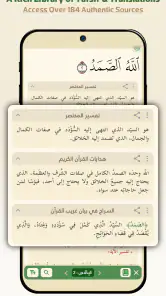
The Wahy (Holy Quran) app provides a comprehensive set of features designed for both casual readers and dedicated scholars. It includes a full digital version of the Holy Quran, audio recitations by various renowned Qaris, verse-by-verse translations in multiple languages, tafsir explanations, and search capabilities to find specific verses or topics. Additionally, the app offers a bookmarking feature, daily Quranic reminders, and a user-friendly interface to enhance the reading and learning experience.
Is the Wahy app available for both Android and iOS devices?
Yes, the Wahy (Holy Quran) app is available for download on both Android and iOS platforms. Users can find the app on the Google Play Store for Android devices and the Apple App Store for iOS devices. This cross-platform availability ensures that users can access the app's features seamlessly, regardless of their device choice, and enjoy a consistent experience while reading and studying the Quran.
Pros
- User-friendly interface for easy navigation.
- Comprehensive Quranic text and translations.
- Audio recitations available for all verses.
- Bookmark and note-taking features included.
- Daily reminders for prayer and recitation.
Cons
- Requires internet for full functionality.
- Ads can be distracting at times.
- Limited language options for translations.
- Some audio recitations are low quality.
- Occasional app crashes reported.
- Category
- Books & Reference
- Version
- 1.2.5