Trading Room - Forex signals a
- 75.00
- 4.5
- Installs
- 100.00K
- Price
- Free

Screenshots
Analysis by Reviewed
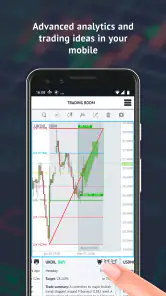
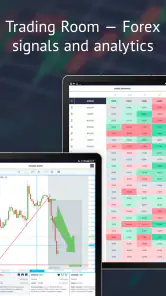
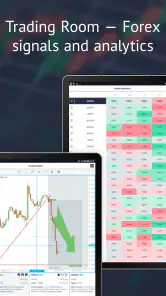
Trading Room - Forex signals a is a finance app from Finansoft Ltd that focuses on helping people follow currency markets through trading ideas and an FX heatmap. I found its appeal quite immediate: instead of opening several market pages and trying to decide what deserves attention, the app puts suggested opportunities and a visual view of currency strength in one place. That makes it interesting for someone who wants a compact market-watching routine rather than a full professional trading terminal.
My first impression was that this is best understood as a research companion, not a replacement for a broker. It can help me notice a possible setup, compare the relative movement of currencies, and decide what deserves further checking. It does not remove the need for a trading account, a risk plan, or independent judgement. That distinction matters, because a signal can be useful as a starting point while still being unsuitable as an automatic instruction to buy or sell.
The app is free to install, carries an Everyone age rating, and has reached over one hundred thousand installs. Its average rating is 4.5 from around 2.6 thousand ratings, which suggests that many users find the basic idea worthwhile. I would still treat those figures as a sign of interest rather than proof that every signal will fit every strategy. Currency trading is too dependent on timing, position size, and personal risk tolerance for any signal tool to work equally well for everyone.
How Trading Room fits into a lasting forex routine
The first week: quick discovery, then a need for discipline
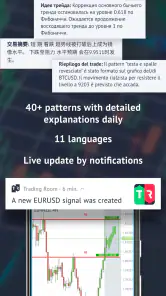
During the first few sessions, the app’s main strength is its focused presentation. The daily trading ideas give me something concrete to investigate, while the FX heatmap offers a broader context. That combination is more useful than a bare list of alerts because it encourages me to ask why a currency pair might be interesting instead of looking at a pair in isolation.
A sensible first-week workflow is to open the ideas, note which pairs repeatedly attract attention, and then use the heatmap to check whether the broader currency picture supports that interest. I would not place a trade immediately after reading an idea. I would compare the suggestion with my own chart, check whether the timing still makes sense, and write down what would invalidate the setup. This turns the app into a filter for research rather than a source of impulsive decisions.
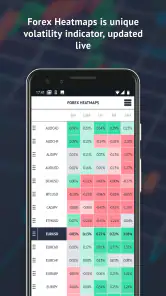
The heatmap is particularly helpful for beginners who struggle to interpret several currency pairs at once. If one currency appears broadly stronger while another appears broadly weaker, that relationship can make a pair easier to understand than a chart viewed without context. The important trade-off is that visual strength does not automatically mean a clean entry. A currency can look strong after a large move, leaving poor timing for a new position.
One non-obvious benefit is the way the two tools can be used to challenge each other. If a trading idea points toward a pair but the heatmap shows mixed strength across the currencies involved, I see that as a reason to slow down. If both views point in a similar direction, I still need confirmation, but the idea has a clearer place in my watchlist. This simple cross-check is more valuable than treating either screen as a final answer.
The first week can also reveal whether the app matches a person’s natural rhythm. Someone who enjoys checking markets at planned times may find the daily ideas easy to incorporate. Someone who wants instant, fully automated execution may become disappointed quickly, because this is a viewing and analysis tool rather than a hands-off trading system. I would recommend using the opening week to test a routine, not to measure success by the number of trades taken.
What the app does better than ordinary market browsing
The usual alternative is to combine a broker’s charting tools with financial news, watchlists, and perhaps a separate currency-strength indicator. That approach can be more powerful, especially for experienced traders, but it also creates more friction. Trading Room’s appeal is that it narrows the first step: I can begin with ideas and a heatmap before deciding whether deeper analysis is justified.
Compared with a broker app, it is better suited to discovery than execution. A broker normally gives me order types, account information, charts, and position management. This app is more useful before that stage, when I am deciding what to investigate. Compared with a general finance news app, it is more directly organized around forex attention rather than broad headlines. The compromise is depth: a specialist trading platform may offer more customization and technical tools.
That difference makes the app especially suitable for a person who already has a separate place to trade and wants a second screen for idea generation. It is also approachable for a learner who needs help building a watchlist. I would be cautious about recommending it as the only resource for a new trader, because learning to interpret market structure, volatility, and risk cannot be outsourced to a signal feed.
A realistic everyday use case
Imagine I have a full-time job and only a short window before work and another in the evening. I can use the morning session to scan the day’s ideas and the heatmap, selecting perhaps a small group of pairs for closer attention. Later, I can check whether the underlying conditions still support those ideas instead of chasing every new movement. If nothing looks clear, the useful decision may be to do nothing.
That last point is important for long-term use. A signal app can create the feeling that I should always be active, but a repeatable routine should include a clear “no trade” outcome. I would keep a simple note beside each idea: what attracted me, what the heatmap suggested, what my own chart showed, and why I accepted or rejected it. After several weeks, those notes can tell me whether the app improves my process or merely increases screen time.
Month-to-month value: does the novelty survive?
The daily ideas are naturally fresh during the first few days, but their lasting value depends on how I use them. If I only read them as predictions, the experience may become repetitive. If I use them as study prompts, they can remain useful. Each idea can become a small exercise in comparing a suggested market view with price behaviour, broader currency relationships, and my own rules.
The FX heatmap has stronger potential for recurring value because it can support a repeatable market scan. Rather than memorizing a pair list, I can look for currencies that are showing a meaningful contrast and then investigate the pairs built around that contrast. This is a practical way to reduce random browsing. It also helps me notice when a favourite pair is not offering the clearest relationship in the wider market.
One advanced workflow I would recommend is separating idea collection from decision-making. During the first pass, I would record interesting pairs without judging them too quickly. During the second pass, I would remove ideas that conflict with my trading timeframe or risk limits. Only then would I open a broker chart or another analysis tool. This layered process reduces the chance that a persuasive-looking idea will immediately become a trade.
Another useful habit is to compare repeated ideas with outcomes without judging the app by one result. A single winning or losing trade says very little. What matters is whether the ideas help me identify markets that deserve research and whether my own filtering improves. I would review the notes at the end of each month, looking for patterns such as entering late, ignoring conflicting heatmap information, or following pairs that do not fit my schedule.
That is where the app can earn a permanent place. It does not need to be the centre of my entire trading setup. It only needs to save enough time during the discovery stage to justify opening it regularly. If I already have a well-organized professional platform with a strong currency-strength view and a reliable research process, the extra value may be modest. For a less organized setup, the focused workflow can be more meaningful.
Maintenance burden: small in setup, larger in interpretation
There is little conceptual maintenance involved in keeping a simple idea-and-heatmap routine. I can open the app, review the current material, and move on. The real burden is mental rather than technical. I have to keep my trading rules in a separate written form, because the app’s ideas should not replace decisions about leverage, exposure, stop placement, or the amount I am prepared to lose.
The app’s current version is 2.9 and it supports devices running Android 7.1 or later. That makes it accessible to people using older Android hardware, although the experience will naturally depend on the phone and the broader operating environment. I would keep the app updated when updates are available and avoid building a routine that depends on a single screen remaining perfect forever. A backup note-taking method is enough; I do not need to duplicate the entire app.
Cost is another part of maintenance. The app itself is free, but in-app purchases range from $15.99 to $79.99 per item. I would begin with the free experience and decide only after establishing a real routine whether any paid element saves enough time to justify its price. A paid upgrade should improve a workflow I already use, not become a substitute for learning how to analyse a market.
This is also where expectations need managing. A person may install the app hoping that the ideas will make profitable trading simple. That expectation creates the wrong kind of maintenance: constant checking, emotional reactions, and repeated changes to a strategy. A healthier approach is to set a fixed review schedule and judge the app by whether it makes research clearer. If it encourages compulsive monitoring, it is no longer serving its purpose.
Sources of fatigue after the initial excitement
The first source of fatigue is repetition. Seeing new ideas each day sounds valuable, but a steady stream can become noise if I do not have a method for ranking it. The heatmap helps with prioritization, yet it cannot decide which opportunities fit my timeframe or account. Without a personal filter, the app may produce more things to watch than I can responsibly evaluate.
The second is the gap between an idea and an executable trade. Market conditions can change between the moment an idea is published and the moment I inspect it. Even when the general direction remains plausible, the entry may no longer be attractive. This is why I would treat the timing of every idea as part of the analysis, not as a detail to ignore.
The third is emotional fatigue. A user who follows every suggestion may start counting wins and losses without understanding the decisions behind them. That can lead to overconfidence after a good result or frustration after a bad one. I prefer using the app to create a shortlist, then making a separate decision based on a prewritten plan. The extra step feels slower, but it protects the habit from becoming reactive.
There is also a practical trade-off between simplicity and depth. The app’s focused purpose is its advantage when I want a quick market overview. It becomes less satisfying when I need extensive chart studies, detailed historical testing, complex alerts, or direct account management. In those situations, a dedicated trading platform is the better primary tool, while this app may still have a supporting role.
Who should use it, and who should skip it?
I think Trading Room suits an aspiring forex trader who wants structure at the beginning of a research session. It is also a reasonable fit for an experienced trader who likes to compare an external set of ideas with a personal system. People with limited time may appreciate the way the ideas and heatmap reduce the need to search broadly before deciding what deserves attention.
I would skip it as a main solution if I want automated trading, direct execution, or a complete account-management environment. I would also avoid relying on it alone if I am still learning basic risk management. The app can point me toward a market, but it cannot make the position size appropriate, protect me from excessive leverage, or guarantee that a setup remains valid.
Beginners should be especially careful with the word “signal.” I read it as a research lead, not a promise. Before risking money, I would practise recording the ideas, compare them with my own analysis, and learn how a broker handles orders and losses. Someone who is unwilling to do that preparation will probably find the app more distracting than helpful.
Final judgement on lasting value
After the novelty fades, the app’s strongest reason to stay installed is its role as a compact forex discovery tool. The combination of trading ideas and an FX heatmap gives me a practical sequence: notice a possibility, examine the currency relationship, and decide whether deeper research is worthwhile. That is a more durable use than simply waiting for a prediction to come true.
Its limitations are equally clear. The app does not remove the need for charts, broker tools, risk controls, or personal judgement. The daily flow can become tiring without a selection process, and the paid items deserve careful consideration rather than an automatic purchase. I would also keep expectations realistic: a useful idea is not the same thing as a suitable trade.
Finansoft Ltd has made a free finance app that can fit neatly into a disciplined routine, particularly for users who want a quick overview before opening their main trading platform. I would give it a permanent place on my phone only if it helps me make fewer, better-researched decisions. Used that way, it earns its space. Used as a shortcut around learning and risk management, it is unlikely to provide lasting value.
My recommendation is therefore measured but positive: try Trading Room - Forex signals a as a research companion, begin without paying for extras, and create a written process before acting on any idea. If the heatmap improves the way you build a watchlist and the daily material supports consistent review, the app can remain useful month after month. If it merely makes you check markets more often, a simpler routine or a stronger all-in-one trading platform would be the better choice.
Pros
- Clear forex signals with entry
- stop-loss
- and take-profit levels.
- Useful for traders who want ideas without constant market screening.
- Covers multiple currency pairs and trading opportunities.
- Simple layout makes signals easy to find and follow.
- Can support learning by showing practical trade setups.
Cons
- Signals are not guaranteed and may lead to financial losses.
- Some features or signals may require a paid subscription.
- Signal timing can be difficult for users in different time zones.
- Beginners may need extra knowledge to manage risk properly.
- App performance and signal quality may depend on internet access.

- Category
- Finance
- Version
- 2.9