TalkIn-Learn Language&Culture
- 156.00
- 3.6
- Installs
- 1.00M
- Price
- Free

Screenshots







Analysis by Reviewed
In a household where a phone or tablet gets passed around, a social language app can be more complicated than a course used alone. One person may want to practise conversation, while someone else is simply curious about life elsewhere. I see TalkIn as a better fit for informal exploration than as a shared family course: people can use the same device, but they should keep separate accounts and personal goals.
Shared-device use needs clear boundaries
If a phone or tablet moves between family members, I’d make a simple rule before anyone starts: switch to the right person’s account, and don’t assume that one person’s chats or contacts are appropriate for everyone else to browse. This is ordinary shared-device hygiene, not a special household feature. It matters especially in a social app, where conversations can feel more personal than a vocabulary exercise.
I’d also decide who is responsible for any purchases before handing the device to a younger user. TalkIn is free to download, but it offers in-app purchases ranging from $0.99 to $129.99 per item. That wide spread makes it sensible to check purchase settings on the device and agree that paid options need an adult’s approval. I wouldn’t treat “free” as a promise that every part of the experience will remain free.
What TalkIn feels like in everyday use
Have you ever dreamed of becoming a polyglot, effortlessly chatting away in multiple languages while immersing yourself in diverse cultures? Well, with TalkIn-Learn Language&Culture, that dream might just be within your reach. This app is like having a personal language coach and cultural guide in your pocket, and today, I’m excited to share my experience with it.
Unpacking the Features
When I first downloaded TalkIn-Learn Language&Culture, I was pleasantly surprised by its sleek and intuitive interface. Navigating through the app felt like a breeze, even for a tech novice like me. What sets this app apart is the blend of language learning and cultural insights, giving users a holistic approach to mastering a new tongue.
The app offers a plethora of languages to choose from. Whether you're interested in picking up Spanish, Mandarin, or even something as exotic as Swahili, the options are vast. What’s more, each language course is tailored to suit different learning paces, ensuring that whether you’re a beginner or an advanced learner, there’s something for you.
Making conversation fit a busy day
The social side is most useful when you give it a small, specific job instead of expecting it to replace a full study routine. For example, after a short lesson, I’d use a spare moment to listen to a voice exchange or send a brief message about a phrase I’m trying to understand. That creates a natural reason to return to the language without turning every session into a long study block.
More From Our News Desk

Clash of Clans Is Won Between the Battles

Android Auto Makes the Case for Quieter Car Software

MobiOffice: Transforming Mobile Productivity with Seamless Integration

EA SPORTS FC™ Mobile Soccer: Redefining Mobile Sports Gaming

How Microsoft OneDrive Became a Mobile Productivity Giant

How Google Translate Breaks Language Barriers Effortlessly
There is a trade-off: chatting with other people can be less predictable than following a structured lesson. A conversation may be lively but not match your current level, and it takes more initiative than tapping through a fixed sequence of exercises. If you need a carefully ordered grammar syllabus, dependable correction, or a quiet offline routine, a traditional course or textbook may suit you better. I’d use TalkIn alongside structured study rather than relying on social contact alone to build fluency.
Immersive Learning Experience
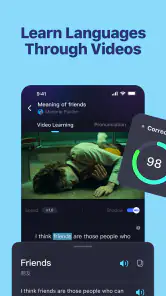
One standout feature of this app is its immersive learning experience. Through engaging audio-visual content, TalkIn-Learn Language&Culture transports you to different countries, allowing you to experience languages in their natural habitat. It’s like a mini-vacation without the airfare!
The interactive lessons are designed to keep you hooked. I found myself eagerly anticipating each session, which is a testament to how well the app gamifies the learning process. The inclusion of native speaker accents and real-world conversations really helped in honing my listening and speaking skills.
For a practical routine, I’d keep a short note of unfamiliar expressions after listening, then try to use one naturally in a later chat. That helps turn an entertaining clip into active practice. It also makes it easier to notice whether I’m improving at understanding speech, rather than measuring progress only by how many lessons I’ve opened. I’d avoid treating a smooth conversation as proof that every grammar point is settled; listening confidence and accuracy develop at different speeds.
Cultural Insights Galore
Now, what truly makes this app shine is its focus on culture. Language and culture go hand in hand, and the app does a fantastic job of weaving cultural facts and trivia into the lessons. From learning about traditional festivals to understanding local customs, it offers a comprehensive cultural education that is both informative and entertaining.
For someone like me who loves to travel and explore new cultures, these insights were invaluable. They not only enriched my language learning journey but also prepared me for real-world interactions.
A useful way to apply those details is to treat them as conversation starters, not as rules that describe every person in a country. Customs vary between individuals and settings, so I’d use a cultural note to ask a thoughtful question rather than assume it tells me exactly how a stranger will behave. That makes the material more respectful and more useful in actual conversation.
Keeping household use comfortable
TalkIn is a social experience, so I’d consider age and trust before inviting a teenager to use it. Its content rating is Teen, and that is a cue for families to discuss sensible boundaries around chatting with people they don’t know, sharing personal details, and asking for help if an interaction feels uncomfortable. I wouldn’t present the app as a supervised family space or assume that a parent can manage another person’s conversations through it.
For a household, coordination can be as simple as agreeing on when the shared device is available and keeping each person’s account separate. If two people are learning different languages, they can still encourage one another by sharing a new phrase or cultural discovery outside the app, without mixing up contacts or private conversations. That small distinction makes shared use more pleasant: the device can be common even when the social activity is personal.
Where it fits among language-learning options
Compared with a conventional language-learning app built around solitary drills, TalkIn puts more emphasis on communication and cultural exchange. That is appealing if your main obstacle is finding a reason to speak or hear a language beyond scripted exercises. Compared with a general messaging app, its educational framing gives language practice a clearer purpose. Still, it is not the best choice for someone who wants a purely private course or a formal classroom substitute.
I’d particularly recommend it to curious learners who enjoy meeting people and can set their own pace. Someone preparing for an exam, needing a strict curriculum, or preferring not to interact socially may be happier with a specialist course. The Android app is free, developed by Octopus Paradise, and requires Android 7.0 or later; it is on version 4.3.1. Its average rating is 3.6 from around 5.8K ratings, with over a million installs. Those figures suggest an established audience, but they don’t tell me whether the social format will suit a particular learner.
TalkIn-Learn Language&Culture also has a thriving community. The language exchange feature allows you to connect with fellow learners and native speakers worldwide, providing a platform to practice and share cultural experiences. It’s a wonderful way to make new friends while enhancing your language skills.
A realistic way to try it
Imagine having ten minutes after dinner while the family shares a tablet. I’d let one person finish their own session, sign out or switch users before passing the device on, then give the next person a chance to explore a different language or cultural topic. If the household wants to discuss what they found, they can do that together without making the app itself a shared inbox. This approach suits casual discovery, though it won’t replace uninterrupted personal practice for someone working toward a specific goal.
Before settling into a routine, I’d check which parts feel useful without spending money and make sure everyone understands that optional purchases exist. I’d also judge the experience by whether it encourages meaningful practice, not just by how often the app is opened. If chats feel distracting or the social element is uncomfortable, there’s no need to force it: a book, audio course, or more structured learning app can be a better match.
Getting more from short sessions
A small change in how you approach a social learning app can make the time feel more productive. Before opening TalkIn, I’d decide on one modest goal: understand a voice exchange, ask about an expression, or share a thought about a cultural detail. That keeps a casual visit from becoming aimless scrolling, and it gives me a clear stopping point when I have only a few minutes.
I’d also separate receptive practice from speaking practice. Listening can be useful when I’m tired or in a public place, while starting a conversation takes more attention and a willingness to make mistakes. If I’m not in the right mood to interact, I can still study elsewhere and return to the social side when I can give another person a thoughtful response. That flexibility is a strength, but it also means the app works best when I bring a little self-direction.
Who will enjoy the social format
I’d point TalkIn toward learners who are curious about people as much as vocabulary: someone planning a trip, keeping up a language after a class, or wanting a reason to use phrases beyond an exercise. It can also suit a household where different people have separate interests and take turns exploring, provided they respect account boundaries and don’t expect the app to coordinate everyone’s study.
On the other hand, I would not choose it as my only resource if I needed a measurable exam plan, detailed grammar progression, or correction on every sentence. Nor would I recommend its social approach to someone who strongly prefers private practice or finds contact with strangers stressful. In those cases, a structured course, tutor, or offline workbook gives clearer control over the pace and subject matter.
Questions worth settling before you start
If you’re wondering whether it can replace a full language course, my answer is no: I’d treat its social and cultural angle as a complement, not a complete curriculum. If you’re asking whether it makes sense on a shared family device, it can, as long as each person uses their own account and the household agrees on privacy and purchase boundaries. The device may be shared; the conversations should remain personal.
For a younger user, the Teen content rating makes an adult conversation about online interactions a sensible first step. And if you’re unsure whether the app is worth trying, its free download lowers the commitment, while optional purchases mean it’s still worth checking spending settings first. I’d give it a fair trial based on whether its conversations help you return to a language, rather than expecting one session to transform your fluency.
The Final Verdict
In a world that’s becoming increasingly interconnected, being multilingual is more important than ever. With this app, you’re not just learning a language; you're opening doors to new cultures and perspectives. The app’s user-friendly design, combined with its rich content and community features, make it a must-have for language enthusiasts.
So, if you’re ready to embark on a language-learning adventure that goes beyond the basics, give it a try. Who knows? You might just find yourself planning your next trip to practice your newfound skills!
TalkIn-Learn Language&Culture Frequently Asked Questions
What does TalkIn-Learn focus on, and what kind of experience should I expect?
TalkIn-Learn is an education app from Octopus Paradise built around chat, voice, moments, and connecting with people. Its short description is TalkIn, and its store summary invites users to discover life around the world. The emphasis is on language and culture through social interaction, so it may appeal to learners who want a more people-centered experience than a standalone course of lessons.
What is TalkIn-Learn Language & Culture and how does it work?
TalkIn-Learn Language & Culture is an innovative app designed to facilitate language learning through cultural immersion. It offers interactive lessons, real-life conversation scenarios, and cultural insights to enhance your linguistic skills. By integrating games, quizzes, and multimedia resources, the app provides a dynamic learning experience that caters to various learning styles. Users can track their progress and set personalized goals to achieve language proficiency.
Is TalkIn-Learn suitable for beginners or advanced learners?
TalkIn-Learn is tailored for both beginners and advanced learners. The app provides a structured curriculum that starts with basics for beginners and gradually progresses to advanced topics. For seasoned learners, it offers challenging modules and immersive cultural experiences to refine their skills. The app's adaptive learning technology ensures personalized content delivery based on the user's proficiency level and learning pace.
What languages are available on TalkIn-Learn?
Currently, TalkIn-Learn offers a wide range of languages, including popular ones like Spanish, French, German, and Mandarin, as well as less commonly taught languages such as Swahili and Icelandic. The app continuously updates its language offerings based on user demand and global language trends. Each language course includes cultural lessons to provide a holistic understanding of the language's context and usage.
Does TalkIn-Learn offer offline learning options?
Yes, TalkIn-Learn supports offline learning for users who may not always have internet access. You can download lessons and resources to your device and study them at your convenience without an internet connection. This feature is particularly beneficial for travelers or users in areas with limited connectivity, ensuring uninterrupted learning experiences.
Pros
- User-friendly interface enhances learning experience.
- Wide range of languages available for practice.
- Interactive lessons keep engagement high.
- Cultural insights enrich language learning.
- Offline mode allows learning on the go.
Cons
- Limited free content; subscription needed.
- Occasional bugs disrupt lesson progress.
- Some languages lack advanced material.
- Voice recognition can be inaccurate.
- Requires internet for initial download.
- Category
- Education
- Version
- 4.3.1