Solar System Scope
- 3.24K
- 4.4
- Installs
- 10.00M
- Price
- Free
Screenshots

Analysis by Reviewed
Have you ever wondered what it would be like to have the entire universe at your fingertips? Well, wonder no more because Solar System Scope is here to make those dreams a reality. I recently took this app for a spin, and let me tell you, it was a cosmic adventure unlike any other. Let me walk you through my journey as I explored the vast reaches of our solar system, all from the comfort of my couch.
Blast Off into the Cosmos
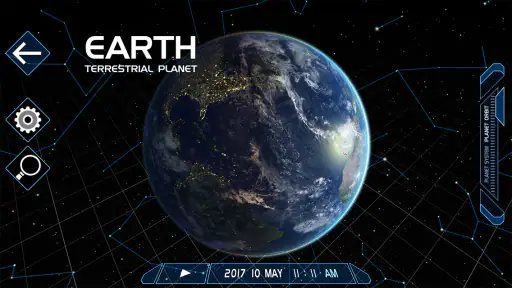
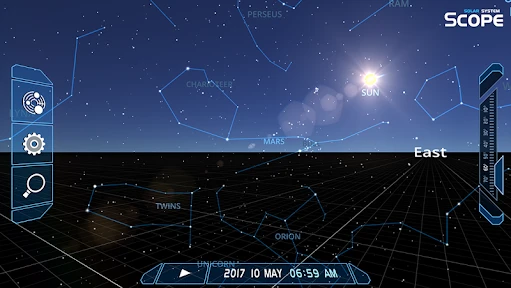
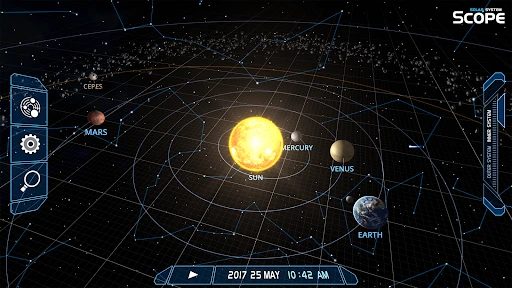
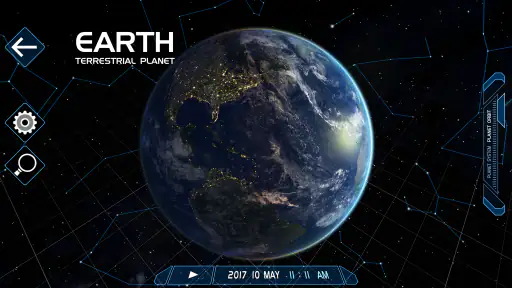
From the moment I launched Solar System Scope, I was greeted with stunning visuals that immediately drew me into its immersive world. The app offers a detailed 3D model of our solar system, complete with all major celestial bodies, from the sun to the farthest reaches of Pluto and beyond. The interface is intuitive, allowing me to easily navigate through space, zoom in on planets, and explore their surfaces.
Features That Shoot for the Stars
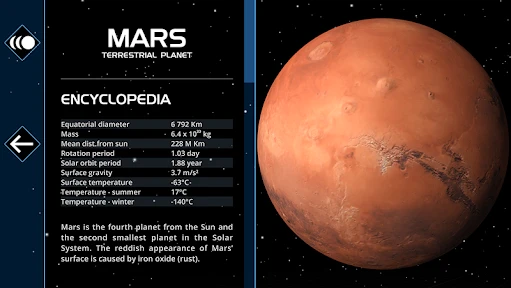
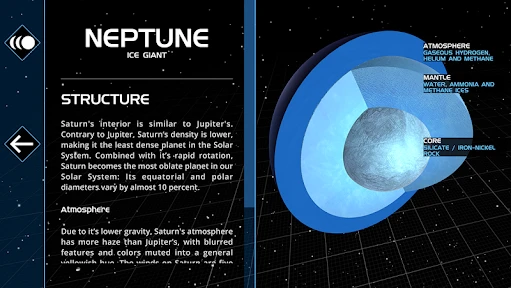
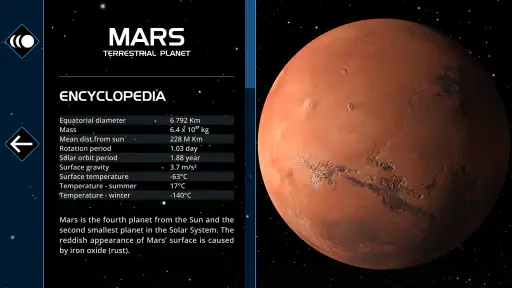
One of the standout features of this app is its wealth of information about each celestial body. Whether you're curious about the composition of Mars or the moons of Jupiter, Solar System Scope has got you covered. The app provides detailed descriptions, fun facts, and even historical context for each planet and moon, making it not just a visual treat but an educational one as well.
I also loved the real-time simulation aspect. You can observe the movement of planets and moons as they orbit the sun, providing a dynamic view of our solar system that's constantly changing. It's like having your own personal planetarium right in your pocket!
A Universe of Possibilities
What truly sets Solar System Scope apart is its ability to make learning about space fun and engaging. The app's developers have done an excellent job of balancing educational content with stunning visuals and interactive elements. Whether you're a space enthusiast or just someone looking to learn more about the universe, this app has something for everyone.
The app also offers customization options, allowing users to adjust the level of detail in the visuals and tailor the experience to their liking. This feature is perfect for those who want to dive deep into the intricacies of our solar system or simply enjoy a more simplified view. It's a thoughtful touch that makes the app accessible to users of all ages and knowledge levels.
Keeping Space in Your Routine
For me, the best way to get lasting value from a solar-system app is to give it a small, specific job rather than expecting it to become a daily destination. I might open it while helping a child with a school question, or use the moving orbital view to make a conversation about planetary motion less abstract. A short visit with one question in mind is often more useful than roaming around without a purpose.
More From Our News Desk

Clash of Clans Is Won Between the Battles

Android Auto Makes the Case for Quieter Car Software

MobiOffice: Transforming Mobile Productivity with Seamless Integration

EA SPORTS FC™ Mobile Soccer: Redefining Mobile Sports Gaming

How Microsoft OneDrive Became a Mobile Productivity Giant

How Google Translate Breaks Language Barriers Effortlessly
That also makes it easier to decide whether it belongs on your phone after the first burst of curiosity. If you enjoy returning to the same planets and noticing how their positions change, the simulation gives you a reason to revisit. If you mainly want quick answers to homework questions, a focused reference source may be faster. And if your main goal is identifying stars or constellations outdoors, a sky-map app is a better fit than a model centered on the solar system.
Where the Experience Can Feel Limited
The visual model is the main attraction, but it can also shape what you learn. A 3D display makes distances and orbits easier to picture, yet any compact screen view is a simplified way to represent an enormous system. I would treat it as a helpful visual aid, not as a substitute for a textbook when exact scale, terminology, or a carefully sourced explanation matters. For a class project, I would use it to build intuition, then check important details against the material assigned by a teacher.
There is a practical trade-off in adjusting the visual detail, too. A simpler view can make it easier to focus on one idea, while a richer display is more inviting to explore; neither setting is automatically best for every learner. I would start with the clearest view for the question at hand, then add detail only when it helps. That small habit keeps the screen from becoming busy and makes a quick learning session easier to follow.
Maintenance, Cost, and Who It Suits
Solar System Scope is a free education app from INOVE, s.r.o., with optional in-app purchases priced at $2.49 to $2.99 per item. It has a 4.4 average from around 149,000 ratings and over 10 million installs, which suggests it has found a broad audience without making popularity a substitute for fit. The age rating is Everyone, and the current version is 3.2.11; it runs on Android 5.1 or later. I would check the purchase choices with a child before handing over the phone, and treat the free experience as a sensible place to decide whether any paid extras are worthwhile.
Its maintenance burden seems modest in everyday use: you can open it when curiosity strikes rather than keeping up with a streak, schedule, or course plan. The app first appeared on December 17, 2013, so it is not a newly launched novelty, but long-term usefulness still depends on whether you enjoy returning to an interactive model. It is a good match for curious learners, parents looking for a visual conversation starter, and anyone who likes exploring planetary relationships. It is less suitable for someone who wants a structured astronomy course, detailed observing instructions, or a replacement for a conventional reference book.
Final Thoughts
In a world where we're constantly looking down at our screens, Solar System Scope encourages us to look up and explore the wonders of the universe. It's a beautifully crafted app that provides both entertainment and education, making it a must-have for anyone with even a passing interest in astronomy. So, if you're ready to embark on a cosmic journey, give this app a try. Trust me, you won't be disappointed!
My longer-term recommendation is a little more measured: try it when you have a real question or want a visual way into a space topic, then notice whether you naturally come back to it. The novelty of spinning around a 3D solar system may fade, but the ability to make planetary motion feel tangible can remain useful in short bursts. If that kind of visual learning suits you, it earns a place as a compact companion; if you need rigor, guided lessons, or help navigating the night sky, another astronomy resource will serve you better.
Solar System Scope Frequently Asked Questions
Can Solar System Scope help me learn about the planets before I download it?
Yes. Solar System Scope is designed around exploring the solar system and outer space, with an educational focus. Its interactive presentation can make it easier to engage with space topics than reading about them alone, whether you are curious about planets or looking for a visual learning aid. The app is intended for a broad audience, so it can suit casual exploration as well as learning activities.
Who develops Solar System Scope, and what kind of app is it?
Solar System Scope is an education app developed by INOVE, s.r.o. Its focus is exploring, discovering, and playing with the solar system and outer space. That makes it a natural fit for people who want a space-themed learning experience on a mobile device, rather than a general-purpose astronomy reference. You can explore its basic offering without paying for the download.
Is Solar System Scope free to download, and what costs should I expect?
Solar System Scope is free to download, so you can try its core experience without paying upfront. It also offers optional in-app purchases, with items priced from $2.49 to $2.99. These purchases are separate from the initial download, so consider whether you want any paid extras before buying them. The app is listed for everyone, making it suitable for a broad audience.
What is Solar System Scope and what platforms is it available on?
Solar System Scope is an interactive 3D simulation of the solar system and night sky, allowing users to explore celestial bodies in a detailed and immersive way. It is available on both Android and iOS platforms, making it accessible for a wide range of mobile device users. Additionally, the app can also be accessed via web browsers for desktop users. It is an education app from INOVE, s.r.o., centered on exploring space.
Does Solar System Scope require an internet connection to function?
While Solar System Scope offers offline functionality for many of its features, such as exploring planets and stars, some features like real-time updates and certain high-resolution textures may require an internet connection. It's recommended to check the app's settings to manage data usage according to your preferences and availability of an internet connection.
Pros
- Interactive 3D model of the solar system.
- Stunning graphics and visuals.
- Educational and fun for all ages.
- Frequently updated with new data.
- User-friendly and intuitive interface.
Cons
- Requires internet for updates.
- Can lag on older devices.
- Limited free features.
- Ads in the free version.
- No offline mode for full features.
- Category
- Education
- Version
- 3.2.11











