Simple Bible Daily Verse Alarm
- 7.36K
- 4.8
- Installs
- 1.00M
- Price
- Free

Screenshots

Analysis by Reviewed
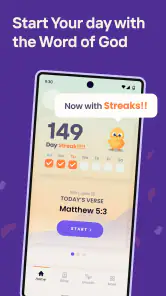
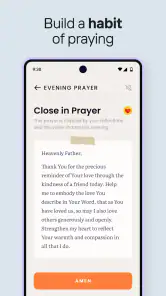
I approached Simple Bible Daily Verse Alarm as a small daily-reading tool rather than a full study platform, and that distinction matters. Its purpose is straightforward: bring a Bible verse into a person’s routine, add a personalized prayer element, and use an alarm-style reminder to make the habit easier to maintain. In my experience, that focused approach is its biggest strength. It does not try to replace a complete Bible app, a commentary library, or a church study resource. Instead, it aims to make a short moment of reflection easier to remember.
The app sits in the education category and is developed by Reminders & Alarms. It is free to start, with in-app purchases priced at $2.99 per item, and it is rated for Everyone. The current version is 2.68, while the app requires Android 9 or later. Its reception is notably strong, with a 4.8 average from around 68 thousand ratings, and it has passed one million installs. Those figures suggest that the simple daily format works for a broad audience, although popularity alone does not make every design choice suitable for every reader.
How clearly the daily experience works
A readable idea with a narrow purpose
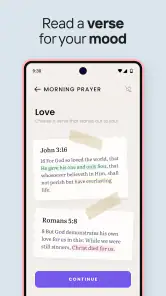
The central experience is easy to understand: choose a time or routine for a reminder, open the day’s content, and spend a few minutes with the verse and prayer. I like that the concept does not require a long setup or knowledge of Bible-study methods. Someone who has never used a devotional app can understand the point almost immediately.
The emphasis on a daily verse also reduces decision fatigue. A conventional Bible app can offer many translations, books, search tools, reading plans, notes, highlights, and cross-references. Those features are useful when I already know what I want to study, but they can make a quick morning reading session feel like another task. This app takes the opposite route. It gives the day a defined starting point, which is helpful for people who want consistency more than depth.
The KJV focus is important to consider before installing. Readers who already enjoy the King James Version may appreciate the traditional wording and familiar rhythm. Newer readers, people learning English, or users who find older language difficult may need more time to interpret the verse. I would not treat that as a flaw in the app itself, but it does affect readability. If plain modern language is essential, a Bible app with several translation choices may be a better companion.
Navigation that favors routine over exploration
From a usability perspective, the strongest design decision is the limited scope. A daily reminder, a verse, and a prayer are easier to approach than a crowded collection of study tools. This makes the app a good fit for someone who wants to open it while making coffee, before leaving home, or during a quiet pause at work.
That same simplicity creates a trade-off. Users who want to browse by book, search for a phrase, compare translations, or build a detailed reading plan may find the experience too restrained. I would use a larger Bible application for sermon preparation, academic study, or tracing a theme across several passages. I would use this one when the main problem is remembering to stop and read at all.
A useful personal workflow is to treat the alarm as the beginning rather than the whole habit. When it appears, I would read the verse once for meaning, once for emphasis, and then consider how the prayer relates to the day ahead. That small pause makes the app feel less like a notification and more like a repeatable practice. It also prevents the reminder from becoming something I dismiss automatically.
Text comfort and cognitive load
Short daily content is naturally less demanding than a long chapter, which can help readers with limited attention, busy schedules, or cognitive fatigue. The app’s concept supports a predictable interaction: one reminder leads to one focused reading moment. That predictability can be valuable for people who become overwhelmed by menus or too many choices.
However, concise content is not automatically accessible to everyone. Some readers need context to understand a verse, especially when the wording is drawn from the KJV. A short passage can be spiritually meaningful, but it may also feel incomplete if I want to know who is speaking, what is happening in the surrounding chapter, or how different interpretations affect the message. The app works best when I accept the daily verse as a prompt for reflection rather than a complete lesson.
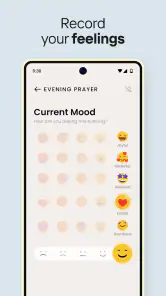
I also think the prayer component deserves a deliberate approach. Personalized prayer can make the daily experience feel more relevant, but personal relevance depends on how closely the wording matches the user’s situation and beliefs. I would read it as a starting point and adjust my own words when necessary. That keeps the routine personal instead of turning it into a passive reading exercise.
Using it across abilities and everyday situations
Motor considerations and the value of a short interaction
For users with limited dexterity, an app that asks for only a few actions can be easier to manage than one requiring repeated swipes, precise selections, or extended typing. The daily-verse format supports that kind of low-effort visit. A person can build the habit around opening the reminder and reading, rather than navigating through a complicated study system.
There is still a practical limitation: even a simple reminder-based routine depends on being able to interact with the device at the right moment. Someone with tremors, reduced reach, or difficulty with small touch targets may prefer to keep the phone positioned where it is easy to access and use the operating system’s own display and interaction settings. I would not assume that a minimal interface automatically solves motor-access needs.
For people who dislike typing, the app’s basic concept is appealing because the daily activity does not need to become a journaling project. That is a meaningful advantage over devotional tools built around extensive notes. On the other hand, users who want to record reflections, organize prayer requests, or attach personal study notes may need a separate notes application or a more feature-rich Bible product.
Sensory needs and reading conditions
A verse-based app can work well for someone who prefers quiet, text-centered content instead of animated lessons or visually crowded feeds. The limited daily scope may also be comfortable for readers who tire quickly when scanning large screens. I found the idea particularly suitable for a calm, low-stimulation moment rather than a long multimedia session.
People with low vision should judge the actual text comfort on their own device, because screen size, display scaling, contrast, and font preferences make a major difference. The app should not be treated as a substitute for the phone’s accessibility settings. Increasing system text size or display magnification may improve comfort, but larger text can also change how much content fits on screen and may require more scrolling.
Users with hearing loss may appreciate that the core value is visual reading rather than spoken instructions. At the same time, the alarm itself is a situational issue. A sound-based reminder may be easy to miss in a noisy place or unsuitable for someone who relies on visual or tactile alerts. I would pair the app with the phone’s available vibration or visual-notification options where appropriate, rather than depending on one sensory channel.
For users who are sensitive to interruptions, the reminder needs thoughtful placement. A morning alarm may be welcome at home but disruptive during a meeting, a commute, or a caregiving task. Scheduling the moment around an existing quiet routine is more inclusive than simply choosing the earliest possible time. The best reminder is one that arrives when the person can actually respond.
Situational access in real life
Consider a realistic weekday scenario: I wake up late, prepare breakfast, and have only a few minutes before work. A large study app might tempt me to browse, compare passages, or postpone the reading until I have more time. This app’s daily structure is better suited to that rushed morning. I can give the verse a brief, intentional reading and return to deeper study later if the passage stays with me.
Another useful situation is a person trying to establish a spiritual routine after a long break. The app’s narrow promise feels less intimidating than committing to several chapters a day. I would begin with a reminder attached to a stable activity, such as sitting down with a morning drink or preparing for bed. The connection between the alert and an existing habit is more reliable than expecting motivation to appear from nowhere.
It can also suit households with different schedules. A user does not need to make the daily reading a group event; the reminder can mark a private moment. That flexibility helps people who want consistency but cannot attend a fixed class or follow another person’s timetable.
There are contexts where it is less suitable. In a group Bible study, I would want shared references, broader chapter context, and a way to compare interpretations. During travel, a reminder may be inconvenient if the phone is muted, offline, packed away, or being used for navigation. For a person who wants audio devotionals while walking, a text-first daily tool may not match the activity at all.
Where the experience still has barriers
The app’s simplicity should not be confused with universal ease. The KJV wording can be a barrier for readers who use English as an additional language, younger readers, or anyone who prefers contemporary vocabulary. A person may understand the spiritual intention while still struggling with sentence structure and unfamiliar expressions. In those cases, I would keep this app for the reminder and use another source for clearer explanation, if that combination fits the person’s needs.
The daily format can also feel repetitive to users who want control over the reading sequence. Some people need a structured plan that moves through a book, while others prefer to select passages based on a question or current concern. A predetermined daily prompt is helpful when consistency is the goal, but restrictive when personal exploration is the goal.
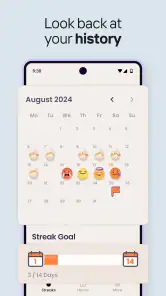
There is a second kind of barrier: attention. A notification can support a habit, but it can also become background noise. If I dismiss reminders repeatedly, the system has stopped helping. I would experiment with a time connected to a genuine pause and keep the expectation modest. Reading one verse carefully is more sustainable than treating every alert as an obligation.
Purchases may also matter to people who want a completely free experience. The app is free to download and use at its basic level, while individual in-app purchases cost $2.99 each. I would first spend enough time with the free experience to decide whether the daily routine actually fits before paying for anything. That is especially important for users who are testing several devotional tools at once.
Who should choose it, and who should look elsewhere?
I would recommend it to a person who wants a gentle daily prompt, likes KJV scripture, and prefers a focused experience over a large library of tools. It is also a sensible choice for someone who repeatedly intends to read the Bible but struggles to create a dependable starting point. The alarm-centered design addresses that practical problem directly.
I would be more cautious about recommending it as someone’s only Bible application. Students, teachers, pastors, and readers who regularly need historical context, keyword search, multiple translations, or detailed notes will probably outgrow its narrow format. A full-featured Bible app is better for research and sustained study, while this app is better as a lightweight daily doorway into reading.
The strongest non-obvious benefit is that it can reduce the psychological cost of beginning. The second is that its short format can remain useful even when life is busy, because it does not demand a large block of time. The third is that the reminder can act as a behavioral cue, provided the user places it in a realistic part of the day instead of treating notifications as magic.
My inclusive verdict
After using the app as a daily devotional prompt, I see its value in restraint. It does not attempt to solve every Bible-reading need, and that makes the main action easier to understand. The combination of a daily verse, prayer, and reminder can support people who need structure, low cognitive load, and a small moment they can repeat.
Its accessibility in practice depends on the reader’s device settings, preferred language, sensory needs, and daily environment. The KJV focus may be comforting for some and demanding for others. The alarm may encourage one person and interrupt another. Those are not reasons to dismiss the app; they are reasons to test it within the routine where it will actually be used.
My final view is positive but specific: this is a habit-building devotional app, not a complete Bible study suite. I would choose it for a quiet verse each day, especially when the main obstacle is consistency. I would pair it with another resource when I need context, translation flexibility, audio support, or serious research. For readers who understand that role and can adapt the reminder to their own abilities and circumstances, it offers a clear, approachable way to make daily scripture reading more attainable.
Pros
- Displays a fresh Bible verse each day for quick spiritual reflection.
- Alarm scheduling helps make scripture reading part of your routine.
- Simple interface is easy to navigate for users of all ages.
- Useful for starting the morning with an encouraging message.
- Lightweight design should use minimal storage and device resources.
Cons
- Limited features may feel too basic for users wanting detailed Bible study.
- Verse translations and available versions may be restricted.
- Daily notifications can become repetitive after extended use.
- Alarm permissions are required for reliable scheduled reminders.
- Some users may prefer more context than a single verse provides.

- Category
- Education
- Version
- 2.68