Lingopie: Language Learning
- 688.00
- 4.4
- Installs
- 500.00K
- Price
- Free

Screenshots
Analysis by Reviewed
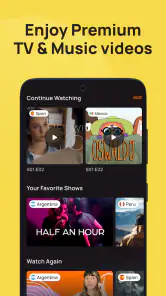
I approached Lingopie: Language Learning as a practical study companion rather than another app to open once and forget. Its central idea is appealing: use videos and songs to make language practice feel closer to ordinary entertainment. That makes it especially interesting for learners who lose motivation with isolated word lists, but it also means the app works best when I use it deliberately instead of simply pressing play.
Developed by Lingopie, this free education app is aimed at people aged 10 and over. It has reached over 500 thousand installs and holds a 4.4 average from around 6.6 thousand ratings, which suggests that the video-based approach has found a sizeable audience. The current version is 9.8.56, and it runs on Android 9 or later. There are in-app purchases ranging from about one dollar to nearly eighty-four dollars per item, so I would treat the free entry point as a way to test the learning style before deciding whether paid content suits my routine.
How I build a useful daily routine with Lingopie
My baseline workflow starts with a short session, not a promise to watch an entire series. I choose something that is slightly challenging but still enjoyable, watch a manageable section, and then return to the same material instead of constantly jumping between unrelated videos. That simple change matters. Familiar context lets me concentrate on expressions, pronunciation, and word order rather than spending the whole session trying to understand the situation.
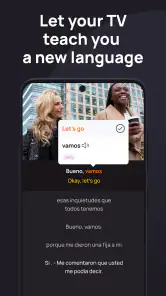
The app’s video-and-song format is most useful when I treat entertainment as raw material for active practice. On a first viewing, I focus on the general meaning. On a second pass, I pay closer attention to the subtitles and unfamiliar phrases. If a line seems useful in everyday conversation, I pause long enough to say it aloud. I do not try to collect every new word, because that quickly turns a relaxed lesson into a transcription project.
A realistic example is a weekday commute or quiet evening at home. I might watch a short portion with subtitles, replay a difficult exchange, and finish by summarizing what happened in my own words. The next day, I return to that same portion before starting something new. This creates a repeatable loop: understand, notice, repeat, then recall. It is less exciting than endlessly discovering new shows, but it gives the content a better chance of staying in memory.
Songs need a slightly different approach. Their repetition can help with rhythm and pronunciation, but lyrics may move quickly or use unusual phrasing. I use music for listening stamina and sound recognition rather than assuming every line is a model sentence for daily conversation. A learner who enjoys singing along may get more value from this format than someone who prefers carefully graded textbook dialogues.
The strongest habit is controlled repetition, not passive viewing. If I watch videos in the background while doing something else, I may get exposure to the language, but I should not confuse that exposure with measurable progress. The app can make practice easier to start; my attention still determines how much I learn.
More From Our News Desk

Clash of Clans Is Won Between the Battles

Android Auto Makes the Case for Quieter Car Software

MobiOffice: Transforming Mobile Productivity with Seamless Integration

EA SPORTS FC™ Mobile Soccer: Redefining Mobile Sports Gaming

How Microsoft OneDrive Became a Mobile Productivity Giant

How Google Translate Breaks Language Barriers Effortlessly
Choosing content without wasting the session
When I open a video-learning app, the temptation is to pick whatever looks most entertaining. That is not always the best choice. I look for material where I can follow the broad situation without translating every sentence. If I understand almost nothing, I spend the session chasing subtitles. If I understand everything, I may get enjoyment but little pressure to grow.
I also think about the type of language I want. A song can improve my ear for connected sounds, while a conversational scene may offer more practical phrases. A dramatic program might expose me to emotional vocabulary and informal speech, but it may not be the clearest place to learn polite forms. This is where Lingopie differs from a conventional lesson app: it gives context and personality, but I have to judge whether a phrase fits the situation before copying it.
For younger users, the Everyone 10+ age guidance is worth taking seriously when choosing what to watch. The age label does not turn every available video into suitable material for every child. I would preview selections, consider the learner’s maturity, and use the app alongside an adult’s judgement rather than treating the catalog as a fully structured school course.
Settings and viewing choices worth checking
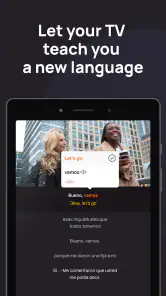
Before settling into regular use, I check the subtitle and playback choices available on the particular video. My preference is to keep the target language visible once I know the basic context. Subtitles in my native language can be useful at the beginning of a difficult scene, but leaving them on constantly makes it easy to read instead of listen. Switching between subtitle modes is more productive than choosing one setting forever.
I use native-language subtitles as a rescue tool, not as my default. If I cannot understand why a conversation changed direction, a quick clarification prevents frustration. After that, I return to the target-language subtitles and listen again. This two-stage approach keeps the story accessible without allowing translation to do all the work.
Playback speed is another setting I consider when it is available for the selected content. Slowing a fast exchange can help me hear word boundaries, but I do not stay there permanently. Normal speed is the real test, and returning to it after a slow replay shows whether I understood the sounds or merely decoded them at an easier pace.
I also keep an eye on how much time I am giving to subtitles. A useful test is to watch a familiar section with the text hidden or ignored, then compare my understanding. If I can only follow the scene while reading, I need more listening practice. If I understand the scene but miss details, I can use the subtitles to identify those details rather than restarting from the beginning.
Because Lingopie is free to install but includes purchases, I would inspect the available access before designing a long-term plan around a particular selection. The listed purchase range runs from about one dollar to nearly eighty-four dollars per item. That does not automatically make the app poor value, but it does make the trial phase important: I would confirm that the content, language, and viewing routine match my needs before paying.
Faster patterns for experienced learners
Once I know how the app fits my level, I stop treating every session as a full lesson. I use a quick three-pass pattern. First, I watch for meaning. Second, I replay only the sections that contain useful language. Third, I close the loop by speaking or writing a short response without looking at the subtitles. This is faster than repeatedly watching an entire episode and hoping something sticks.
I also separate recognition from production. Recognizing a phrase when an actor says it is easier than producing it myself. After replaying a line, I pause and imitate the rhythm, then make a new sentence using the same structure. I do not need to memorize the whole dialogue. One adaptable pattern is usually more useful than a long list of isolated vocabulary.
Another efficient habit is to keep a small, selective phrase record outside the app. I note the expression, the situation where it appeared, and my own example. The context is essential. A phrase used between close friends may sound wrong in a workplace, and a dramatic line may be natural only in an emotional scene. Lingopie supplies the context; I supply the judgement.
For listening improvement, I sometimes replay a short exchange without pausing and try to identify where one word ends and the next begins. This is a non-obvious benefit of video content: facial expressions and scene changes provide clues that audio-only exercises do not. At the same time, those visual clues can hide weak listening. I occasionally look away from the screen so I can test whether I am hearing the language rather than guessing from the actors’ actions.
Short sessions are easier to repeat than ambitious ones. I would rather use the app for a focused period several times a week than start a long viewing plan that collapses after a few days. The best workflow is the one I can maintain when I am tired, busy, or not especially enthusiastic about studying.
Where the video approach reaches its limits
Lingopie is not a complete replacement for a structured language course. Videos can show natural phrasing, accent, tone, and cultural context, but they do not automatically provide a carefully ordered path through grammar. If I need systematic explanations, exercises that build from one rule to the next, or formal exam preparation, I would pair this app with a textbook, class, or dedicated grammar resource.
It also demands more self-direction than a drill-based app. A flashcard system may tell me exactly what to review, while video learning leaves me to decide what deserves attention. That freedom is enjoyable for an experienced learner, but beginners may feel lost if they expect every viewing choice to become a complete lesson.
Subtitles create a similar trade-off. They make authentic material more approachable, yet they can encourage reading dependence. I need to turn them down, switch modes, or revisit scenes without relying on text. Someone who wants instant correction for every spoken answer may prefer an app built around interactive exercises rather than a video library.
There is also a comfort problem. Familiar shows and songs can make practice pleasant, but pleasant exposure is not always challenging enough. I have to move gradually toward faster speech, less familiar accents, or more complex situations. If I only replay easy material, my confidence may improve faster than my actual listening ability.
The purchase model is another consideration. Since individual in-app items can cost from around one dollar to nearly eighty-four dollars, I would not assume that installing the app means every part of the experience is permanently available at no cost. The sensible approach is to explore the free experience, identify whether the catalog supports my target language, and then compare the likely cost with alternatives I already use.
Who should use it, and who should choose something else?
I think Lingopie is a strong fit for learners who already enjoy television, music, and conversational language. It is particularly useful for someone who knows basic grammar but struggles with real-speed listening. The visual setting helps connect words to actions, relationships, and emotion, making phrases easier to remember than they might be in a bare vocabulary list.
It can also work well for families, provided an adult selects suitable material and keeps expectations realistic. The age guidance begins at 10+, but a child still needs content chosen for both maturity and language level. The app is more likely to succeed when viewing becomes a shared routine rather than unsupervised screen time labeled as study.
I would be cautious about recommending it as the only tool for a complete beginner. Someone who needs a very clear first-week path, frequent pronunciation feedback, or tightly controlled vocabulary may find a course with sequential lessons less frustrating. Likewise, advanced learners preparing for a specific professional or academic test should use material designed for that goal and treat Lingopie as listening enrichment.
Compared with ordinary streaming, the advantage is intentional language practice around video and songs. Compared with flashcards, the advantage is context, tone, and natural pacing. Compared with a classroom, it offers flexibility but not the same live correction or accountability. Its place is between entertainment and formal study, and that middle ground is exactly why it can be motivating while still requiring personal discipline.
My verdict after using a repeatable system
My overall view is positive, with an important condition: I get much more from Lingopie when I use settings, repetition, and selective note-taking instead of watching passively. The app makes it easier to encounter language in situations that feel alive, and songs add a useful change of pace. That combination can keep practice from becoming a chore.
I would start with the free installation, test several sessions, and check whether the available material matches my language and level. I would then choose a modest routine, use target-language subtitles as the normal setting, bring in translation only when necessary, and revisit short sections until I can follow them without text. That workflow answers the practical questions most new users have: how long to study, whether subtitles help, and how to turn viewing into actual learning.
The app is not magic, and it does not remove the need for grammar study, speaking practice, or deliberate recall. Its real strength is giving those activities a memorable source of language. If I want a friendly way to improve listening and pick up expressions from videos and songs, I would recommend trying it. If I need a fully guided curriculum or constant correction, I would choose a more structured companion and use Lingopie only as an additional listening tool.
In short, this is an app I would recommend to a friend who is motivated by stories and music but needs a better method than simply watching with subtitles on. With a repeatable habit, it becomes more than background entertainment; without that habit, it can remain just that.
Lingopie: Language Learning Frequently Asked Questions
Is Lingopie available on Android and iOS, and what devices can run it?
Lingopie is a mobile language-learning app for Android and iOS, so you can study on a compatible phone or tablet. The Android version requires Android 9 or later. Before downloading, check that your device’s operating system meets the requirement and that you have enough space for the app and video streaming. The app is intended for a broad audience and is rated Everyone 10+.
What is Lingopie: Language Learning, and how does it work?
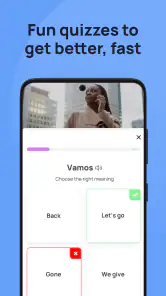
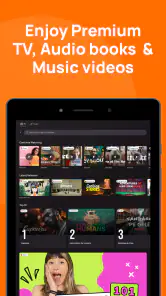
Lingopie is a language-learning app that combines streaming-style entertainment with interactive study tools. You can watch selected TV shows, series, and videos in your target language, usually with subtitles that can be tapped for translations. The app is designed to help you improve listening, vocabulary, and pronunciation through regular exposure rather than traditional lessons alone.
Which languages can I learn with Lingopie?
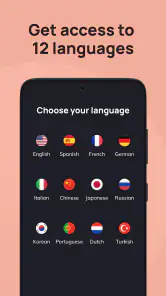
Lingopie offers content for learning several popular languages, although the exact selection and available shows may vary by platform, subscription, and region. Commonly supported options include Spanish, French, Italian, German, Portuguese, Korean, Japanese, and other languages. Before subscribing, check the current in-app language list to confirm that your preferred language has enough suitable content.
Is Lingopie suitable for complete beginners?
Yes, beginners can use Lingopie, especially when they choose slower content, enable subtitles, and review unfamiliar words as they appear. However, the app is primarily based on real video and natural conversation, so some programs may feel difficult at first. It generally works best when combined with basic grammar study and consistent vocabulary practice.
Does Lingopie require a subscription, and is there a free trial?
Lingopie is free to download, but it offers in-app purchases for paid access. Trial opportunities, pricing, and available plans can change over time, and some features and content may be restricted without a subscription. Review the purchase screen carefully before confirming, including renewal terms, billing frequency, and cancellation instructions for your Android or iOS account.
Pros
- Authentic TV clips make vocabulary feel practical and memorable.
- Subtitles can be switched between languages for flexible practice.
- Playback controls help learners replay difficult phrases easily.
- Progress tracking encourages regular study sessions.
- Works well for learners who prefer entertainment over textbook exercises.
Cons
- Most useful content and features require a paid subscription.
- The catalog may vary depending on your country or region.
- Some shows use slang that beginners may find difficult to follow.
- Limited speaking practice compared with dedicated language courses.
- Streaming video can consume significant mobile data without Wi-Fi.
- Category
- Education
- Version
- 9.8.56