Praktika – AI Language Tutor
- 6.59K
- 4.7
- Installs
- 10.00M
- Price
- Free

Screenshots



Analysis by Reviewed
I find Praktika – AI Language Tutor most useful when I want to turn a small pocket of free time into speaking practice, rather than start another course that asks me to sit through a long lesson. It is an education app from Praktika.ai Company, and its focus on conversational practice makes it feel different from a textbook-style study routine. The app is free to download, though it offers in-app purchases, so I would check the options in the app before making it part of a paid learning plan.
Starting with a practical goal
A good way to approach a language tutor is to decide what you want to say before opening it: introduce yourself, handle a simple work exchange, or get more comfortable answering everyday questions. That gives a conversation a purpose and makes it easier to notice what you can already express and where you hesitate. Praktika is aimed at people who want to learn and speak new languages; in my experience, its conversational format is especially appealing if speaking feels more intimidating than reading.
The app has an average rating of 4.7 from around 986,000 ratings, and it has been installed over 10 million times. Those figures suggest it has attracted a large audience, but they do not tell me whether its style suits every learner. I would treat it as a way to practise and build confidence, not as a promise of fluency or a replacement for every part of language study.
The Perfect Language Buddy
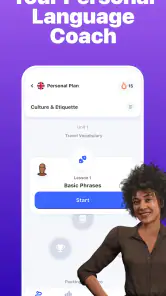
First off, let's talk about what makes Learn & Speak English Praktika stand out. This app is like having a personal language tutor in your pocket. Gone are the days when you had to sit through tedious grammar lessons. Instead, this app makes learning English as easy as chatting with a buddy. The interface is super user-friendly, which means you can dive right in without any fuss.
Interactive Learning
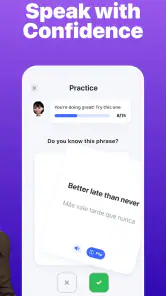
What I love about this app is its interactive approach. You're not just passively absorbing information. Instead, you're actively participating in conversations. It's almost like you're having a casual chat with a friend, which, let's be honest, is a much more natural way to learn a language. Plus, the voice recognition feature is pretty spot-on, so you can practice speaking without feeling self-conscious.
For a more useful practice loop, I would pick one topic, answer aloud, then try the same idea again using a clearer or more natural sentence. That second attempt matters: it shifts a session from simply completing a conversation to actively testing what you can retrieve. In a shared room or on a noisy commute, speaking aloud may be awkward, so this style works best when you can find a reasonably private moment. If you mainly want quiet vocabulary drills, a flashcard app may fit that situation better.
Tailored to Your Needs
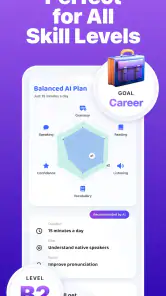
Another cool feature is how personalized it is. The app adapts to your learning pace and style, ensuring that you're not overwhelmed or, worse, bored. Whether you're a beginner just starting out or someone looking to polish your skills, there's something for everyone. It's like the app knows exactly what you need to improve on and gently nudges you in the right direction.
More From Our News Desk

Weather by Xiaomi Review: Clear at a Glance, Less Clear Up Close

X Under Pressure: Can It Recover When Posting Goes Wrong?

Clash of Clans Is Won Between the Battles

Android Auto Makes the Case for Quieter Car Software

MobiOffice: Transforming Mobile Productivity with Seamless Integration

EA SPORTS FC™ Mobile Soccer: Redefining Mobile Sports Gaming
Learn & Speak English Praktika also offers a variety of topics and scenarios that you can choose from. This means you can focus on areas that interest you or that you find more challenging. It's all about making learning relevant and engaging, which is a huge plus in my book.
Turning a session into something you can use
Here is an everyday way I would use it: before a meeting, I might practise a short introduction and a few likely follow-up answers. Afterwards, I can make a note of the phrases that felt difficult and try them again in a later session. That gives the practice a handoff into real life instead of letting it end when I close the app. For travel, I would use the same approach with common requests or directions, while keeping a phrasebook or translation tool available for situations where accuracy matters more than conversational flow.
Compared with a language-learning app built around lessons, written exercises, or vocabulary review, Praktika puts more emphasis on saying things aloud. That is a useful distinction if your main obstacle is getting words out in conversation. It is less suited to someone who wants a carefully structured grammar syllabus, extensive writing correction, or silent study on a crowded train. I would pair it with reading and listening practice rather than expect one conversational tool to cover every skill equally.
Keeping You Motivated
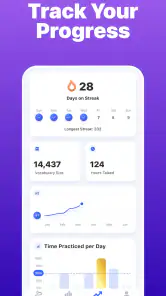
We all know that staying motivated can be tough, especially when learning a new language. But this app seems to have cracked the code. With its gamified elements, you're constantly encouraged to keep pushing forward. Whether it's earning badges or hitting new milestones, there's always something to keep you coming back for more.
And let's not forget about the community aspect. You can connect with other learners, share tips, and even engage in friendly competitions. It's like having a support group cheering you on, which makes the whole experience a lot more fun.
Motivation is helpful, but I would use progress markers as a prompt to practise, not proof that a skill is ready for a real conversation. A quick review after a session—what did I say smoothly, and where did I pause?—can make the next practice more targeted. If a streak or milestone starts feeling like pressure, it is reasonable to take a break and return with a specific speaking goal rather than practising just to keep a number going.
Making practice fit around the day
For a realistic routine, I would attach a short session to something I already do, such as settling in after lunch or winding down before dinner. The point is not to force a long study block into a busy day; it is to make speaking practice easy to start and easy to repeat. I would keep a small note outside the app with one useful phrase and one sticking point after each session. That turns vague progress into a concrete next step without asking me to remember every exchange.
This approach is especially handy for someone preparing for a predictable conversation: a first introduction at a new job, a brief chat with a host while travelling, or a simple question in a shop. I would practise the opening and a couple of possible replies, then stop before the exercise becomes a script to memorise. Real conversations rarely follow a perfect sequence, so the useful skill is adapting the phrase, not reciting it word for word.
Choosing the right practice partner
Compared with a human tutor, an AI conversation partner is easier to fit into a spare moment and can make repetition feel less awkward. A teacher is still the better choice when I need nuanced feedback, a clear explanation of why a sentence is wrong, or a plan built around a specific exam or professional goal. Compared with a standard course app, Praktika is more compelling when speaking is the part I avoid; a structured course may be better when I need a dependable progression through grammar and reading.
I would not treat those options as rivals that must replace one another. A practical mix could be a course or class for foundations, short conversations here for active recall, and real listening or reading for exposure to language beyond a prompted exchange. If I only have time for one tool, I would choose based on the weakness I am trying to fix: spoken hesitation points toward this format, while gaps in grammar or written accuracy point elsewhere.
When a conversation needs a second check
One useful habit is to separate low-stakes rehearsal from important communication. I might use a practice conversation to get comfortable asking for directions, but for a medical appointment, legal matter, or detailed work instruction, I would prepare carefully and verify key wording with a reliable person or resource. Confidence can make a phrase easier to say, but it does not guarantee that every nuance is right. That distinction lets the app support everyday learning without asking it to carry more responsibility than a speaking practice tool should.
Beginners can also avoid a common trap: trying to sound polished before they can make a simple point. I would begin with short, clear answers and then add detail on a second attempt. If I already know the vocabulary but stall when someone responds, I would focus on follow-up questions and flexible answers instead of repeatedly practising the same introduction. The best topic is the one that exposes a real gap, not necessarily the one that feels easiest.
Cost, device fit, and expectations
Praktika is rated for Everyone, and the current version is 3.50.0, with a minimum operating-system requirement of 8.0. I would still check that the app runs comfortably on my device before relying on it for a regular routine. Its free entry point makes it easy to try, while in-app purchases range from $1.99 to $199.99 per item; I would compare the available choices with how often I expect to practise before spending. The app was released on May 18, 2022, and its large pool of ratings and reviews gives newcomers plenty of signs that other learners have tried it, without removing the need to judge the experience for themselves.
Because speaking is central to the experience, the setting matters as much as the lesson choice. I would use headphones if I want to hear prompts clearly, but I would not start a speaking session somewhere I cannot comfortably answer aloud. If I am travelling or sharing a room, a quiet reading or listening activity from another resource may be a better use of that moment. Planning around this friction prevents the app from becoming something I repeatedly open at the wrong time and then abandon.
Before paying for anything, I would first establish whether I actually return to the free experience and whether the conversation style helps with my particular goal. If I do, then I can compare the purchase options with my expected routine rather than deciding based on enthusiasm after one session. If I do not, that is useful information too: a different learning format may suit me better. The key question is not whether a feature sounds appealing, but whether it changes what I can say outside the app.
What progress should look like
I would judge progress by a small real-world change: answering without translating every word in my head, recovering after forgetting a phrase, or asking a follow-up instead of ending the conversation. Those signs are more useful to me than simply feeling that a session went smoothly. A comfortable practice exchange is a starting point, not a guarantee that a spontaneous conversation will feel easy, so I would occasionally test a phrase in a low-pressure real interaction and notice what still needs work.
When the same hesitation keeps appearing, I would change the exercise rather than repeat it mechanically. For instance, I could answer the same question in a shorter way, then explain the reason behind my answer, or practise a related question with a different detail. That kind of variation makes retrieval more flexible. It also helps me tell whether I have learned a usable expression or only memorised one response for one familiar prompt.
Where the flow can break
The biggest limitation is built into the format: a simulated conversation is not the same as a messy exchange with a person who speaks quickly, changes topics, or uses unfamiliar expressions. It can help me get words moving, but I still need exposure to natural speech and real people to build listening flexibility. I would also avoid expecting one app to provide every kind of correction or to diagnose all the reasons behind a persistent grammar problem. When I cannot explain a repeated mistake, a teacher, reference guide, or structured lesson can fill that gap more directly.
There is also a practical difference between having a few minutes and being in a place where speaking is possible. If I am in a quiet office, on public transport, or with family asleep nearby, I may not want to answer aloud. In those moments, I would switch to silent review rather than force an awkward session. A tool that depends on speaking is valuable precisely because it gets me to practise aloud, but that same strength makes it less convenient in some everyday settings.
In conclusion, if you're looking for a straightforward, engaging, and effective way to improve your English, Learn & Speak English Praktika is a fantastic choice. It feels less like a chore and more like an exciting journey. So, why not give it a shot? You might just find yourself speaking English more confidently in no time!
Who should make it part of a routine?
I would recommend trying it if you understand some of a language but freeze when it is your turn to speak, or if you want low-pressure practice between classes. It may also suit learners who prefer choosing a situation and responding naturally over working through a fixed sequence of written exercises. On the other hand, if you need formal exam preparation, detailed grammar explanations, or dependable correction for high-stakes communication, I would use a specialist course or a qualified teacher alongside it. The best outcome is not simply more time in an app; it is feeling more ready to speak when the conversation is real.
My final call
For me, Praktika earns a place as a focused speaking companion, not an all-in-one language plan. I would reach for it when I have a clear conversational goal and a private moment to practise, then carry one useful phrase into the next real interaction. If that is the gap you want to close, the free starting point makes it reasonable to try and judge for yourself. If your priority is silent study, a formal curriculum, or precise guidance on complex language, another resource will likely serve you better.
Praktika – AI Language Tutor Frequently Asked Questions
What languages can I study with Praktika – AI Language Tutor?
Praktika is presented as an AI language tutor, and its store summary is “Learn & Speak New Languages.” That makes it worth considering if you want speaking practice as part of language learning. Before downloading, think about which language you want to study and whether the app’s conversation-focused approach suits your goals; you can explore the app and its available learning options after installing it.
Who develops Praktika, and what kind of app is it?
Praktika is an education app developed by Praktika.ai Company. Its focus is language learning, with an emphasis on practicing through conversations rather than treating it as a general reference tool. If you are choosing an app to support your studies, this focus can help you decide whether it fits the kind of practice you want to add to your routine.
Is Praktika – AI Language Tutor free to download, and are there optional purchases?
Praktika is free to download, so you can try the app before deciding whether to spend money on it. It also offers in-app purchases, with options ranging from $1.99 to $199.99 per item. Check the purchase details shown in the app before confirming anything, and consider whether the available paid options fit your learning needs and budget.
Which devices and operating systems can run Praktika?
Praktika is available for Android and iOS. On Android, the listed minimum requirement is version 8.0, so check your device’s software version before downloading. The app is an education product from Praktika.ai Company, and its Everyone age rating makes it suitable for a broad audience. Keeping your device’s operating system up to date can also help with compatibility.
What is Learn & Speak English Praktika?
Learn & Speak English Praktika is a language learning app designed to help users improve their English speaking skills. It offers a variety of lessons, interactive exercises, and real-life conversation practice sessions to enhance vocabulary and fluency. The app is suitable for beginners as well as advanced learners aiming to refine their English speaking abilities.
Pros
- Interactive lessons with native speakers
- User-friendly interface and design
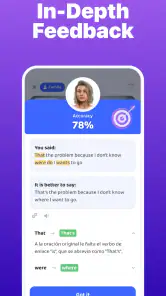
- Progress tracking with detailed feedback
- Offline mode available for learning anywhere
- Customizable learning paths for all levels
Cons
- Limited free content without subscription
- Requires stable internet for live sessions
- Occasional app crashes reported
- Voice recognition can be inaccurate
- High subscription cost for premium features
- Category
- Education
- Version
- 3.50.0