Kikoff - Build Credit Quickly
- 17.57K
- 4.8
- Installs
- 5.00M
- Price
- Free

Screenshots



Analysis by Reviewed
I would treat a credit-building app as a personal finance tool, not something to pass around casually on a shared phone. That distinction matters with Kikoff: it is designed around an individual’s credit activity, so the person whose account is being used should be the one making decisions and checking payments. For a household, the practical question is less “Can everyone use it?” and more “Can the account holder keep their financial tasks private and consistent?”
A shared phone needs clear boundaries
If two people share a device, I’d avoid leaving a finance app open or letting someone else make payments on the account holder’s behalf. Even helpful household coordination can blur responsibility: the person whose credit is involved needs to know what was purchased, what is due, and whether the payment went through. A simple routine—one person handles the account, while another can remind them about a date without signing in—keeps the boundary clear.
I’d also make sure the account holder can reliably access the device when they need it. If a partner or relative regularly uses the phone, signing out after a session and keeping the phone’s own access code private are sensible habits. These are general device practices rather than special Kikoff controls, but they matter when an app relates to personal credit.
Coordination without mixing up responsibility
A realistic household use case might be someone who is rebuilding credit while sharing bills with a partner. The partner can help the person remember to review the account around payday, but the account holder should confirm the balance and complete any payment themselves. That small distinction prevents “I thought you did it” confusion and gives the person building credit a direct view of their own activity.
I would not treat Kikoff as a shared household budgeting app or a way to build credit jointly. It makes more sense as one person’s separate routine, alongside whatever tools the household already uses to track rent, groceries, or utility bills. If both adults want to work on their own credit, they should think in terms of separate personal accounts and responsibilities rather than sharing one login.
For an individual who wants a structured starting point, Kikoff is a finance app from Kikoff, Inc. It is free to download, has an Everyone age rating, and has a 4.8 average from around 106,000 ratings. More than a million installs suggest it has reached a broad audience, though popularity alone cannot tell me whether its approach fits a particular person’s finances. I’d use it with a specific aim—establishing a steady payment routine—not as a shortcut to a particular score.
What is Kikoff, Anyway?
Alright, so Kikoff is this nifty app designed to help you boost your credit score without having to jump through hoops. It's like having a personal finance assistant right in your pocket. The app offers a unique credit-building service that doesn't require a credit check, which means it's accessible even if your credit history isn't exactly spotless. Basically, Kikoff provides you with a credit line that reports to major credit bureaus, and your job is to use it responsibly to see your score climb.
More From Our News Desk

 Bolt: Request a Ride
Bolt and the Shift from One-Tap Rides to More Legible Trips
Bolt shows how ride-hailing is shifting from a one-tap taxi request toward a more legible, choice-driven trip, while leaving the hardest questions of price and reliability unresolved.

 Farm Land - Farming life game
Farm Land Review: A Small Island Farm with a Satisfying Loop
A bright, breezy island farm turns a few quick chores into a satisfying cycle of planting, harvesting, expanding, and deciding what to build next.

 Android Auto
’s Community Takes Shape in the Passenger Seat
Its most valuable network is not a public feed but a shared set of routes, voice habits, app integrations, and advice that make driving less isolating—and sometimes more complicated.

 My Talking Angela
 Makes the Virtual Pet Feel Personal
A polished pet-raising game built on small rituals, playful customization, and a character who gives everyday screen time a surprisingly personal rhythm.

 Google Translate
 Review: A Pocket Tool for the Small Frictions of Travel
From menus and signs to quick conversations, Google Translate earns its place by cutting the little delays that make unfamiliar language feel like a barrier.

 Shazam: Find Music & Concerts
Shazam’s Best Trick Is Turning a Song Into a Night Out
A few seconds of recognition can settle an argument, rescue a half-remembered chorus, and point toward a live show. Shazam’s real trick is what happens after the match.
Latest News



How Does It Work?
So, here's the deal. Once you sign up, Kikoff gives you access to a credit line, usually around $500. You can use this credit line to make small purchases within the app's store, where you'll find various digital products, from e-books to online courses. The catch? You need to pay off these purchases on time each month. It's kind of like training wheels for your credit score, helping you build a positive payment history without the risk of going overboard.
That structure makes the first decision less about finding something to buy and more about whether you can stick to a payment habit. I’d look at the purchase as a planned step in a credit routine, not as a reason to add items to a cart. If the timing of a due date is awkward beside rent or other bills, I’d sort out a reminder and a realistic payment plan before using the account. A product that helps organize credit activity still depends on the account holder having enough room in their budget to pay on time.
Why I Love It
If you're anything like me, managing finances can sometimes feel like a juggling act. What I genuinely appreciate about Kikoff is its simplicity. The app is straightforward and user-friendly, with a dashboard that clearly shows your credit line, due dates, and payment history. Plus, there are no hidden fees or interest rates to worry about. It's literally about paying back what you owe, on time. That's it. This transparency makes it perfect for anyone who wants to improve their credit score without getting tangled in complicated financial jargon.
Still, I wouldn’t confuse a clean dashboard with a complete financial plan. It can help me keep an eye on this particular account, but I’d continue using my usual calendar or budget method for household bills and other credit accounts. That separation is useful in a shared home: a partner can help plan around payday without needing access to the account itself. The app works best as one clearly owned task, not as the household’s single source of truth for money.
Some Handy Features
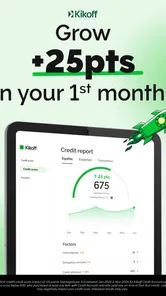
Aside from the credit line, Kikoff offers some cool features that can help you on your credit-building journey. For instance, there's a feature that tracks your progress and gives you insights into how your credit score is evolving over time. It's like having a personal credit coach cheering you on! Also, there's plenty of educational content within the app, so you're not just building credit; you're also building your financial literacy. Pretty neat, huh?
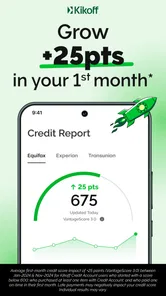
One practical way I’d use the progress information is as a prompt to review, rather than as a verdict on whether the whole plan is working. Credit profiles involve more than one account, and a score can change for reasons outside this app. If the display looks different from what I expected, I’d avoid making a rushed purchase or payment just to chase a number; I’d check the account details and my wider credit picture first. That keeps the app’s feedback in perspective.
I also love that Kikoff is available on both Android and iOS, so no matter what kind of smartphone you have, you can join in on the credit-building fun. Plus, the fact that it reports to major credit bureaus means your efforts won't go unnoticed. It's a win-win!
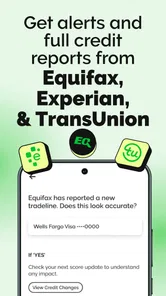
For someone comparing options, that reporting-focused routine is distinct from simply checking a credit score in a monitoring app. A score tracker can help you observe changes, but observation alone does not create a payment history. A traditional card can support everyday purchases, yet it also asks you to manage a wider range of spending and balance decisions. Kikoff sits between those approaches: it gives the user a contained credit-building activity, but it is not a substitute for a general-purpose card or a complete credit-monitoring service.
Choosing the right credit-building route
The most useful way to judge this approach is to compare it with the alternatives, not to assume that any credit-building product works the same way for everyone. A secured credit card may give someone more flexibility to make ordinary purchases, but it usually involves putting down money and requires careful management of a revolving balance. Kikoff’s in-app purchasing model is more contained, which can help someone who wants fewer spending decisions; the trade-off is that it is not a general-purpose card for everyday errands.
If you already have a credit card, a practical first step may be to keep its balance manageable and pay on time rather than adding another account. If you have no credit history or want a guided routine, Kikoff may be worth considering. I would not open it expecting an immediate score jump: credit-building takes patience, and results depend on the broader details of a person’s credit file. Before committing to any credit product, I’d read the current terms in the app and make sure the payment schedule fits my budget.
People often wonder whether they need to buy something regularly or whether simply installing the app will do the work. I’d treat the account as an active financial commitment: understand what you’re purchasing, when payment is due, and what activity is being reported before proceeding. Downloading a finance app by itself is not a credit-building strategy. If your main aim is to learn about credit without taking on an account, educational material or a free monitoring tool may be a better first step.
Another useful check is whether you can manage the routine if your phone is unavailable for a day or two. Keep the due date somewhere you can still consult, and don’t make a payment decision based only on a notification that might be missed. This is especially helpful for people who share a device, change phones, or have irregular work schedules. The point is not to create extra paperwork; it is to make the payment habit resilient rather than dependent on remembering to open one app at just the right moment.
Who should use it—and who should pass
I can see Kikoff suiting someone who wants a small, deliberate credit-building habit and is comfortable managing it through a phone. It may also suit a person who prefers a clearly bounded in-app purchase process over having another card available for spontaneous spending. The app is less compelling for someone who needs flexible purchasing power, already manages credit well, or is trying to solve a short-term cash shortage. Credit-building is not the same as borrowing money for essentials, and I would not use a credit product to cover bills I cannot afford.
One non-obvious tip is to connect the routine to something you already do, such as reviewing finances on payday. Check the amount due and the payment status rather than relying on memory or on a score display alone. Another is to keep expectations grounded: a progress view can make changes easier to notice, but it does not replace checking your wider credit picture. If a payment date is easy to forget, set a reminder in the calendar you already use; that keeps coordination outside a shared login and makes the responsible person unmistakable.
I’d also pass if the person using it is likely to treat an available credit line as extra spending money. A credit-building routine only makes sense when the purchases and payments fit the person’s real budget. Someone facing a tight month may be better served by pausing before opening any new credit product and focusing on essential bills and a basic budget first. That is not a knock on Kikoff; it is a reminder that a tool for building credit cannot fix a cash-flow problem on its own.
Trust, age, and day-to-day ownership
The Everyone age label describes the app’s content classification, not a reason for a child to manage a credit account. I’d keep credit decisions with the adult whose financial record is involved and avoid letting a younger family member browse or operate the account just because the phone is shared. For a household, trust means being clear about who owns the account and who is responsible for checking the due date—not assuming that a shared device makes the finances shared.
When deciding whether it is worth trying, I’d also consider how comfortable I am handling a financial account on a mobile device. The current version is 1.141.2160 and the app requires Android 7.0 or later; Kikoff is also available on iOS. I’d keep the app updated through the device’s usual app store and use the phone’s ordinary security settings. Those basics are especially useful if a device changes hands or is used by more than one person.
For a household with more than one adult interested in building credit, a sensible arrangement is to compare routines and reminders without exchanging credentials. Each person can decide whether the product fits their own circumstances, then keep their own account activity private and accountable. That approach avoids turning a shared phone into a shared financial identity, and it leaves room for each person to choose a different route if their credit history or budget calls for it.
Final Thoughts
In a world where credit scores play such a significant role in our financial lives, having a tool like Kikoff - Build Credit Quickly can be a game-changer. It's easy to use, effective, and risk-free, making it an excellent option for anyone looking to improve their credit score without the stress. Whether you're just starting out or need a little help getting back on track, Kikoff is definitely worth checking out. So, why not give it a shot and see your credit score soar?
I’d temper that enthusiasm with one final check: no credit-building app can promise a particular result for every person, and “risk-free” is stronger than I’d use for any financial product. I’d review the current terms, make sure the payment fits comfortably, and think of a score change as a possible outcome rather than a guarantee. With those expectations, Kikoff can be a useful, focused option for someone who wants a defined routine and understands the trade-offs.
There you have it, folks! I hope this review gives you a good sense of what Kikoff is all about. Until next time, happy credit-building!
Kikoff - Build Credit Quickly Frequently Asked Questions
Does Kikoff require a credit check to get started?
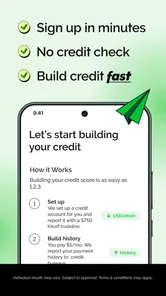
Kikoff’s summary says that no credit check is needed, which may make the app worth exploring if you want to begin a credit-building program without a credit check. It is still a finance app, so take time to review the terms and the steps shown during sign-up. Make sure you understand how the program works before deciding whether to continue.
Who makes Kikoff, and is it a credit-building app or a general finance tool?
Kikoff is a finance app published by Kikoff, Inc. Its focus is helping users build credit, rather than serving as a general-purpose banking or budgeting tool. If you are considering downloading it, think about whether you want a dedicated credit-building service and review the program details in the app before sharing information or enrolling.
Is Kikoff free to download, and what should I know before signing up?
Kikoff is free to download and is listed for Everyone, so its app listing is suitable for a broad audience. Before signing up, consider that it is a finance app intended for credit building, and read the terms presented in the app so you understand how its credit-building program works. The app’s short description is simply “Kikoff,” while its summary notes that no credit check is needed.
What is Kikoff and how does it help in building credit?
Kikoff is a financial app designed to help users build their credit score quickly and effectively. It offers a straightforward credit-building program that involves low-cost credit lines. By responsibly using these lines, users can demonstrate creditworthiness, which is reported to major credit bureaus, thus helping to improve their credit scores over time.
Is Kikoff safe to use for credit building?
Yes, Kikoff is safe to use for credit building. The app employs robust security measures to protect your personal and financial information. Furthermore, it is designed to report your credit usage to major credit bureaus, which is essential for building a reliable credit history. Always ensure you follow best practices for digital security when using financial apps.
Pros
- Quick sign-up process.
- No hidden fees involved.
- User-friendly interface.
- Free credit score monitoring.
- Personalized financial tips.
Cons
- Limited to U.S. residents.
- No physical credit card.
- Requires bank account linkage.
- Minimal customer support.
- Limited credit building options.