HODL: Coin Tracker
- 482.00
- 4.4
- Installs
- 100.00K
- Price
- Free
Screenshots
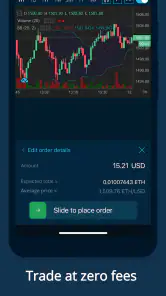
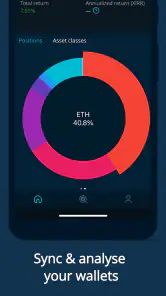
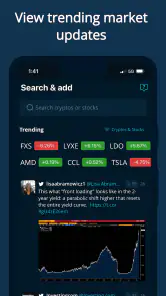
Analysis by Reviewed
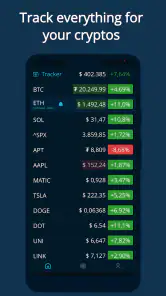
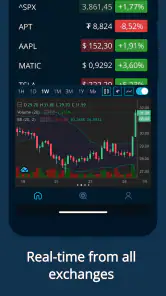
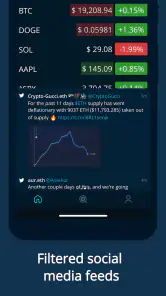
I usually judge a finance app by one simple test: does it help me make a better decision, or does it merely give me more numbers to look at? HODL: Coin Tracker sits on the useful side of that line when I use it as a monitoring tool rather than a trading platform. It brings cryptocurrency and stock prices into one place, adds news from different sources and exchanges, and gives me a practical way to check what is moving before I open a separate brokerage or exchange app.
That combination makes it especially appealing if your attention is split between digital assets and traditional investments. I do not have to jump between a crypto exchange, a stock quote app, and several news tabs just to understand the morning’s broad direction. The app is free to download, although it includes optional purchases ranging from $0.99 to $59.99 per item, so I would look carefully at what is included before paying for anything.
HODL: Coin Tracker is a finance app from HODL Media Inc. It is rated for Everyone, runs on Android 7.0 or later, and its current version is 9.36. With an average rating of 4.4 from around 3.9 thousand ratings and over 100 thousand installs, it has clearly found an audience among people who want a compact market dashboard rather than a full investment account.
My everyday workflow for checking markets
My preferred routine starts with a short check, not an open-ended scroll. I open the app, look first at the assets I care about most, then use the wider market view and news to decide whether anything deserves a deeper look. That order matters. If I begin with headlines, I can easily spend too much time reacting to whatever is loudest instead of checking the prices and assets that actually affect my plans.
The app works best in this role because it combines two different kinds of information. Prices tell me what the market is doing, while news helps explain why a move may be attracting attention. Neither one is enough by itself. A sudden price change can be temporary noise, and a dramatic headline may have little practical effect on the assets I follow. Keeping both views close together makes the first pass more efficient.
A realistic example is a weekday morning when I am deciding whether to review my long-term holdings before work. I can use HODL to see whether the stocks and cryptocurrencies on my personal watchlist have moved unusually, scan the available news, and then close the app if nothing needs action. If something does stand out, I move to the relevant exchange or brokerage for confirmation and execution. That last step is important: I treat this app as a research and tracking companion, not as a replacement for the service that actually holds my money.
This workflow also helps reduce unnecessary checking. Markets are always producing another price change, but that does not mean every change deserves a response. I find the app more useful when I decide in advance what I am checking for: an unusual move, a relevant headline, or a quick comparison between asset classes. Without that boundary, a combined market feed can become another source of distraction.
What the combined view is genuinely good at
The strongest part of the experience is the ability to place stocks and crypto in the same monitoring habit. Many people follow both, but their usual tools keep them separated. A dedicated exchange may be excellent for digital-asset orders, while a brokerage app may be better for portfolio administration. Neither is necessarily designed for a quick cross-market overview.
HODL fills that gap. I can use it to notice whether a market theme seems isolated or broader, then investigate elsewhere. For example, if a cryptocurrency headline is attracting attention while the stock side of my watchlist is quiet, I know I am looking at a narrower event. If several areas are active at once, I may spend more time checking the underlying news and my own exposure.
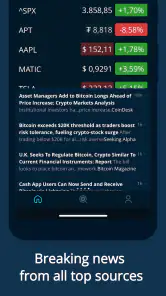
The news aggregation is helpful, but I would not read every item as equally reliable or equally relevant. “From all sources and exchanges” is useful for breadth, yet breadth also means the reader has to filter. I pay attention to whether a story is directly connected to the asset, whether it is reporting a confirmed event or repeating speculation, and whether the price reaction supports the importance suggested by the headline.
The practical strength is not prediction; it is reducing the number of places I need to check before deciding what deserves attention. That is a modest benefit, but it is a real one for anyone who follows several markets.
Settings I would check before building a habit
When I install a market tracker, I do not immediately rely on its default presentation. I first inspect the available settings and display controls, then adjust the app so the information I care about appears with as little friction as possible. The exact choices depend on how I use the app, but the principle is consistent: remove noise before adding more data.
I would begin by reviewing the assets being followed. A watchlist full of coins and stocks that I never intend to research is not comprehensive; it is cluttered. I prefer a smaller group divided mentally into three levels: assets I own or may buy, assets I use as market references, and assets I am watching only because of a current event. When an event passes, I remove the temporary items rather than letting the list grow permanently.
I would also check how prices, market information, and news are displayed. A tracker becomes easier to use when I can distinguish a quick quote check from a deeper news review. If the interface allows sorting or rearranging, I put the assets that affect my decisions first. This is a small change, but it turns the opening screen into a repeatable checklist instead of a random stream.
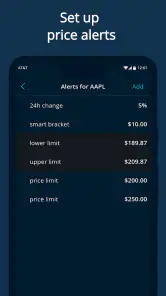
Notifications deserve particular caution. Alerts can be useful when I am waiting for a meaningful threshold, but constant market prompts encourage impulsive behavior. I would enable only the notifications that serve a specific purpose and silence anything that merely reports activity I am not prepared to act on. A price alert is most useful when I already know what I will do after receiving it; otherwise it is just another interruption.
Because the app includes optional purchases, I would inspect any premium prompt in the same deliberate way. I would not pay simply because a feature sounds more advanced. First I would use the free experience long enough to identify the exact inconvenience I am trying to solve. If the paid option does not remove that particular friction, the purchase is unlikely to improve my process.
Faster patterns for experienced users
Once the basic setup is in place, the biggest speed improvement comes from repeating the same sequence every time. My sequence is: check the priority list, scan meaningful changes, review only related news, and verify important details in the original financial service. I avoid opening articles just because their titles are dramatic. This keeps the app in a supporting role and prevents the news feed from controlling the session.
Another useful pattern is separating observation from action. I can record that an asset moved or that a story appeared without deciding immediately to buy or sell. HODL is well suited to the observation stage because it puts quotes and headlines together. The decision stage still benefits from a brokerage or exchange that shows account balances, order details, fees, and execution information.
I also find it helpful to compare related items rather than looking at one price in isolation. A move may seem large until I compare it with the broader group I follow. Likewise, a stock headline may appear important but have little relevance to my own holdings. The app’s value increases when I use its breadth to ask better questions, not when I treat every number as a signal.
A repeatable evening review can be more useful than constant checking. I might look at the day’s notable changes, remove irrelevant news from my attention, and prepare a short list for the next session. This habit is especially suitable for long-term investors who want awareness without turning every market fluctuation into a decision. It is less suitable for someone who needs professional-grade execution or highly specialized research.
For a person following both crypto and stocks, I would keep separate mental rules for each. Digital assets can trade around the clock, while stock-market routines often follow a more defined daily schedule. A single app makes them easy to view together, but it does not make their risks, liquidity, or trading conditions identical. The convenience of one dashboard should not encourage one-size-fits-all decisions.
Where the app should not be your final authority
The first limitation is the difference between tracking and transacting. HODL can help me notice a price or story, but I would still use the relevant exchange or brokerage to confirm the live quote, account position, order type, and any costs before placing an order. A tracker is one layer of information, not the complete transaction environment.
The second limitation is news quality. Aggregation saves time, but it shifts responsibility to the reader. Headlines can be repetitive, delayed, overly speculative, or written for attention rather than clarity. I use them as prompts for verification. If a story could materially change my decision, I look for the underlying announcement or a dependable primary source before acting.
There is also a trade-off between breadth and depth. A combined stock-and-crypto tracker is convenient, but it may not provide the specialist tools that serious users expect from a dedicated platform. Someone who needs detailed company research, tax documents, advanced chart analysis, portfolio allocation reports, or direct order management will probably be better served by the appropriate specialist service.
I would also skip this app if I wanted a completely passive experience with no need to configure a watchlist or judge the relevance of news. Its usefulness depends on active filtering. The more careless I am about what I follow, the less meaningful the opening view becomes. It is not a magic portfolio manager that automatically understands my goals.
Privacy and account safety should be approached sensibly with any finance-related app. I would avoid treating a market tracker as a place to store sensitive trading credentials unless I clearly understood why that access was necessary and what it enabled. For actual transactions, I prefer the official app of the exchange or brokerage involved. HODL can remain the observation layer without becoming the place where I take unnecessary security risks.
Who will get the most from HODL
I think this app is a good match for a curious investor who follows a manageable list of stocks and cryptocurrencies and wants one quick starting point each day. It is also useful for someone who is learning to connect price action with news without opening several unrelated apps. The free entry point makes it easy to test that workflow before deciding whether any optional purchase is worthwhile.
It is less compelling for a person who follows only one market and already has an excellent dedicated tool. If all I need is a crypto exchange for orders, or a brokerage for portfolio administration, adding another dashboard may not improve anything. The app earns its place when the cross-market view and mixed news feed solve a real organizational problem.
The Everyone age rating makes it broadly accessible, but accessibility should not be confused with simplicity of financial decisions. A new investor can use the app to learn vocabulary, observe markets, and build a watchlist, yet should not interpret a rising quote or urgent headline as investment advice. The app can support a learning routine; it cannot supply personal risk tolerance or a financial plan.
My verdict after using its full workflow
HODL: Coin Tracker is most successful as a compact market-awareness tool. I like it because it brings stocks, crypto prices, and news into a single routine, which is genuinely convenient when my attention is divided across both areas. The app from HODL Media Inc. does not need to replace every financial tool to be useful; it only needs to make the first five minutes of research more organized.
My recommendation comes with a clear condition: use it as a filter, not as an automatic signal generator. Keep the watchlist focused, limit notifications, verify important information elsewhere, and separate monitoring from trading. Those habits make the app calmer and more valuable. Without them, the same stream of prices and headlines can encourage overchecking and rushed decisions.
The current version, 9.36, is available for users on Android 7.0 or later, and the app is free with optional in-app purchases. I would start without paying, build a realistic daily workflow, and only consider an upgrade if a specific feature solves a problem I repeatedly encounter. For me, that is the fairest way to judge it.
In the end, I would recommend HODL to friends who want a shared dashboard for traditional investments and digital assets, especially those who value a quick news-aware overview. I would point active traders, research-heavy investors, and anyone needing account-level portfolio tools toward more specialized alternatives. Used within its proper limits, HODL: Coin Tracker is a practical first stop that helps me decide where to look next, which is exactly what a good tracking app should do.
Pros
- Supports tracking of multiple cryptocurrencies in one portfolio.
- Clean interface makes checking holdings quick and straightforward.
- Useful price charts help monitor market movements over time.
- Portfolio data can be reviewed without placing trades in the app.
- Suitable for users who want a simple
- focused tracking tool.
Cons
- Market prices may vary depending on the selected data source.
- Advanced trading
- staking
- and exchange features are not included.
- Crypto tracking can become difficult with many small holdings.
- Some useful features may require an in-app purchase or subscription.
- The app does not replace a secure wallet for storing cryptocurrency.
- Category
- Finance
- Version
- 9.36