Gerald - Cash Advance
- 4.23K
- 4.4
- Installs
- 500.00K
- Price
- Free

Screenshots



Analysis by Reviewed
When an unexpected expense lands between paydays, I understand why a cash advance app can look appealing. Gerald - Cash Advance is a free finance app from Gerald Technologies, Inc. that is built around getting access to cash without a credit check or interest. I found the experience most useful when I treated it as a short-term bridge rather than as extra income. That distinction matters: the app can help with a tight moment, but it does not replace a budget or solve a recurring gap.
Gerald has attracted over 500 thousand installs and holds a 4.4 average from around 10 thousand ratings, which suggests that many people find the basic idea worthwhile. It is rated for Everyone, so the presentation is approachable rather than aimed at financial professionals. My overall impression is that the app is easiest to appreciate when you already know exactly why you need a small advance and can repay it without putting the next pay cycle under pressure.
What to expect before requesting cash
The first thing I would tell a new user is not to confuse “no credit check” with “no evaluation at all.” A service still needs enough information to decide whether an advance can be offered and how the transaction should work. The practical lesson is to approach the setup carefully, read each screen, and avoid assuming that installing the app guarantees immediate money.
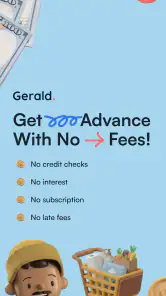
The store summary presents Gerald as a way to get cash quickly, with no credit check and no interest. That makes it different from a conventional personal loan, where the application can involve a credit inquiry, a stated interest rate, and a longer repayment structure. It also differs from a credit card because the purpose is not to carry a balance for repeated spending. In my view, this is a tool for a defined shortfall, not a general-purpose source of funds.
A realistic example would be a necessary household purchase arriving just before your regular income does. If you already know that the next deposit will cover the advance, Gerald may be worth considering. I would be much more cautious if the expense is part of a pattern that happens every month. Using one advance to cover another recurring shortage can make the following pay period feel even tighter, even when there is no interest charge.
The absence of interest is an important attraction, but I would still inspect the final flow before confirming anything. “Free” describes the app’s price, not necessarily every possible delivery choice or financial circumstance connected with using it. I would read the amount, timing, and any displayed conditions on the confirmation screen rather than tapping through quickly because the need feels urgent.
That habit is one of the most useful safeguards with any financial app: separate the cost of borrowing from the convenience of receiving money. A no-interest advance can still be inconvenient if repayment arrives before your essential bills, or if the cash reaches you later than you expected. Gerald can be a good fit for a predictable, temporary gap, but it is not automatically the best answer simply because the headline offer sounds simple.
Installing and preparing the account
Gerald is free to install, and its current version is 69.0.9. It supports Android 7.0 and later, so people using an older Android device should check compatibility before planning around it. The app was released on July 8, 2021, and its continued presence in the finance category makes it feel more established than a brand-new experiment, although that alone should not replace reading the current screens carefully.
During setup, I would keep the information needed for identity and financial verification close at hand and make sure the details match the accounts or income information being connected. Small mismatches can create unnecessary friction in financial apps. I would also use a secure device, avoid public Wi-Fi for sensitive steps, and review every permission or connection request in plain language before accepting it.
The best way to make the first session less stressful is to begin when you are not already late for a bill. Install the app, sign in, and look through the available options before you actually need the money. That gives you time to understand the sequence and notice whether your situation is supported. Waiting until the last minute turns a straightforward setup into a high-pressure decision.
I also recommend deciding your maximum comfortable repayment amount before opening the request screen. Do not start with “How much can I get?” Start with “How much can I repay while still covering food, transport, rent, and scheduled bills?” That change in order is a small but meaningful advantage. It keeps the app in the role of a controlled emergency tool instead of encouraging you to take the largest amount displayed.
For a first-time user, the most important setup question is whether the app can recognize the financial information you intend to use. If the connection does not work immediately, I would check the spelling of personal details, confirm that the selected account is the intended one, and try again later rather than repeatedly submitting random variations. A finance app is not a place where guessing improves the result.
Another practical tip is to capture the repayment date and amount in your own calendar once they are shown. Even if Gerald displays the information clearly, a separate reminder helps when the app is not open. This is especially useful for someone who manages several bills across different services. The advance may feel small, but forgetting its repayment can create a much larger problem.
Getting from approval to the first useful result
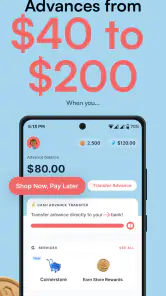
After setup, I would make the first request deliberately small and tied to one specific need. For example, if an essential purchase costs less than the maximum available amount, requesting only what closes that gap is safer than taking extra cash “just in case.” The first successful action should be measured by solving the immediate problem while preserving room in the next paycheck, not by receiving the biggest possible advance.
The workflow is easier to understand if you treat it as four decisions: verify your information, review the amount, check how and when repayment works, and confirm only when the result fits your budget. I would not skip the third step just because the app emphasizes speed. Speed is helpful only when the terms are clear enough for you to make a calm decision.
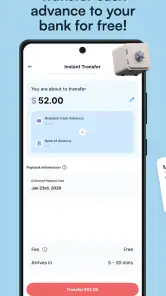
If the request is accepted, I would verify the destination and expected arrival before making plans around the money. A pending transaction is not the same as cash already available. This is a common point of confusion with digital finance tools: an approval screen can feel like completion, while the practical result still depends on processing and the chosen delivery path.
Once the money arrives, use it for the purpose that justified the request. That sounds obvious, but it protects the whole strategy. If the advance was meant for a required bill and is instead spread across several optional purchases, the original shortfall remains while repayment still approaches. Gerald works best when the user gives the money a job before requesting it.
I would also check the app after the transaction rather than deleting it immediately. The repayment details, status, and account activity are easier to manage when you know where to find them. Keeping a record outside the app is sensible too: note the amount, the expected date, and the expense covered. That creates a simple personal audit trail and makes it easier to decide whether using the service again was genuinely helpful.
One non-obvious trade-off is that convenience can reduce the pause that normally comes with borrowing. Traditional borrowing often feels slower because there are more forms and more visible costs. Gerald’s simpler presentation can be useful in an emergency, but it also means you need to supply your own pause. I recommend waiting a few minutes after seeing the offer and checking the next week of expenses before confirming.
Where new users can get confused
The phrase “cash advance” can mean different things across financial products, so I would not assume Gerald behaves like a bank overdraft, a credit card cash withdrawal, or a conventional installment loan. Those products can have different timing, repayment, and fee structures. The safest approach is to rely on the exact amount and schedule shown in your own Gerald session, not on how another service handled a similar request.
Another possible confusion is the difference between the app being free and the advance being a permanent source of free money. The app itself has no purchase price, but every advance still affects your future cash flow. I see the no-interest structure as a reason to compare Gerald favorably with expensive short-term borrowing, not as a reason to borrow casually.
People may also wonder whether a credit score is required. Gerald’s central appeal is that it does not use a credit check for the cash advance, which can make it more accessible to someone who would rather avoid a traditional loan application. That does not mean every user receives the same result, and it does not remove the need for accurate information or responsible repayment planning.
If a request does not move forward, I would avoid treating that as a signal to keep submitting applications repeatedly. First review the information you entered and the account you connected. Then consider whether the requested amount is realistic for your situation. Repeated attempts made in a rush can create confusion and do not improve a budget that is already under strain.
Some users will ask whether Gerald is suitable for building credit. I would not choose it for that purpose. The main value here is access to a short-term advance without a credit check, not a conventional credit-building arrangement. If your goal is to establish a credit history, a product specifically designed and clearly reported for that purpose may be a better match.
There is also a difference between an emergency and a planned purchase. If you can wait, compare the advance with delaying the purchase, using existing savings, asking a provider about a payment arrangement, or choosing a less expensive alternative. Gerald is most compelling when the expense is necessary, the timing is tight, and repayment is already visible. If none of those conditions apply, the convenience may not justify taking on another obligation.
How it compares with familiar alternatives
Compared with a bank loan, Gerald feels more focused on immediate short-term access. A bank may offer a larger amount or a longer repayment period, but the application can be more formal and may involve credit considerations. If you need substantial financing or several months to repay, a bank product with transparent fixed terms could be more appropriate than a cash advance.
Compared with a credit card, Gerald may be easier to understand for a single temporary gap because the advance is not built around carrying an open revolving balance. A credit card can be more flexible for repeated purchases, but interest can become expensive when a balance remains unpaid. On the other hand, someone who already has a card, can pay it in full, and needs a purchase rather than direct cash might find the card more convenient.
Compared with borrowing from a friend or family member, Gerald offers more privacy and a structured digital process. Personal borrowing can be free and flexible, but it can also affect relationships. I would still compare the emotional and practical cost of each option. If a trusted person can help without creating pressure, that may be preferable; if privacy matters, an app can feel more manageable.
Compared with a payday loan, Gerald’s no-interest positioning is a significant reason to look at it first, provided the repayment schedule is affordable. Payday borrowing can become costly when fees and rollovers accumulate. I would never assume that every cash advance app is equally safe or equally inexpensive, though. Read the final terms in the app and compare the real repayment obligation, not just the promotional wording.
Compared with simply using savings, Gerald is usually the more expensive choice in terms of future flexibility, even without interest, because it commits part of the next income cycle. Savings are intended for exactly this kind of disruption. If using savings would not endanger your basic emergency cushion, that option may be financially cleaner. The app is most useful when savings are unavailable or preserving them is necessary for a more serious risk.
Who will benefit and who should look elsewhere
I think Gerald is a reasonable option for an adult who has a short, identifiable cash gap, expects dependable incoming money, and wants to avoid a credit check and interest. It is particularly approachable for a first-time user who prefers a focused mobile workflow over negotiating with a lender. The Everyone content rating also makes the presentation broadly accessible, though financial responsibility still depends on the individual user’s circumstances.
I would skip it if your income is unpredictable, your essential bills already exceed what comes in, or you are considering an advance to cover another advance. I would also look elsewhere if you need a large amount, a long repayment period, or a product that builds credit. In those cases, a credit union, bank, nonprofit financial counselor, employer-based option, or carefully reviewed payment plan may answer the underlying need better.
My strongest practical recommendation is to use the app as a one-purpose tool. Before requesting anything, write down the expense, the exact amount required, and the date you expect to repay it. After receiving the money, record what it paid for and whether the next pay cycle remained comfortable. That simple test tells you more than the speed of the first transaction: it shows whether the service actually improved your situation.
My recommendation after using the workflow
Gerald - Cash Advance is a straightforward finance app with a clear appeal: it offers a way to seek short-term cash without a credit check or interest, and it is free to download. I like that proposition for a narrowly defined emergency, especially when the user has already mapped out repayment. The app’s strong adoption and 4.4 average indicate that it has found an audience, but popularity should not replace personal affordability.
The experience is best when you install it before the crisis, complete the setup calmly, request only what you need, and save the repayment details somewhere you will see them. That path turns the first meaningful success into more than simply receiving cash; it means resolving the original expense without creating a second emergency.
My bottom line: use Gerald for a controlled, temporary gap, not as a substitute for income or savings. If your situation fits that narrow use case, it is worth considering. If repayment is uncertain or the same shortage keeps returning, I would choose a solution that addresses the budget problem directly rather than relying on another advance.
Pros
- Simple application process with minimal paperwork required.
- May help cover urgent expenses before your next paycheck.
- Clear repayment information can make borrowing easier to understand.
- Useful for users who prefer managing finances from a mobile device.
- Application access is available at any time
- including outside bank hours.
Cons
- Eligibility and loan availability may vary by state and personal circumstances.
- Fees or interest can make short-term borrowing expensive.
- Late repayment may result in additional charges or financial stress.
- Not suitable as a long-term solution for recurring money problems.
- Users may receive less money than requested after approval.

- Category
- Finance
- Version
- 69.0.9