Farmers Insurance Inc.
- 4.86K
- 4.7
- Installs
- 1.00M
- Price
- Free

Screenshots
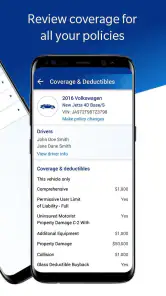
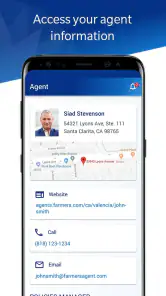
Analysis by Reviewed
When I look at an insurance app, I do not judge it by how polished the opening screen feels. I want to know whether it helps when something important is happening: a payment is due, proof of coverage is needed, or a stressful incident has just occurred. My experience with Farmers Insurance is that its strongest idea is putting those routine insurance jobs in one mobile place instead of making me search through paperwork or switch between separate digital services.
That focus makes sense for a finance app from Farmers Group Inc. It is free, aimed at everyone, and built for existing customers as well as people exploring coverage. The app has been available since December 22, 2010, and its current version is 26.08, with support beginning at iOS or Android 8.1. With more than a million installs, it is clearly intended as a practical customer tool rather than a niche calculator or educational finance product.
One useful capability: handling insurance tasks from one place
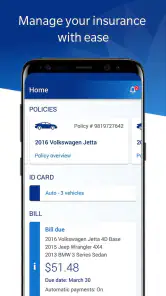
The capability I kept coming back to is the app’s ability to connect several insurance tasks in one workflow. I can use it to make a payment, access insurance ID cards, report a claim, or request a quote. Those actions are not equally important every day, but together they cover the moments when I most want quick access to my policy.
The real benefit is not simply that each option exists. It is that I do not have to remember which piece of information belongs in a drawer, an email inbox, or a separate customer portal. A digital ID card is useful when I need to show coverage quickly. Payment access matters when I am away from home and do not want to wait for a desktop session. Claims access matters most when I am already dealing with damage, confusion, and time pressure.
I also like the distinction between managing an existing policy and starting a new conversation. A customer can use the same app for everyday account work and for getting a quote. That does not mean the app replaces every discussion with an insurance professional, but it gives me a convenient first step before deciding whether I need personal help.
The practical strength is consolidation, not novelty. Insurance apps rarely need to entertain me. They need to reduce small obstacles at exactly the right moment. Farmers Insurance succeeds when I treat it as a pocket access point for my relationship with the insurer, rather than as a general-purpose money management app.
What the main actions mean in real life
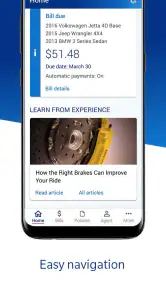
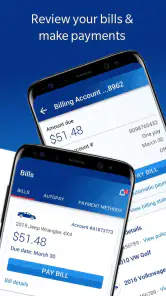
Making a payment is the most routine use. I would open the app when I am traveling, away from my usual computer, or simply trying to deal with an account task while it is fresh in my mind. The convenience comes from keeping that action near the rest of my policy information. It is easier to act when I do not need to reconstruct which website or document I should use.
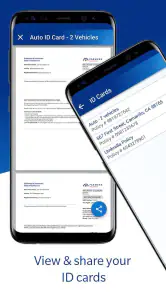
Insurance ID cards are a smaller feature with an outsized practical value. Physical cards are easy to misplace, leave in another vehicle, or forget when borrowing a car. Having access through the app can make a last-minute request less awkward. I would still prepare important documents before a long trip, but the digital card is a useful backup for ordinary situations.
Reporting a claim is where the app’s purpose becomes more serious. A claim is not a task I want to postpone while looking for a phone number or trying to work out which department handles the incident. Starting from the app can give me a clear digital route into the process. That does not remove the need for accurate information, photographs, or follow-up, but it can shorten the time between the event and the first report.
The quote function serves a different audience. Someone considering Farmers coverage can begin from the phone instead of committing to a long visit or searching through unrelated comparison pages. I see this as a convenience for gathering an initial direction, not as a substitute for comparing the details of multiple policies. A quote is only useful when I understand the coverage, exclusions, deductibles, and conditions behind it.
How I would use it after an everyday incident
Imagine I return to my parked car and notice damage that was not there earlier. My first instinct might be to take photographs, check that everyone is safe, and gather the basic facts. After that, I would want the insurance step to be obvious. Opening the app gives me a direct place to begin a claim instead of searching a browser for the correct Farmers page.
I would use the phone to record the time and location while the details are still clear, then keep the photographs organized so I can provide a consistent account. The app does not make judgment calls for me, and it cannot turn incomplete information into a complete claim. Its value is that the administrative starting point is close at hand while the event is still recent.
This is one of the less obvious trade-offs of mobile claims access. Speed is helpful, but speed can also tempt people to submit before checking the facts. I would treat the app as a guided doorway, not as a reason to rush. Reviewing the incident carefully before sending anything is still important, especially when damage, another driver, or property ownership is involved.
For a minor issue, I might also use the app to begin the process and then keep the phone available for follow-up. For a serious incident, I would not let the convenience of a digital claim distract me from immediate safety, emergency assistance, or any responsibilities at the scene. The app handles the insurance workflow; it does not replace sensible action outside the app.
Where the combined workflow saves the most effort
The app is particularly helpful when I have several small insurance tasks close together. For example, I might need to check an ID card, make a payment, and review the next step on an existing matter while away from my desk. Instead of opening a laptop for each job, I can keep the work within one familiar customer app.
That convenience is also useful for households where more than one person needs access to insurance information. A driver may need an ID card even when the person who normally manages the policy is not nearby. The app gives the household a more immediate option than relying entirely on a paper card or asking someone else to forward a document.
There is a subtle organizational advantage here: I can handle an action when I remember it. Insurance chores are easy to delay because they do not feel urgent until they suddenly are. A mobile payment or account task can be completed during a spare moment, which may be more realistic than waiting until I am back at a computer.
On the other hand, I would not confuse access with full visibility into every insurance question. The app is strongest for defined actions. When I need to understand a complicated coverage choice, dispute a detail, or discuss unusual circumstances, a human conversation may be more suitable. The best workflow is often hybrid: use the app to find the relevant starting point, then ask for help when the situation needs interpretation.
Trade-offs compared with the usual alternatives
Compared with paper documents, the app is more convenient for access and less dependent on what I remembered to carry. A physical card does not need a battery or an app session, though, so I would not discard every paper backup simply because a digital option exists. Mobile access is excellent for everyday flexibility, while paper can be reassuring when a phone is unavailable.
Compared with using a mobile browser, a dedicated app can feel more direct because its purpose is already defined around Farmers customer tasks. I do not have to start by finding the right page or remembering the exact account route. The trade-off is that an app takes space on the phone and must remain compatible with the operating system. Phones running an older system than Android or iOS 8.1 are outside the stated minimum, so owners of older devices should check compatibility before relying on it.
Compared with calling customer service, the app is better for actions that are already clearly defined. A payment, ID card request, claim report, or quote can begin without waiting for a conversation. Calling is better when I am unsure which action applies, when the matter is complicated, or when I need an explanation rather than a button that starts a process.
Compared with a general insurance comparison service, the app is more useful once Farmers is already my insurer or a serious option I am considering. A comparison service may be better for surveying multiple companies in one place. Farmers Insurance is more focused: it connects me to Farmers-specific account work rather than trying to be a neutral marketplace.
That focus explains both its usefulness and its limits. If I insure everything elsewhere, the app has little reason to become part of my routine. If I am a Farmers customer, having payment, ID cards, claims, and quotes together is more practical than maintaining several unrelated tools. The choice depends less on whether the app is impressive and more on whether Farmers is part of my insurance life.
Small habits that make the app more useful
My first tip is to open the app before an urgent need arises. I would confirm that I can reach the account area and find the ID card while I am calm. That simple rehearsal matters because an app is most valuable when I already know where to look, not when I am standing beside a damaged vehicle trying to learn the interface.
My second tip is to treat the digital ID card as a convenience and a backup, not as the only plan. I would keep the phone charged before a long drive and make sure the relevant information is available in the app. For important travel, I would also keep essential policy details accessible in another form. Redundancy is sensible when documentation may be needed at an inconvenient time.
My third tip is to separate “starting a claim” from “understanding the claim.” The app can help me begin the report, but I would gather the facts first and read each prompt carefully. If the situation involves multiple parties or unclear responsibility, I would avoid guessing simply to move faster. A clean, accurate first report is more valuable than a hurried one.
For payments, I would use the app as a reminder to deal with the account rather than waiting for a deadline to become stressful. I would check that the selected policy and payment details are correct before confirming. Mobile convenience reduces friction, but it also makes it easy to tap through a task quickly, so a short review is worthwhile.
For quotes, I would use the app to begin research and then compare the actual coverage rather than focusing only on the initial figure. Insurance is not a product where the lowest visible number automatically represents the best fit. I would pay attention to what protection is included and what responsibilities remain with me before making a decision.
Who will get the most from it
I think the app suits Farmers customers who prefer handling straightforward account tasks themselves. It is a good match for someone who wants a digital ID card, makes payments from a phone, and values a direct way to report a claim. It also suits people who dislike keeping paper records organized or who frequently manage errands while away from home.
It can be especially useful for drivers who share vehicles or need quick access to proof of coverage. It also makes sense for a customer who wants to begin a quote without first arranging a longer conversation. The app’s value increases when the same person needs several of these functions, because the benefit comes from having them together rather than from any single isolated tool.
The audience is broad: the app carries an Everyone content rating and is free to install. Its average rating is 4.7 from around eleven thousand ratings, with roughly four thousand nine hundred written reviews, which suggests that many users find the basic experience worthwhile. I would read that as evidence of practical appeal, not as a guarantee that every device, policy situation, or claim will feel effortless.
I would skip it if I am looking for a complete personal finance dashboard, investment tracking, budgeting tools, or a way to manage insurance from many different providers. This is a Farmers customer app, not a universal financial command center. I would also prefer a phone call or direct professional guidance when my question is about interpreting coverage rather than completing a standard task.
People who rarely use smartphones may find a paper card or a phone conversation more comfortable. Likewise, anyone using a device below the minimum operating-system requirement should not build an urgent plan around the app until compatibility is clear. The free price removes a financial barrier, but it does not remove the need for a suitable device and an active reason to use the service.
My final assessment of the mobile insurance experience
Farmers Insurance is most convincing when I judge it as a practical extension of an insurance account. Its central promise is not entertainment or financial analysis; it is reducing the distance between me and a handful of important actions. Payments, digital ID cards, claims, and quotes are more useful when they are gathered in one place, especially during travel or an unexpected incident.
I appreciate that the app can serve both calm, routine moments and more pressured ones. I can use it for a small account chore today and potentially for the first step after an accident tomorrow. That range gives it a clearer purpose than an app that only displays information without helping me act.
Still, I would keep my expectations realistic. A mobile interface cannot answer every coverage question, replace careful documentation, or make a complicated claim simple by itself. For those situations, the usual alternatives—calling Farmers, speaking with an insurance professional, or comparing policies independently—may be better. The app works best alongside those options, not as a universal replacement for them.
For an existing Farmers customer, I would recommend installing it and learning the basic paths before needing them. The strongest reason is preparedness: knowing where the ID card and claim route are can save frustration when time matters. For someone who is not connected to Farmers, I would not install it merely because it is free. Its usefulness is tied directly to the insurer and the tasks I need to perform there.
Overall, I see this finance app as a focused, sensible tool from Farmers Group Inc. Its large install base and strong 4.7 average reflect broad acceptance, but my recommendation comes from the workflow itself: it puts common insurance actions within reach and makes the phone a useful backup for real-world paperwork. If that is exactly what I need, Farmers Insurance earns a place on my device.
Pros
- Easy access to policy details
- documents
- and coverage information.
- Claim filing can be started quickly from a mobile device.
- Digital ID cards are convenient when driving or handling paperwork.
- In-app tools help locate agents
- repair shops
- and other services.
- Useful alerts can keep users informed about payments and claim updates.
Cons
- Some features may require an active Farmers policy or account login.
- App performance and available tools can vary by state and policy type.
- Claim estimates and updates may not appear immediately after submission.
- Users may still need to contact an agent for complex policy changes.
- Location and device permissions may be needed for certain features.

- Category
- Finance
- Version
- 26.08