dub: Social Investing Unlocked
- 223.00
- 4.5
- Installs
- 100.00K
- Price
- Free

Screenshots



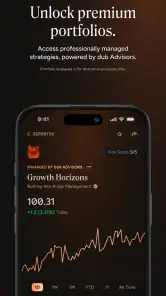
Analysis by Reviewed
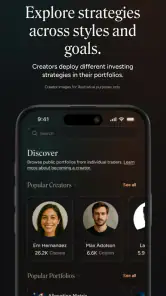
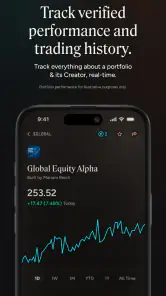
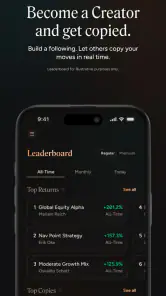
I approached dub: Social Investing Unlocked as a finance app for people who want to follow investment ideas through other people’s activity rather than build every watchlist from scratch. Its focus is social discovery: tracking Pelosi stocks, hedge funds, and creator portfolios in one mobile experience. That makes it more interesting than a basic quote screen, but it also means the value depends heavily on how clearly you can separate useful signals from attention-grabbing noise.
My first impression is that dub is best understood as a research companion, not a replacement for a brokerage account or a complete personal finance system. I would use it while exploring an idea, checking what a public figure or creator portfolio is drawing attention to, and deciding which companies deserve deeper research elsewhere. I would not treat a portfolio mention as an instruction to buy. That distinction matters throughout the app because social investing can make a complicated decision feel deceptively simple.
The app is free to install, with optional in-app purchases ranging from $9.99 to $89.99 per item. It is available to an Everyone audience, and the developer is listed as dub Support Team. With a 4.5 average from around 1.5 thousand ratings and more than 100 thousand installs, it has clearly attracted a meaningful early audience. The current release is version 5.61.0, and it runs on Android 8.0 or later.
How dub feels when your connection is doing the work
Network-dependent moments shape the whole experience
Because dub revolves around changing investment information and social portfolio activity, a reliable connection is central to the experience. The moments that matter most are the ones where I expect current information: opening a portfolio, checking a tracked idea, comparing several sources, or returning to see whether something has changed. These are not static reference tasks. They depend on fresh content being available when I need it.
That connected design gives the app its main advantage over a simple notes file or a manually maintained spreadsheet. Instead of typing company names into a personal list and remembering to update everything, I can use the app as a discovery layer. The practical benefit is not merely convenience; it is the ability to organize my attention around people and ideas that I already want to monitor.
There is also a psychological trade-off. A stream built around recognizable investors, hedge funds, or creators can make research feel approachable, but it can encourage authority-based thinking. I found it more useful to ask, “Why is this idea here, and does it fit my own plan?” rather than, “Who shared it?” A connection makes the information accessible, but it does not make the underlying investment thesis sound.
For that reason, I would avoid using dub during a rushed decision at a checkout line or immediately before placing a trade. A short delay, a partial screen, or a missed update can change the context of what you are seeing. The app works better when I have enough time to open an idea, compare it with my own notes, and continue the investigation outside the app.
A useful workflow for following people without copying them
One of the more valuable ways to use the app is to create a two-step research habit. First, I use the social side to discover a name or theme. Then I move that idea into a personal checklist: what does the company do, what risk would make the idea fail, how long would I hold it, and what would change my mind? This turns dub from a copying tool into a filter for deciding what deserves attention.
The workflow is especially helpful when several portfolios overlap. If the same company appears in different areas of the app, I can treat that repetition as a prompt for research rather than proof of quality. Conversely, an interesting idea appearing only once may still deserve consideration, but it needs more independent checking. The app can show me where to look; it cannot replace the reasoning that follows.
I also recommend separating “interesting” from “actionable” in your own notes. A creator portfolio can be useful for learning how someone groups ideas, while a hedge fund reference may be useful for spotting a sector worth studying. Neither automatically tells me whether the timing, valuation, or risk suits my circumstances. That small mental separation prevents the social layer from becoming a source of impulsive decisions.
Using it in real mobile situations
On a phone, dub makes the most sense in short research windows: during a commute while stationary, between appointments, or when I want to save an idea before I forget it. The compact format suits quick scanning, especially when I am checking whether a portfolio or theme is worth revisiting later. I would not expect the same comfort from a long analytical session that requires several documents, a calculator, and side-by-side comparisons.
A realistic scenario would be a weekend planning session. I might open the app to review a creator portfolio, notice a company that fits a sector I am already studying, and record the reason it caught my attention. Later, at home, I would compare that idea with company filings, broader market information, and my own risk limits. In that situation, dub saves discovery time without becoming the only source behind the decision.
Another mobile use is a quick portfolio check when I am already thinking about a particular theme. The temptation is to keep refreshing and interpret every change as important. I found a better approach is to set a specific question before opening the app: am I looking for a new idea, reviewing a person’s approach, or checking whether an existing research note needs updating? A defined purpose keeps a short session from turning into endless scrolling.
The phone-first format also exposes a limitation. Financial information can be dense, and small screens encourage quick judgments. If you need detailed comparisons, extensive historical analysis, or a complete household view, a desktop research setup or a dedicated investment platform will usually be more comfortable. dub is strongest at the front end of research, where discovery and organization matter more than deep portfolio accounting.
What happens when loading is interrupted
Connectivity problems are most frustrating when they occur halfway through a research task. If a portfolio or idea does not load properly, I would avoid assuming that a blank or incomplete view means there is no relevant information. The safest response is to pause, retry when the connection is stable, and confirm the context before acting. In finance, an incomplete screen is a reason to wait, not a reason to guess.
Recovery is easier if I keep a lightweight record outside the app. For an idea that matters, I would note the company name, the person or portfolio that led me to it, the date I reviewed it, and the question I still need to answer. This is not a replacement for the app; it is a safeguard against losing the thread when a mobile session is interrupted.
I also prefer opening dub before I need it rather than relying on it at the exact moment of a decision. That gives me time to check whether the relevant page is available and to move any important research into a more stable workflow. If the app becomes unavailable, I can continue with my notes and independent sources instead of being forced into a rushed choice.
The app’s connected nature means it should not be treated as the sole archive of an investment thesis. Social portfolios can change, and the meaning of an item can depend on when and where it appeared. Keeping your own dated reasoning is valuable because it lets you distinguish a new development from something you simply failed to see during a disrupted session.
Being careful with mobile data and attention
For data-conscious users, the main question is not only how much mobile data the app uses, but how often it encourages checking. Repeatedly opening a finance feed can consume attention even when the information has not changed in a meaningful way. I would use dub with a deliberate review schedule instead of treating every notification or new item as urgent.
When I am on a limited connection, I would reserve the app for targeted checks and postpone broad browsing until I have a stronger network. That is practical for both data use and concentration. A focused session—one portfolio, one idea, one research question—is more valuable than repeatedly loading several areas without recording what I learned.
There is another form of data discipline that matters here: personal decision data. I would be cautious about entering anything sensitive into a social investing environment unless I clearly understand why it is needed. A discovery app can be useful without becoming the place where I store every detail of my financial life. Keeping account credentials, private budgeting information, and personal risk calculations in the appropriate tools reduces unnecessary exposure and keeps dub in its proper role.
The optional purchase range also deserves attention before upgrading. Since the app is free to start, I would use the basic experience long enough to identify a real limitation in my workflow. Paying makes sense only if an added capability saves meaningful research time or improves organization. It does not make sense to subscribe simply because a social investing app creates a fear of missing the next idea.
Where dub beats familiar alternatives—and where it does not
Compared with a traditional brokerage app, dub is more oriented toward discovering and following investment ideas through people and portfolios. A brokerage is generally the more appropriate place for account management, orders, and the practical mechanics of investing. I see dub as something I might use before opening that other app, not instead of it.
Compared with a spreadsheet, dub offers a more natural way to browse social portfolio themes and recognizable sources. A spreadsheet still wins when I want complete control over columns, personal scoring, tax notes, entry assumptions, and review dates. My preferred combination would be dub for discovery and a private system for the reasoning that determines whether an idea stays on my list.
Compared with general financial news, the app’s identity-based approach can reduce the amount of searching needed to find a starting point. The weakness is that a person-centered view may narrow my attention. If I only follow familiar names, I can miss less fashionable companies or develop an overly concentrated perspective. I would deliberately use the app to generate questions, then broaden the research beyond the portfolios that first caught my eye.
That comparison also clarifies who should skip it. If you want a full budgeting tool, detailed retirement planning, tax preparation, or a complete trading terminal, this is not the right primary app. It is also a poor fit if you know that seeing other people’s positions makes you chase trends. On the other hand, curious investors who enjoy structured discovery may find its social angle genuinely useful.
Questions I would settle before relying on it
A common concern is whether dub can replace a broker. I would answer no: I treat it as a finance research and discovery app, while the broker remains the place for whatever account and transaction work I need. Keeping those roles separate makes the experience clearer and reduces the chance that an interesting portfolio view becomes an unexamined trade.
Another question is whether the app is suitable for beginners. It can be a friendly starting point because people and ideas are easier to browse than a blank market screen. Still, beginners should pair it with basic lessons about diversification, risk, fees, and time horizon. The social presentation lowers the barrier to finding ideas, but it does not remove the need to understand them.
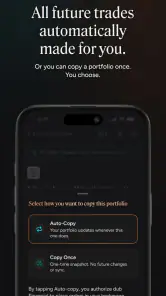
Users also often wonder whether a high-profile portfolio is worth copying exactly. I would strongly resist that approach. A portfolio may reflect goals, timing, resources, or risk tolerance that are completely different from mine. I use the source as a lead and investigate the underlying company or theme independently before deciding whether it belongs anywhere in my own plan.
For someone worried about connectivity, my practical answer is to avoid making dub the only place where important reasoning lives. Keep short notes, review ideas when the connection is dependable, and do not act on a partially loaded or unclear screen. That approach preserves the app’s discovery benefits without making a network interruption financially consequential.
Finally, I would ask whether the paid items solve a problem I actually have. The free entry point makes testing straightforward, so I would first build a repeatable routine around following ideas, recording questions, and reviewing results. If the optional features do not improve that routine, there is little reason to pay merely for a larger stream of information.
My connectivity verdict
After looking at dub through everyday mobile use, I think its strongest quality is the way it gives investment discovery a social structure. Tracking Pelosi stocks, hedge funds, and creator portfolios can make the first step of research more approachable than starting with an empty watchlist. The experience is particularly useful when I want to find themes worth investigating and then carry that work into a more complete research process.
Its biggest limitation is inseparable from that strength: the app asks me to stay connected to changing information and to other people’s ideas. That can be distracting, and it can become risky if convenience turns into imitation. I would use it with a stable connection, a defined question, independent research, and personal notes that remain useful when the app is not open.
For me, the recommendation is positive but specific. Try it if you want a free mobile starting point for social investment research and you are comfortable treating public portfolios as clues rather than instructions. Skip it as your main tool if you need detailed financial planning, full brokerage functionality, or a quiet environment free from market personalities. Used with that boundary, dub is a practical idea-finding companion, not a shortcut around investment judgment.
Pros
- Clear interface makes portfolio tracking easy for beginners.
- Useful social feed for discovering other investors’ strategies.
- Supports learning through shared market insights and discussions.
- Helps users compare ideas before making investment decisions.
- Convenient access to investing content from a mobile device.
Cons
- Social sentiment can encourage impulsive or emotional investing.
- Shared strategies may not match your risk tolerance or goals.
- Some features or insights may require a paid subscription.
- Investment information can be delayed or incomplete.
- Availability of assets and features may vary by region.

- Category
- Finance
- Version
- 5.61.0