Du Chinese: Read&Learn Chinese
- 525.00
- 4.8
- Installs
- 500.00K
- Price
- Free

Screenshots




Analysis by Reviewed
If you are learning Mandarin and keep getting stuck between textbook sentences and real reading, Du Chinese: Read&Learn Chinese takes a refreshingly practical route. I found it most useful as a bridge: it gives you reading material that feels more meaningful than isolated vocabulary drills, while still offering enough support to keep a difficult sentence from turning into a dead end.
This is an education app from Sinamon, available for free, with optional in-app purchases ranging from $11.99 to $119.99 per item. It is aimed at Everyone 10+, and the Android release requires at least Android 5.0. The app has built a strong reputation, with a 4.8 average from around 11K ratings and more than 500K installs. Those figures do not replace personal experience, but they do match my impression that this is a focused tool for learners who want to spend more time reading Mandarin and less time searching for suitable material.
What reading Mandarin with Du Chinese actually feels like
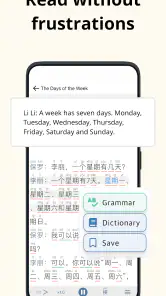
The first thing I noticed is that the app is not trying to be a complete Mandarin course in the traditional sense. It does not feel like a sequence of classroom chapters where every activity is designed to teach a single grammar point before you move on. Instead, the central experience is reading Chinese content at a level you can manage, with assistance available when the language becomes challenging.
That difference matters. Beginners often know a surprising number of words but still cannot get through a simple paragraph because word order, particles, and unfamiliar characters pile up at once. A graded reading approach reduces that pressure. I can attempt a passage, pause when necessary, and return to the surrounding sentence instead of abandoning the whole exercise after meeting one unknown expression.
The app is especially appealing if your main goal is to become comfortable with written Mandarin. Reading is a skill that can lag behind listening and speaking, particularly when you have learned through conversations or flashcards. Du Chinese gives that neglected skill a regular place in your routine. I would describe it as a reading companion first, not a replacement for pronunciation practice, structured grammar study, or conversation with another person.
For a first-time user, the important expectation is simple: you are not installing a magic shortcut to fluency. You are installing a place to practise understanding connected Chinese. The meaningful progress comes from repeatedly finishing material, noticing familiar structures, and gradually needing less help. That makes the app less exciting than a game at first, but more useful for building the quiet endurance required to read naturally.
Who will get the most from it
I think it suits learners who already know some basic Mandarin and want to turn that knowledge into actual comprehension. It can also work for a motivated beginner who is comfortable reading slowly and looking up support along the way. The experience becomes more rewarding when you can recognise at least some characters and sentence patterns, because you immediately see how the pieces behave in context.
More From Our News Desk

Clash of Clans Is Won Between the Battles

Android Auto Makes the Case for Quieter Car Software

MobiOffice: Transforming Mobile Productivity with Seamless Integration

EA SPORTS FC™ Mobile Soccer: Redefining Mobile Sports Gaming

How Microsoft OneDrive Became a Mobile Productivity Giant

How Google Translate Breaks Language Barriers Effortlessly
It is a particularly good fit for someone who says, “I know the words when I study them, but I cannot follow a paragraph.” That problem is not solved by memorising another disconnected list. It is solved by meeting vocabulary repeatedly inside understandable sentences. I found that repeated exposure more useful than simply increasing the number of words I had seen once.
On the other hand, I would not choose this as my only app if my immediate priority were speaking with a taxi driver, preparing for a pronunciation exam, or learning to write characters by hand. Reading support is its centre of gravity. A separate speaking partner, audio-focused course, or handwriting tool may be the better companion for those goals.
From installation to the first useful reading session
Start with a manageable level, not an ambitious one
My advice is to resist the temptation to choose material because the topic sounds interesting. Your first success should come from a passage that is slightly comfortable, not one that forces you to investigate every line. The purpose of the first session is to learn how the reading workflow feels and to finish something with a clear understanding of what happened.
When I begin with content that is too difficult, I spend the session collecting fragments rather than reading. That creates the false impression that Mandarin is impossible, when the real problem is simply poor level selection. A shorter, easier piece gives you a chance to test whether you can follow the general meaning before worrying about every character.
Once you open a reading, move through it slowly on the first pass. I prefer not to interrupt every sentence immediately. I first look for the broad situation: who is involved, what is changing, and whether the passage is describing an event, explaining an idea, or presenting a conversation. Even partial understanding gives the vocabulary a place to attach itself.
Use help as a tool, not as a substitute for reading
The most useful habit is to attempt the sentence before reaching for assistance. If I stop at every unfamiliar character, I turn reading into a lookup exercise. Instead, I try to infer the sentence from the words I recognise, the grammar around them, and the paragraph’s direction. Only then do I check the troublesome part.
This approach produces a small but important distinction: some words are genuinely necessary for understanding, while others can wait. I do not need to resolve every detail before continuing. Sometimes the next sentence makes the earlier one clearer. Sometimes I discover that an unknown word was only a minor description and did not affect the main point.
A useful workflow is to read once for meaning, revisit the sentences that caused trouble, and then read the passage again. That second pass is where I often notice progress. The characters have not changed, but the sentence feels less crowded because I now know what role each part plays. This is one of the app’s strongest practical qualities: it encourages repeated contact with connected language rather than one-time exposure.
Your first meaningful success
For me, the first real win is not understanding every word. It is reaching the end of a reading and being able to explain its basic message without translating each sentence into English. That may sound modest, but it is a much better measure of reading ability than the number of definitions you have opened.
After finishing, I recommend summarising the passage in very simple English, or in Mandarin if you are ready. Then return to one or two sentences that seemed especially useful. Ask yourself why the sentence was understandable on the second attempt. Was the vocabulary repeated? Did the grammar become familiar? Did the surrounding context provide the missing clue?
This turns a passive reading session into a small lesson. I also like choosing one expression that I could imagine using or recognising again. Saving every unknown word would create an oversized list with little priority. Selecting only the expressions that mattered to the passage makes later review more realistic.
A realistic everyday routine
Imagine that you have a short break before work or class. You open the app, choose a reading that does not look intimidating, and spend the first few minutes reading for the general idea. During the next few minutes, you investigate only the sentences that block comprehension. Before closing the app, you reread the opening and ending so the passage feels complete rather than abandoned halfway through.
That routine is more sustainable than promising yourself a long study session every evening. It also creates a useful boundary: you are practising reading, not trying to solve the entire Chinese language in one sitting. On a busy day, finishing a small piece can preserve momentum. On a quieter day, you can revisit the same material and examine the language more closely.
Where new users may feel confused
“I understand the words, but not the sentence”
This is probably the most common frustration with Mandarin reading, and it is not necessarily a problem with the app. Chinese sentences can remain unclear even when most individual words look familiar. Particles, omitted subjects, modifiers, and the order of information all contribute to meaning. If you translate word by word, the result may sound unnatural or incomplete.
When that happens, I stop trying to build an English sentence from left to right. I look for the main action first, then identify who or what the sentence is about, and only afterward fit in the extra description. Reading aloud quietly can also expose where one phrase ends and another begins. The aim is to understand the structure, not to force every character into a one-to-one English equivalent.
Du Chinese helps most when I treat the surrounding passage as evidence. A sentence that seems ambiguous in isolation often becomes obvious after the previous line establishes the situation. That is why jumping straight to individual definitions can be counterproductive. The context is part of the lesson.
“Should I translate everything?”
No. I would translate only when the meaning remains important and unclear after a genuine attempt. Constant translation slows reading and can make English feel like the real language of the exercise. The app is more valuable when you use its support to return to Mandarin, rather than staying in an explanation screen for most of the session.
A good compromise is to allow yourself one careful look, close the help, and reread the original sentence. If the sentence still does not make sense, check the larger paragraph instead of immediately opening another definition. This creates a habit of using support strategically. It also reveals whether the obstacle is vocabulary or sentence structure, which require different kinds of practice.
“Why does an easier passage sometimes feel harder?”
Difficulty is not determined only by the number of unfamiliar words. A familiar topic may contain an unusual way of organising information, while a slightly longer passage may use predictable patterns. I have found that conversational writing can feel easy in one paragraph and surprisingly subtle in the next because short phrases often depend heavily on context.
Do not judge your ability from one reading. Try a second piece at a similar level and compare the kind of difficulty you encountered. If the problem is repeated vocabulary, review a small selection. If the problem is sentence structure, reread slowly and identify the main verb or relationship between clauses. This diagnosis is more useful than simply moving to a higher or lower level without knowing why.
When the free starting point is not enough
The app itself is free to install, which makes it easy to test whether the reading method suits you before spending money. Optional purchases are available, with individual items priced from $11.99 to $119.99. I would not make that decision immediately. First, use the free experience long enough to answer practical questions: Do you return to the readings? Does the level feel appropriate? Are you using the support thoughtfully, or are you still avoiding connected Chinese?
If the answer is that you enjoy the method but need more material or deeper continuity, a purchase may make sense. If you only want occasional translations or a quick phrase lookup, paying for expanded reading content may not be the best value for you. The right choice depends less on the headline price than on whether you will actually build a regular reading habit.
How it compares with familiar alternatives
Compared with flashcard apps, Du Chinese gives vocabulary a living environment. Flashcards are better when you need deliberate repetition and quick recall, but they can leave you unprepared for the way words interact in a sentence. I would use flashcards to strengthen weak vocabulary and this app to test whether that vocabulary works in context.
Compared with a conventional textbook, the app feels less rigid. A textbook usually gives you a clear progression through grammar and exercises, which is valuable when you want a planned curriculum. Du Chinese is more flexible and immediately reading-centred, but that flexibility means you need to take responsibility for identifying what you still do not understand.
Compared with machine translation, it is far better suited to learning because the goal is not merely to obtain an English answer. Translation tools can rescue you when you need information quickly, but they often hide why a sentence means what it does. Here, the effort of reading, checking, and rereading is the point. If you are travelling and need an instant translation, use a translation tool. If you want to become less dependent on one, this app is the more constructive choice.
Compared with audio-first language apps, it may feel limited if your confidence problem is listening or speaking. Reading can support those skills indirectly by making vocabulary and grammar more familiar, but it does not replace hearing natural speech or producing your own sentences. I would pair it with conversation practice rather than expecting it to cover every part of Mandarin.
Three habits that make the app noticeably better
- Read twice with different goals: use the first pass for the story or message, then use the second for language details. This prevents vocabulary checking from destroying your first impression of the text.
- Keep a small “worth remembering” list: choose expressions that were important to the passage or likely to appear again. A short, selective list is more useful than recording every unfamiliar character.
- Use difficulty as feedback: if you cannot explain the passage after rereading, do not simply blame your vocabulary. Check whether the real obstacle was grammar, context, or an unsuitable level.
These habits also answer a question many first-time users have: how long should a session be? I would measure it by completed understanding rather than minutes. A short reading that you can revisit successfully is more valuable than a long session that ends in a pile of unresolved lookups.
Who should install it, and who should pass
I would recommend it to independent learners, students who need extra reading outside class, and intermediate learners who feel that beginner material has become repetitive but authentic Chinese still feels too difficult. It is also a good option for people who prefer learning from situations and stories instead of drilling isolated examples.
I would be more cautious if you need a fully guided course with explicit lessons, frequent tests, and a fixed order. You may find the reading-first approach too open-ended. Likewise, learners who cannot yet recognise much written Chinese may need a stronger foundation before this becomes comfortable. That does not mean they should never use it, only that their first sessions may require patience and an additional beginner resource.
The age rating of Everyone 10+ makes it suitable for a broad audience, but suitability is not the same as level. A younger learner may still need guidance choosing material and deciding which vocabulary deserves attention. An adult beginner may have the opposite issue: the content can be accessible while the learning process still requires self-discipline.
The app has been available since Jan 7, 2016, and its current version is 3.6.1. I mention that because it feels more like an established learning tool than a temporary experiment, while the Android compatibility beginning at Android 5.0 also makes it accessible on older devices. The important question is still whether its reading workflow matches your goal, not simply how long it has existed.
My recommendation after using the full workflow
What I like most is the way the app changes the task from “learn enough Chinese before I can read” to “read something manageable and learn from the gaps.” That is a healthier starting point. You do not need perfect knowledge before opening a passage, and you do not need to understand every character before gaining something from it.
The main limitation is equally clear: the app rewards active participation. If you tap for help without attempting the sentence, skip material as soon as it becomes uncomfortable, or expect it to teach speaking automatically, the experience will feel less effective. Its strengths appear when you read, make a reasonable guess, check selectively, and return to the original Mandarin.
For a first-time user, I would install it, choose an approachable reading, finish one complete piece, and repeat it before judging the method. Pay attention to whether the second pass feels easier and whether you can describe the main idea without translating line by line. If that small improvement feels satisfying, you have found a useful place in your study routine.
My final view is that Du Chinese is not a universal Mandarin course, but it is a strong, focused answer to a very specific problem: moving from knowing Chinese in fragments to following it as connected writing. The free entry point makes testing straightforward, and the optional purchases give committed readers room to continue. If your next goal is to read more confidently, rather than merely collect more vocabulary, this is an app I would genuinely recommend trying.
Du Chinese: Read&Learn Chinese Frequently Asked Questions
What devices and operating systems can run Du Chinese: Read&Learn Chinese?
Du Chinese: Read&Learn Chinese is an education app developed by Sinamon for Android and iOS users. On Android, it requires version 5.0 or later, so checking your device’s operating system before downloading can help avoid compatibility problems. The app is designed around reading Mandarin, and its graded material makes it a practical option for learners who want to study on a phone or tablet.
Is Du Chinese suitable for complete beginners, or do I need prior Mandarin knowledge?
The app is designed for learners at different levels, including beginners, and its graded reading materials let users start with content suited to their ability. New learners can use reading tools such as pinyin, translations, and word explanations to work through unfamiliar text. Those who already know some Mandarin can choose more challenging material and continue building comprehension through stories, articles, and dialogues.
What is Du Chinese: Read&Learn Chinese, and who is it designed for?
Du Chinese: Read&Learn Chinese is a reading-focused language-learning app for people studying Mandarin. It offers graded stories, articles, and dialogues organized by difficulty, making it suitable for beginners through advanced learners. The app is especially useful for students who want to improve reading comprehension, vocabulary, grammar recognition, and listening skills through practical Chinese content rather than isolated word lists.
How does Du Chinese help users learn Mandarin vocabulary and grammar?
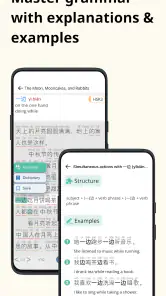
While reading a lesson, you can tap unfamiliar Chinese words to view their meanings, pronunciation, pinyin, and additional information. The app also lets you review vocabulary and revisit words encountered in context. Because grammar patterns appear inside complete sentences and stories, Du Chinese can make them easier to understand naturally. It works best when used consistently alongside speaking, writing, or conversation practice.
Does Du Chinese include audio and support for simplified or traditional Chinese?
Yes, the app includes audio for many reading materials, allowing learners to listen while following the text. This is helpful for practicing pronunciation, tones, listening comprehension, and reading speed. Du Chinese primarily supports Mandarin learning and provides useful reading tools such as pinyin and translations. Before downloading, learners should check the current app listing for the exact availability of simplified or traditional character content.
Pros
- Graded reading material suits beginners through advanced learners.
- Tap any word to view its meaning
- pronunciation
- and usage quickly.
- Audio playback helps connect written Chinese with natural pronunciation.
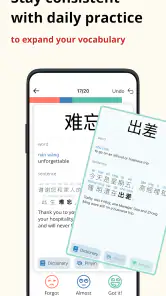
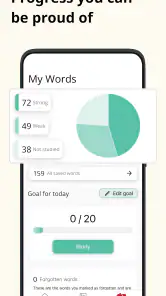
- New vocabulary can be saved for later review and practice.
- Articles cover varied topics
- making study sessions less repetitive.
Cons
- Most useful lessons and features require a paid subscription.
- Some translations and explanations may feel too brief for beginners.
- The amount of content can feel overwhelming without a study plan.
- Audio speed and playback controls may not suit every learning style.
- Reading-focused lessons offer limited practice for speaking and writing.
- Category
- Education
- Version
- 3.6.1