DeerCast: Weather, Maps, Track
- 1.85K
- 4.6
- Installs
- 500.00K
- Price
- Free
Screenshots
Analysis by Reviewed
When I plan a deer hunt, weather matters less as a general forecast than as a clue for choosing when to go and what conditions to expect. That focus is what makes DeerCast: Weather, Maps, Track stand out to me: it is a hunting-oriented weather app from GSM Outdoors, built around interpreting conditions in the context of whitetail movement. I would treat its guidance as one useful input, not a promise that deer will appear on schedule.
Why a hunting forecast changes the decision
The central appeal is not simply having weather on a phone; it is having a forecast framed around a question hunters actually ask: when might conditions make a trip more worthwhile? A general forecast gives me the ingredients, while DeerCast encourages me to consider them in relation to whitetail movement. That can make planning feel more purposeful, especially when I have several possible windows and limited time to choose between them.
I would still separate a useful signal from certainty. A movement-oriented forecast can help me rank opportunities, but it cannot promise what an animal will do at a particular location. My own scouting, access route, hunting regulations, daylight, and changing local conditions remain part of the decision. The forecast is most useful as a planning aid, not a substitute for judgement.
Weather that supports a decision
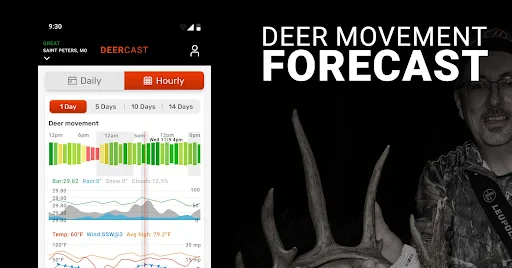
A standard weather app can tell me whether rain is likely, but I still have to work out what the forecast means for a hunt. DeerCast puts hunting conditions at the center, letting me examine the forecast by hour and consider wind direction, temperature, and pressure trends together. The practical advantage is not simply seeing more weather information; it is having a reason to compare one possible time in the field with another.
For example, if I have a free morning and a separate chance to hunt later in the day, I can check the hourly outlook before deciding which window deserves priority. I would still factor in access, daylight, and my own observations. A forecast can help me plan, but it cannot account for every detail at a particular stand or guarantee animal movement. Use it to refine a plan, not replace field judgement.
A forecast works best beside a familiar map
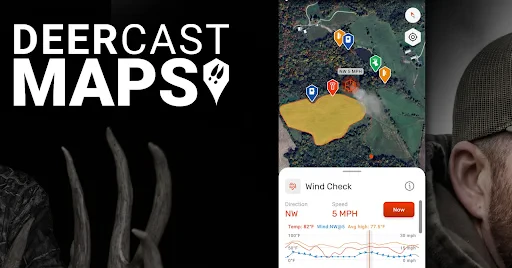
Weather becomes more actionable when I connect it to a place I know. Before setting out, I can think through whether the wind direction makes my usual approach sensible and use the map to consider terrain and property boundaries. That is a different task from simply checking whether the day looks pleasant: it helps me compare a promising time with a practical location and route.
One useful habit is to check the forecast before choosing among familiar spots rather than letting a favorable outlook send me somewhere I have not evaluated. I would also treat map layers as planning references and make sure boundary details are appropriate for the area. A map can help me think ahead, but it does not remove the need to confirm where I can go and how I should enter a property.
More From Our News Desk

Clash of Clans Is Won Between the Battles

Android Auto Makes the Case for Quieter Car Software

MobiOffice: Transforming Mobile Productivity with Seamless Integration

EA SPORTS FC™ Mobile Soccer: Redefining Mobile Sports Gaming

How Microsoft OneDrive Became a Mobile Productivity Giant

How Google Translate Breaks Language Barriers Effortlessly
Planning a Hunt Around Conditions
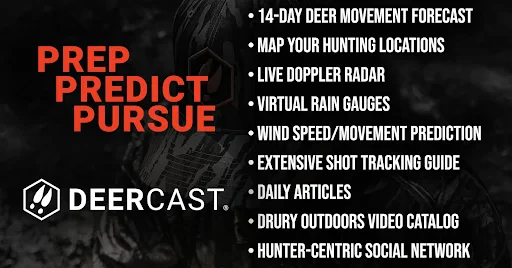
Let’s dive into why DeerCast has become the go-to app for many hunters out there. First off, it offers a highly detailed weather forecast. Now, I know what you’re thinking – “Another weather app?” But hold on! This isn’t just any weather forecast. It’s tailored specifically for hunting, providing hourly updates that help you decide the perfect time to head out. You can track wind direction, temperature, and even the pressure trends. Pretty neat, right?
Mapping Out Your Success
Next up, the mapping feature. It’s like having a GPS specifically designed for hunting. You can mark your favorite spots, track deer movements, and even share your locations with fellow hunters. The maps are detailed, and you can layer them with information like property boundaries and topographic details. It’s like having a bird’s-eye view of your hunting grounds right in your pocket.
For a useful routine, I’d compare a promising weather window with the places I already know rather than choosing a location based on the forecast alone. Wind direction can change which approach makes sense, while a map can help me think through terrain and boundaries before I leave. That combination is more practical than treating weather and mapping as separate tools, though I would still check that the boundary information suits the area and my needs. A dedicated hunting app can bring these planning details together; a general weather app may be simpler if all I need is rain and temperature.
Tracking Made Easy
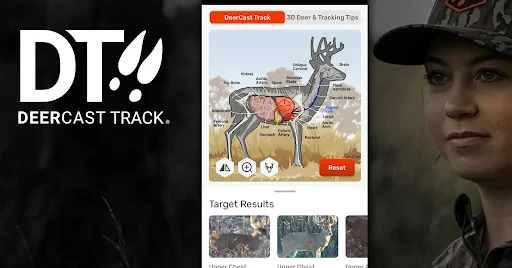
One of the standout features of DeerCast is its tracking capability. Whether you’re tracking your own movements or the patterns of your prey, the app provides an intuitive and easy-to-navigate interface. You can log sightings, track routes, and even manage your hunting calendar. It’s like having a digital hunting journal that keeps all your data organized and accessible.
That record-keeping is most valuable when I make it a habit. Logging a sighting soon after it happens is more useful than trying to reconstruct it days later, and noting a route can make it easier to review where I have already spent time. I would keep entries consistent and focused on details I will actually use; an overcomplicated journal quickly becomes another chore. The app can organize observations, but the quality of any pattern I notice still depends on what I choose to record.
Putting the tools into an ordinary routine
Imagine I finish work and have just enough time to hunt before dark. I could check the hourly outlook first, compare the available window with another evening, then use wind and terrain to decide whether a known location makes sense. If I go, I can log a sighting or route afterward while the details are fresh. The useful part is the sequence: forecast, location choice, time in the field, then a concise record that may help with later planning.
That routine also helps answer a practical question: do I need to enter a lot of information for the app to be worthwhile? I would begin with only observations that could affect a future decision, such as where I went and what I noticed. There is little value in turning every outing into paperwork. A small, regular record is more likely to remain useful than a detailed log I abandon after a few trips.
For hunters who share plans, marked locations and shared information can make coordination easier than describing a spot by landmarks or text alone. I would still be deliberate about which locations I share and with whom; a convenient sharing tool does not mean every personal spot should be widely circulated. The best use is practical coordination with people already involved in the same outing or planning process.
And hey, if you’re someone who loves to learn, DeerCast also offers a wealth of content from hunting experts. From tips and tricks to instructional videos, it’s a treasure trove of knowledge that can help you hone your skills and become a more successful hunter.
In the end, what truly sets this app apart is its community. DeerCast brings together hunters from all over, allowing you to share experiences, tips, and even a laugh or two. It’s more than just an app; it’s a community that shares your passion and enthusiasm for the great outdoors.
Where a specialized app beats a basic forecast
Compared with a conventional weather app, DeerCast makes more sense when I want weather to inform a hunting decision rather than simply know whether to bring a jacket. Its hourly view and hunting-oriented framing give me a reason to compare possible times, while mapping and records can keep planning details close to that forecast. The trade-off is that a broader weather app may be quicker and less involved for everyday errands or a simple check of rain and temperature.
It also suits a different routine from paper notes. A notebook can be dependable and distraction-free, and it does not ask me to organize observations in an app. DeerCast is more appealing if I want weather, locations, and records in one digital workflow. If I already have separate tools that I understand and use consistently, switching only makes sense if bringing those tasks together saves effort rather than adding another place to check.
Where it fits—and where it doesn’t
For an everyday scenario, imagine checking conditions before work because you have only a short window to hunt that evening. I would use the hourly forecast to compare that window with another day, then consider wind and terrain when choosing a familiar location. If I go, I can record what I saw afterward rather than trusting memory. The value is in connecting planning with follow-up, not in expecting an app to make the decision for me.
There are trade-offs. DeerCast is aimed at hunters, so it may be more involved than someone wants for a quick local forecast. If you mainly need broad weather information, a conventional weather app is likely the more direct choice. And if you prefer to plan entirely on paper or already use separate tools that suit your routine, switching is worthwhile only if the hunting-focused forecast and organization make your preparation easier. I would also avoid treating predicted movement as certainty; local conditions and careful judgement still matter.
Another limitation is that useful predictions do not erase the gap between a regional outlook and conditions at one stand. Wind can behave differently around terrain, and a forecast cannot tell me whether access is quiet or whether a particular location is appropriate that day. I would use the app to narrow choices, then rely on observation and common sense once I am planning the actual outing. Anyone hoping for a guaranteed answer about where deer will be is likely to be disappointed.
It is free to install, with in-app purchases ranging from about thirty to seventy-five dollars per item, so I would explore the basic experience before deciding whether any paid option is worth considering. The app is rated for Everyone 10+ and runs on Android 8.0 or later. Its current version is 4.3.3; it has an average rating of 4.6 from around 5,300 ratings, with about 1,900 written reviews and over 500,000 installs. Those figures suggest an established audience, but they cannot tell me whether its workflow will suit a particular hunter.
Who will get the most from it
DeerCast is the better fit for someone who hunts whitetail, wants weather interpreted for hunting decisions, and will actually use maps or keep notes over time. It is less compelling for a casual outdoor user who wants only a basic forecast, or for a hunter who expects a prediction to replace scouting and personal experience. I would start by checking a few real planning situations and see whether the hourly outlook changes a decision in a useful way. If it does, the app can earn a place in your routine; if not, a simpler weather tool may be enough.
I would also recommend it most to a hunter who enjoys reviewing outings and adjusting plans, rather than someone who wants an instant answer and rarely records anything. The forecast has a clearer role when paired with a repeatable routine: compare windows, consider a location, then note what happened. If that sounds like useful preparation rather than extra work, the app’s focus is a real advantage. If you hunt only occasionally or do not need hunting-specific context, its broader set of tools may be more than you want.
So, if you’re looking to take your hunting game to the next level, give DeerCast: Weather, Maps, Track a shot. It’s packed with features that every hunter will appreciate and use. Plus, it’s a great way to connect with others who share your love for hunting. Trust me, once you try it, you’ll wonder how you ever went hunting without it!
DeerCast: Weather, Maps, Track Frequently Asked Questions
Is DeerCast free to download, and are there optional purchases?
DeerCast is free to download, so you can try the app without paying upfront. It also offers in-app purchases, which may be relevant if you want access to additional features or content. Check the purchase details in the app before buying, and consider whether its hunting tools match what you need.
What is DeerCast and how does it enhance my hunting experience?
DeerCast is a specialized app designed for hunters to improve their hunting experience by providing accurate weather forecasts, maps, and tracking features. With real-time data and predictive algorithms, it helps hunters make informed decisions on when and where to hunt, increasing the chances of a successful outing.
How accurate are the weather predictions in DeerCast?
DeerCast uses advanced meteorological data and algorithms to provide highly accurate weather forecasts tailored for hunting. It takes into account various factors such as wind speed, temperature, and barometric pressure, offering hour-by-hour predictions that help hunters plan their activities effectively. However, like any weather app, it cannot guarantee 100% accuracy due to the unpredictability of weather changes.
Can DeerCast be used offline, and what features are available without internet access?
DeerCast offers limited offline functionality, allowing users to access previously downloaded maps and saved data. However, real-time weather updates and certain tracking features require an internet connection. It is recommended to download necessary maps and data before heading to areas with limited connectivity to ensure a seamless hunting experience.
Is DeerCast suitable for all hunting seasons and locations?
Yes, DeerCast is designed to be versatile and adaptable for different hunting seasons and locations. It provides tools and insights for various types of game and hunting conditions. Users can customize the app settings to suit specific hunting preferences, ensuring it remains a valuable tool regardless of the season or location.
Pros
- Accurate weather forecasts for hunters
- Detailed maps for tracking deer movements
- User-friendly interface and navigation
- Social features to connect with other hunters
- Customizable alerts for weather and deer activity
Cons
- Limited free features
- many require subscription
- Can drain battery with continuous GPS use
- Requires stable internet for real-time updates
- May be overwhelming for new hunters
- Ads present in free version
- Category
- Weather
- Version
- 4.3.3