Deepstash: Smarter Every Day!
- 4.78K
- 4.5
- Installs
- 5.00M
- Price
- Free

Screenshots
Analysis by Reviewed
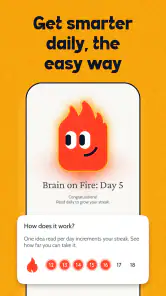
I like learning apps most when they help me turn a spare moment into a useful idea without pretending that a short read is the same as mastering a subject. Deepstash: Smarter Every Day! is built around that distinction: it presents knowledge and book-derived ideas in compact pieces, so I can explore a topic in a few minutes and decide what deserves more attention. It is an education app from Deepstash, and its strongest appeal is not a substitute for a course or a full book, but a low-friction way to keep curiosity moving.
That makes it a practical choice if you often save articles and then never return to them, or if a long reading session feels unrealistic on a busy day. I would approach it as a source of prompts and useful starting points, rather than a complete learning plan. Whether that trade-off suits you depends on how much depth, structure, and follow-through you expect from a learning tool.
What you want from a learning app
Quick discovery, not a full curriculum
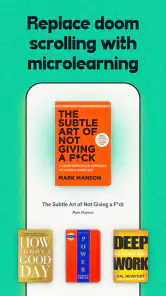
The central decision is whether you want a compact introduction or a thorough explanation. Deepstash is geared toward short-form learning: it gathers ideas into brief reading experiences that can fit between tasks. That format is convenient when I want to sample a subject, revisit a concept, or find a new angle without committing to a book-length read.
It is less suited to learning something that depends on a carefully ordered sequence of lessons. A short insight can give me a useful mental handle, but it cannot reliably provide all the background, exceptions, and practice needed for expertise. If I were learning a language, preparing for an exam, or building a technical skill, I would pair this kind of app with a structured course, textbook, or hands-on practice.
Ideas worth keeping, not just consuming
Brief content is easiest to enjoy when I have a small purpose for reading it. Before opening the app, I might choose a question such as how to give better feedback or why a habit keeps falling apart. That simple step helps me judge whether an idea is relevant instead of scrolling through interesting but disconnected fragments.
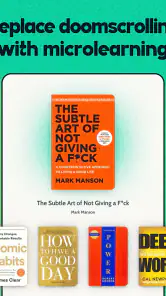
My most useful approach is to pause after a short read and write one sentence in my own words: what the idea means, and where I could try it. That turns passive browsing into a tiny learning loop. It is particularly helpful with book summaries, because a compressed version can point me toward a book I may want to read in full, but should not be mistaken for the experience of reading the whole argument.
A reasonable first look at the app
Deepstash has an average rating of 4.5 from around 190,000 ratings, and it has been installed over 5 million times. Those figures suggest that this style of bite-sized learning has broad appeal, though popularity alone cannot tell you whether the format matches your habits. The app is free to start, is rated for Everyone, and includes optional in-app purchases priced from $12.99 to $119.99 per item.
It first arrived on April 16, 2019, and version 32.8.0 is listed for devices running Android 7.0 or later. I would treat the free entry point as a chance to test how well the reading format fits my routine before considering a purchase. Since the in-app purchase range is wide, I would check the exact offer and its terms in the app rather than assume every paid option costs the same or unlocks the same things.
Where Deepstash earns a place in my routine
Small windows of time become usable
The clearest advantage is convenience. When I have a few minutes before an appointment, I can read one compact idea instead of opening a long article that I will have to abandon halfway through. On a commute, during a lunch break, or while waiting for a friend, a short piece can be a better fit than a full chapter.
There is a useful boundary here: I would not use it while driving or in any situation where reading competes with attention. But in a safe, quiet pause, the short format lowers the effort required to begin. That matters for people who are curious but have trouble finding a dedicated hour for reading.
A bridge between browsing and deeper study
For me, the best use is not to collect the largest number of ideas. It is to use a concise piece as a filter. If an idea feels immediately relevant, I can follow it up with a longer source, test it at work, or discuss it with someone. If it does not connect with anything I care about, I can move on without feeling that I abandoned a major commitment.
One practical workflow is to pick a single theme for a week, such as focus or communication, and read only with that theme in mind. Then I can compare ideas rather than letting a variety of topics blur together. The app’s short format makes this experiment manageable, while my own notes or a separate reading list can hold the ideas I want to investigate further.
Useful for people who need a nudge to start
Deepstash is a good fit for someone who wants a gentle entry into learning but does not yet know which books or subjects deserve attention. A short summary can make a topic feel approachable and help reveal whether I want more. It can also be handy for a reader returning to a subject after a long break, when a quick refresher is more appealing than restarting with a dense reference book.
I would be more cautious if I already have a strong reading routine and prefer uninterrupted arguments. The act of condensing ideas is convenient, but it can leave out the reasoning that makes an author’s conclusion persuasive. If I am evaluating a complex claim, I want the original context, not only the distilled takeaway.
Keep the value from evaporating
A real risk with any short-form learning app is mistaking exposure for progress. Reading several concise ideas can feel productive while leaving little behind. I try to counter that by choosing one item to revisit and asking what I would do differently because of it. Even a small action—changing how I prepare for a meeting, for example—gives a piece of knowledge a better chance of sticking.
Another helpful habit is to avoid opening the app with no intention when I am already tired or distracted. In that mood, fast content can become another stream to skim. A question, topic, or specific time limit gives the session a stopping point and makes the experience feel more like learning than endless browsing.
When another kind of resource is better
Books and long-form reading offer more context
If you want an author’s full chain of reasoning, a complete book or long-form article is the better choice. Deepstash can help me discover a title or remember a central idea, but summaries inevitably compress. They are most valuable as a doorway, not as evidence that I have absorbed every nuance or counterargument in the original work.
That distinction matters especially for subjects where details change the conclusion: health, finance, law, or technical decisions. I would use a short insight to generate questions, then consult reliable, current sources before acting. A bite-sized format is an invitation to explore, not a replacement for careful research.
Courses work better when sequence and practice matter
Compared with a structured online course, Deepstash is more suited to browsing and discovery than to a defined path from beginner to competent. Courses usually make more sense when I need lessons to build in order, exercises to check understanding, or feedback on a skill. Short readings can reinforce that work, but they cannot do all of it for me.
Likewise, a dedicated note-taking tool may be a better home for a personal knowledge system. I would not assume that reading alone will organize ideas into a searchable set of notes or connect them to my projects. If preserving and retrieving what I learn is the priority, I would keep a separate note or document and move only the most useful takeaways into it.
Attention and depth are the main trade-offs
The same compactness that makes the app easy to use can also make it easy to overconsume. A string of short insights may expose me to many topics without giving any one of them enough space to settle. If you prefer one carefully developed lesson over frequent snippets, a book, lecture, or course may feel more satisfying.
I would also skip it if I mainly want entertainment, a formal qualification, or a step-by-step training plan. Its educational value depends on how I use the ideas after reading. If I am unwilling to reflect, take notes, or seek fuller explanations when needed, the experience may remain pleasant but shallow.
Trying it without rebuilding your habits
Start with one real-life question
Switching to a new learning app does not have to mean abandoning books, podcasts, or saved articles. I would begin with a specific everyday problem—perhaps making a meeting more productive or staying focused on a task—and use a short session to look for relevant ideas. Afterward, I would keep one takeaway and ignore the pressure to turn every reading into a permanent collection.
This also gives you a fair way to judge the app. After a few sessions, ask whether it has helped you find an idea you actually used, introduced a subject worth exploring, or made learning easier to fit into your day. If the answer is no, the short format may not be the right match, and there is little reason to force it into your routine.
Be deliberate about paid options
The app can be tried without an upfront purchase, while in-app purchases range from $12.99 to $119.99 per item. Because that span is substantial, I would inspect the particular option presented and decide based on how often I use the app and what value it adds to my routine. I would not pay simply because a free session felt interesting; I would first see whether I return consistently and whether the content changes what I read, think, or do.
There is no need to replace a library card, a course subscription, or a favorite reading app just to try Deepstash. It works best as a complementary layer: a quick way to encounter an idea, followed by deeper reading or practical testing when the subject earns it. That keeps the app’s convenience while avoiding the expectation that short summaries should do every job.
My recommendation
I recommend Deepstash to curious readers who want a low-effort way to explore ideas in short sessions, especially if long books often feel hard to start. It is most useful when I arrive with a question, treat concise pieces as starting points, and carry one worthwhile insight into real life. The developer is Deepstash, and the app’s education focus comes through in that emphasis on accessible learning rather than formal instruction.
I would not make it my primary resource for deep study, verified high-stakes guidance, or skills that require practice and feedback. For those needs, a full book, a structured course, or an authoritative reference is a better fit. But as a modest daily prompt to read, reflect, and occasionally discover a subject worth pursuing, Deepstash earns a place on my phone. Its main strength is making the first step small; the lasting value still comes from what I do with an idea afterward.
Deepstash: Smarter Every Day! Frequently Asked Questions
What is Deepstash: Smarter Every Day!?
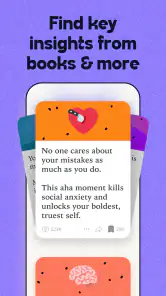
Deepstash is a learning and personal-growth app that presents ideas from books, articles, podcasts, and other sources in short, easy-to-browse summaries called “stashes.” You can explore topics such as productivity, psychology, health, business, and relationships, then save useful ideas to revisit later. It is designed for quick reading rather than replacing the original material or providing a complete, in-depth account of every source.
Is Deepstash free to use, or does it require a subscription?
Deepstash can generally be explored without paying, but the available features and content may be limited compared with its paid plan. A subscription may unlock additional reading, learning tools, or other premium benefits, depending on the current offer and your region. Check the app’s pricing and subscription terms before confirming a purchase, including the renewal period, trial conditions, and how to cancel through your app store.
How does Deepstash help me discover and remember ideas?
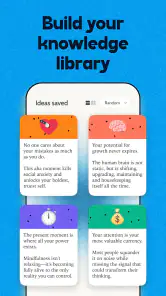
The app organizes bite-sized ideas into topics and collections, making it possible to browse casually or focus on subjects that match your interests. You can save ideas to your own stash for later reference, which is useful when you want to build a personal library of takeaways. The short format makes regular learning approachable, though remembering or applying an idea still depends on revisiting it and putting it into practice.
Does Deepstash provide full books, and can its summaries replace reading the originals?
Deepstash mainly offers concise ideas and takeaways rather than complete books. Its summaries can help you preview a subject, pick up a few useful concepts, or decide whether a longer source is worth exploring. However, brief extracts may leave out context, evidence, examples, or nuance found in the original work. If you need a thorough understanding, consult the cited source instead of treating a stash as a substitute.
What should I know about privacy and using Deepstash on my device?
As with most apps that personalize recommendations, Deepstash may collect information related to your account, preferences, and activity; the precise details can change as the service is updated. Review its privacy policy and the permissions requested during setup, and avoid adding sensitive personal information to saved notes or account fields. Availability, offline access, and specific features can also vary by device, app version, and subscription, so check the current store listing.
Articles Related to Deepstash: Smarter Every Day!
Clash of Clans Is Won Between the Battles
Its raids are quick; its community is a long-term project of coordination, teaching, rivalry, and shared responsibility—with all the friction that entails.
Android Auto Makes the Case for Quieter Car Software
The car interface is no longer judged by how much it can do, but by how quietly it helps. Android Auto shows what drivers now expect—and what still gets in the way.
MobiOffice: Transforming Mobile Productivity with Seamless Integration
MobiOffice: Word, Sheets, PDF is redefining mobile productivity with a surprising blend of functionality and innovation.
EA SPORTS FC™ Mobile Soccer: Redefining Mobile Sports Gaming
Dive into EA SPORTS FC™ Mobile Soccer, where immersive gameplay and strategic depth transform mobile sports gaming.
Pros
- Bite-sized summaries make useful ideas easy to fit into a busy day.
- Topics span areas such as productivity
- psychology
- and personal growth.
- A personalized feed can help surface ideas based on your interests.
- Saving ideas makes it easy to revisit useful insights later.
- A clean
- card-based layout is quick to browse on a phone.
Cons
- Short summaries may leave out nuance and important context.
- Some content and features may require a paid subscription.
- The feed can encourage browsing without sustained
- in-depth learning.
- Recommendations may feel repetitive if your interests are narrow.
- Many ideas are presented as summaries rather than original sources.

- Category
- Education
- Version
- 32.8.0