BoldVoice - Accent Training
- 381.00
- 4.7
- Installs
- 1.00M
- Price
- Free

Screenshots



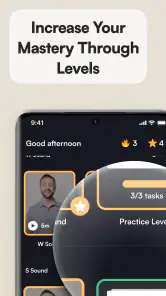
Analysis by Reviewed
I find pronunciation practice easiest to maintain when it fits into the day rather than demanding a special study session. That is the appeal of BoldVoice: it focuses on spoken English and American-accent coaching, making it relevant to people who want more confidence being understood at work, in class, or in everyday conversation. It is an education app from BoldVoice, and its emphasis is narrower than a general English course. That focus can be useful in a shared household, too, as long as each person treats practice as individual rather than assuming the app coordinates a group.
Making pronunciation practice work in a shared home
One device, different speaking goals
A realistic household use case is a person preparing for a video meeting while another family member is studying English for travel. They may both want clearer pronunciation, but they are unlikely to need the same practice. One may be working on sounds that affect professional introductions; the other may want to feel more comfortable ordering food or asking for directions. I would use BoldVoice as a personal practice tool for each learner, not as a shared lesson that everyone completes together.
That distinction matters because pronunciation is personal. Learners may have different first languages, speech habits, confidence levels, and priorities. A shared phone or tablet can make practice convenient, but it can also blur whose progress or preferences are being used. Before handing the device to someone else, I would make sure they understand how to return to their own practice and avoid treating another person’s activity as a model for their needs.
The app’s subject is specific enough to make a short practice session purposeful: you are working on how English sounds, especially in an American-accent context, rather than trying to cover every part of language learning at once. That is a strength if pronunciation is the obstacle you notice most. It is less useful as the household’s sole English-learning resource if different people need broad vocabulary, grammar, reading, or beginner instruction.
Keep practice separate from a general English lesson
I would pair pronunciation work with real language use rather than expect it to replace it. For example, someone preparing for an interview could practise saying a short introduction, then use that wording in a mock conversation with a friend. A learner preparing for a trip could rehearse a few useful phrases and then practise the whole exchange aloud with a family member. In both cases, the app can help focus attention on speech, while the other person supplies the unpredictable back-and-forth that a solo exercise cannot fully reproduce.
A useful habit is to choose one immediate speaking situation before opening the app. Instead of vaguely aiming to “sound better,” decide what you want to say more comfortably: your name, a work update, a question for a teacher, or a request at a shop. After practice, try the same wording in a natural conversation. This makes it easier to judge whether the lesson is helping communication, rather than simply making practice feel productive.
I would also resist correcting everyone else in the household. The goal is clearer, more confident speech, not turning family conversation into a pronunciation exam. If one person is practising, let them decide whether they want feedback. That small boundary keeps the tool supportive, especially for learners who already feel self-conscious about speaking English.
More From Our News Desk

Clash of Clans Is Won Between the Battles

Android Auto Makes the Case for Quieter Car Software

MobiOffice: Transforming Mobile Productivity with Seamless Integration

EA SPORTS FC™ Mobile Soccer: Redefining Mobile Sports Gaming

How Microsoft OneDrive Became a Mobile Productivity Giant

How Google Translate Breaks Language Barriers Effortlessly
Set up practical boundaries before sharing a device
When a device is used by several people, I would agree on simple ground rules first: each person should open the app for their own session, avoid changing another learner’s settings or activity, and put the device back where it belongs afterward. These are ordinary household habits, not special app controls. They reduce confusion without assuming that the app offers family profiles, shared dashboards, or parental management features.
Privacy is part of that conversation. Speech practice can feel more personal than reading a vocabulary list because learners are listening to their own voices and working on sounds they may find difficult. I would avoid asking someone to demonstrate a lesson or share a result unless they are comfortable doing so. In a family setting, especially with a teenager or an adult who is still building confidence, treating practice as private can make it easier to keep going.
If several people want to use the same device, decide whose account or session is active before starting. Don’t assume that switching users will happen automatically or that one person’s progress will remain separate without checking how the app is currently set up. For a household where clear separation is essential, individual devices or accounts may be a more comfortable arrangement than passing one phone around.
There is also a practical trade-off: spoken practice needs a moment when the learner can talk without feeling rushed or interrupting someone else. A quiet corner, a walk where speaking aloud feels natural, or a few minutes before a meeting may work better than trying to practise beside a television or during a busy family meal. The app can fit into a routine, but the household still has to make room for concentration.
Coordinate gently, without turning it into a contest
Coordination works best when it is about timing and encouragement rather than comparing who sounds more native. A household could agree that one person uses the device after breakfast and another later in the evening, or simply ask before borrowing it. That kind of arrangement is more realistic than expecting every learner to practise at the same time or follow an identical routine.
For a parent supporting a young learner, I would let the learner choose a small, practical goal and ask what they want help with after a session. For adult relatives, I would offer help only when invited. Accent work can touch on identity, and an accent is not a flaw that must be erased. The most useful standard is whether someone can express themselves more clearly and comfortably in the situations that matter to them.
One non-obvious way to make shared practice more useful is to bring a real communication problem into the session, then test the result outside it. If a person often needs to repeat a particular word in meetings, they can focus their attention on that word and later notice whether colleagues understand it more readily. The point is not to claim a guaranteed outcome; it is to connect practice to a concrete moment the learner cares about.
Another helpful routine is to keep a short list of phrases that recur in daily life. A household member might choose a greeting used at work, a sentence for a class discussion, or a common question asked on the phone. Returning to familiar phrases can reveal whether pronunciation feels more comfortable over time, while also keeping practice grounded in the person’s own needs instead of an abstract idea of accent perfection.
Age, expectations, and trust
BoldVoice is rated for Everyone, so its age context is broad. That does not mean every child will find accent coaching suitable or enjoyable. A younger learner may need a parent or teacher to explain why they are practising and to make sure the experience feels encouraging rather than corrective. I would frame it as learning to communicate with confidence, not as an instruction to hide the way someone naturally speaks.
For adults, the same care applies in a different way. Someone may be learning English for a new job, a move, study, or social confidence. They should be able to set their own aim and decide how much attention to give pronunciation. If the main need is understanding fast conversation, building vocabulary, or learning grammar from the beginning, a broader course or conversation-based practice may be a better first step.
The app is free to install, but in-app purchases range from $9.99 to $199.99 per item. In a shared household, I would make sure everyone knows that before treating it as a cost-free resource for a group. The free starting point may be enough to see whether focused pronunciation practice suits a learner, while any purchase decision should belong to the person who will use it or the adult responsible for the device. I would not assume that one purchase automatically covers multiple people.
BoldVoice has a 4.7 average from around 12,000 ratings, and it has passed a million installs. Those figures suggest that many people have chosen it, but they do not tell me whether it will match a particular learner’s accent, goals, or preferred teaching style. I would use the initial experience to decide whether the app’s focused approach feels helpful, rather than treating popularity as proof that every household member needs it.
Where it fits among pronunciation alternatives
Compared with a general language-learning app, BoldVoice is more clearly aimed at spoken pronunciation and American-accent coaching. That can save time for a learner who already knows what they want to say but wants to feel more at ease saying it aloud. By contrast, a broad English course is often a better fit when someone needs a structured mix of vocabulary, grammar, reading, and listening. The choice depends on the bottleneck: spoken clarity or wider language foundations.
Compared with a conversation partner, a focused app offers a more private place to practise without the pressure of keeping a live exchange going. But a person cannot replace the give-and-take of talking with a real listener. A tutor or conversation group may be preferable when the learner wants immediate human feedback, spontaneous questions, or help adapting to different speaking styles. I would see the app as one part of a speaking routine, not a substitute for every kind of practice.
There is a further trade-off for anyone with a strong preference for their own regional or cultural speech. The American-accent focus will make sense for learners who want that target, but not for everyone. If your goal is to maintain another variety of English or communicate effectively without changing your accent, choose lessons and feedback that respect that goal. Clear speech is not the same thing as sounding like one particular speaker.
The app was released on June 16, 2021, and its current version is 4.8.2. It requires Android 8.0 or later. Those details matter when choosing a household device: an older phone may not meet the minimum system requirement, so I would check compatibility before planning a shared routine around it. On a supported device, keeping the app updated is a sensible way to use the current release, though the best test remains whether its practice suits the learner.
My household verdict
I would recommend BoldVoice to a household member who already communicates in English and wants focused help with pronunciation, particularly when an American-accent target fits their personal or professional aims. Its education focus makes it easier to understand what kind of practice it is meant to support, and its broad age rating leaves room for different learners, provided expectations are appropriate and practice stays encouraging.
I would skip it as the only learning tool for a beginner who needs a complete English curriculum, for someone who mainly wants live conversation, or for a learner who has no interest in the American-accent direction. It may also be a poor fit when a family expects one shared device to keep everyone’s learning neatly coordinated without first checking account and session boundaries. In those cases, a general course, tutor, conversation group, or separate setup may be more practical.
My advice is to start with one person, one real speaking goal, and a quiet moment to practise. If the learner finds the approach comfortable, they can build it into a routine and bring the phrases into everyday conversation. If they feel judged, distracted, or simply need a different kind of English support, there is no reason to force it. For the right learner, BoldVoice is a focused option for making spoken English feel more deliberate and confident, while the household’s role is to give that practice room without turning it into a performance.
BoldVoice - Accent Training Frequently Asked Questions
What is BoldVoice, and who is it designed for?
BoldVoice is a speech-training app focused on helping users improve English pronunciation and develop a clearer, more confident speaking style. It is intended for non-native English speakers and others who want structured practice with sounds, stress, rhythm, and intonation. The app is designed for individual learning, so it can suit people preparing for work, study, interviews, presentations, or everyday conversations.
How does BoldVoice’s accent training work?
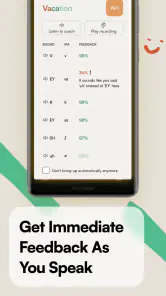
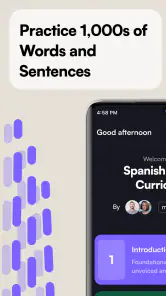
The app offers guided lessons and speaking exercises that ask you to listen, repeat, and practise specific English sounds and speech patterns. Depending on the lesson, you may work on pronunciation, word stress, sentence rhythm, or intonation. BoldVoice also uses speech-analysis features to give feedback on your practice. Results can vary with the exercise and recording conditions, so it is best treated as a practice aid rather than a substitute for a qualified speech coach.
Is BoldVoice free to use, or does it require a subscription?
BoldVoice may let you explore or try some of its content before requiring payment, but access to the full lesson library and features can depend on the current subscription options shown in the app. Pricing, trial availability, and renewal terms may vary by region or change over time. Before starting a trial or subscribing, check the purchase screen for the cost, billing period, cancellation rules, and whether the subscription renews automatically.
Do I need special equipment or an internet connection to use BoldVoice?
You generally need a compatible Android or iOS device, a working microphone, and a quiet place to record your voice. Headphones are optional, but they can make it easier to hear the model pronunciation without disturbing others. An internet connection may be needed to download lessons, sign in, or use online features. Check the app’s current store listing for device requirements, and allow microphone access if you want to complete speaking exercises.
Can BoldVoice eliminate my accent or guarantee fluent English?
No pronunciation app can guarantee that you will eliminate an accent or become fluent, and having an accent is not inherently a problem. BoldVoice can provide structured practice that may help you speak more clearly and notice pronunciation patterns, but progress depends on regular effort, your goals, and the feedback you act on. It focuses on spoken English practice; it does not replace broader language study, conversation with other speakers, or professional support when needed.
Pros
- Short
- focused lessons make it easy to practice in small daily sessions.
- Speech feedback helps highlight sounds that need more work.
- Video demonstrations show how instructors form words and sounds.
- Lessons cover practical situations
- including work and everyday conversation.
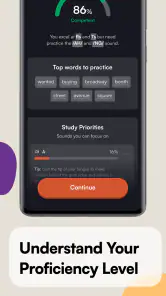
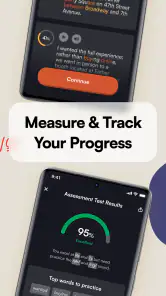
- Progress tracking can help you notice improvements over time.
Cons
- Many lessons and features require a paid subscription.
- Speech recognition may struggle with background noise or unclear recordings.
- The app focuses mainly on American English pronunciation.
- Some users may find repeated drills less engaging than conversation practice.
- Accent coaching cannot replace feedback from a live conversation partner.

- Category
- Education
- Version
- 4.8.2