Beanstack Tracker
- 2.02K
- 4.7
- Installs
- 500.00K
- Price
- Free

Screenshots

Analysis by Reviewed
Reading more often sounds simple until real life gets in the way. A book gets started, a few busy days pass, and the original intention disappears. Beanstack Tracker takes a practical approach to that problem: it turns reading into something you can record, follow, and connect with challenges. I found it most useful not as a replacement for a library or reading app, but as a lightweight layer of accountability around the books I already wanted to read.
As an education app from Zoobean, Inc., it is aimed at readers, families, schools, and library communities rather than only serious book collectors. It is free, rated for Everyone, and available for devices running Android 8.0 or later. The current version is 6.1.5, and the app has built a 4.7 average from around 20K ratings, with over 500K installs. Those figures suggest a well-established tool, but the real question is whether its tracking style fits the way you read.
How Beanstack Tracker fits into a normal reading routine
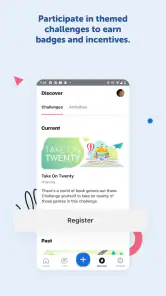
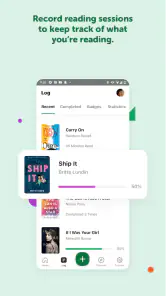
The basic workflow is easy to understand. You choose a reading activity, record progress as you go, and use the app’s challenge structure to keep your goal visible. The important distinction is that Beanstack Tracker is not primarily trying to make reading feel like a game with complicated mechanics. Its value comes from reducing the distance between deciding to read and remembering to acknowledge that you did.
I would begin by setting one modest target rather than trying to create an ambitious reading identity overnight. A short daily session, a number of books, or a challenge connected with a school or library is easier to maintain than an unrealistic promise. Once the goal is active, the app works best when logging becomes part of the same moment as reading: after closing a book, during a commute, or before putting the phone away at night.
That timing matters. If I wait several days and try to reconstruct every session, tracking becomes a chore. If I record the activity immediately, the process feels almost invisible. My most reliable routine would be to keep the app available on the same device I use for reading reminders, then make one quick entry after a chapter or reading session. The point is not to turn every page into administration. It is to create a small, repeatable finish line.
Families can use the same approach differently. A parent might treat the app as a shared check-in rather than a surveillance tool: a child reads, the activity is logged, and the conversation focuses on what was enjoyable or difficult. That makes the tracker a prompt for discussion. It is less useful if adults turn every missed entry into a correction, because the habit then becomes associated with pressure instead of books.
For students, the strongest use case is consistency during a long assignment or reading program. A challenge can make a distant goal feel more concrete, especially when motivation drops halfway through. I would still keep school requirements and personal notes somewhere else if detailed analysis is important. Beanstack Tracker supports the habit of recording reading, but it should not be mistaken for a full academic journal or citation manager.
More From Our News Desk

Clash of Clans Is Won Between the Battles

Android Auto Makes the Case for Quieter Car Software

MobiOffice: Transforming Mobile Productivity with Seamless Integration

EA SPORTS FC™ Mobile Soccer: Redefining Mobile Sports Gaming

How Microsoft OneDrive Became a Mobile Productivity Giant

How Google Translate Breaks Language Barriers Effortlessly
What to check before committing to a challenge
Before joining or creating a reading routine, I would look closely at what the activity actually asks me to record. Some people prefer counting books, while others read long novels, essays, comics, or short stories in mixed patterns. A book-count goal can feel unfair when one title takes weeks and another takes an afternoon. In that situation, a time-based or session-based approach is more honest, if the available challenge supports it.
I would also check whether the challenge is personal or connected to an organization I already use. Beanstack Tracker can make more sense when it is part of a library, school, or community reading program, because the challenge gives the tracking a shared purpose. On its own, the app may feel less compelling to someone who only wants a private list of titles. A simple notes app or a dedicated reading journal could be faster for that narrow need.
The age rating of Everyone makes the app approachable for households, but that does not mean every setup will suit every child automatically. An adult should still decide how much independence is appropriate, how goals are discussed, and whether the child should be encouraged to log alone or together with a parent. The most productive arrangement is usually the one that keeps the reader in control of the book choice while using the app for structure.
One useful habit is to define what counts as success before starting. For me, success would mean maintaining a realistic reading rhythm, not filling every available challenge or producing impressive totals. That distinction prevents the tracker from rewarding speed at the expense of understanding. It also makes it easier to pause a goal without feeling that the entire reading plan has failed.
Settings and choices that deserve attention
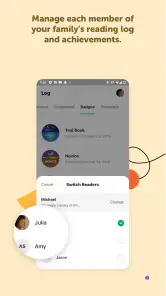
The first settings worth checking are the ones that affect identity, activity, and challenge participation. Beanstack Tracker is more valuable when the profile reflects the reader who will actually use it. In a family, I would take care to select the correct profile before recording anything. A misplaced entry can make progress confusing and undermine trust in the history, especially when several people share a device.
I would also review the way notifications and reminders fit into my day rather than accepting every prompt automatically. A reminder at a useful transition, such as after dinner or before bedtime, can support a routine. A reminder during work, school, or another focused activity quickly becomes background noise. The best setting is not the one that produces the most alerts; it is the one that appears at the moment when logging is easiest.
Another practical check is the challenge selection itself. Joining too many activities can scatter attention across several targets and make the home experience feel busy. I prefer one main challenge and, at most, a secondary goal with a different purpose. For example, one could encourage regular reading while another supports a seasonal or community event. Keeping those roles separate makes progress easier to interpret.
Because the app is free, it is easy to try without a financial commitment. That makes experimentation worthwhile: I can test a small goal, see whether the logging rhythm feels natural, and adjust before building a larger routine. Free access is especially helpful for families and classrooms, although the absence of a price should not be confused with zero effort. The real cost is attention, and an overly detailed routine can still become tiring.
I would also spend a few minutes deciding how precise my entries need to be. If the purpose is simply to maintain momentum, quick and consistent logging is better than perfect detail. If the purpose is to participate in a formal reading program, accuracy matters more. This is one of the app’s central trade-offs: the more information I choose to enter, the more useful the record may become, but the more likely I am to abandon the habit if every session feels like paperwork.
Faster patterns for people who dislike logging
The fastest pattern is to attach tracking to an existing action. I would not open Beanstack Tracker at random and hope motivation appears. Instead, I would log immediately after finishing a planned session, when the title and activity are still fresh. This avoids the common failure where several reading sessions blur together and the user either guesses or skips them.
A second pattern is to use a weekly reset. At the start of the week, I would choose a small number of reading opportunities that are genuinely available, such as a few pages before sleep or a quiet weekend block. At the end of the week, I would review the challenge progress and adjust the next week rather than judging the previous one. This turns the app into a planning aid without making it the center of the reading experience.
For households, a shared check-in can be more efficient than separate reminders. Each reader can log their own activity, then the family can briefly compare progress at a regular time. That approach reduces interruptions and gives children a chance to talk about books without making the app feel like a reporting system. It also helps adults notice when a goal is too difficult or when a reader has lost interest in the selected challenge.
Experienced users should resist the temptation to chase every visible milestone. The strongest workflow is usually boring: one clear goal, one reliable logging moment, and a short review once a week. If I were helping a friend set it up, I would recommend starting with the smallest routine that could survive a busy month. Once that pattern feels automatic, adding another challenge becomes a deliberate choice rather than a burst of enthusiasm.
There is also a useful distinction between tracking progress and choosing books. I would use Beanstack Tracker to support the first task, but I would not expect it to solve the second. If I am stuck deciding what to read, I would turn to a librarian, a trusted recommendation source, or friends. The app becomes more effective when the book-selection problem is handled elsewhere and the tracker is left to do what it does best: keep the chosen activity visible.
Where the app is strong, and where it reaches its limits
Beanstack Tracker’s main strength is its focus. It gives reading goals a place to live without demanding that the reader become a data analyst. That makes it a good fit for people who need a nudge to stay consistent, children who enjoy visible progress, and participants in organized reading programs. The challenge format can also make a solitary habit feel connected to a wider community when the reader is already part of one.
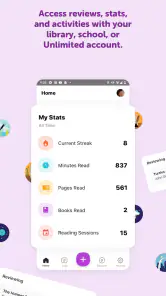
Its limitations become clearer for readers who want deep cataloging. Someone looking for detailed metadata, extensive personal annotations, advanced statistics, or a highly customizable digital bookshelf may prefer a specialized reading database. Likewise, a person who only wants to save a list of titles may find a basic notes tool quicker. Beanstack Tracker is strongest when the goal itself matters more than building a permanent archive of every book.
Logging can also become friction when reading habits are irregular. A reader who moves between many books, borrows titles briefly, or reads in scattered bursts may struggle to keep the record tidy. The app can encourage consistency, but it cannot create time or interest. If the challenge starts making reading feel like a duty, I would simplify the goal or step away from tracking for a while.
Another trade-off is motivation. Visible progress can encourage a reluctant reader, but it can also tempt a competitive user to rush through easier material. I would treat the numbers as reminders, not as a quality score. A slow, absorbing book should not feel like a poor choice simply because it advances a challenge less quickly than several short titles.
Compared with a paper reading log, the app offers more immediate structure and less risk of losing the record, but paper can be calmer and more personal. Compared with a general habit tracker, Beanstack Tracker is more directly shaped around reading challenges and reading activity, while a general tracker may handle many kinds of habits in one place. Compared with a full book database, it is likely to feel lighter and more approachable, but less satisfying for someone who wants exhaustive organization.
A realistic day-to-day example
Imagine a parent whose child has stopped reading regularly after the school term becomes busy. Instead of setting a large monthly target, the parent chooses a manageable challenge and agrees on a short reading window after dinner. The child reads, opens the app with the parent nearby, and records the session. On difficult evenings, the family keeps the conversation focused on the book rather than treating a missed entry as a failure.
After a week, the parent notices that the child reads more willingly on nights when the book was chosen independently. The next adjustment is not a stricter target; it is giving the child more control over the titles while keeping the same check-in. That is the kind of insight the app can support when it is used as a mirror for habits rather than as a scoreboard. The challenge provides structure, but the family still makes the important decisions.
An adult reader could use a similar pattern during a long commute or a demanding project. The goal might be to protect a few sessions each week, with logging completed immediately afterward. If work disrupts the routine, the reader can reduce the target instead of abandoning the entire challenge. The app is most helpful here because it makes the intention concrete without requiring a complicated productivity system.
Who should use it and who should choose something else
I would recommend Beanstack Tracker to readers who benefit from visible goals, families looking for a gentle shared routine, and anyone taking part in a library or school reading challenge. It is also a sensible starting point for someone who has tried to read more but keeps losing track of the intention. The free price and Everyone rating make it easy to introduce in a household, while the established user base gives it the feel of a mature education tool rather than an experiment.
I would steer a different reader elsewhere if their priority is a detailed personal library, sophisticated book discovery, or extensive notes about every title. A paper journal may be better for someone who dislikes screens during reading. A general habit app may be more convenient for a person who wants reading tracked alongside exercise, study, and other routines. The right choice depends on whether the reader needs challenge-based accountability or a broader organization system.
I would also avoid making it the sole measure of a child’s reading progress. A record can show that an activity was logged, but it cannot fully show comprehension, enjoyment, or whether the book was a good match. Adults should combine the tracker with conversation and observation. That small limitation is important: Beanstack Tracker can support a reading culture, but it cannot replace one.
My verdict after settling into the routine
After looking at the app as a daily tool rather than a one-time download, I see its appeal in its restraint. Beanstack Tracker does not need to turn reading into a complex project. Its best workflow is a simple loop: choose a realistic challenge, read at a repeatable time, record the activity while it is fresh, and review progress without becoming obsessed with totals.
The app will not satisfy every reader, and its challenge format may feel unnecessary if a plain list is all you want. Still, for families, schools, library participants, and adults who need a little structure, it offers a useful middle ground between a paper log and an elaborate book database. Its real strength is making a good reading intention easier to repeat.
My final recommendation is to start small and judge it by whether reading becomes more regular, not by how many goals appear on the screen. If the reminders, profile choices, and challenge setup support that habit, Beanstack Tracker is worth keeping. If recording begins to compete with the pleasure of reading, simplify the routine or choose a quieter alternative. Used with that balance, this education app is a practical companion for building a reading habit that can survive ordinary busy days.
Beanstack Tracker Frequently Asked Questions
Is Beanstack Tracker suitable for young readers and families?
Beanstack Tracker is an education app intended to support reading habits through challenges and tracking. Children, parents, students, and other members can use it when their school, library, or organization participates. Families may find it helpful to check with the organization first, since access and available activities depend on its Beanstack program. The app’s content rating is Everyone.
What does Beanstack Tracker help readers do?
Beanstack Tracker is designed to help users build reading habits by recording reading and taking part in challenges. Depending on the program, participants can follow their activity and progress toward goals or milestones. It is most useful when a school, library, or organization has set up a program for the user, because the activities and tracking options are shaped by that program.
What devices and operating systems can run Beanstack Tracker?
Beanstack Tracker is an education app for recording reading and challenge activity on a mobile device. Before downloading, check that your device meets its minimum operating-system requirement: iOS 8.0 or later. Keeping the app and your device’s software up to date can help you use the current version and access your organization’s Beanstack program smoothly.
Do I need to use Beanstack Tracker every day to benefit from it?
Daily use is not required to make use of the app. Its purpose is to help you build reading habits through challenges and tracking, so you can log activity in a way that suits your schedule and the program you have joined. Regularly recording reading can make it easier to follow your progress, while the goals and participation expectations are set by your school, library, or organization.
What is Beanstack Tracker, and who is it designed for?
Beanstack Tracker is a reading and activity-tracking app connected to participating schools, libraries, and organizations. It allows children, parents, students, and other members to record books, minutes, pages, or activities, depending on the program. Before downloading, check whether your school or library uses Beanstack, because most features require an organization-provided account or access code.
Pros
- Makes tracking reading progress simple and motivating.
- Supports reading challenges with clear goals and milestones.
- Works well for families managing multiple reader profiles.
- Barcode scanning can quickly add books to a reading list.
- Provides useful activity history for reviewing past reading.
Cons
- Some libraries or schools may not support all Beanstack features.
- Account setup can feel lengthy for first-time users.
- Challenge notifications may become repetitive over time.
- Book details and recommendations can occasionally be incomplete.
- Most useful features depend on an organization-provided account.
- Category
- Education
- Version
- 6.1.5