Atlas Earth - Buy Virtual Land
- 22.36K
- 4.6
- Installs
- 1.00M
- Price
- Free

Screenshots
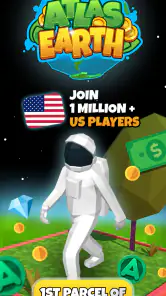
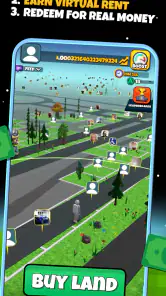

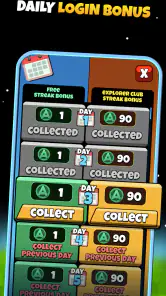
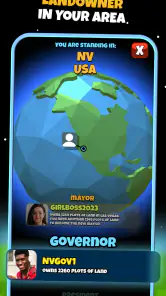
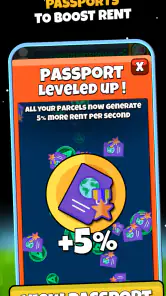

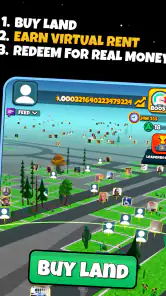
Analysis by Reviewed
I’d approach Atlas Earth as a map-based pastime, not as a side-income plan. The appeal is the little loop of choosing a place, collecting virtual property and seeing what happens over time; the important distinction is that the land is digital, not a deed to real estate. If you enjoy location-based games and can treat any earnings as a bonus, it may be an entertaining way to fill a spare moment. If you’re looking for dependable income, I’d choose something else.
Who this kind of map game suits
Atlas Earth is a free finance app from Atlas Reality, Inc., though it includes in-app purchases ranging from $1.99 to $399.99 per item. That spread makes it especially important to decide your spending limit before you start. The app is rated Mature 17+, so it isn’t a casual option for younger players, and anyone sharing a device should keep that age rating in mind.
I can see it working best for someone who likes checking a map, making small collecting decisions and returning later to see progress. It is less suitable if you dislike waiting for gradual rewards, prefer games with a clear finish, or expect cash earnings to compete with a job or a savings plan. For ordinary personal finance, a budgeting or savings app gives more useful control over money; Atlas Earth is better understood as entertainment with a financial theme.
A practical way to approach the first session
When opening the app, I’d first get familiar with the map and the way virtual parcels relate to real places, then decide whether the basic collecting loop is enjoyable before spending anything. That order matters: a purchase can make progress feel faster, but it does not make the experience a sound investment. I’d also check the current in-app purchase prompt carefully rather than assuming every parcel or reward uses the same route.
A realistic routine might be to open the app while waiting for a bus, look over nearby locations, make a choice using the game’s available currency, and close it until the next convenient break. Later, rent collection gives you a reason to return, but I would treat those check-ins as part of the game rather than a task that deserves constant attention. The useful trade-off is simple: frequent checking may make the loop feel more active, while occasional visits keep it from taking over your day.
What happens between play and payout
The phrase “earn” can make people wonder whether rewards arrive as ordinary cash automatically. In practice, I’d think of the process as a sequence: acquire virtual land, let the game’s rent mechanic build, then decide whether to reinvest or pursue a cash-out option. Those are separate decisions, and the balance shown in a game should not be treated as money already in your bank account. Before planning around a payout, read the in-app requirements and options carefully.
There is also a handoff between the game’s map and the real world. Seeing a parcel associated with a familiar location can make ownership feel more concrete, but it does not change what you own: a position in the app’s virtual system. That distinction is easy to lose when the map resembles a place you visit. I’d enjoy the geographic connection without treating it as a claim on the actual property.
More From Our News Desk

Clash of Clans Is Won Between the Battles

Android Auto Makes the Case for Quieter Car Software

MobiOffice: Transforming Mobile Productivity with Seamless Integration

EA SPORTS FC™ Mobile Soccer: Redefining Mobile Sports Gaming

How Microsoft OneDrive Became a Mobile Productivity Giant

How Google Translate Breaks Language Barriers Effortlessly
Atlas Earth has attracted a substantial audience: it has over a million installs, an average rating of 4.6 from around 242,000 ratings, and about 22,000 written reviews. It launched on November 16, 2021, and version 1.81.5 supports Android 8.0 and later. Those figures suggest an established app rather than an untested experiment, but popularity alone cannot tell you whether its reward pace or spending model will suit you.
Ever dreamed of owning a piece of the world? Well, with the Atlas Earth app, you can get pretty close! This nifty app lets you buy virtual land and become a digital landowner. Intrigued? Let’s dive into the nitty-gritty of how it all works and whether it’s worth your time.
Step into the World of Virtual Real Estate
So, what’s the deal with Atlas Earth? Essentially, it’s a virtual real estate platform that allows you to purchase parcels of land using in-game currency. It’s kind of like playing Monopoly, but with real-world locations. You can check out maps, scope different areas, and decide where you want to plant your digital flag. The app provides a fun and engaging way to learn about real estate and geography while interacting with fellow landowners.
How It Works
Starting your journey in Atlas Earth is pretty straightforward. Once you download the app, you’re greeted with a user-friendly interface that guides you through the process of buying your first plot of land. You earn rent over time, which you can reinvest into more properties or cash out. They’ve gamified the whole experience, making it feel rewarding whether you’re actively playing or just checking in occasionally.
The app offers a range of locations to choose from, each with its own level of value and potential for rent generation. You can literally buy land in your own city or explore new territories across the globe.
Why You’ll Love It
What makes Atlas Earth stand out is its simplicity and the thrill of owning digital land. It doesn’t matter if you’re a real estate mogul or a newbie; the app caters to all levels. Plus, the sense of community is a huge bonus. You can join forces with other users, participate in events, and even compete for the top spot on the leaderboards.
Another cool feature is the augmented reality aspect. You can see your land in the real world through your phone’s camera, adding a layer of immersion that makes the experience more tangible.
Things to Consider
While Atlas Earth is loads of fun, it’s worth mentioning that it’s not a get-rich-quick scheme. The earnings are modest, and the primary appeal lies in the entertainment and educational value rather than financial gain. Moreover, like any app involving real money, it’s essential to proceed with caution and set limits on your spending.
Also, the app is still relatively new, which means there might be occasional bugs or glitches. However, the developers seem committed to improving the app continuously, so expect things to get smoother over time.
Make the map part of a routine, not an obligation
One small but useful way to keep the experience in perspective is to attach it to a break you already take. I might check the map while waiting for coffee or after finishing a commute, rather than opening it repeatedly to see whether a balance has changed. That keeps the game’s slow accumulation from turning into a daily chore. It also makes it easier to judge whether I actually enjoy choosing parcels, rather than simply chasing a number.
If you travel around your own area, the map can give you a playful reason to notice places you normally pass without thinking about them. I’d browse only when safely stopped, though; looking at a phone while walking through busy streets or driving is not worth a virtual parcel. The location theme is most enjoyable as a way to connect a game with places you already know, not as a reason to detour or take risks.
There is a practical choice between buying near home and exploring elsewhere. Familiar locations can make a collection feel personal and easy to revisit on the map, while distant spots may appeal if you enjoy filling in a broader digital map. Neither choice changes the basic fact that the property is virtual. I’d choose based on what makes the collection satisfying to look at, not on an assumption that a real-world address guarantees better financial results.
Spend only when the entertainment earns it
Because purchases are available at very different price points, it helps to separate the urge to progress from the question of value. Before paying, I’d ask whether I would still want the purchase if the app’s rewards never became meaningful to my personal finances. If the answer is no, I’d stick with the free route. This is a useful test for any game with a money-related theme: buy only for enjoyment you can afford, not because a projected return seems certain.
I’d also avoid treating a larger purchase as a shortcut to understanding the game. A new player may not yet know which parts of the routine they enjoy, how often they will return, or whether the map itself holds their interest. Spending time with the basic loop first gives a better basis for deciding. The range of purchase options makes that pause more important, not less.
Another point to keep in mind is the difference between a displayed game balance and a usable payout. The path from collecting rent to cashing out involves choices and in-app requirements, so it is sensible to read those screens when you reach them and before you make plans around the result. I would not count a virtual balance toward rent, bills, or savings goals. If your main aim is to improve your finances, a dedicated budgeting tool or a conventional savings account is a more direct fit.
How it compares with other money apps
Atlas Earth sits in an unusual corner of finance: it borrows the language of rent and ownership but behaves more like a casual collecting game than a tool for managing a household budget. A budgeting app helps you track spending and make decisions about real money. A savings product is designed around putting actual funds aside. This app’s draw is the map, the gradual collection, and the possibility of rewards—not financial planning features.
Compared with a standard mobile game, the virtual-property theme gives each choice a link to geography and a longer-term collecting goal. That can make brief sessions feel more purposeful than tapping through a game with no persistent map. The trade-off is that progress can feel slow, and the finance framing may encourage expectations a conventional game would not. I’d recommend it to someone who enjoys location-based collecting and understands that the economic language is part of the game, not a substitute for investing.
It is also not the right choice for anyone who wants guaranteed returns, a clear payout schedule, or a hands-off way to earn meaningful income. For those goals, I’d look elsewhere and compare options designed explicitly for personal finance. If you are curious about Atlas Earth, try it as entertainment first and let the actual experience—not the idea of future earnings—decide whether it deserves a place on your phone.
What to expect before sticking with it
New players often want to know whether they need to spend money to make the app worthwhile. I’d say no: the first question is whether you enjoy the map and collecting loop without paying. Purchases are optional, but the presence of paid options means it is worth setting a personal limit before browsing them. The app is free to start, not a promise that every route through it will be free.
People also wonder whether they can treat it as a passive earner. The rent mechanic does give the experience a gradual, return-later quality, but I wouldn’t describe it as reliable passive income. The amount of attention and any money you put in should make sense even if the financial result stays modest. That expectation protects the fun: you can check on your collection without feeling that each visit must produce a worthwhile return.
As for who should skip it, I’d point to anyone under the app’s age rating, anyone uncomfortable with in-app purchases, and anyone who needs a dependable source of income. It may also frustrate players who want immediate progress or a definite ending. A person who enjoys maps, small decisions, and long-running collections is more likely to appreciate the format than someone looking for a fast-paced game or a serious finance tool.
In conclusion, if you’ve ever fantasized about dipping your toes into the world of real estate without the hefty price tag, Atlas Earth is a fantastic way to start. It’s educational, engaging, and honestly, just plain fun. So, go ahead, give it a whirl, and let your inner land baron shine!
Atlas Earth - Buy Virtual Land Frequently Asked Questions
Who develops Atlas Earth, and what kind of app is it?
Atlas Earth is a finance app developed by Atlas Reality, Inc. It combines virtual land ownership with game-like features, giving users a way to explore a digital economy through the app. Its appeal may depend on whether you enjoy collecting virtual assets and checking in on an ongoing app experience, rather than using a conventional finance tool.
What age rating does Atlas Earth have, and what should parents consider?
Atlas Earth is rated Mature 17+, so it is intended for adults and older teens rather than young children. Parents and guardians should consider that rating before allowing a younger person to download it. The app also has optional in-app purchases, making it sensible to discuss spending limits and expectations before use.
What is Atlas Earth, and is it suitable for casual players?
Atlas Earth is a finance app built around virtual land ownership. Its store summary describes a play-for-fun experience where users can collect rent by owning virtual land and get cashback. The idea is easy to understand, but players should be comfortable with a game-like economy and keep expectations measured rather than treating it as a guaranteed source of income.
What is Atlas Earth and how does it work?
Atlas Earth is a virtual real estate game that allows users to purchase and own virtual land parcels mapped to real-world locations. By buying land, users can earn virtual rent and participate in a unique digital economy. The game integrates location-based services to give players a realistic experience of owning properties in a virtual world.
Can I earn real money with Atlas Earth?
While Atlas Earth primarily operates in a virtual economy, users can earn virtual rent from their owned properties. Although this rent is virtual, some players explore ways to monetize their in-game assets through secondary markets, but this is not officially supported by the game developers. Users should manage expectations regarding real-world earnings.
Pros
- Innovative concept of owning virtual land
- Interactive and engaging user interface
- Regular updates with new features
- Potential for future investment returns
- Encourages exploration and learning
Cons
- Requires a stable internet connection
- In-app purchases can be expensive
- Limited offline functionality
- App may drain battery quickly
- Not suitable for all age groups
- Category
- Finance
- Version
- 1.81.5