Airlearn - Learn Languages
- 2.62K
- 4.5
- Installs
- 1.00M
- Price
- Free

Screenshots






Analysis by Reviewed
When I choose a language-learning app, I care less about a long menu of promises and more about whether I can make useful progress in small, repeatable sessions. Airlearn - Learn Languages is aimed at that everyday kind of study: it brings several language options into one education app, which is handy if I want to explore before committing to a single course. Its strongest case is convenience, but the right choice still depends on whether you want guided practice, conversation with people, or a more formal course.
A practical way to decide
I’d consider Airlearn if I’m starting from scratch, refreshing familiar material, or trying to build a learning habit around spare moments. UNACADEMY INC makes the app, and it is free to download, with optional in-app purchases ranging from $4.99 to $124.99 per item. The Everyone age rating makes it broadly accessible, while the paid options mean I’d check what is included before treating the free experience as a complete long-term course.
The app has a 4.5 average from around 25,000 ratings, and it has passed 1 million installs. Those figures suggest plenty of people have tried it, but they cannot tell me whether its teaching style suits my goals. I would use the first few sessions to see whether the pace, exercises, and language choice feel comfortable rather than relying on popularity alone.
Where it can fit into a real routine
A useful way to test a study app is to attach it to a moment that already exists in the day. I might open Airlearn while waiting for a bus, work through a short lesson during a lunch break, then return later to review what felt unfamiliar. That makes it easier to notice whether the app helps me keep going without needing a long, carefully planned study block.
For instance, if I’m learning Spanish before a trip, I can use a brief session to practise everyday material, then write down a phrase I want to remember and try it aloud later. I wouldn’t treat an app lesson as a substitute for speaking with people, though. A better workflow is to use structured practice for preparation and then seek a real conversation, class, or tutor when I need feedback on natural speech.
Airlearn is most appealing to curious beginners and casual learners who want to try languages without installing a separate app for each one. It may also suit someone returning to a language after a break, provided they are happy to rebuild steadily. If I need a recognized qualification, a strict syllabus, or detailed correction from a human teacher, I’d choose a course or tutor designed around that outcome instead.
Airlearn - Learn a language is a fantastic application designed for those who want to dive into the world of languages with ease and efficiency. It's like having a personal language tutor right in your pocket. Let’s explore what makes this app a must-have for language enthusiasts.
More From Our News Desk

Clash of Clans Is Won Between the Battles

Android Auto Makes the Case for Quieter Car Software

MobiOffice: Transforming Mobile Productivity with Seamless Integration

EA SPORTS FC™ Mobile Soccer: Redefining Mobile Sports Gaming

How Microsoft OneDrive Became a Mobile Productivity Giant

How Google Translate Breaks Language Barriers Effortlessly
Getting Started with Airlearn
Once I downloaded Airlearn, I was instantly hooked by its sleek and intuitive interface. The app welcomes you with a friendly tutorial that guides you through its features, ensuring you know exactly where everything is. It feels like the app is holding your hand, leading you into the exciting journey of language learning.
Features That Stand Out
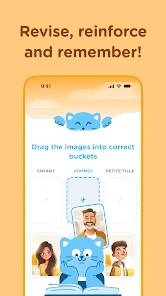
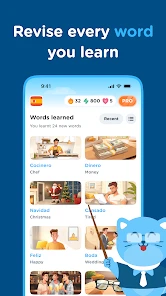
One of the standout features of Airlearn is its wide selection of languages. The app supports Spanish, French, Japanese, Korean, German, Chinese, Russian, and Italian. I like that having several choices together makes it easier to sample a new direction without changing apps; the trade-off is that a broad catalogue does not by itself tell me which course best matches an advanced or specialist goal. I was particularly impressed by the interactive lessons that cater to different learning styles—visual, auditory, or kinesthetic learners will all find something to love here.
Another cool feature is the app's integration of real-life conversations and scenarios. You’re not just learning words and grammar; you're learning how to actually use these languages in real-world contexts. It gives you a sense of confidence, knowing that you’re preparing for actual conversations, not just textbook exercises.
One small but useful habit is to pause after a lesson and recall a few expressions without looking at the screen. Then, later in the day, try to use one in a sentence of your own. This turns a quick app session into a test of what I can actually retrieve, instead of simply recognizing an answer when it appears. If I keep forgetting a phrase, that is a cue to revisit it rather than rush through more material.
Why You'll Love It
The app's personalized learning path is a game changer. Based on your current knowledge and learning pace, Airlearn customizes your lessons, ensuring you're always challenged but never overwhelmed. It’s like having a personal coach who knows just how to push you to your limits in a good way.
Moreover, the gamification aspect keeps you engaged and motivated. With points, badges, and leaderboards, learning a language feels less like a chore and more like an exciting game. This is perfect for competitive souls who enjoy a bit of challenge.
That motivational layer can help me return to a lesson, but I’d treat visible progress as a prompt to practise, not proof that I can hold a conversation. A useful check is to close the app and explain aloud what I learned, even in simple sentences. If that feels difficult, I need more recall and listening practice, not just another streak or badge.
For a more traditional alternative, a textbook or structured class may be a better fit when I want a fixed sequence, deeper grammar explanations, or a teacher to catch persistent mistakes. Language-exchange conversations are better when my priority is spontaneity and hearing how people actually respond. Airlearn’s appeal is the guided, app-based middle ground; I would combine it with those options rather than expect one tool to cover every skill equally well.
Switching languages and keeping expectations realistic
Trying more than one language is tempting, especially when the app puts several choices within reach. I’d still focus on one at a time if my main aim is practical progress: splitting short study sessions across unrelated languages can make recall harder. If I’m exploring for fun, sampling is part of the value; if I’m preparing for a specific conversation or trip, consistency matters more than variety.
Switching from another learning method is low-risk if I treat Airlearn as a trial of routine rather than assume it will replace everything I already use. I’d pick one language, follow a steady schedule for a little while, and note whether I can remember material away from the screen. Before paying for anything, I’d also check which parts of the learning path I can access without a purchase and whether the available lessons match my level and purpose.
The app is free to download and is rated for Everyone. Its current version is 3.12.29, and it requires iOS or Android version 11 or later. Those practical details make it easy to consider on a compatible device, but they don’t change the main decision: choose it for accessible guided practice, not as a guaranteed substitute for live conversation or formal instruction.
Questions I’d settle before making it a habit
One natural question is whether Airlearn works for a complete beginner or is more useful as a refresher. I’d approach it as a reasonable starting point for basic, guided study, while checking early lessons against what I can already do. If the material feels far too easy, that is a sign to compare the course’s progression with my actual level rather than assume that a personalized path automatically meets an advanced target.
I’d also ask whether I can study several languages at once. The range of choices makes exploration convenient, but I would not mistake access to multiple courses for a reason to divide my attention equally. For someone learning Japanese for personal interest while also needing practical French soon, I’d put most sessions into the urgent goal and reserve occasional time for exploration. That protects momentum without turning language switching into the main activity.
Another practical concern is what happens when a lesson feels familiar but real speech does not. I’d use the app to build a base, then add listening from other sources and conversation practice when comprehension and spontaneous replies matter. The distinction is important: recognizing a phrase in a guided exercise is a useful milestone, but it does not necessarily mean I can catch it at natural speed or produce it under pressure.
For a busy learner, I’d make the routine deliberately small: choose one language, finish a manageable lesson when a predictable pause arrives, and spend a minute recalling the key material later without prompts. If I have more time, I can extend the session; if not, the recall step still makes the study more active. This is a better test of usefulness than opening the app repeatedly just to keep a routine alive.
When another approach is the smarter choice
Airlearn is less compelling if I need a course built around a specific exam, a teacher who can diagnose recurring errors, or a clear formal sequence tied to an external curriculum. In those cases, I’d look for instruction with explicit coverage of the exam or syllabus, and use an app as supporting practice rather than the main plan. A language exchange or tutor is also a better fit when my priority is real-time interaction and personal feedback.
It may also be the wrong choice for someone who already has a strong study system and wants detailed reference material above all else. A textbook can be easier to consult for a grammar point, while a dictionary is more direct when I need to check one word. Airlearn’s convenience matters most when I want guided activity that can fit into the day; it is not automatically the best tool for every language-learning task.
Because the app is free to download but includes optional purchases, I’d decide what I need before considering an upgrade. I would first see whether the accessible lessons provide enough structure and practice for my current goal, then compare any paid option with the value I would get from a class, book, or conversation partner. The broad purchase range makes it especially sensible to inspect the specific offer in the app rather than assume every learner needs to pay.
A measured recommendation
Released on April 11, 2024, Airlearn has since reached version 3.12.29. For me, that makes the version detail useful mainly as a compatibility check, not a reason on its own to choose the app. The more important question is whether its guided sessions make me practise consistently and whether I can carry what I learn into a conversation, a trip, or another real task.
Overall, I’d recommend Airlearn to a beginner or casual learner who wants a straightforward way to explore Spanish, French, Japanese, Korean, German, Chinese, Russian, or Italian in short sessions. I’d be more cautious if I needed advanced, specialist, or teacher-led study, and I would pair it with listening and human interaction for a rounded routine. Its best use is as a convenient starting point and practice companion, not a promise that an app alone will make every part of a new language effortless.
Final Thoughts
In a world where language barriers can limit opportunities, Airlearn - Learn a language acts as a bridge, opening up new worlds and possibilities. Whether you’re preparing for a trip, looking to add a new skill to your resume, or simply indulging your love for languages, this app has something for everyone. It’s not just about learning; it’s about discovering and connecting with the world around you.
So, if you’re ready to embark on a linguistic adventure, give Airlearn a try. It might just be the best decision you make this year!
Airlearn - Learn Languages Frequently Asked Questions
How much does Airlearn cost, and does it include in-app purchases?
Airlearn is free to download, so you can get started without paying for the app itself. It also offers in-app purchases, with prices ranging from $4.99 to $124.99 per item. If you are considering a purchase, check the options shown in the app and make sure they suit your learning needs and budget.
Which languages can I learn with Airlearn?
Airlearn’s language selection includes Spanish, French, Japanese, Korean, German, Chinese, Russian, and Italian. You can choose among these options based on what you want to study, whether you are learning for travel, personal interest, or another goal. The range includes several widely studied languages, making it useful for learners with different interests.
What is Airlearn and how does it work?
Airlearn is a language learning app designed to help users master new languages through interactive lessons and practical exercises. By using a mix of audio, visual, and text-based materials, the app ensures a comprehensive language learning experience. Users can set their own pace, choosing from various difficulty levels and focusing on specific language skills such as speaking, writing, and comprehension.
Is Airlearn suitable for beginners or advanced learners?
Airlearn caters to all levels of learners, from beginners to advanced. The app provides a structured curriculum tailored to the user's proficiency, allowing beginners to start with basic vocabulary and grammar, while offering advanced learners more complex language structures and idiomatic expressions. This flexibility makes it ideal for a wide range of users seeking to improve their language skills.
Does Airlearn offer multiple languages to learn?
Yes, Airlearn offers a diverse selection of languages for users to choose from. Whether you're interested in widely spoken languages like Spanish, French, and Mandarin, or more niche languages like Norwegian or Swahili, Airlearn provides resources and courses tailored to each language's unique characteristics and cultural context. This wide variety ensures that users can pursue their language learning goals effectively.
Pros
- User-friendly interface enhances learning.
- Wide range of languages available.
- Interactive lessons keep users engaged.
- Offline mode for learning on the go.
- Progress tracking helps maintain motivation.
Cons
- Limited free content available.
- Some advanced features are paid.
- Occasional app crashes reported.
- Requires stable internet for full features.
- Voice recognition can be inconsistent.
- Category
- Education
- Version
- 3.12.29