1688
- 52.00
- 2.5
- Installs
- 5.00M
- Price
- Free

Screenshots
Analysis by Reviewed
I approach the 1688 app as a specialist shopping tool rather than an everyday place to buy one item. Its focus is wholesale sourcing, so the main question is not simply whether a product looks appealing, but whether the listing, supplier conversation, order size, and delivery route make sense for a real purchase. That distinction shapes the whole experience: it can be useful for a small business or a careful reseller, while feeling like hard work if you just want a quick, familiar checkout.
Who gets the most from a wholesale-first marketplace
I’d consider it when I already have a product category in mind and need to compare potential sources, rather than when I’m browsing for casual retail bargains. A shop owner planning a restock, for example, can use a focused search to build a shortlist and then assess each option before committing. The practical advantage is having a wholesale-oriented marketplace in one app; the trade-off is that finding a suitable listing does not by itself settle questions about quantity, communication, or delivery.
For a first-time buyer, I’d treat the first session as research rather than a shopping spree. Search for one specific item, open several relevant listings, and note what still needs clarification before placing an order. That deliberate approach makes the large selection easier to handle and helps prevent an attractive unit price from distracting you from the full purchase decision.
How I’d check a listing before committing
One useful habit is to separate product discovery from supplier evaluation. I’d first narrow the results by the exact product characteristics I need, then use the supplier information and available chat to resolve uncertainties. A listing that looks right in a photo may not answer every practical question, so I would confirm details in writing before treating it as a dependable match. Translation tools can help make that exchange manageable, but I would keep questions short and specific to reduce the chance of misunderstanding.
I’d also compare the complete order, not just the displayed product cost. For a wholesale purchase, the relevant decision includes the order size and the likely delivery process, as well as whether the supplier’s answers give me enough confidence to proceed. This is where patience becomes part of the workflow: a little more checking up front may be more valuable than moving quickly through checkout.
A realistic use case—and when I’d choose another option
Imagine I run a small gift shop and need to plan a seasonal restock. I could use 1688 to search a narrow group of products, compare several suppliers, and ask questions before choosing what to order. I would build in time for translation and shipping rather than leaving the purchase until the shelves are already empty. That makes the app more suitable for planned sourcing than for an urgent replacement or a last-minute gift.
Compared with familiar retail shopping apps, 1688 is oriented toward wholesale buying rather than the simplest single-item purchase. That can make it a better fit when I’m evaluating stock for a business, but a mainstream retailer is usually more convenient when I want a straightforward consumer order with minimal research. I would skip 1688 if I’m not prepared to navigate Chinese-language content, discuss details with suppliers, or allow time for delivery. Its average rating is 2.5 from around 4,100 ratings, which is a reason to approach it with realistic expectations rather than assuming every part of the process will feel effortless.
There is also a useful distinction between discovering a product and being ready to buy it. I’d save or record promising options outside the moment of browsing, then revisit them when I can compare supplier replies and order requirements calmly. This reduces the temptation to treat a long list of search results as a recommendation in itself. For a small business, that bit of organization can make repeated sourcing less chaotic without turning the app into a full inventory system.
As a shopping app operated by 1688.com, 1688 is free and has reached over five million installs. It is rated for Everyone, and its current version is 11.75.8.0. The app has been available since December 19, 2011, so it is an established service rather than a new experiment. Those points help describe its current standing, but they do not guarantee that every supplier interaction or delivery will suit a particular buyer.
Exploring the Features of 1688
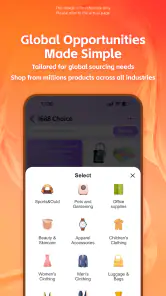
Diving into the 1688 app was like opening a treasure chest. The app is designed for businesses looking to purchase products in bulk at competitive prices. One of the first things I noticed was the wide variety of categories available. From electronics to clothing, and even niche market items, the app covers it all. It’s a veritable Aladdin's cave for those in the import/export business.
The user interface is quite intuitive, although at first, it might seem a bit overwhelming due to the sheer volume of products. However, once I got the hang of it, navigating through different categories and using the search function became second nature. It’s essential to have an idea of what you’re looking for because, trust me, you can easily get lost in the sea of options!
Language and Accessibility
The app primarily operates in Chinese, which might pose a barrier for non-Chinese speakers. However, with the help of translation tools, maneuvering through the app becomes manageable. It’s a small hurdle considering the potential business benefits. The app also offers a chat function where you can communicate directly with suppliers. This is a fantastic feature, although, again, language barriers might require some creative solutions.
What really stands out is the app's reliability in connecting buyers with genuine suppliers. The platform has built-in features to verify suppliers, which adds a layer of trust and security. This is crucial when dealing in high volumes of products and transactions.
Shopping and Shipping Experience
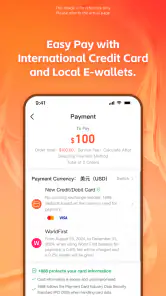
Ordering products through the app is straightforward. Once I added items to my cart and proceeded to checkout, the process was smooth. The app provides multiple payment options, making it convenient regardless of which part of the world you are in.
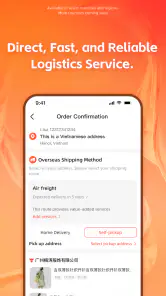
Shipping, however, can be a bit of a waiting game, depending on your location. Patience is key here, but the app provides tracking features that help alleviate the anxiety of waiting for your goods. It’s a bit like waiting for a surprise gift to arrive!
Making a first order less risky
For a newcomer, I would avoid making the first purchase the biggest one. A small, carefully chosen trial order can help reveal whether the product quality, supplier communication, and delivery arrangements work for the buyer’s actual needs. That approach may not be practical for every listing, but it is a sensible way to limit exposure when the supplier is unfamiliar. The goal is not just to find a low price; it is to learn whether the whole sourcing relationship is workable.
Before sending a message, I’d prepare a short checklist of points that could change the decision: the exact specification, the quantity available, packaging expectations, and what happens if the item received does not match the agreed description. Asking all the important questions clearly in one exchange is more useful than relying on a vague message and trying to interpret an incomplete answer later. I’d keep the supplier’s replies alongside the listing details so I can compare options without mixing up who said what.
Photos deserve a careful reading, too. I would distinguish between what the image shows and what the written listing promises, especially when a product has several versions or finishes. If a detail matters to the business—such as a particular color, material, or component—I’d ask about that exact detail rather than assume the picture settles it. This is a practical use of chat, not just a way to negotiate: it can help turn an appealing result into a purchase decision based on specifics.
Where the wholesale model changes the comparison
On a regular retail marketplace, I can often compare finished consumer offers by price, delivery convenience, and familiar return expectations. With 1688, I’d put more weight on supplier fit and whether the order scale matches my plan. That makes it a different kind of comparison, not simply a cheaper version of a standard shopping app. A local retailer is the easier choice for one-off household needs; a wholesale platform is more relevant when I can use a batch of goods and have time to assess its source.
There is a middle ground for people who are curious but not ready to run a business: use the app to understand what kinds of suppliers and product options exist, without assuming that every listing is suitable for a personal purchase. If the minimum order or delivery path makes a small order uneconomical, the lower displayed cost may not translate into a better deal. I would compare the final commitment with what I would pay through a familiar retail channel, including the value of convenience and a simpler resolution process.
Likewise, a business buyer should not treat the app as a substitute for a sourcing plan. It can help with discovery and contact, but I would still decide in advance what quantities I can store, how much variety I can sell, and how long I can wait for stock. Buying too many variants because the catalog makes them easy to browse is a real risk. A narrow initial brief keeps the search tied to demand rather than impulse.
What returning users should reassess
The long-running nature of the platform is relevant to returning buyers: the app has continued to a current release, but that alone does not tell me that any particular workflow is unchanged. Existing users should reassess the screens and terms they actually encounter before repeating an old ordering routine. When I return to source a familiar item, I’d check the current listing and supplier conversation again rather than relying only on notes from a past purchase.
The current release is 11.75.8.0, and that gives existing users a concrete point of reference when checking that they are using the present app version. A version number by itself does not tell me what has changed inside the experience, so I would not assume that a new release necessarily means a particular feature was added or a friction point was fixed. What matters in practice is whether the screens and steps I use now still support the way I source.
For repeat orders, I would treat previous success as useful context, not a guarantee. Product specifications can be easy to confuse when several listings look similar, and a supplier conversation from an earlier purchase may not address today’s order. Reconfirming the details can feel repetitive, but it is a small cost compared with receiving stock that does not fit the shop’s current needs. Keeping a concise record of product identifiers and agreed details also makes it easier to spot when a listing is not the same one I used before.
Remaining friction and sensible expectations
My main practical caution is that a smooth-looking path to checkout should not replace due diligence. Before ordering, I’d confirm the details that matter to my use case, keep a record of supplier responses, and make sure the delivery timeline fits the reason I’m buying. The app is best treated as one part of a sourcing process, not as a guarantee that every offer is suitable or that every order will be simple.
Language is not the only potential source of effort. A buyer still has to interpret product information, judge whether supplier replies are clear enough, and make sense of the order’s full requirements. Translation can reduce the language hurdle, but it cannot decide whether a response actually answers the question. If I still have uncertainty about a detail that would make or break the purchase, I would pause rather than filling in the gaps with assumptions.
That is also why I would not recommend the app to someone who needs a predictable, low-effort purchase. The interface may be navigable once I know what I’m looking for, yet the sourcing decisions around it take time. For urgent household shopping, an established local retailer may be a better match even if the product selection is narrower. For a buyer who enjoys comparing suppliers and planning ahead, the extra work can be a reasonable trade-off.
What I’d watch before committing
For people who want to explore wholesale options and are willing to do that extra checking, 1688 can be worth learning. For shoppers who value a familiar local retail experience above supplier choice, a conventional shopping app will probably be the better fit. I’d try it with a focused goal, a translation tool at hand, and enough time to evaluate the purchase before placing it.
If I were deciding whether to rely on it for an upcoming restock, I’d first check whether the order can arrive within the business’s planning window and whether the amount being considered is appropriate for the expected demand. I would then compare supplier replies, not just product photos and listed costs. These checks are especially important when a purchase is meant for a specific season: a delayed delivery can make an otherwise appealing source less useful.
I would also watch for whether the app is comfortable for the way I actually work. Someone who sources repeatedly may value having product searches, supplier conversations, and purchase decisions in one place. Someone who prefers a simple cart and a familiar customer-service route may find that convenience outweighs wholesale choice. The right answer depends less on how many products appear and more on how much responsibility I am willing to take for evaluating the transaction.
Final Thoughts
Overall, the 1688 app offers an incredible opportunity for businesses looking to source products directly from manufacturers. While there are some hurdles, such as language barriers and shipping delays, the benefits outweigh these challenges. If you’re in the business of buying in bulk, it’s an app worth exploring. Just remember to bring along your patience and a good translation tool!
1688 Frequently Asked Questions
Is 1688 suitable for someone who has never used a wholesale shopping app?
1688 is a shopping app operated by the 1688 Official Team and focused on wholesale online shopping. New users can browse product categories and explore the app’s shopping and order-management features, but its China-focused experience may take some getting used to. If you are unfamiliar with wholesale purchasing or Chinese-language services, consider whether the app fits your needs before downloading it.
What devices can run the 1688 app, and does it cost anything to download?
1688 is free to download, and its listed minimum operating system is Android 6.0. The app is categorized as Shopping, is rated Everyone, and was released on December 19, 2011. Check that your device meets the operating-system requirement before installing. The developer is 1688.com, and the current version is 11.75.8.0.
What is 1688 and what features does it offer?
1688 is a popular e-commerce platform primarily serving Chinese businesses and consumers. It offers a vast array of products across various categories, including electronics, fashion, home goods, and more. The app features a user-friendly interface for browsing, purchasing, and managing orders. Additionally, it provides secure payment options and customer support services, making it a comprehensive tool for online shopping. The app’s store summary describes it as a wholesale online platform.
Is 1688 available for international users and how can they access it?
Yes, 1688 is available for international users, though primarily tailored for the Chinese market. International users can access it by downloading the app from their respective app stores. However, they might need to use translation tools or services, as the primary language is Chinese. It’s crucial to ensure compatibility with international shipping and payment methods when using the app from outside China.
What are the pros and cons of using the 1688 app?
The 1688 app offers several advantages, including a wide range of products, competitive pricing, and a user-friendly interface. However, there are some drawbacks, such as language barriers for non-Chinese speakers and potential challenges with international shipping. Additionally, users should be cautious about the quality of certain products, as the platform hosts numerous sellers with varying standards.
Pros
- High-quality graphics and immersive gameplay.
- Wide range of character customization options.
- Engaging storyline with multiple endings.
- Smooth performance on most devices.
- Frequent updates with new content.
Cons
- Requires a lot of storage space.
- In-app purchases can be expensive.
- Occasional bugs and crashes.
- Limited offline functionality.
- High battery consumption during play.

- Category
- Shopping
- Version
- 11.75.8.0