Color Block Jam
- 1.79K
- 4.2
- Installs
- 10.00M
- Price
- Free
Screenshots
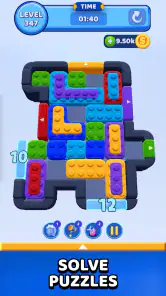
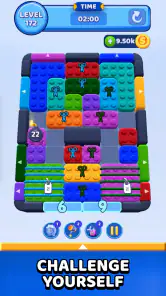
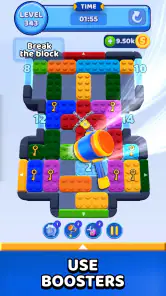

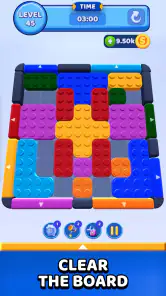
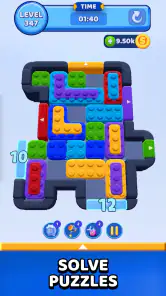
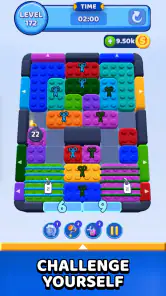
Analysis by Reviewed
One reason I keep a small puzzle game on my phone is that it can fill an awkward pause without asking me to remember a plot or settle into a long session. Color Block Jam gets to its central appeal quickly: I look at a board, consider the colored pieces, and decide where a move might lead. That immediate clarity is a real strength when I want a little focus between everyday tasks, though it does not mean every puzzle is effortless or every session ends on my schedule.
Why its first few moments work
As a puzzle game from Rollic Games, it makes a friendly first impression through a simple premise and bright blocks. I do not have to learn a complicated set of rules before I can start thinking about the board. The attraction is less about spectacle than the small satisfaction of spotting a placement that seems promising and seeing how it changes the space around it.
That accessible start makes it easy to recommend to someone who likes visual puzzles but does not want a lengthy tutorial or a story to follow. It also makes the game convenient to show a friend: the basic idea is easy to grasp by looking at a board. The more interesting question is whether that simple loop keeps you engaged after the novelty of the first few moves. For me, it does when I enjoy planning, but it depends on how much variety I want from a puzzle game.
A quick start, with a familiar puzzle feel
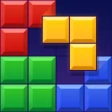
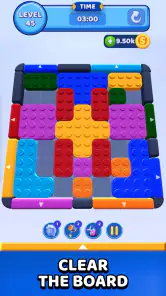
First things first, let's talk about how easy it is to dive into Color Block Jam. The premise is simple: you have to strategically place colored blocks on a grid to create and clear full lines, much like Tetris but with a colorful twist. Trust me, once you start, it's hard to put down.
That resemblance makes the game approachable if you already enjoy arranging shapes, but it is better to treat it as its own puzzle rather than expect a direct Tetris replacement. Its appeal is in scanning the available space and weighing a placement, not in the speed and falling-piece pressure that define many block games. I find that distinction useful: when I want reflexes and a rising tempo, I reach for a faster alternative; when I want to think through a board at my own pace, this is the more fitting choice.
Compared with match-three games, which often put the focus on spotting combinations of neighboring colors, this asks me to pay attention to how pieces occupy space and what room remains. That difference changes the kind of concentration it rewards. If you enjoy working out a placement before committing, the board offers a clear problem to consider. If you prefer cascades, a changing playfield, or a stream of surprises, a match-three puzzle may feel more lively.
How the turns feel in a short session
What I love most about this game is its simplicity paired with its challenging nature. The controls are intuitive, and you can easily drag and drop blocks with your finger. As the game progresses, the difficulty ramps up, keeping you on your toes and making it a real test of your strategic thinking.
The graphics are vibrant and pleasing to the eye, adding to the overall enjoyment. Each block's color is distinct, which helps in planning your moves. Plus, the sound effects are subtle yet satisfying, giving you that little dopamine hit every time you clear a line.
For a useful habit, I try not to place a piece just because it fits the current gap. I first check whether that move leaves workable space for the next decision, since a tidy-looking board can still become awkward if I close off useful openings. This small pause makes the game feel more like deliberate planning than a series of quick taps, especially when a level becomes less forgiving.
That habit also helps when I am choosing between a move that clears something now and one that preserves more options. An immediate clear can be satisfying, but the nicest-looking move is not automatically the most useful one if it leaves an awkward area to work around. I try to judge the board by what it lets me do next, not just by the result of the move I am about to make. It is a small change in approach, but it gives repeated attempts a purpose.
Easy to pause, not always easy to solve
The modest, self-contained puzzle format suits spare moments: a wait for a drink, a quiet break between tasks, or a short ride when I can safely look at my phone. If real life interrupts, I can simply stop playing and return when it is convenient rather than needing to follow a long narrative thread. I would still avoid starting when I have only a few seconds to spare; a tricky board may leave me wanting to think through one more move before putting the phone away.
That stop-and-return quality is a practical strength, but it does not make every session effortless. When I am tired, considering several possible placements can feel more like work than relaxation. If I want something completely passive, a simple matching game is probably a better fit; this one asks me to stay engaged with the shape of the board.
A realistic use for it is a short break when I can spare a little attention but do not want to start an episode, a long article, or a game with a chain of story events to remember. I can make a few considered moves, then put the phone aside when my break ends. On the other hand, if I am waiting in a place where I may be called away at any moment, I would choose a game that needs almost no concentration. The convenience here comes from the compact puzzle format, not from every board being instantly disposable.
It is also worth separating “easy to stop” from “easy to resume mentally.” There is no long narrative to lose track of, which helps, but if I leave in the middle of a board I still need a moment to read its layout again. Before putting it down, I try to notice the main open spaces and the placement I was considering. That quick mental bookmark makes it easier to return without replaying the whole decision process.
What keeps it interesting—and what may not
Now, let's get into why Color Block Jam is so addictive. The game offers a variety of levels and modes that provide endless entertainment. Whether you're looking to relax with a quick game or push your limits in a more challenging mode, there's something for everyone.
One of the standout features is the leaderboard system. It adds a competitive edge, encouraging you to beat not only your personal best but also to climb the ranks among other players. It's a fantastic way to keep the adrenaline pumping and your interest piqued.
For me, a leaderboard works best as an optional nudge rather than the main reason to play. I can use it to give a session a small target, but comparing results can also turn a casual puzzle into another score to chase. If that kind of comparison makes play less relaxing, I would ignore it and judge a run by whether I made a more thoughtful decision than last time. The puzzle does not need a ranking to be satisfying.
Who will enjoy the replay loop
The repeated cycle of judging a board, placing blocks, and looking for a clear gives each attempt a simple goal. I get the most replay value when I treat a run as practice in reading space rather than expecting every round to feel dramatically different. A useful approach is to notice which placements leave flexible room and which ones make later choices feel forced. That makes a restart feel like a chance to test a better plan, not just repeat the same motions.
It is also a good fit for someone who likes visible progress and a little competition, but a leaderboard will not matter to everyone. If comparing results adds pressure rather than motivation, the puzzle itself is the stronger reason to play. Players who need a deep campaign, a social story, or constant novelty may find this loop too narrow; a richer puzzle adventure would serve them better.
I would especially point it toward people who like a clear objective and enjoy improving through small adjustments. It suits a commute when I am seated and able to focus, a quiet waiting room, or a short pause at home when I want to switch from scrolling to doing something a little more deliberate. I would skip it if my favorite puzzle games are the ones that continually introduce new rules, characters, or environments. The appeal is the repeated spatial challenge, not a steadily unfolding adventure.
One practical way to keep the loop fresh is to set a personal goal that is about decision-making rather than only a score: leave more usable room, avoid a placement that boxes in the next move, or pause before committing to the first available fit. These are not extra game systems; they are ways I choose to approach the same board. They make a replay feel like a small experiment, though they cannot change the fact that the core activity stays familiar.
Practical details before you install
Rollic Games makes this free puzzle game for Android, and its Everyone age rating makes it suitable for a broad audience. It was released on November 18, 2024, and version 1.17.1 requires Android 7.0 or later. The game has an average rating of 4.2 from around 72,000 ratings, with more than 10 million installs. Those figures suggest plenty of players have tried it, though popularity alone cannot tell you whether its particular style will suit you.
There is no purchase price to start, but optional in-app purchases range from $1.99 to $99.99 per item. I would decide whether the core block puzzle is enjoyable before spending anything, and check purchase prompts carefully if a child uses the device. That is a sensible precaution for any free game with paid items, especially if you prefer a completely no-spend experience.
For a parent or anyone sharing a device, the Everyone rating is reassuring as a broad age classification, while the presence of paid items is still worth keeping in mind. I would make the purchase decision separately from the question of whether the puzzle itself is fun: the free starting point lets you judge that first. If you prefer games with no optional spending at all, the purchase range may be a reason to choose a different title, even if the core play appeals.
The listed version is 1.17.1, and Android 7.0 or later is required. That is the practical compatibility check I would make before trying it on an older device. The game is free to begin, but I would not assume that every optional item is necessary to enjoy the puzzle; I would first see whether the ordinary placement-and-clearing loop holds my interest. That simple test is more useful than buying something just because a prompt appears during play.
My casual verdict
In a world full of apps vying for your attention, Color Block Jam stands out as a must-try. It's the perfect blend of fun, challenge, and simplicity. Whether you're a casual gamer or a puzzle aficionado, this app is sure to keep you entertained for hours on end.
For me, the best reason to try it is the low-friction start: I can open it for a compact puzzle session without first learning a complicated system. The main trade-off is repetition; the same core kind of spatial decision-making is also what gives it its appeal, so it may lose its charm if you want frequent surprises. I would recommend it to friends who enjoy planning placements and returning for another attempt, but suggest a more varied puzzle game to anyone who quickly tires of familiar loops.
Its average rating of 4.2 reflects a strong level of interest, but I would not use a rating as a substitute for matching the game to your taste. The key question is whether placing blocks and protecting useful space feels satisfying to you. If yes, the free entry point makes it easy to test that fit. If you usually want fast reactions, a long progression path, or constant changes in the rules, another kind of puzzle game is likely to hold your attention better.
So, what are you waiting for? Give Color Block Jam a try, and let me know if you get as hooked as I did. Happy puzzling!
Color Block Jam Frequently Asked Questions
Can I play Color Block Jam with one hand, and are the controls easy to learn?
The game’s basic idea is straightforward: you look at the colored blocks, decide where they should go, and work toward clearing lines. That makes the controls and objective approachable for someone new to puzzle games, while planning placements adds a little more thought as play continues. If you enjoy simple, visual interactions rather than a lengthy tutorial, Color Block Jam may suit you.
Does Color Block Jam offer a clear sense of progression as I play?
Yes. The game is described as offering new challenges, and its puzzles become more challenging as you progress. That gives you a reason to keep adapting your approach instead of repeating exactly the same decisions each time. Its color-matching premise stays easy to understand, while the growing challenge can make each session feel more demanding for players who enjoy thinking ahead.
Is Color Block Jam suitable for a quick game when I only have a few minutes?
Yes. Color Block Jam is a puzzle game built around short, focused decisions: you look at the colored blocks, consider where they can go, and try to clear lines before the grid fills. That makes it easy to pick up for a brief session, while the increasing challenge gives you a reason to keep playing when you have more time.
What is Color Block Jam and how do you play it?
Color Block Jam is a vibrant and addictive puzzle game where players must strategically place colored blocks on a grid to create and clear lines. The objective is to prevent the blocks from stacking up to the top of the screen. Players need to think ahead and plan their moves carefully, as the game progressively becomes more challenging. With each level, new colors and block shapes are introduced, adding to the fun and complexity of the game.
Is Color Block Jam available for both Android and iOS devices?
Yes, Color Block Jam is available for download on both Android and iOS platforms. Users can find the app on the Google Play Store for Android devices and on the Apple App Store for iOS devices. The game is optimized for smooth performance across various devices, ensuring that players can enjoy the game on their smartphones or tablets, regardless of their operating system. Android users need version 7.0 or later to run it.
Pros
- Challenging puzzles enhance problem-solving skills.
- Vibrant graphics make gameplay visually appealing.
- Easy-to-understand controls for all ages.
- Regular updates with new levels and features.
- Offline mode available for uninterrupted play.
Cons
- Ads can be intrusive during gameplay.
- Some levels may feel repetitive over time.
- In-app purchases can be expensive.
- Limited hints available for difficult levels.
- Requires significant storage space on device.
- Category
- Puzzle
- Version
- 1.17.1