Candy Crush Jelly Saga
- 97.44K
- 4.6
- Installs
- 100.00M
- Price
- Free
Screenshots
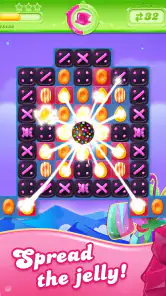
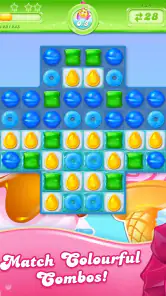
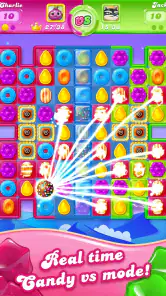
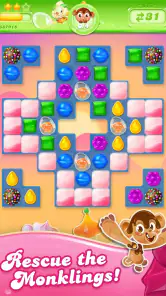
Analysis by Reviewed
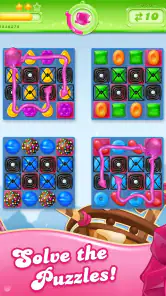
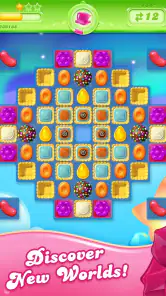
I first opened Candy Crush Jelly Saga expecting a familiar match-three game, and that is exactly where it starts: colorful candies, simple moves, and a clear goal. What makes it worth a closer look is the way spreading jelly and facing the Jelly Queen give the usual swapping puzzle a distinct objective. I find it easy to understand within a few minutes, though later levels ask for more patience and planning than the cheerful presentation suggests.
What to expect from the puzzle
This is a free puzzle game from King, released on January 6, 2016. It has a 4.6 average from around 1.8 million ratings and over 100 million installs, so it is a well-established choice rather than a new experiment. The age rating is Everyone, and the current version is 4.12.1.0 for devices running Android 6.0 or later. Those details make it easy to judge whether it fits your device and household, but the important question is whether its play style suits you.
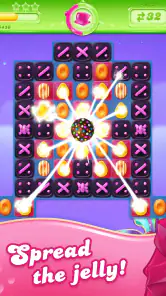
The main appeal is a short, self-contained puzzle session: look at the board, decide where a match will help, and try to meet the level’s objective. Unlike match-three games where the main aim is simply to clear pieces or chase a score, Jelly Saga puts spreading jelly at the center. That changes how I choose moves. A large match can look satisfying but be less useful than a smaller one that reaches an untouched part of the board.
Getting Started
Diving into the Candy Crush Jelly Saga was like walking into a candy shop. Right off the bat, the game's vibrant colors and playful music make it feel like you're in a world where Willy Wonka meets a sugar rush. Setting up is a breeze; the app takes no time to download and, once it's up and running, you're immediately tossed into the sugary action.
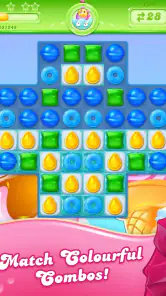
The initial levels ease you into the mechanics. If you've played any of the other Candy Crush games, you'll feel right at home. But even if you're new to the series, the game guides you smoothly through the rules. The goal is pretty simple: match candies to spread jelly across the board. But don't let the simplicity fool you—things get tricky as you progress.
A first win comes from reading the board
For a first-time player, I would not rush to make the most obvious match. Before moving a candy, I scan the board for areas that still need jelly and ask whether the swap will help cover them. This small pause makes the objective clearer and prevents a common early mistake: treating every match as equally valuable. When the board has obstacles or a narrow route to an uncovered area, I look for a move that opens space or creates a better follow-up rather than focusing only on the immediate animation.
A realistic way to fit the game into a day is to play a level while waiting for a bus or taking a short break, then stop when the puzzle needs more attention. The bright presentation makes it inviting for quick visits, but a tough board can take repeated attempts, so I would not count on every session being a quick win. If I am tired or distracted, I save the harder levels for later instead of making careless moves just to finish.
More From Our News Desk

Weather by Xiaomi Review: Clear at a Glance, Less Clear Up Close

X Under Pressure: Can It Recover When Posting Goes Wrong?

Clash of Clans Is Won Between the Battles

Android Auto Makes the Case for Quieter Car Software

MobiOffice: Transforming Mobile Productivity with Seamless Integration

EA SPORTS FC™ Mobile Soccer: Redefining Mobile Sports Gaming
How it differs from familiar match-three games
Compared with a standard match-three puzzler built around clearing pieces or reaching a score, Jelly Saga gives board coverage more weight. That is a welcome change if I enjoy thinking about where a match will matter, but it may be less satisfying if I mainly want a quick cascade and a high score. The Jelly Queen encounters also add a playful competitive edge, so the game can feel more like a direct contest than a string of ordinary boards.
It is best suited to players who like colorful puzzles, gradual challenges, and a clear objective on each level. If you prefer quiet logic puzzles with no luck involved, or dislike replaying a board after a failed attempt, this is probably not the right fit. Candy Crush Jelly Saga still relies on the changing arrangement of candies, so planning helps but cannot make every outcome predictable.
The Gameplay
Now, the real juicy part of this game is the gameplay itself. Each level presents a board filled with colorful candies and obstacles. Your mission? Spread that jelly everywhere. It sounds straightforward, but there are layers—pun again!—of strategy involved. You have to think ahead, plan your moves, and sometimes just hope for a bit of luck.
As you move through the levels, you'll meet the game's quirky characters. Each one adds a bit of personality and humor, keeping things fresh and fun. Oh, and the boss battles are a blast. These levels pit you against a jelly queen, and you need to outsmart her to win. It's a playful competition that keeps you on your toes.
Small habits that make tougher boards easier
When a level does not go well, I try to identify what caused the failure before replaying it. Was I spending moves on matches that did not spread jelly, or did I leave a difficult corner until the end? Changing one decision at a time gives me a useful test instead of repeating the same approach and hoping for better luck. I also avoid making a special-looking match automatically; I first check whether its position supports the level goal.
Another practical trade-off is pace. It is tempting to keep tapping through attempts, especially when a board looks nearly solved, but a brief pause can reveal a better route. The game is forgiving to learn, yet its later puzzles reward attention more than speed. I find that this makes it a better fit for a relaxed break than for moments when I need to play without looking closely.
What Keeps You Hooked?
One word: variety. The game introduces new challenges and candies that keep you guessing. Just when you think you've mastered it, a new twist shows up. Plus, the satisfaction of watching those candies pop and the jelly spread is oddly satisfying. It’s like a mini celebration with every level you complete.
The social aspect is also a big draw. You can connect with friends, share your progress, and even compete for the highest scores. It adds a layer of friendly competition that makes you want to keep playing "just one more level."
Free to start, with a spending choice
You can begin without paying, but the game offers in-app purchases ranging from $0.99 to $99.99 per item. I would treat purchases as optional rather than necessary: first learn how the objectives work and see whether you enjoy the challenge without spending. If you are installing it for a child, it is sensible to discuss purchases beforehand and use the device’s purchase controls. The Everyone age rating describes its broad audience, while optional spending is still worth keeping in mind.
One thing a new player may wonder is whether experience with other Candy Crush games is required. It is not: the early levels introduce the basic idea, and familiarity mainly helps with recognizing match patterns. Another likely question is whether the game is all about luck. Luck can affect what falls into place, but deliberate moves still matter, especially when you focus on spreading jelly instead of making matches just because they are available.
The Visuals and Sound
Visually, the game is a treat. The colors are vibrant, and each candy looks good enough to eat. The animations are smooth, making the gameplay experience feel polished and engaging. As for the sound, it's catchy without being annoying, which is a big plus when you're playing for extended periods.
The music and sound effects add to the whimsical feel of the game. It's like being in a candy-coated dream. The playful tunes and satisfying sound of candies popping are like a serotonin boost in audio form.
Making a short session count
For a first visit, I would treat the opening levels as practice in spotting useful moves, not as a test of how quickly I can finish. A good routine is to check the level goal, identify the least-covered area, and then choose a match that moves toward it. After each move, I look again rather than assuming the board will keep the same priorities. That simple reset is especially helpful when a cascade changes the layout unexpectedly.
This approach also answers a practical question: is it a game I can play in brief bursts? Usually, yes, because individual puzzles have a clear beginning and end. The exception is a board that takes several tries or catches me when I have only a moment to spare. I would start a level when I can give it my attention, rather than opening it during a task that might interrupt me halfway through.
Who will enjoy it, and who may prefer another puzzle
I would recommend it to someone who likes matching games but wants more purpose than simply making the biggest chain available. Jelly coverage gives each move a tactical reason, and the Jelly Queen stages lend the journey a character of its own. It can also suit casual players who want a cheerful game that does not require learning a complicated control scheme before the first attempt.
On the other hand, I would steer a player toward a quieter, more deterministic logic puzzle if they dislike board changes they cannot fully control. Someone who wants uninterrupted difficulty progression may also find retries frustrating when a level depends partly on what falls into place. And if a player mainly enjoys chasing a personal score, a puzzle built around clearing jelly may not deliver the same satisfaction as a score-focused alternative.
How to approach a frustrating level
When I am close to finishing but keep missing one patch, I resist spending moves on broad matches that do not reach that area. I look for the move that changes access to the remaining space, even if it produces a smaller immediate payoff. If a board still feels blocked, I switch my attention to creating room for a later match instead of repeating the same local move. The useful lesson is not that every level has one obvious solution, but that a failed attempt can show which part of my plan needs changing.
That distinction matters because the game is not a pure test of calculation. Candy positions can shift the available options, so a plan should be flexible rather than fixed. I find the most satisfying wins come from adjusting to the board as it develops, not from trying to execute a memorized sequence. If repeated attempts stop feeling enjoyable, taking a break is a better choice than treating a difficult puzzle as an obligation.
Final Thoughts
In conclusion, Candy Crush Jelly Saga is a delightful mix of strategy, fun, and sugary goodness. Whether you're a seasoned gamer or just looking for something to pass the time, this game has something to offer. It's easy to pick up but challenging enough to keep you coming back for more.
So, the next time you're looking for a sweet escape, give Candy Crush Jelly Saga a try. Just a heads up, though: you might find yourself utterly addicted, but that's part of the charm, isn't it?
Candy Crush Jelly Saga Frequently Asked Questions
Can I enjoy Candy Crush Jelly Saga if I have never played a Candy Crush game?
Yes. Candy Crush Jelly Saga is a match-three puzzle game, so its central idea is approachable for newcomers: match candies to work through each puzzle. Its jelly-focused objectives and encounters with the Jelly Queen add their own twists as you progress. You can learn the game through play rather than needing experience with another Candy Crush title first.
What kind of gameplay should I expect from Candy Crush Jelly Saga?
Expect colorful match-three puzzles built around more than simply clearing candies. Some challenges ask you to spread jelly across the board, while others bring you face to face with the Jelly Queen. Those changing objectives encourage you to consider the board before making a move, giving the game a puzzle-focused feel with a playful candy theme.
Does Candy Crush Jelly Saga require an internet connection to start playing?
You can play the core match-three puzzles offline, which makes the game handy for a short session when you do not have a connection. Online access is useful for connected features such as syncing progress and viewing leaderboards. If you intend to move between devices and keep your progress aligned, connect to the internet and sign in to the account you use.
Is Candy Crush Jelly Saga suitable for children?
Candy Crush Jelly Saga is a colorful puzzle game with an Everyone content rating, so it is presented as suitable for a broad audience. Its match-three play is easy to understand, while the levels can still offer challenges for older players. The game includes optional in-app purchases, so families may want to review their device’s purchase settings before letting children play.
What is Candy Crush Jelly Saga?
Candy Crush Jelly Saga is a match-three puzzle game developed by King. It’s a spin-off of the popular Candy Crush series, featuring new gameplay dynamics, such as spreading jelly and challenging the Jelly Queen. The game boasts over 1000 levels, vibrant graphics, and exciting power-ups to keep players engaged.
Pros
- Engaging puzzle mechanics.
- Vibrant and colorful graphics.
- Regular updates with new levels.
- Smooth performance on most devices.
- Fun multiplayer modes available.
Cons
- In-app purchases can be pricey.
- Requires constant internet connection.
- Ads can be intrusive at times.
- Lives system limits play time.
- Can become repetitive over time.
- Category
- Puzzle
- Version
- 4.12.1.0