Arrows – Puzzle Escape
- 22.73K
- 4.7
- Installs
- 100.00M
- Price
- Free

Screenshots
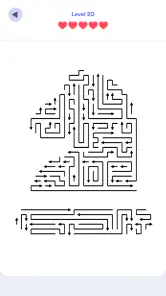
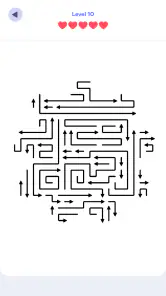
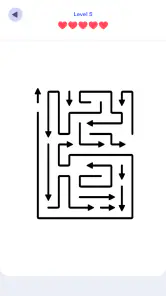
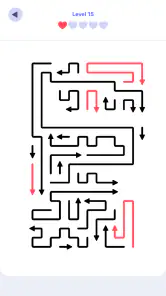
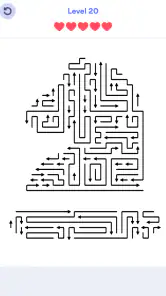
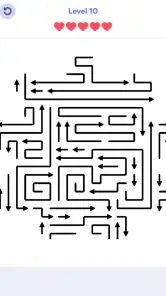
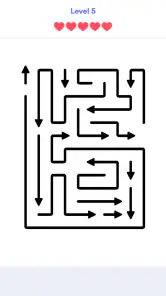
Analysis by Reviewed
The first thing I notice about Arrows – Puzzle Escape is how quickly it makes a simple idea feel absorbing. This is a puzzle game about clearing arrows, but the appeal is not just spotting a move and tapping it. I have to pause, read how the pieces relate, and work out an order that lets the board open up. That makes it an easy game to pick up in a spare moment, yet one that can hold my attention longer than I planned.
Made by Lessmore GmbH, this free puzzle game has found a large audience: it has a 4.7 average from around 2.2 million ratings and over 100 million installs. Those figures suggest broad appeal, but the more useful question is whether its particular kind of concentration suits you. In my experience, it is best for players who enjoy visual logic and steady progress, not people looking for a story-heavy adventure or a constant stream of elaborate new mechanics.
A quiet visual language built around the board
I find the board’s restrained visual language useful because it gives me a practical way to think, not just a look to admire: direction and position become clues for deciding what to inspect first. When a layout feels tangled, I try tracing one small cluster before committing to a move, which can reveal whether clearing it will open the rest or leave the main knot untouched. That visual focus sets up the next question: how the game’s pacing supports careful play.
First impressions: clarity before spectacle
The board is the main event. Arrows give the puzzle its visual vocabulary, and the task of clearing them encourages me to treat the layout as a small system rather than a picture to admire. I look for what is accessible, what appears to depend on another piece moving, and which choice might make the next few decisions easier. The design works because I can focus on the problem without needing a long explanation before I begin.
That clarity is also the game’s trade-off. Anyone hoping for expressive characters, a detailed setting, or a narrative reason to keep going may find the presentation restrained. The mood comes chiefly from the act of solving: a crowded arrangement becomes more manageable as I understand it. I find that satisfying, but it is a quieter kind of atmosphere than a puzzle game built around exploration or a strong fictional world.
The arrow motif is more than decoration; it gives the board a consistent visual grammar. When I feel stuck, I can stop tapping and inspect the arrangement again, using direction and position to reconsider the order. One practical habit helps: before making a move, scan the whole board for a piece that seems to have a clear path, then check whether removing it will expose useful choices or simply leave the harder knot untouched. That small pause often feels more rewarding than rapid guessing.
Sound and rhythm: a game that benefits from pauses
Arrows works well as a short-session game because its central challenge is easy to return to. I can approach a board for a brief break, make a few deliberate decisions, and put the phone down without needing to remember a complicated plot. Its rhythm is determined by how quickly I read the puzzle, not by an elaborate sequence of story beats. That makes it a natural fit for waiting rooms, a commute when I am seated, or a quiet pause between tasks.
More From Our News Desk

Weather by Xiaomi Review: Clear at a Glance, Less Clear Up Close

X Under Pressure: Can It Recover When Posting Goes Wrong?

Clash of Clans Is Won Between the Battles

Android Auto Makes the Case for Quieter Car Software

MobiOffice: Transforming Mobile Productivity with Seamless Integration

EA SPORTS FC™ Mobile Soccer: Redefining Mobile Sports Gaming
The game’s atmosphere is most convincing when I let it stay calm. I do not need to rush through a board; taking a moment to trace the possible order is part of the pleasure. For that reason, I would choose it over a more frantic arcade-style distraction when I want to focus without feeling pressured by a race against the clock. It is also a reasonable option when I want a small mental reset, though it is not the best choice if I need to keep my attention on the world around me.
Sound can shape how restful a puzzle feels, but I would not make it the main reason to choose this game. The lasting impression comes from the visual problem-solving and the measured pace. If you usually play with your phone muted, the central appeal still makes sense: the arrows and board are what ask for your attention. If you prefer games where music, effects, and setting carry as much weight as the mechanics, this is likely to feel more minimal.
Why the mechanics suit the presentation
The puzzle format and the clean arrow language reinforce each other. Since the goal is to clear the board, the challenge is not simply to identify a single correct-looking move; it is to reason about how one removal affects what can happen next. I find the strongest moments come when a move changes my understanding of the layout. A choice that looked obvious at first can be less useful than a move that opens a route through a more crowded area.
A helpful approach is to divide the board mentally into small clusters. Rather than searching every arrow at once, I ask which area seems to have the fewest dependencies, then consider whether clearing that part will make the rest easier to read. This is not a guarantee of a solution, but it keeps me from making taps just to see what happens. It also makes a difficult board feel like a sequence of manageable observations rather than one intimidating tangle.
There is a clear limitation to this style: if you dislike visual scanning or prefer puzzles with words, numbers, or explicit clues, arrow arrangements may feel repetitive. Likewise, players who enjoy improvising through lots of different toolsets may want a broader puzzle collection. Arrows makes its core idea the attraction, so whether that focus feels elegant or narrow depends on how much you enjoy working within one visual rule set.
Compared with familiar match-three games, it asks for less pattern-matching by color and more attention to the relationships between pieces. Compared with Sudoku or crossword puzzles, it is more immediately visual and less dependent on remembering a set of written clues. That gives it a useful middle ground: I can start without preparation, but solving well still rewards patience. If you want a game that lets you tap casually with little thought, a conventional matching game may fit better; if you like tracing consequences, Arrows has the stronger pull.
Where it fits in an everyday routine
A realistic use case is a short wait when I have enough attention to focus but not enough time to settle into a longer game. I can open a board, study the arrows, and make a few considered moves. If I get interrupted, the puzzle’s visual state gives me a clear point to reassess when I return. I would still avoid playing while walking or during a conversation that needs my attention: the game is quiet, but its best decisions come from actually looking at the whole arrangement.
It can also work as a low-stakes way to switch mental gears after reading or working. Instead of scrolling through a feed, I can give myself a small, bounded problem. The useful trick is to set a stopping point before starting if I only have a minute or two; a board that seems almost solved can tempt me into continuing. This is less about any special feature and more about matching the game’s thoughtful pace to the amount of attention I have available.
For example, if I am waiting for a train and have a few quiet minutes, I can use the board as a deliberate break from checking messages. I would choose a moment when I am already seated, take a quick look at the arrangement, and decide whether I have enough time to think it through. If an announcement or conversation pulls my attention away, I can stop rather than trying to play and listen at once. The game is most relaxing when the puzzle gets my attention by choice, not when it competes with something more important.
It is also a better fit for a brief reset than for filling a long stretch with changing activities. When I want variety, a puzzle collection can move me between wordplay, numbers, and spatial problems; here, I am returning to the same arrow-based way of thinking. That consistency is useful if I want to settle into one kind of challenge, but it can become a limitation over a longer session. I would treat it as a focused option in my rotation, not necessarily the only puzzle game I keep around.
The game is free to download, with in-app purchases ranging from $1.49 to $40.00 per item. That means the basic decision to try it does not require a purchase, but anyone who prefers to avoid optional spending should be comfortable seeing in-app purchase options. Its Everyone age rating makes the subject matter broadly suitable, and I would describe the puzzle itself as approachable in concept even though some arrangements can demand careful thought.
What to know before settling in
With 23K reviews and a large player base, Arrows is clearly not a niche experiment, but popularity does not make its focused design a fit for everyone. The current version is 0.23.0, and the game is listed for devices running Android 7.0 or later. It was released on Jul 9, 2025. Those details are useful when checking whether it suits your device, while the more important personal test is whether you enjoy pausing over a board and reasoning from what you can see.
One question players often have is whether they need to be experienced puzzle fans. I do not think so: the basic premise is visually direct, and you can learn by examining the board. But newcomers should expect to slow down rather than tap at random. Another fair question is whether it is suited to tiny breaks. Yes, provided you are in a place where you can give the screen your attention; it is less suitable when you are juggling another task or need a game that can be played almost unconsciously.
If you are choosing between this and a more varied puzzle app, think about what you want from each session. Arrows is the better pick when you want one clear visual challenge and a measured pace. A collection with word, number, and spatial puzzles will offer more variety, while a story-driven title may do more to make you curious about what happens next. I would skip Arrows if I needed narrative momentum, frequent changes of activity, or a game designed around reflexes rather than careful observation.
Another useful question is whether this is suitable for playing with someone beside you. I find the visible layout makes it easy to talk through a possible move together, so it can prompt a casual bit of shared reasoning. It is not a substitute for a party game or a built-in multiplayer activity; the appeal is still in considering the board. If you enjoy comparing how two people read the same arrangement, that can make a quiet wait more engaging, but if you want direct competition or a social game structure, another choice will serve you better.
For players who are unsure about spending, I would begin by trying the free game and deciding whether the core loop holds my attention before considering any purchase. The listed in-app price range makes it sensible to be deliberate rather than treating optional spending as part of the basic puzzle. I would also keep expectations focused: the appeal is the board and the reasoning it invites, not a promise of a broad collection of modes. That makes the decision fairly simple: try it for the visual challenge, and move on if that particular loop does not click.
A measured verdict on its atmosphere
For me, the atmosphere succeeds because it does not compete with the act of solving. The arrows establish a distinct visual identity, and the unhurried rhythm gives me room to think. That coherence is a strength, though it also explains the game’s narrowness: the experience depends on whether the board itself is enough to keep you interested. It does not need a dramatic setting to work, but players who expect a vivid world may wish it offered more than a puzzle-first mood.
I would recommend Arrows – Puzzle Escape to a friend who likes clean, visual logic and wants something that can fit into a quiet break. I would describe it as focused rather than expansive: its pleasure comes from spotting a sensible sequence and watching a confusing arrangement become clearer. If that kind of small victory sounds appealing, it is worth trying for free. If you would rather follow a story, switch between many puzzle types, or play without giving the screen sustained attention, a different kind of game will be a better companion.
Arrows – Puzzle Escape Frequently Asked Questions
What is Arrows – Puzzle Escape?
Arrows – Puzzle Escape is a logic puzzle game built around arranging or removing arrow-shaped pieces so they can escape without colliding. Each level presents a compact board with arrows pointing in different directions, and the challenge is to work out a safe sequence of moves. It is suited to players who enjoy visual problem-solving, careful planning, and short puzzles rather than action-heavy gameplay.
How do you play Arrows – Puzzle Escape?
The main task is to examine the arrows on the board and determine which ones can move out safely. An arrow’s direction and the pieces blocking its route affect the order you should choose, so a move that looks obvious may prevent another arrow from escaping. Read the layout before tapping, then test a sequence and adjust if needed. Exact controls and available hints can vary by version.
Is Arrows – Puzzle Escape free to download and play?
The game may be available to download for free, but the price, advertisements, and optional in-app purchases can differ between the Android and iOS editions and may change over time. Check the listing for your device before installing to see whether it mentions ads, purchases, or paid features. If you are downloading for a child, review purchase settings and parental controls as well.
Can I play Arrows – Puzzle Escape offline?
Many level-based puzzle games allow their core puzzles to be played without a continuous internet connection, but offline access for Arrows – Puzzle Escape can depend on the current app version and platform. Online access may still be needed for downloading the game, loading advertisements, syncing progress, or using certain bonus features. If offline play matters to you, try opening a level after disconnecting from the internet.
Is Arrows – Puzzle Escape suitable for children, and what should I check before downloading?
Its arrow-and-obstacle puzzles are generally approachable for a broad range of ages, though some levels may require patience and trial and error. Suitability also depends on the store’s age rating and the app’s current advertising and purchase policies, so check those details before installing. Confirm that your device meets the listed requirements, and consider whether the game offers hints or other assistance if a puzzle becomes frustrating.
Pros
- Simple rules make it easy to start playing without a long tutorial.
- Short levels suit quick sessions during breaks or commutes.
- Arrow paths add a satisfying spatial-planning challenge.
- Gradually tougher puzzles can keep experienced players engaged.
- A clean
- focused presentation keeps attention on the board.
Cons
- Some puzzles may require trial and error before the solution clicks.
- Later levels can feel repetitive if you prefer varied puzzle mechanics.
- A single mistake may force you to rethink much of your planned route.
- The minimalist visuals may feel too plain for some players.
- Difficulty can become frustrating for players looking for a very casual game.
- Category
- Puzzle
- Version
- 0.23.0