Fill The Fridge
- 10.09K
- 4.3
- Installs
- 50.00M
- Price
- Free

Screenshots
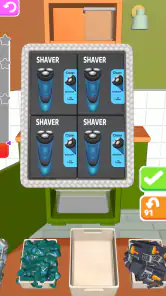
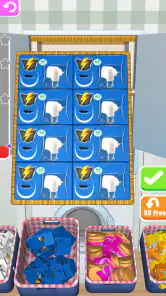
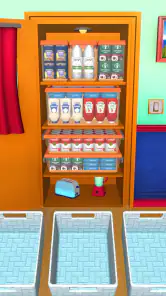
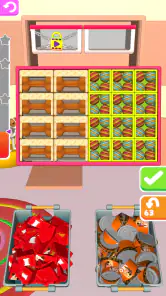
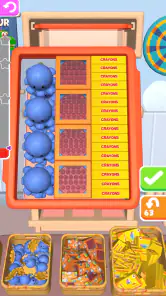
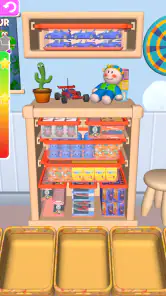
Analysis by Reviewed
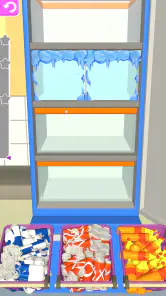
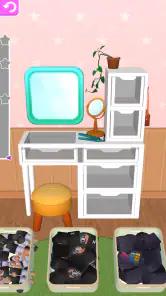
I’m drawn to puzzles that give me one clear problem to solve, and arranging groceries into a cramped fridge has an immediate, tactile appeal. Fill The Fridge turns that familiar task into a casual puzzle game: instead of planning a real shopping trip, I’m working out how to place the items on screen. It’s an easy idea to understand, but the pleasure comes from making a crowded space work.
A simple puzzle for short breaks
For me, this is best as a brief between-tasks game. I can imagine opening it while waiting for a drink to brew, trying a level, then putting my phone away without needing to remember a long story or complicated set of rules. The visual goal is clear, and the organizing theme gives each placement a practical feel that differs from matching colors or clearing blocks.
The game is a puzzle title from Rollic Games. It is free to download, rated for Everyone, and has a 4.3 average from around 623,000 ratings. That makes it easy to try without paying upfront, though free access and optional purchases are separate considerations: in-app items are priced from $0.99 to $99.99 each. I’d treat spending as something to decide for myself rather than assume it is needed to enjoy the core organizing idea.
Where the challenge comes from
The main appeal is spatial thinking: different groceries have different shapes, so the order and position of items matter. A useful habit is to pause before dropping a bulky item and scan the remaining gaps. Filling the most obvious open space first can leave awkward pockets behind; thinking about which shapes could fit those pockets helps make the arrangement feel deliberate rather than random.
That makes it a good fit for people who like neat visual puzzles and quick rounds, especially anyone who enjoys the small satisfaction of turning clutter into a tidy layout. It is less suitable if you want a deep campaign, a strong narrative, or a puzzle that keeps introducing elaborate rules. Compared with a conventional block puzzle, the fridge theme makes the objects feel familiar, but the basic pleasure is still about fitting shapes into limited space. If you prefer longer strategy sessions or a more varied challenge structure, another puzzle game may hold your attention better.
The Joy of Organization
At its core, Fill The Fridge is all about organization and strategy. You start with an empty fridge and an assortment of food items that need to fit in just right. The game challenges you to place each item strategically, maximizing space and ensuring everything fits. It's like Tetris, but with groceries. And trust me, it's way more fun than it sounds.
Gameplay and Mechanics
So, how does it work? You begin each level with a set number of items, ranging from soda cans to milk cartons, all of which need to be neatly stacked into a limited space. The catch? Each item has a different shape and size, requiring you to think ahead and plan your moves carefully. The game rewards precision and clever planning, making each level a satisfying puzzle to solve.
More From Our News Desk

Clash of Clans Is Won Between the Battles

Android Auto Makes the Case for Quieter Car Software

MobiOffice: Transforming Mobile Productivity with Seamless Integration

EA SPORTS FC™ Mobile Soccer: Redefining Mobile Sports Gaming

How Microsoft OneDrive Became a Mobile Productivity Giant

How Google Translate Breaks Language Barriers Effortlessly
One of the things I love about this game is its simplicity. The controls are intuitive, allowing you to drag and drop items with ease. And the graphics? Crisp and clean, making the whole experience visually pleasing. It's the kind of game you can pick up and play whenever you have a few spare minutes, yet it's challenging enough to keep you coming back for more.
Why You'll Keep Playing
Now, you might be wondering, "What's the big deal about stacking items in a fridge?" Well, the real magic of Fill The Fridge lies in its addictive nature. Each level is a new challenge, with different items and layouts. As you progress, the levels become more complex, requiring more strategic thinking and planning. It's a game that keeps you on your toes, always eager to see what the next level holds.
And let's not forget the satisfaction that comes with perfectly arranging all the items. There's something incredibly rewarding about seeing everything fit just right, like completing a jigsaw puzzle. Plus, the game offers a sense of accomplishment as you conquer each level, pushing you to tackle the next one.
Progress, fairness, and spending
When I want to keep a casual game fair on my own terms, I set a simple boundary: enjoy the puzzle first and only consider a purchase if I understand what I’m buying and genuinely want it. The listed purchase range stretches from $0.99 to $99.99 per item, so the upper end is substantial; I would not tap through a payment prompt casually. The game is free to start, but that alone doesn’t tell me whether any particular purchase changes convenience, progression, or access, so I’d check the item details before deciding.
There’s also a useful distinction between difficulty and pressure. A crowded arrangement can make me want to act quickly, but this kind of spatial puzzle rewards looking before placing. I’d use a spare minute to inspect the available shapes, then work from the largest or most awkward pieces rather than filling easy gaps just because they are convenient. That approach makes the challenge feel more like planning and less like correcting avoidable mistakes.
What to expect before installing
If you are choosing between this and a familiar match-three game, the difference is the kind of attention it asks for: here I’m arranging objects in a confined space rather than chasing combinations. That makes it a better pick when I want a tidy, hands-on-feeling puzzle, but not necessarily when I’m looking for a broad variety of mechanics. It also suits a parent or child looking for an age-rated casual game to try together, though I’d still keep an eye on purchase prompts when a device is shared.
The practical questions are straightforward. Is it free to try? Yes, the game is free, with optional in-app purchases. Is it designed for a quick session? Its simple placement concept makes it easy to approach in short breaks. Will every player find it challenging? Probably not: people who dislike spatial packing or repeated level-based puzzles may find the central idea wears thin. The game’s version is 60.9.1, and it was released on February 6, 2022; those details help identify the current app, but they don’t change whether its particular puzzle style suits you.
The Verdict
So, is Fill The Fridge worth downloading? Absolutely! It's a fun, addictive, and surprisingly challenging game that offers a unique twist on the classic puzzle genre. Whether you're a fan of puzzle games or just looking for something new to try, this app is definitely worth checking out. It's the perfect way to unwind and exercise your brain at the same time.
In a world full of complex, high-stakes games, sometimes it's nice to kick back with something simple yet satisfying. And Fill The Fridge delivers just that. So go ahead, give it a try, and see if you have what it takes to become a fridge-stacking master!
A practical way to approach each level
I get the most out of this kind of packing puzzle when I treat the first few seconds as a planning phase, not a race to start dragging. I look for the piece that seems least flexible and reserve a spot for it mentally, then consider how the smaller shapes can use the leftover space. This doesn’t guarantee a perfect arrangement, but it prevents the common-feeling mistake of making a neat-looking early placement that blocks a better fit later.
It also helps to judge the board as a whole instead of focusing on one item at a time. A gap that looks useless by itself may still be valuable if its outline matches a later object. If I’m stuck, I’d rather reconsider the order and move an item than keep forcing the next piece into the first available opening. That little reset in perspective is a useful skill for players who want the puzzle to feel thoughtful rather than fiddly.
Where it fits into a daily routine
A realistic use for the game is a short pause during a commute break or while waiting for someone, when I want something more engaging than scrolling but don’t have the headspace for a story-heavy game. The familiar food shapes make the objective readable at a glance, so I can return to it without needing a recap. I’d still choose a safe, stationary moment to play rather than trying to arrange pieces while walking or doing something else that needs attention.
It can also work as a low-pressure shared activity: one person can suggest where a bulky item should go while another handles the placements. That turns the spatial problem into a small conversation, which may suit a parent and child better than passing the phone back and forth without a plan. Because purchases are available, I’d keep the device’s buying controls in mind when a child is playing, and make the spending boundary clear before handing it over.
For someone who wants a puzzle to fill a few spare minutes, this is a more focused choice than a game built around daily chores, long sessions, or managing several systems at once. The trade-off is that the same narrow focus can become repetitive. If I’m in the mood for variety, I’d choose a puzzle collection or a game that changes its core rules more often; if I want one recognizable spatial task, the fridge layout is the point.
How the challenge compares with other puzzle styles
Compared with match-three games, this asks me to think about shape and available room instead of scanning for a color pattern or planning a chain of matches. Compared with a traditional falling-block puzzle, there is less emphasis on reacting to pieces under time pressure and more on placing groceries into a bounded layout. That difference makes the game a sensible pick for players who prefer deliberate visual decisions, though fans of fast reactions may find it too calm.
It is also more concrete than many abstract logic puzzles: the objects look like things that belong in a fridge, so the task has an everyday visual hook. That doesn’t necessarily make the underlying reasoning deeper; the appeal is the combination of recognizable items and spatial fit. I wouldn’t choose it as a substitute for a puzzle game with a broad range of mechanics, but it has a clear identity among casual packing games.
Spending with a clear boundary
The price range is worth noticing before a first session, but it does not tell me what each purchase provides or whether spending is needed to continue. I would therefore avoid treating any purchase as a shortcut unless its on-screen description makes the benefit clear. If a prompt appears at a moment when I’m focused on finishing a level, I’d pause and read it rather than letting impatience make the decision.
That is a practical fairness rule for any free-to-start puzzle, not a claim that this game is unfair. I can try the basic organizing idea without an upfront price, and I can keep my experience free by declining optional items. Anyone who prefers games with one fixed purchase and no in-app offers may be more comfortable choosing a different title; anyone happy to ignore optional spending can make the decision based on whether the puzzle itself is enjoyable.
There are a few details I would not use to guess at the experience: a large audience does not prove that every level will suit me, and a version number does not explain how a purchase affects play. The useful test is personal and simple: do I enjoy thinking about object shapes, order, and leftover space? If yes, the central loop has a good chance of working for me. If I mainly want unlockable stories, competition, or a changing set of puzzle rules, I would look elsewhere.
Who should try it, and who may want something else
I’d recommend giving it a try to casual puzzle fans who like visual order, fitting objects together, and finishing a compact challenge before returning to the day. It may especially suit someone who finds abstract grids less inviting but enjoys the familiar look of cans, cartons, and groceries. Its Everyone age rating makes it broadly accessible, although adults should still supervise spending choices on a shared device rather than assuming an age label answers every household concern.
I would skip it if the main reason I play games is to explore a world, follow characters, compete against other people, or learn a succession of very different mechanics. The satisfaction here depends on liking the core arrangement task; a neat final layout is rewarding only if placing the pieces is enjoyable along the way. Players who get tired of repeating a central idea should treat it as an occasional break rather than a game they need to keep playing every day.
My closing take
My trust verdict is measured: the free entry point and clearly stated range of optional purchase prices give me enough to make a cautious choice, but neither popularity nor a polished-looking puzzle should replace reading a payment prompt. I’d try it for the packing challenge, keep purchases off the table unless I understand their value, and judge it by whether the short sessions remain satisfying.
As a casual spatial puzzle, it knows what it wants to be: a small organizing problem built around fitting groceries into limited room. That focus is both its strongest feature and its main limitation. If that sounds like a pleasant way to spend a few spare minutes, I think it is worth trying; if you want a deeper campaign, broader mechanics, or a purchase model with no optional items, another puzzle game will be a better fit.
Fill The Fridge Frequently Asked Questions
Is Fill The Fridge appropriate for children?
Fill The Fridge is rated Everyone, and its basic idea is easy to grasp: arrange items inside a fridge as part of a puzzle. That broad age rating makes it suitable for a general audience, though younger children may still benefit from an adult nearby when learning the controls. If children are playing, consider managing device purchase settings because optional in-app purchases are available.
How much storage space does Fill The Fridge need?
Before downloading, it is sensible to check that your device has enough free storage for a new game and its updates. Fill The Fridge is a 3D fridge-organizing puzzle, so you can expect a visual, hands-on experience rather than a text-based one. Keeping some space available on your device also helps avoid download or update interruptions.
Is Fill The Fridge a good choice for quick play sessions?
The organizing premise makes Fill The Fridge easy to pick up: you place items into a fridge and work out how to fit them neatly. That straightforward puzzle format can suit a short break or a longer stretch of casual play, depending on your mood. It is a relaxed option if you enjoy visual sorting challenges more than complex rules or lengthy explanations.
Does Fill The Fridge have an age rating?
Fill The Fridge is rated Everyone, so it is intended for a broad audience rather than a specific age group. Its simple mechanics and fridge-organizing puzzles can appeal to children and adults alike. As with any game that offers optional purchases, parents may want to review purchase controls on the device, particularly if a child can use it independently.
What is the current version of Fill The Fridge?
The current version of Fill The Fridge is 60.9.1. Checking the version shown on your device’s app store can help you make sure you are installing or updating to the latest release available for your platform. The game’s central appeal remains its 3D organizing challenge, where you arrange items in limited fridge space.
Pros
- Engaging gameplay mechanics
- Simple user interface
- Colorful graphics
- Frequent updates
- Offline play available
Cons
- Limited levels available
- In-app purchases required
- Ads are intrusive
- No multiplayer mode
- Repetitive after a while
- Category
- Puzzle
- Version
- 60.9.1